
Превращайте аналитические выводы ИИ в реальные действия

В тренде
Categories
Why many aircraft do not belong to the airlines at all
Why Many Aircraft Do Not Belong to Airlines
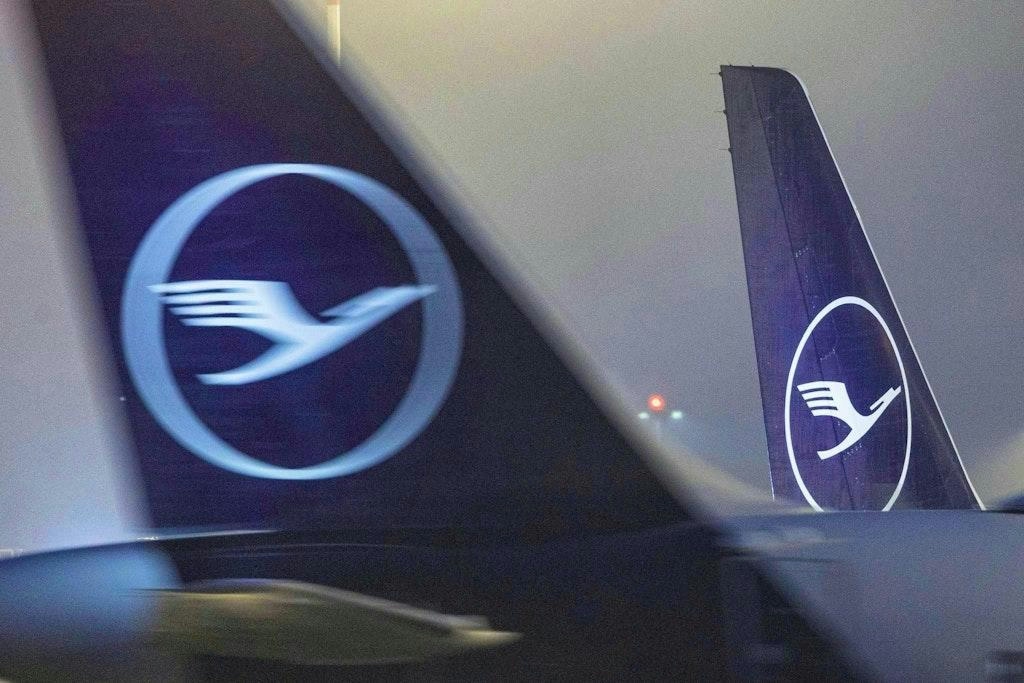
Although commercial airplanes prominently display the logos of major airlines, more than half of these aircraft are not owned by the airlines themselves. Instead, a vast and lucrative leasing market, valued in the billions of dollars, finances much of the global fleet. This system enables airlines to remain agile and competitive in an industry characterized by rapid change.
The Role of Leasing in Aviation
According to the International Air Transport Association (IATA), over 50 percent of the world’s commercial aircraft are leased rather than owned outright. This trend is particularly pronounced in Europe, where the proportion of leased planes is even higher. Leasing allows airlines to circumvent the enormous upfront costs associated with purchasing new aircraft, which can exceed $100 million per plane. For example, an Airbus A320 typically costs between $110 million and $130 million. By paying leasing fees instead of investing billions in fleet acquisition, airlines can adjust their capacity swiftly in response to fluctuating market demands.
Major carriers also rely on leasing to maintain flexibility. Lufthansa’s annual report reveals that 11 percent of its fleet is leased, with an even greater share among its low-cost subsidiaries such as Eurowings. This approach is essential in an industry where routes, passenger volumes, and technology are in constant flux.
The Mechanics of Aircraft Leasing
Specialized leasing companies, including industry leaders like AerCap and the International Lease Finance Corporation (ILFC), purchase aircraft in bulk and lease them to airlines worldwide. While airlines manage all operations, maintenance, and branding, leasing companies remain largely invisible to passengers. This business model, which emerged in the 1970s, revolutionized aviation by enabling airlines to expand their networks and offer more destinations without incurring prohibitive financial risks.
The growth of leasing has coincided with broader industry trends, such as the consolidation of European airline groups like Lufthansa and Air France-KLM. These conglomerates’ strategies for fleet management, balancing owned and leased aircraft, significantly influence the competitive dynamics of the aviation sector.
Expanding Markets and Emerging Trends
The leasing market extends beyond commercial airlines. The rise of business jet brokers has further stimulated demand for leased aircraft, with brokers capitalizing on financial incentives such as bonus depreciation. This has made leasing an attractive option not only for commercial carriers but also for private and corporate aviation.
Simultaneously, airlines are investing in new in-flight services to enhance competitiveness. For instance, American Airlines and others are adopting high-speed internet solutions like SpaceX’s Starlink. These technological advancements increase the pressure on airlines to control costs and maintain operational flexibility, reinforcing the preference for leasing over ownership.
A New Paradigm in Aviation Flexibility
The shift toward leasing has fundamentally transformed the aviation industry, allowing airlines to adapt more readily to technological advancements, variable demand, and evolving passenger expectations. Whether flying with a flagship carrier or a budget airline, it is increasingly likely that the aircraft beneath the logo is leased rather than owned—a reflection of the complex and often unseen forces shaping modern air travel.

Etihad and Swissport Extend Global Partnership

Sepehran Airlines B737 Returns to Mashhad After Tyre and Engine Issues

Etihad Deploys Widebody Fleet to Meet Strong Demand

Korean Air Finalizes $36.2 Billion Deal with Boeing

Australia’s RFDS Queensland Section Orders Six King Air 260Cs

Korean Air Finalizes Order for 103 Boeing Jets and Engines

Embraer E195-E2 Features Distinctive Engine Placement Among Regional Jets

What Passengers Can Expect on Boeing’s New 777X Jet

How Ethiopian Airlines Became Africa’s Leading Carrier Amid Gulf Competition

Joby Aviation Extends Autonomous Flight Capabilities with Cross-Country Tour
