
Превращайте аналитические выводы ИИ в реальные действия

В тренде
Categories
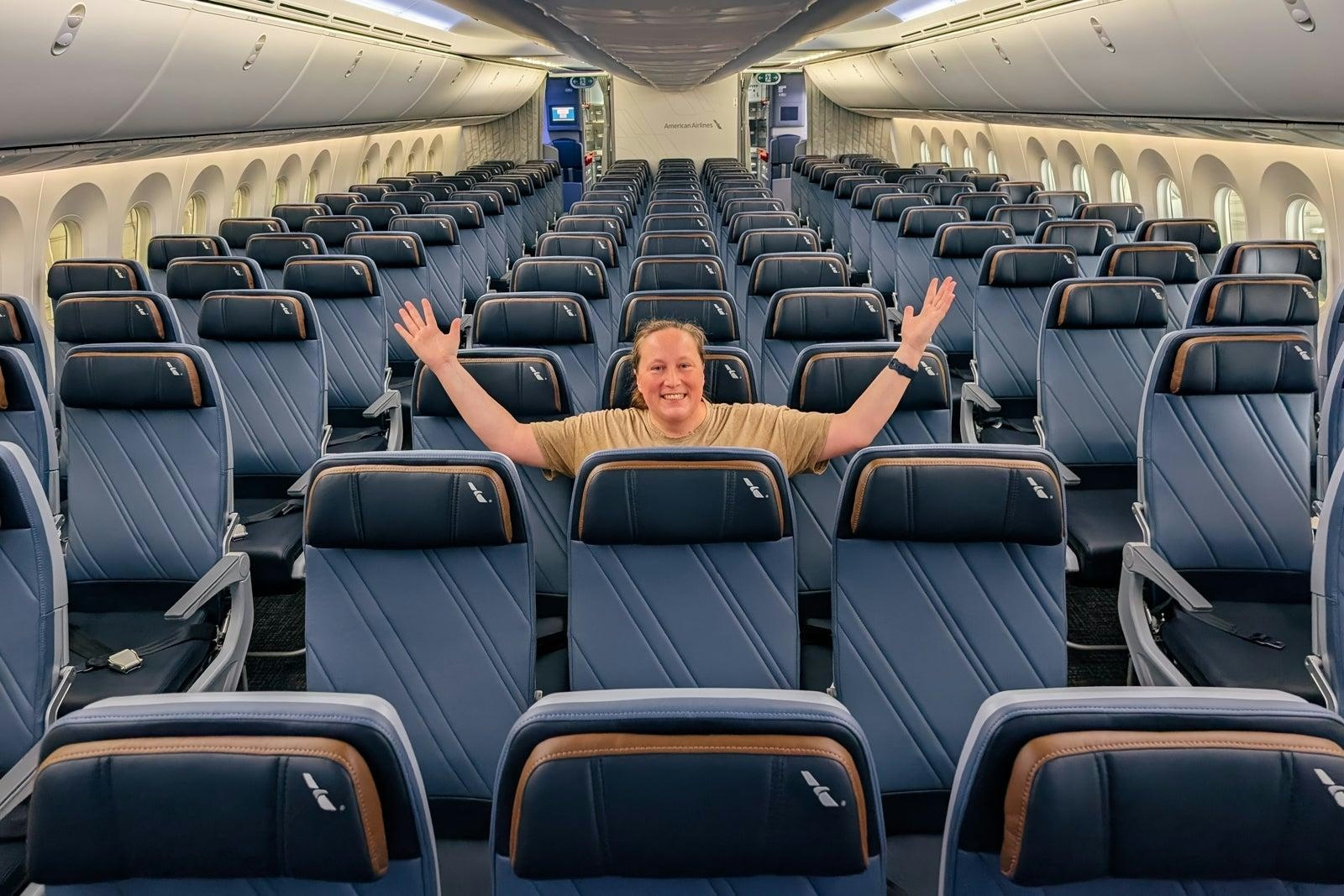
Why Many US Airlines Lack Premium Economy on All Aircraft
Why Many US Airlines Lack Premium Economy on All Aircraft
Over the past decade, the presence of premium economy cabins on widebody aircraft has more than doubled globally, now featured on approximately 45% of such planes. In North America, nearly 90% of widebody aircraft offer premium economy, reflecting robust demand on long-haul international routes. Leading U.S. carriers, including American Airlines, Delta Air Lines, and United Airlines, have introduced premium economy products on their intercontinental flights since 2015, catering to passengers seeking enhanced comfort between economy and business class.
Limited Availability of Premium Economy on Domestic Flights
Despite its growing popularity on international routes, premium economy remains scarce on domestic U.S. flights. This disparity stems from a combination of aircraft configurations, route economics, and the distinctive structure of the U.S. airline market. Premium economy is designed to provide wider seats, increased legroom, and elevated service levels, features that are most valued on long-haul flights lasting eight to twelve hours. Passenger willingness to pay for such upgrades diminishes significantly on shorter domestic flights, which typically last only a few hours.
Moreover, many U.S. domestic routes already feature a first-class cabin that often delivers an experience comparable to or exceeding that of international premium economy. Introducing a separate premium economy class on these flights could lead to redundancy and overlap between cabin offerings. Instead, airlines have opted to enhance the economy experience through products such as Delta’s Comfort+, United’s Economy Plus, and American’s Main Cabin Extra. These upgraded economy sections provide additional legroom and perks like early boarding or complimentary beverages, while maintaining a seat configuration similar to standard economy. This approach allows airlines to offer a differentiated product without the complexity and cost of a full premium economy cabin.
Operational and Economic Constraints
The installation of a true premium economy cabin involves more than simply adding a few seats. Most domestic flights are operated by narrow-body aircraft, such as the Boeing 737 and Airbus A320 families, which have limited cabin space. Incorporating premium economy seating would necessitate removing a significant number of economy seats, thereby reducing overall capacity and potentially diminishing revenue. Premium economy seats are larger and more expensive to install, and the resulting lower seat count can adversely affect profitability, especially on routes where demand for such a product is uncertain.
Economic pressures further complicate the introduction of premium economy on domestic flights. Rising fuel costs, exacerbated by geopolitical tensions including conflicts in the Middle East and uncertainties surrounding Iran, have increased operational expenses and disrupted supply chains. These factors have delayed the deployment of more fuel-efficient aircraft and heightened caution among airlines regarding investments in new cabin products that may not yield clear financial benefits.
Nonetheless, there are indications of stabilization in leisure travel demand, particularly for U.S. outbound flights, which has helped sustain a resilient market across the North Atlantic. Despite this, the combination of limited domestic demand, operational limitations, and economic uncertainty continues to restrict the expansion of premium economy offerings on most U.S. domestic routes.

Etihad Airways Suspends Airbus A380 Flights on Key Route

Aditya Birla Group Seeks Approval for Aircraft Leasing in GIFT City

Qatar Airways Highlights Innovation and Connectivity at Arabian Travel Market 2026

Hong Kong's Five-Year Plan Includes Andrew Fan's Aircraft Parts Processing Hub Proposal

ACIA Aero Leasing Delivers ATR72-600 to Air Nostrum

RTX Appoints Jill Albertelli as Head of Pratt & Whitney

TAT Technologies Joins Beyond Aero Hydrogen Aircraft Program

AURAK Study Highlights Barriers to Air Taxi Adoption in Emerging Economies

Xiamen Air Selects Altitude for 787 Maintenance at Heathrow

Etihad and Swissport Extend Global Partnership
