
Превращайте аналитические выводы ИИ в реальные действия

В тренде
Categories
Why New Airbus Aircraft Are Moved Between Sites Before Delivery
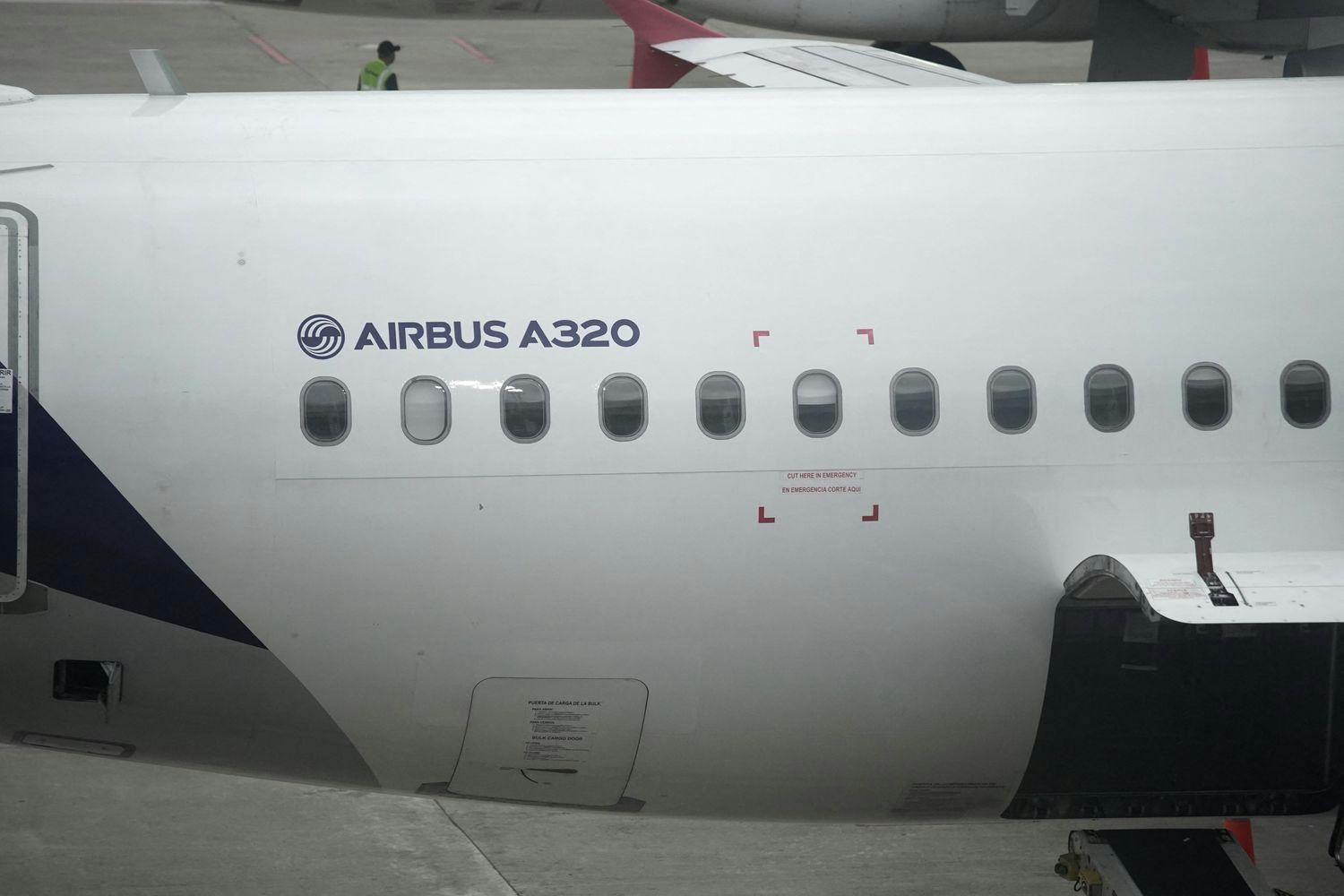
The Complex Journey of New Airbus Aircraft Before Delivery
When airlines receive brand-new Airbus aircraft, it is common for these planes to traverse thousands of miles between multiple sites prior to entering commercial service. These pre-delivery movements, occurring before the aircraft’s inaugural revenue flight, are an integral part of Airbus’s delivery process. They are meticulously coordinated to accommodate a range of essential activities, including inspections, legal formalities, customization, and service preparations. Given Airbus’s extensive global production network, this process is notably intricate and presents considerable logistical challenges.
A Global Manufacturing Network
Airbus operates over 20 major manufacturing facilities worldwide, each specializing in distinct components or systems. For instance, the wings of the Airbus A350 are manufactured in Broughton, United Kingdom, while fuselage sections are produced in Saint-Nazaire, Nantes, and Hamburg. These components are subsequently transported to final assembly lines located in Toulouse, Hamburg, Mobile, and Tianjin. Widebody aircraft such as the A350 are primarily assembled in Toulouse, whereas narrowbody models like the A320neo family are assembled across multiple sites, including Mobile, Alabama, and Tianjin, China. The A220 model is mainly assembled in Mirabel, Canada, and Mobile.
Transporting these large and complex components between facilities demands a highly sophisticated logistics operation. Airbus utilizes its fleet of BelugaXL cargo aircraft, specifically designed to carry oversized parts such as wings and fuselage sections across Europe. This logistical framework supports Airbus’s distributed manufacturing model while maintaining efficient assembly operations. Nevertheless, the complexity inherent in moving aircraft and components between multiple sites can introduce logistical hurdles and potential delays, which may affect production schedules.
Assembly, Testing, and Delivery Challenges
Upon arrival at the final assembly line, engineers dedicate several weeks to assembling the aircraft, installing major systems, avionics, cabin interiors, and landing gear. Even after assembly is complete, the aircraft undergoes rigorous testing and inspections before formal handover to the airline customer. This pre-delivery process ensures compliance with all regulatory and customer requirements but also adds layers of time and complexity to the delivery timeline.
The logistical intricacies involved in this multi-site movement have broader implications for Airbus and the wider aviation market. Delays or disruptions in transporting aircraft between sites can raise concerns about supply chain reliability and increase costs for airlines awaiting new deliveries. Market analysts have observed that such challenges may be contributing to Airbus’s delivery forecast for 2026, which stands at 870 aircraft—slightly below market expectations. Meanwhile, competitors such as Boeing are intensifying efforts to narrow the delivery gap, with Boeing’s January 2026 delivery figures reportedly surpassing those of Airbus. This competitive environment highlights the critical importance of efficient logistics and supply chain management within the global aircraft manufacturing industry.
The movement of new Airbus aircraft between multiple sites before delivery thus reflects the company’s global production strategy. While this approach enables Airbus to leverage specialized expertise across different countries, it also introduces logistical complexities that can influence delivery schedules and market dynamics.

Etihad Airways Suspends Airbus A380 Flights on Key Route

Aditya Birla Group Seeks Approval for Aircraft Leasing in GIFT City

Qatar Airways Highlights Innovation and Connectivity at Arabian Travel Market 2026

Hong Kong's Five-Year Plan Includes Andrew Fan's Aircraft Parts Processing Hub Proposal

ACIA Aero Leasing Delivers ATR72-600 to Air Nostrum

RTX Appoints Jill Albertelli as Head of Pratt & Whitney

TAT Technologies Joins Beyond Aero Hydrogen Aircraft Program

AURAK Study Highlights Barriers to Air Taxi Adoption in Emerging Economies

Xiamen Air Selects Altitude for 787 Maintenance at Heathrow

Etihad and Swissport Extend Global Partnership
