
Превращайте аналитические выводы ИИ в реальные действия

В тренде
Categories
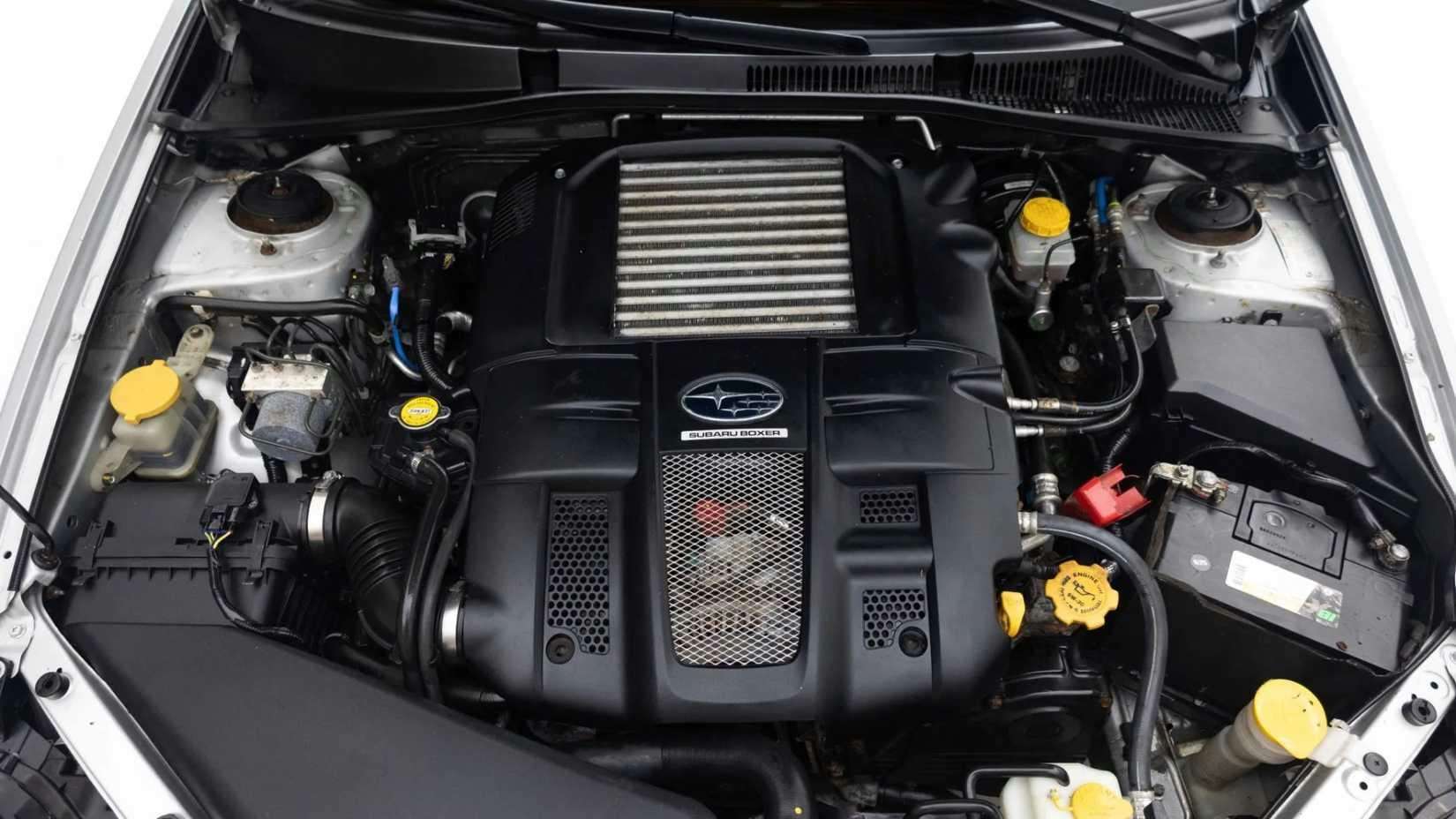
Why Subaru Boxer Engines Are Common in Small Airplanes
Why Subaru Boxer Engines Are Common in Small Airplanes
Automotive engines have increasingly been adapted for use in small, single-propeller aircraft, with aviation enthusiasts and builders often opting for conversions of popular car engines such as the Chevy LS V8. These adaptations range from amateur DIY projects to professionally engineered kits. However, automotive engines typically demand extensive modifications to meet the rigorous durability and longevity standards expected of dedicated aviation powerplants. Despite these challenges, car engines remain an attractive, cost-effective option for small aircraft when properly converted and maintained.
The Rise of Subaru Boxer Engines in Aviation
Among the various automotive engines repurposed for aviation, Subaru’s flat-four “boxer” engines have gained significant traction. Manufacturers like Foxcon Aviation and Zenith Aircraft Company have produced small aircraft models equipped with modified Subaru engines, while companies such as Maxwell Propulsion Systems offer specialized Subaru aero engine packages designed for retrofitting existing aircraft. These packages often include critical enhancements tailored for flight, such as reinforced internal components capable of withstanding sustained high-rev operation and reduction gearboxes that lower engine output speed to align with optimal propeller performance—typically below 2,800 revolutions per minute. This reduction is essential because propellers lose efficiency and risk structural damage when their tips approach transonic speeds.
The popularity of Subaru boxer engines in aviation is largely due to several inherent advantages. The horizontally opposed cylinder configuration allows for a more streamlined and aerodynamically efficient nose profile, reducing drag and improving overall aircraft performance. Additionally, the exposed cylinder heads facilitate effective air cooling, an important feature for aircraft operating across a wide range of altitudes and temperatures. The boxer design also delivers smooth operation by balancing opposing pistons, which minimizes vibration. This reduction in vibration not only enhances passenger comfort but also lessens mechanical stress on the airframe, contributing to improved reliability and longevity.
Challenges and Market Perspectives
Despite these benefits, integrating Subaru boxer engines into aircraft presents notable challenges. Conversion processes are often complex and require specialized expertise, as exemplified by intricate projects such as those undertaken by Russian mechanics at Garage 54. These conversions can be both technically demanding and costly, necessitating custom components and rigorous testing to ensure compliance with safety and performance standards. Moreover, while Subaru engines enjoy a reputation for reliability and low maintenance in automotive contexts, concerns persist within the aviation community regarding parts availability and ongoing support for these engines when deployed in aircraft.
Market responses to Subaru-powered aircraft have been mixed. Many pilots and builders are attracted by the promise of a dependable and affordable powerplant, yet some remain cautious about long-term maintenance support and regulatory acceptance. Established aviation engine manufacturers, including Lycoming and Rotax—both producers of horizontally opposed engines—are likely to emphasize their own products’ proven reliability and extensive support networks. This competitive environment may drive further innovation and development within the small aircraft engine sector.
Subaru boxer engines thus represent a compelling option for small aircraft, offering aerodynamic efficiency, effective cooling, and smooth operation. However, their adoption requires careful consideration of conversion complexity, support infrastructure, and evolving market dynamics as the aviation community explores alternative propulsion solutions.

Etihad Airways Suspends Airbus A380 Flights on Key Route

Aditya Birla Group Seeks Approval for Aircraft Leasing in GIFT City

Qatar Airways Highlights Innovation and Connectivity at Arabian Travel Market 2026

Hong Kong's Five-Year Plan Includes Andrew Fan's Aircraft Parts Processing Hub Proposal

ACIA Aero Leasing Delivers ATR72-600 to Air Nostrum

RTX Appoints Jill Albertelli as Head of Pratt & Whitney

TAT Technologies Joins Beyond Aero Hydrogen Aircraft Program

AURAK Study Highlights Barriers to Air Taxi Adoption in Emerging Economies

Xiamen Air Selects Altitude for 787 Maintenance at Heathrow

Etihad and Swissport Extend Global Partnership
