
Превращайте аналитические выводы ИИ в реальные действия

В тренде
Categories
Why the Airbus A380 Uses Two Different Engine Types
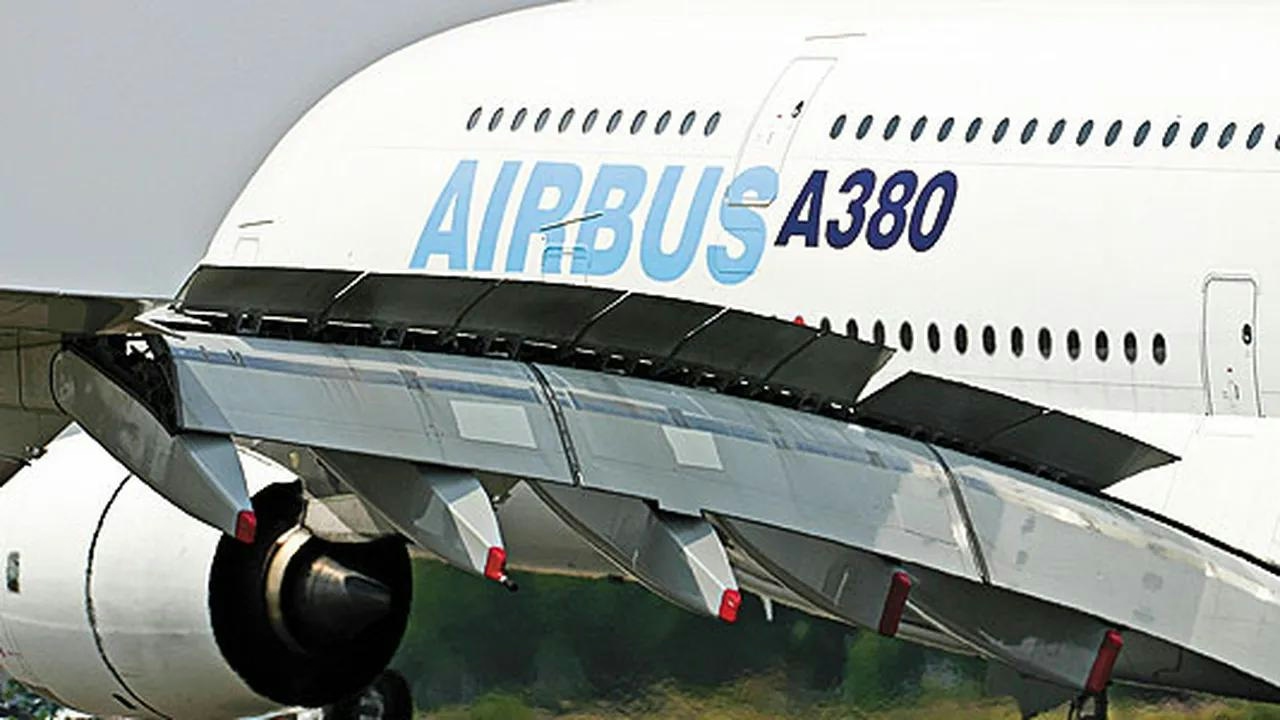
Why the Airbus A380 Uses Two Different Engine Types
The Airbus A380, often described as a “flying apartment building” due to its immense double-deck fuselage, represents a remarkable feat of aerospace engineering. Weighing approximately 560 tons, this widebody aircraft relies on four powerful engines that generate thrust comparable to a small rocket launch. While passengers enjoy the spacious cabin and onboard amenities, the true engineering marvel lies beneath the wings, where the choice of engines plays a critical role in the aircraft’s performance and operational strategy.
Engineering Challenges Behind the A380’s Powerplant
Developed during the 1990s, the Airbus A380 faced unprecedented engineering challenges, particularly in terms of propulsion. As the aircraft’s design evolved, its maximum takeoff weight approached 1.3 million pounds (575 tonnes), necessitating a combined thrust output of up to 300,000 pounds. This requirement pushed engine technology to new limits. Unlike twin-engine aircraft such as the Boeing 777, which are “takeoff-thrust limited” and require engines capable of sustaining flight safely in the event of an engine failure, the four-engine A380 was “climb-thrust limited.” Losing one engine resulted in only a 25% reduction in total thrust, shifting the emphasis from raw takeoff power to efficient and sustained climb performance. This unique operational profile demanded the development of entirely new engine designs tailored to these specific needs.
The Rationale for Offering Two Engine Options
Airbus’s decision to provide airlines with a choice between two engine types—the Rolls-Royce Trent 900 and the Engine Alliance GP7200, a collaboration between General Electric and Pratt & Whitney—was a strategic move shaped by market and operational considerations. By involving both manufacturers, Airbus aimed to appeal to a broader range of airlines, each with established preferences and maintenance infrastructures. However, this dual-engine approach introduced significant complexity. Airlines and maintenance teams had to manage two distinct engine models, each with unique parts, service requirements, and supply chains. This multiplicity increased logistical challenges and operational costs.
Market responses to the dual-engine offering were mixed. Some carriers preferred the reliability and performance characteristics of one engine over the other, resulting in varied adoption rates across the fleet. Meanwhile, competitors such as Boeing emphasized the simplicity and cost-effectiveness of their single-engine widebody aircraft, positioning them as easier to maintain and operate.
Regulatory and Competitive Influences
The development and deployment of the A380’s engines were also heavily influenced by regulatory and competitive pressures. Stringent noise regulations, particularly at London Heathrow Airport, compelled both Rolls-Royce and the Engine Alliance to refine their engine designs to reduce noise emissions without compromising performance. This regulatory environment spurred a technological competition between the two manufacturers, each striving to meet the demanding operational and environmental standards imposed on the A380.
The legacy of the A380’s dual-engine strategy continues to resonate within the aerospace industry. Ongoing negotiations between Airbus and engine manufacturers such as Pratt & Whitney highlight the competitive dynamics that persist in the commercial aircraft engine market. The A380 remains a distinctive example of an era when airlines could select their powerplants, a choice that introduced both innovation and complexity to the world’s largest passenger aircraft.

Etihad Airways Suspends Airbus A380 Flights on Key Route

Aditya Birla Group Seeks Approval for Aircraft Leasing in GIFT City

Qatar Airways Highlights Innovation and Connectivity at Arabian Travel Market 2026

Hong Kong's Five-Year Plan Includes Andrew Fan's Aircraft Parts Processing Hub Proposal

ACIA Aero Leasing Delivers ATR72-600 to Air Nostrum

RTX Appoints Jill Albertelli as Head of Pratt & Whitney

TAT Technologies Joins Beyond Aero Hydrogen Aircraft Program

AURAK Study Highlights Barriers to Air Taxi Adoption in Emerging Economies

Xiamen Air Selects Altitude for 787 Maintenance at Heathrow

Etihad and Swissport Extend Global Partnership
