
Превращайте аналитические выводы ИИ в реальные действия

В тренде
Categories
Will the F-47 Initially Use Inferior Engines?
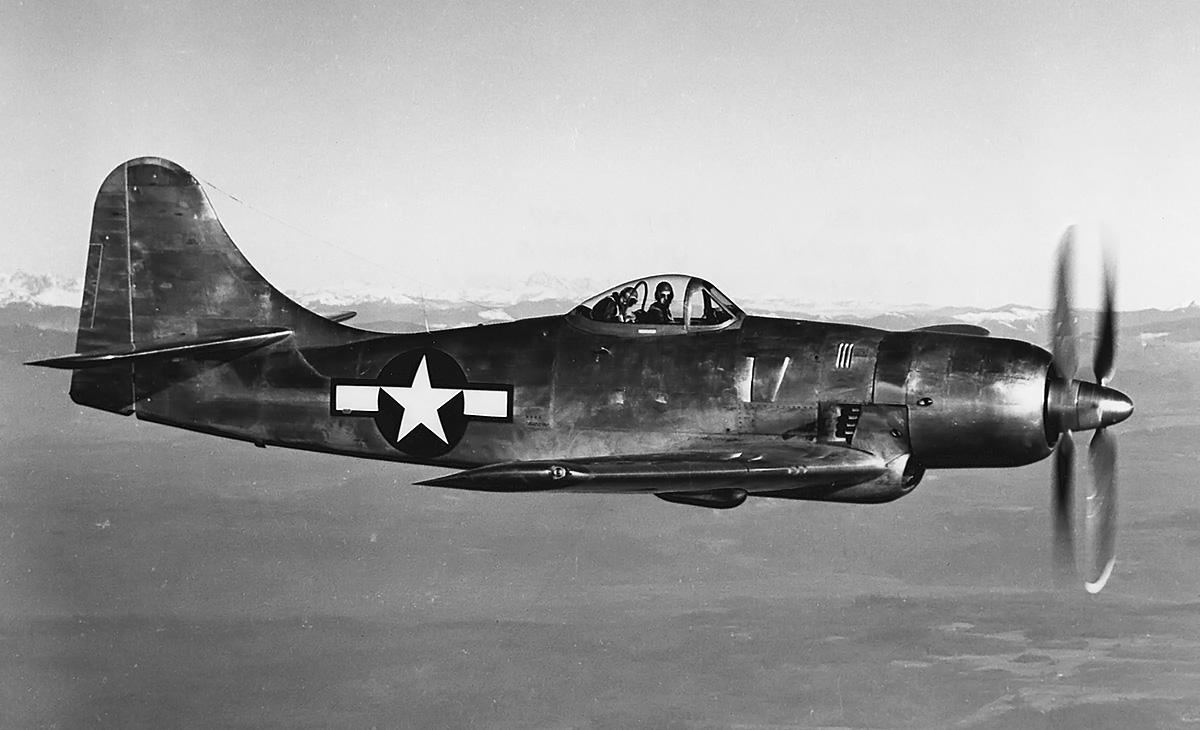
Will the F-47 Initially Use Inferior Engines?
The U.S. Air Force’s F-47 fighter program is confronting a critical challenge as its next-generation engine, developed under the Next Generation Adaptive Propulsion (NGAP) initiative, is not expected to be ready for integration until at least 2030. This delay raises significant concerns about the propulsion system that will power the F-47 when it is slated for its maiden flight in 2028.
Engine Development and Timeline Challenges
The Air Force has long planned for the F-47, along with other advanced aircraft, to leverage the enhanced capabilities of the NGAP engine. However, according to the service’s 2027 Fiscal Year budget proposal, the NGAP prototype engine remains in its “Prototype Fabrication & Engine Assessment” phase through at least September 2031. This timeline suggests that the initial operational F-47s may need to rely on existing or interim engines, which are less advanced than the NGAP design. Such a scenario could constrain the aircraft’s performance, particularly in fuel efficiency, electrical power generation, and cooling capacity.
These limitations may affect the F-47’s operational effectiveness until the NGAP engine is ready for widespread deployment, potentially not until the mid-2030s. The reliance on older engine technology during the early production phase could hinder the fighter’s ability to meet its full design potential.
Budget and Program Outlook
John Sneden, Portfolio Acquisition Executive for the Propulsion Directorate at the Air Force Life Cycle Management Center (AFLCMC), provided updates on the NGAP program at the Life Cycle Industry Days conference in Dayton, Ohio. He emphasized that the Air Force is actively preparing for the future integration of NGAP technology, stating, “What we’re doing right now is we’re building our system today, and we’re getting ready for the future.”
Budget documents reveal a significant increase in NGAP funding over the coming years, with nearly $513.7 million requested for the next fiscal cycle, followed by $905.7 million and $865 million in Fiscal Years 2028 and 2029, respectively. Funding is expected to decline to approximately $300 million annually in 2030 and 2031 as the program shifts from development to testing and competitive evaluation phases.
Sneden noted that current expenditures focus on engine construction and testing, with competitive assessments planned over the next several years. Nonetheless, he acknowledged that the Air Force is still determining which aircraft will first be equipped with the NGAP engine.
Implications for the F-47 Program
The delay in NGAP engine readiness presents broader implications for the F-47 program’s cost and capability trajectory. Early production models powered by less advanced engines may face operational constraints, potentially limiting the Air Force’s ability to deploy the fighter at its intended performance levels. This gap could persist until the new propulsion system becomes fully available, affecting the program’s overall effectiveness during its initial service period.

Etihad and Swissport Extend Global Partnership

Sepehran Airlines B737 Returns to Mashhad After Tyre and Engine Issues

Etihad Deploys Widebody Fleet to Meet Strong Demand

Korean Air Finalizes $36.2 Billion Deal with Boeing

Australia’s RFDS Queensland Section Orders Six King Air 260Cs

Korean Air Finalizes Order for 103 Boeing Jets and Engines
Embraer E195-E2 Features Distinctive Engine Placement Among Regional Jets

What Passengers Can Expect on Boeing’s New 777X Jet

How Ethiopian Airlines Became Africa’s Leading Carrier Amid Gulf Competition

Joby Aviation Extends Autonomous Flight Capabilities with Cross-Country Tour
