
Превращайте аналитические выводы ИИ в реальные действия

В тренде
Categories
WTI Events Drive Marine Aviation Transformation at MAWTS-1
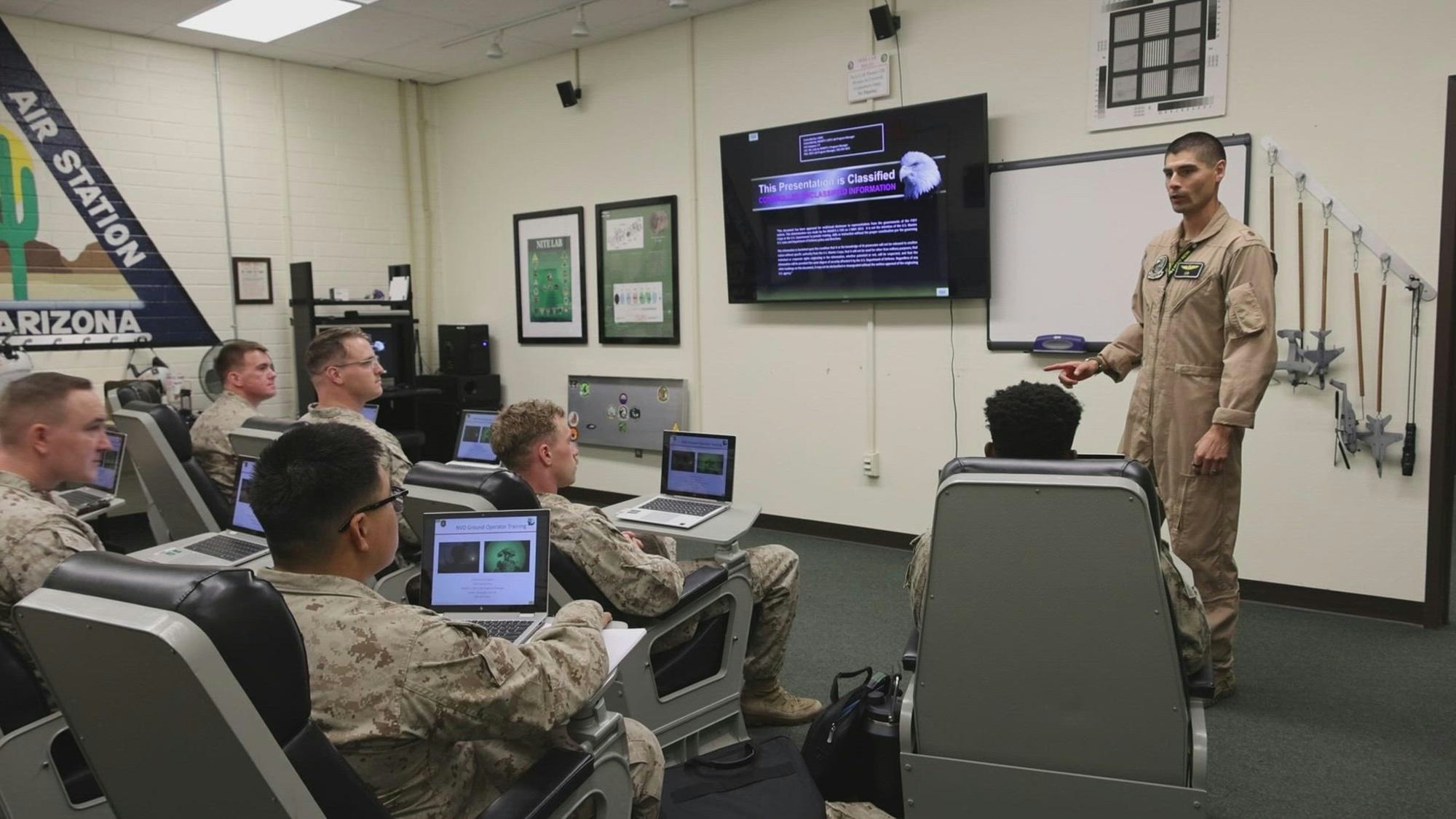
WTI Events Drive Marine Aviation Transformation at MAWTS-1
At the heart of Marine aviation’s quest for combat excellence lies a semi-annual event that remains largely obscure outside military circles: the Weapons and Tactics Instructor (WTI) Course. As a former commanding officer of Marine Aviation Weapons and Tactics Squadron One (MAWTS-1) has noted, WTI is where the United States Marine Corps unites to train for war. This characterization highlights the course’s significance as more than a routine training exercise; it serves as the primary catalyst for transformation, tactical refinement, and innovation within Marine aviation.
The Scale and Scope of WTI
MAWTS-1, headquartered at Marine Corps Air Station Yuma, Arizona, conducts two WTI courses annually, each spanning approximately seven weeks. These events represent the most substantial recurring training and innovation exercises within Marine Corps aviation, attracting hundreds of students, thousands of maintenance personnel, and dozens of aircraft from across the service and allied units. The scale of these exercises is immense. For instance, a recent course involved 236 students, 92 additional aircraft, and over 4,000 maintenance personnel, generating roughly 2,350 sorties. This concentration of aviation assets—comparable to the air power of a Marine Expeditionary Brigade—enables integrated, multi-platform tactical training on a scale unattainable during routine operations.
The WTI curriculum encompasses the full spectrum of Marine aviation missions, including offensive air support, control of aircraft and missiles, assault support, aerial reconnaissance, anti-air warfare, electronic warfare, and aviation ground support. Crucially, ground combat element personnel train alongside aviators, ensuring that lessons learned from recent operational deployments are swiftly incorporated into evolving tactics and procedures.
Broader Context: Economic and Technological Challenges
The transformative impact of WTI does not occur in isolation. Broader economic and industry trends increasingly influence the operational environment of Marine aviation. Recent fluctuations in global oil prices, such as the declines in Brent and WTI crude between May and June driven by demand concerns and economic uncertainty, underscore the volatility of fuel costs. Although temporary price rebounds have occurred due to supply disruptions, ongoing apprehensions about demand destruction continue to affect operational planning and resource allocation.
In response to these challenges, both military and civilian aviation sectors are exploring alternatives, including a transition to sustainable aviation fuels. This shift carries significant implications for agricultural feedstocks and supply chains, potentially affecting the logistics that support large-scale training events like WTI.
Simultaneously, the retirement of legacy platforms such as the AV-8B Harrier II marks a pivotal transition for Marine aviation. This change not only alters tactical capabilities but also impacts pilot retention and compensation strategies, as the Marine Corps competes with commercial and private aerospace sectors for skilled aviators.
Ultimately, the WTI course remains the cornerstone of Marine aviation’s capacity to adapt and innovate. By assembling personnel, platforms, and the latest operational insights, MAWTS-1 ensures that the Marine Corps maintains agility amid evolving threats and the shifting economic and technological landscape that defines modern warfare.

Etihad Airways Suspends Airbus A380 Flights on Key Route

Aditya Birla Group Seeks Approval for Aircraft Leasing in GIFT City

Qatar Airways Highlights Innovation and Connectivity at Arabian Travel Market 2026

Hong Kong's Five-Year Plan Includes Andrew Fan's Aircraft Parts Processing Hub Proposal

ACIA Aero Leasing Delivers ATR72-600 to Air Nostrum

RTX Appoints Jill Albertelli as Head of Pratt & Whitney

TAT Technologies Joins Beyond Aero Hydrogen Aircraft Program

AURAK Study Highlights Barriers to Air Taxi Adoption in Emerging Economies

Xiamen Air Selects Altitude for 787 Maintenance at Heathrow

Etihad and Swissport Extend Global Partnership
