图像

AeroGenie — 您的智能副驾驶。

问任何问题。分析一切。立即行动。

热门趋势

Categories

Air Dolomiti Adds Two Embraer 195 Aircraft to Fleet
March 18, 2026By ePlane AI
Air Dolomiti Adds Two Embraer 195 Aircraft to Fleet
0
0
Air Dolomiti
Embraer 195
Fleet Expansion

Air Dolomiti Expands Fleet with Two Embraer 195 Aircraft Amid Growing Regional Competition

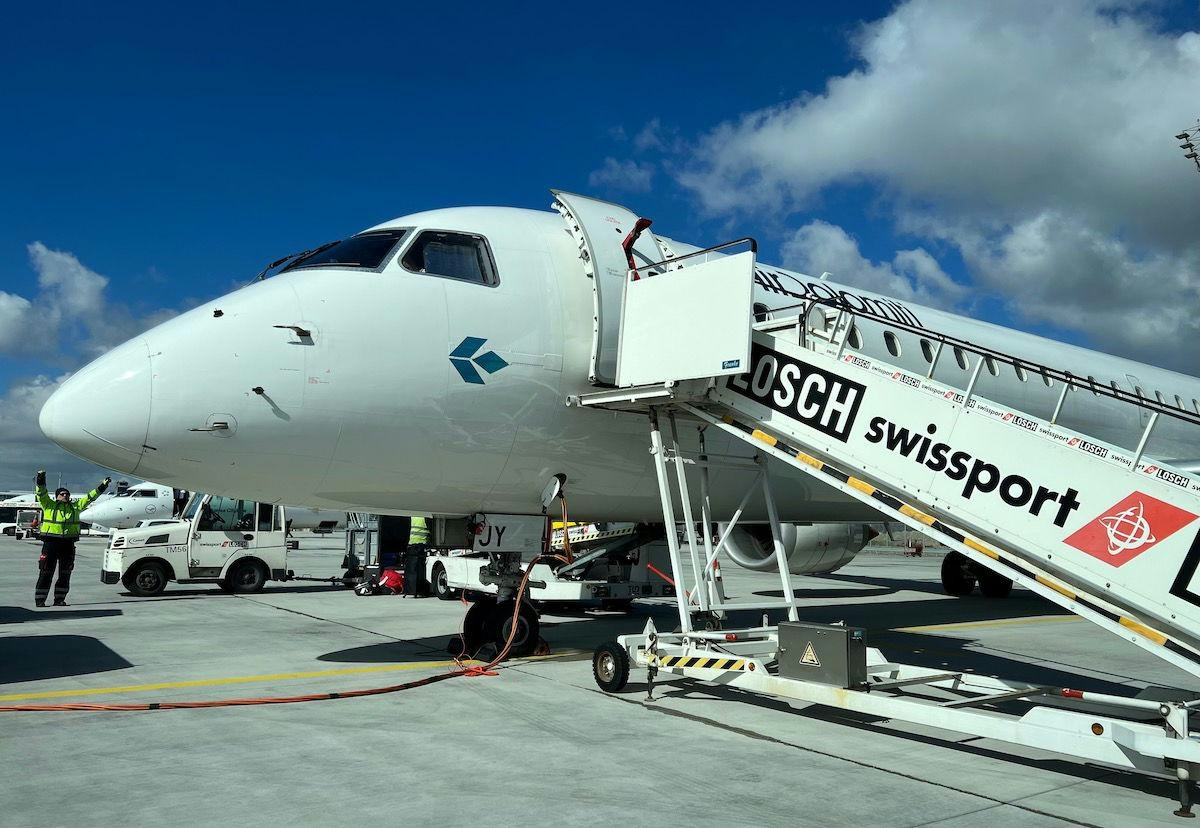
Air Dolomiti, a subsidiary of the Lufthansa Group, has taken a decisive step in its fleet renewal strategy by incorporating two Embraer E195 aircraft. The first of these jets joined the fleet in December and is already operational, while the second arrived on March 16 and is expected to commence service shortly. This development signals the start of a broader fleet expansion and modernization phase for the Italian regional carrier.

Fleet Renewal and Growth Strategy

The addition of the E195s forms part of an extensive renewal and growth program scheduled to continue through 2028. Over this period, Air Dolomiti plans to acquire a total of 13 Embraer E195 aircraft, which will gradually replace nine of its existing 108-seat E190s. This transition will increase the airline’s fleet size from 28 to 30 aircraft, thereby enhancing overall capacity and operational efficiency.

The new E195s offer several advantages, including increased seating capacity, improved cabin comfort, and greater fuel efficiency. These enhancements align with Air Dolomiti’s commitment to delivering modern, customer-focused services while reinforcing its role within the Lufthansa Group network. By deploying these aircraft, the airline aims to provide more seats on key routes without compromising reliability or passenger experience.

Operational Challenges and Market Context

Integrating the Embraer E195s into the existing fleet presents operational challenges that Air Dolomiti must carefully manage to maintain service quality and efficiency. The airline operates in a highly competitive regional market, where rivals such as Finnair are expanding their E190 fleets, and QantasLink has recently introduced international flights using the Airbus A220. These moves reflect a wider trend among regional carriers toward fleet modernization as they seek to enhance their service offerings and safeguard market share.

As Air Dolomiti advances its fleet renewal, it aims to deliver a more consistent and enhanced passenger experience across its network. The increased capacity and flexibility provided by the E195s will enable the airline to optimize its route network in close coordination with the Lufthansa Group. This strategy is designed to strengthen connectivity between regional Italian airports and major European hubs, allowing Air Dolomiti to better respond to evolving market demands, support both business and leisure travel, and maintain operational resilience amid a dynamic competitive landscape.
More news
Madrid Wins Ryanair’s Largest European Maintenance Hub, Impacting Aviation Jobs in Spain

Madrid Wins Ryanair’s Largest European Maintenance Hub, Impacting Aviation Jobs in Spain

Madrid Secures Ryanair’s Largest European Maintenance Hub, Transforming Spain’s Aviation Sector Madrid has emerged as a pivotal center in European aviation with Ryanair’s inauguration of its largest aircraft maintenance facility at Madrid-Barajas Airport. This €25 million investment represents the airline’s most substantial ground-level commitment to date, positioning Spain as a key player in Ryanair’s future expansion plans. The new maintenance, repair, and overhaul (MRO) center is set to reshape the aviation employment landscape across the country. A State-of-the-Art Facility and Its Impact on Employment Occupying 22,000 square meters within the airport’s industrial zone, the new MRO center is capable of servicing up to seven aircraft simultaneously. It is equipped to perform a wide range of tasks, from routine inspections to complex engineering operations, necessitating a highly skilled workforce trained to meet rigorous international standards. The facility is expected to generate approximately 700 skilled jobs, offering stable and well-compensated employment opportunities in a sector where technical expertise is increasingly in demand. The inauguration ceremony, attended by Madrid’s Mayor José Luis Martínez-Almeida, highlighted strong municipal support and aligned with broader initiatives to establish Madrid-Barajas as a premier European aviation hub. However, the expansion also introduces challenges. Industry experts, including the CEO of Danish Air Transport, have cautioned about potential oversaturation in the aircraft, crew, maintenance, and insurance (ACMI) market. The increased maintenance capacity may intensify competition among service providers in Spain, raising concerns about job security for existing aviation workers as the market adapts to these new dynamics. Spain’s Growing Strategic Role in Ryanair’s Operations Ryanair currently operates 109 aircraft from 11 bases across Spain, making the country a cornerstone of its Southern European network. The Madrid maintenance hub now serves as a central node within Ryanair’s network of seven EU-based maintenance centers. This development complements the airline’s existing Spanish infrastructure, which includes another facility at Barajas, a maintenance center in Seville, a crew training site, and a technology hub in central Madrid. Together, these assets reinforce Spain’s strategic importance to Ryanair’s operations. The establishment of the Madrid hub is also expected to prompt competitive responses from other airlines, which may reconsider their maintenance strategies and potentially relocate operations to Madrid to capitalize on the new facility’s capabilities. This could further heighten competition for skilled labor and maintenance contracts within the Spanish aviation sector. Supporting Ryanair’s Ambitious Growth Targets Ryanair’s investment in Madrid is closely linked to its long-term vision of operating 800 aircraft and transporting 300 million passengers annually by 2034. The new maintenance hub is designed to enhance operational efficiency by reducing logistical dependencies and turnaround times, thereby supporting this ambitious growth trajectory. Moreover, the facility may influence Ryanair’s future route planning. Market analyses indicate untapped potential for routes such as Newcastle to Madrid, which could become more viable as the airline consolidates its operations in the Spanish capital. As Ryanair deepens its commitment to Madrid, the move presents both significant opportunities and challenges for Spain’s aviation sector. It promises a substantial boost in employment while simultaneously reshaping the competitive landscape for maintenance services across Europe.
SITA Introduces Bag Radar to Enhance Predictive Baggage Tracking

SITA Introduces Bag Radar to Enhance Predictive Baggage Tracking

SITA Introduces Bag Radar to Enhance Predictive Baggage Tracking The aviation sector is poised to make a substantial advancement in reducing baggage disruptions with the launch of SITA Bag Radar, a cloud-based analytics platform designed to predict and prevent mishandled luggage, missed connections, and operational bottlenecks in real time. As global air travel continues to grow, baggage mishandling remains a persistent issue, often leading to passenger dissatisfaction and significant financial costs for airlines. From Reactive to Proactive Baggage Management Historically, airlines have managed baggage issues reactively, addressing problems only after they have caused operational disruptions. SITA Bag Radar represents a strategic shift by employing historical data, real-time monitoring, and artificial intelligence to deliver early warnings of potential baggage disruptions. This proactive approach empowers airlines, airports, and ground handlers to intervene before issues escalate, thereby improving operational efficiency and enhancing the overall passenger experience. Operational Mechanics of SITA Bag Radar The platform processes extensive operational baggage data, transforming it into actionable insights. By detecting anomalies and emerging risks—such as patterns that suggest likely missed connections or congestion at transfer points—SITA Bag Radar enables operational teams to implement corrective measures, including rerouting baggage or reallocating resources. The objective is to mitigate disruptions before they affect travelers. Persistent Challenges in Baggage Handling Despite technological progress, baggage mishandling continues to be a challenge due to the complexity of global airline networks. Baggage frequently passes through multiple systems, handlers, and airports, with data often fragmented across disparate platforms. This fragmentation complicates efforts to maintain a comprehensive view of baggage movement, allowing delays and inefficiencies to escalate rapidly. Integration and Industry Reception The success of SITA Bag Radar depends on addressing several critical challenges. Integration with existing legacy baggage tracking systems used by airlines and airports is essential to ensure reliable, real-time insights. Additionally, the accuracy and consistency of data collected from diverse sources are vital for the effectiveness of predictive analytics. Privacy concerns also arise from real-time location tracking, necessitating stringent measures to safeguard data security and maintain passenger trust. Industry response to Bag Radar has been mixed. Some airlines remain skeptical about the technology’s efficacy and the potential costs associated with its implementation. Meanwhile, competitors are expected to enhance their own baggage tracking solutions or develop alternative technologies to maintain competitive advantage. Future Prospects SITA Bag Radar signifies a major step toward embedding predictive intelligence within aviation operations, addressing a longstanding gap in baggage management. Should the challenges of integration and data quality be successfully navigated, the platform has the potential to establish a new benchmark for proactive baggage handling, reducing mishandling rates and improving the travel experience for millions of passengers worldwide.
Bordeaux Airport uses AI to reduce passenger waiting times

Bordeaux Airport uses AI to reduce passenger waiting times

Bordeaux Airport Implements AI to Reduce Passenger Waiting Times Bordeaux-Mérignac Airport has initiated a trial of advanced artificial intelligence technology aimed at improving passenger flow and minimizing waiting times within its terminal. Collaborating with Outsight, a specialist in real-time data solutions, the airport has deployed a ‘Physical AI’ system—referred to as a “motional digital twin”—to monitor and manage crowd movements more effectively. Enhancing Operational Efficiency Through Real-Time Data Since March 16, the AI system has been operational at strategic locations in Hall A, including security checkpoints. Utilizing 3D LiDAR sensors, the technology captures three-dimensional data on passenger movements, providing real-time insights into crowd density, queue lengths, and spatial utilization. This continuous stream of information allows airport personnel to dynamically adjust resource allocation, such as deploying additional security staff or opening extra service counters when necessary. The system also generates alerts in instances of overcrowding or capacity breaches, enabling swift operational responses. This capability is particularly pertinent given the recent introduction of the Entry/Exit System (EES), which has increased security checks and contributed to longer wait times. Talel Jaouad, head of airport process operations at Bordeaux Airport, emphasized that the trial aims to deepen understanding of passenger flows to optimize resource deployment and enhance overall passenger satisfaction. The airport’s official statement highlighted that data-driven management of passenger movement is becoming a critical factor in operational performance. Importantly, the AI technology ensures passenger privacy by providing only anonymized visualizations, with no personal identification recorded. This confidential data offers a comprehensive, real-time overview of terminal capacity, supporting efforts to prevent bottlenecks and reduce queue lengths at key points. Broader Implications for the Aviation and Travel Industries Bordeaux’s adoption of AI reflects a growing trend across the aviation sector, where airports increasingly rely on anonymized AI tools to optimize passenger throughput and improve operational efficiency. Raul Bravo, president and co-founder of Outsight, noted that airports like Bordeaux are integrating technologies that seamlessly fit into existing operations while delivering immediate, measurable benefits. Handling approximately six million passengers annually, Bordeaux Airport plans to expand its capacity to 7.8 million by 2027. Serving over 80 destinations through 24 airlines, including planned growth from major carriers such as EasyJet, the airport is prioritizing the optimization of its current infrastructure. Passenger volumes currently stand at about 85 percent of pre-pandemic levels, underscoring the importance of efficient terminal management. Beyond airport operations, the integration of AI is reshaping the wider travel industry. As AI-driven agents increasingly automate planning, booking, and operational tasks, traditional business models—particularly those of intermediaries like online travel agencies—may encounter mounting challenges. Recent volatility in sectors such as logistics and software has been linked to rapid AI advancements, and Bordeaux’s initiative may encourage competitors to adopt similar technologies to maintain their competitive edge. This evolution raises important questions about the future role of intermediaries and the overall landscape of travel services. By leveraging AI, Bordeaux Airport seeks not only to improve passenger experience but also to position itself at the forefront of an industry undergoing rapid technological transformation, where innovation is essential for maintaining competitiveness and operational excellence.
Airbus Faces Delivery Challenges for 2026

Airbus Faces Delivery Challenges for 2026

Airbus Faces Delivery Challenges for 2026 Slow Start and Competitive Pressure Airbus is encountering significant challenges in meeting its commercial aircraft delivery targets for 2026, grappling with a sluggish start to the year compounded by ongoing supply chain disruptions. Internal data from Forecast International reveals that Airbus has delivered only 6.2% of its 870-aircraft target so far this year, a pace that lags behind its historical performance. By comparison, at the end of February 2025, Airbus had achieved 7.9% of its annual delivery goal, which was subsequently revised downward from 820 to 790 aircraft. This underperformance is particularly notable in light of Boeing’s stronger delivery figures. Boeing has nearly doubled Airbus’s deliveries in the same period and secured more net orders in January, intensifying competitive pressures. This dynamic underscores the urgency for Airbus to accelerate its production and delivery rates if it is to meet its 2026 objectives. Production Constraints and Forecast Adjustments Airbus’s forecast of delivering 870 commercial aircraft in 2026 falls slightly short of analyst expectations, which hover around 880 units. Despite maintaining a record backlog of orders, the company has moderated its planned production ramp-up for the A320neo family, primarily due to engine delivery constraints from supplier Pratt & Whitney. These supply chain challenges continue to hamper Airbus’s ability to meet its production targets, particularly for its high-demand passenger jets. Although the current delivery pace does not yet necessitate a formal downward revision of the annual target, it raises the possibility that such an adjustment may become unavoidable if production does not accelerate. To remain on course, Airbus will need to significantly increase deliveries in the second half of the year, facing an even steeper climb than in 2025. Outlook Amidst Uncertainties As 2026 progresses, Airbus confronts a complex environment characterized by persistent supply chain uncertainties and heightened competition. The combination of a weaker start and ongoing production headwinds suggests that achieving the company’s initial delivery target will be more challenging than in previous years. The coming months will be critical in determining whether Airbus can overcome these obstacles and fulfill its ambitious delivery goals.
AerFin Sells A330 for Parts

AerFin Sells A330 for Parts

AerFin Sells Airbus A330 Airframe for Parts Amid Market Pressures Aviation asset management firm AerFin has completed the sale of an Airbus A330 airframe to an undisclosed airline for parts trading, highlighting the sustained demand for widebody aircraft components in a dynamic and increasingly competitive market. Auvinash Narayen, Chief Investment Officer at AerFin, emphasized the enduring value of widebody airframes, noting that they remain a critical source of materials for the industry, especially for platforms with significant operational life remaining. He added that the transaction exemplifies AerFin’s capability to align assets with customers who can optimise their value effectively. Market Dynamics and Operational Challenges The deal, finalised at the close of 2025, occurs amid intensifying competition within the market for used serviceable material. Industry players such as AerSale have voiced concerns regarding the scarcity of suitable feedstock, as the availability of used aircraft and engines continues to diminish. This competitive landscape is further complicated by constrained capacity in engine maintenance, repair, and overhaul (MRO) facilities, alongside unpredictable lead times for materials. These factors collectively challenge asset managers in securing buyers and managing inventory with efficiency. AerFin’s decision to dismantle the A330 for parts also reflects broader shifts in airline parts sourcing strategies, particularly among carriers operating in demanding environments like the Middle East. Such operational conditions influence the demand for components from older aircraft models, including the A330, thereby affecting both pricing structures and the availability of used parts in the market. Strategic Asset Management and Industry Collaboration Earlier in 2025, AerFin acquired an A330 powered by CF6-80 engines, though it remains unclear whether this is the same airframe involved in the recent sale. At the time of acquisition, Simon Goodson, AerFin’s Chief Executive Officer, described the purchase as a demonstration of disciplined capital deployment. He underscored the company’s deep understanding of asset demand and its ability to act decisively when opportunities arise, a strategy that has supported AerFin’s growth over the past 15 years. Goodson also highlighted the importance of collaborative partnerships in ensuring the timely completion of the transaction, despite the challenges posed by a tight year-end schedule. He remarked that a foundation of trust and responsiveness between parties enabled swift resolution of obstacles, allowing the deal to progress without delay. As the market for used aircraft parts becomes increasingly competitive and operational pressures intensify, AerFin’s recent sale underscores both the opportunities and complexities confronting asset specialists in the contemporary aviation sector.
Completion of New Aviation Maintenance and Repair Complex Marks Industry Milestone

Completion of New Aviation Maintenance and Repair Complex Marks Industry Milestone

Completion of New Aviation Maintenance and Repair Complex Marks Industry Milestone The inauguration of a major aviation maintenance, repair, and overhaul (MRO) industrial complex in Sacheon, South Gyeongsang Province, represents a significant advancement for South Korea’s aerospace sector. Spanning 300,000 square meters and developed with an investment of 180 billion won, the facility is designed to integrate research and development, production, and maintenance operations within a single, comprehensive hub. This strategic consolidation is expected to transform the domestic aerospace industry by enhancing efficiency and reducing reliance on foreign MRO services. Strategic Significance and Industry Integration The completion ceremony, held on June 18 at the Yongdang General Industrial Complex, brought together over 400 representatives from industry, academia, and research institutions. Governor Park Wan-soo highlighted the province’s ambition to establish Sacheon as the capital of Korean aerospace and a leading aviation maintenance center in Northeast Asia. Historically, South Korea has depended heavily on overseas MRO providers, resulting in substantial financial outflows. The new complex aims to reverse this trend by fostering a self-sufficient aerospace ecosystem. Building upon existing infrastructure, including the Korea Aerospace Industries (KAI) production base, the Sacheon complex introduces comprehensive MRO capabilities that complete a full-cycle aerospace ecosystem encompassing development, manufacturing, and maintenance. Key tenants such as Korea Air Service (KAEMS) and KAI have already commenced operations, with approximately 41% of the industrial facility’s land occupied at launch. Future phases will focus on expanding maintenance infrastructure and establishing comprehensive support centers to further enhance operational capacity. Market Context and Challenges The global MRO market, currently valued at approximately 160 trillion won, is projected to surpass 220 trillion won by 2040, reflecting robust growth and intensifying competition. International developments, such as West Star Aviation’s acquisition of DCJet to strengthen field maintenance and Aircraft on Ground (AOG) services, underscore the evolving competitive landscape. Meanwhile, structural challenges persist in emerging markets like Brazil, where the aviation sector remains underdeveloped relative to global standards, presenting both obstacles and opportunities for expansion. Despite the positive outlook, the industry faces notable challenges, particularly in workforce availability and supply chain stability. Recent layoffs at Supernal, Hyundai’s electric vertical takeoff and landing (eVTOL) unit, highlight ongoing vulnerabilities. In response, Gyeongsangnam-do has implemented targeted manpower training programs tailored to industry needs, producing 179 professionals to date, with over 100 already employed within the sector. Technological Innovation and Economic Impact Technological advancement remains a central focus for the province, which aims to support high value-added sectors such as cargo plane modification (Passenger-to-Freighter conversions), localization of aviation parts, and the integration of artificial intelligence (AI)-based predictive maintenance systems. While adoption of predictive maintenance technologies continues to grow, concerns related to privacy and security persist, mirroring broader industry challenges associated with digital transformation. The new complex is anticipated to generate substantial economic benefits, including job creation and the stabilization of supply chains. Expansion plans envision servicing both civil and military aircraft, including models such as the KF-21 fighter jet and FA-50 light combat aircraft, which would further enhance regional competitiveness and resilience. As South Gyeongsang Province accelerates efforts to strengthen infrastructure and workforce capabilities, the Sacheon MRO complex is positioned to play a pivotal role in reshaping South Korea’s aerospace industry and elevating its status within the global market.
AerCap Orders 100 Airbus A320neo Jets in Major Leasing Deal

AerCap Orders 100 Airbus A320neo Jets in Major Leasing Deal

AerCap Places Landmark Order for 100 Airbus A320neo Jets AerCap, one of the world’s largest aircraft leasing companies, has announced a significant order for 100 Airbus A320neo-family jets, marking one of the most substantial leasing agreements in recent years. The deal comprises 23 A320neo and 77 A321neo aircraft, with deliveries scheduled to commence in 2028 and extend through 2034. This order reflects AerCap’s strategic intent to expand its fleet and meet growing demand for modern, fuel-efficient narrowbody aircraft. Details of the Agreement and Engine Partnership AerCap’s CEO, Aengus Kelly, revealed that the company will exercise 45 previously agreed Airbus options and add 55 new aircraft to its portfolio. In addition to the aircraft order, AerCap has entered into a long-term lease agreement with CFM International for 48 LEAP-1A engines, which are slated for delivery beginning in the second quarter of 2026. CFM International, a joint venture between General Electric and France’s Safran, produces the LEAP-1A engines, widely recognized for their fuel efficiency and reliability, making them a preferred choice for the A320neo family. Strategic Implications and Market Context This substantial order underscores AerCap’s confidence in the sustained demand for narrowbody jets as airlines worldwide continue to modernize their fleets with more environmentally friendly and cost-effective models. However, the sizeable capital commitment required to fulfill this order presents potential challenges related to financing and balance sheet management, which AerCap will need to navigate carefully. Investor response to the announcement has been predominantly positive, viewing the deal as a strategic move that could enhance AerCap’s competitive position in the aircraft leasing sector. The order arrives amid heightened industry activity, with competitors such as SMBC Aviation Capital pursuing acquisitions like the takeover of Air Lease Corp., signaling intensifying competition among major lessors. Industry Trends and Competitive Landscape The broader aviation market is witnessing a wave of fleet renewals and expansions. Airlines and lessors alike are investing heavily in next-generation aircraft, as evidenced by Cathay Pacific’s ongoing fleet modernization and Atlas Air Worldwide Holdings’ record order for Airbus A350F freighters. These developments highlight a wider industry trend toward upgrading fleets with more efficient aircraft, which will likely influence AerCap’s market dynamics and competitive environment in the coming years. With this latest order, AerCap reaffirms its position as a leading global aircraft lessor, strategically positioning itself to support airlines’ evolving needs as the aviation industry continues its recovery and growth trajectory.
Rolls-Royce Secures Major Cargo Deal Amid Aviation Sector Challenges

Rolls-Royce Secures Major Cargo Deal Amid Aviation Sector Challenges

Rolls-Royce Secures Major Cargo Deal Amid Aviation Sector Challenges Rolls-Royce has secured a landmark order from Atlas Air Worldwide for 40 Trent XWB-97 engines, which will power 20 Airbus A350F freighter aircraft. This agreement represents the largest single order for this engine model and the most significant aircraft purchase in Atlas Air’s history. The deal comes at a challenging time for the aviation industry, which continues to face disruptions linked to ongoing conflicts in the Middle East. Financial Resilience and Strategic Outlook Despite the broader sector difficulties, Rolls-Royce enters this period with considerable financial strength. The company recently reported a 41% increase in underlying operating profit for 2025, reaching £3.46 billion, alongside a free cash flow of £3.3 billion. The civil aerospace division demonstrated a marked improvement in operating margin, rising from 16.6% to 20.5%. Looking forward, management projects underlying operating profit to increase to between £4.0 billion and £4.2 billion in 2026, with further growth anticipated to reach £4.9 billion to £5.2 billion by 2028. In a clear signal of confidence, Rolls-Royce has announced a substantial share buyback program valued between £7 billion and £9 billion ($12 billion), scheduled for 2026 through 2028, with £2.5 billion allocated for the current year. The company has also raised its financial targets for 2028, reflecting optimism about its future growth trajectory. Aftermarket Services as a Core Profit Driver With engine deliveries experiencing a downturn, Rolls-Royce has intensified its focus on aftermarket services to maintain and enhance profitability. The Atlas Air contract is strategically important as it secures long-term revenue through the company’s TotalCare service model, which charges customers based on engine flight hours. This model positions aftermarket services as the primary profit engine for Rolls-Royce, supported by improved contractual margins and increased profitability from spare engines. Further reinforcing its aftermarket capabilities, Rolls-Royce recently appointed StandardAero as the preferred maintenance, repair, and overhaul (MRO) provider for its RR300 engines. This partnership aims to reduce overhaul costs and shorten turnaround times for scheduled maintenance, thereby delivering greater value to operators and strengthening Rolls-Royce’s service-led business strategy. Cargo Sector Provides Stability Amid Market Volatility The air cargo segment, which is less susceptible to disruptions affecting passenger flights, offers a degree of resilience in the current volatile market environment. Deliveries for the Atlas Air order are scheduled to begin in 2029 and continue through 2034, with options for an additional 20 aircraft. This will position Atlas Air as the global launch operator for the A350F and the first U.S.-based carrier to introduce this aircraft type. Industry Challenges and Market Conditions Despite these positive developments, the civil aviation sector continues to face significant challenges. Airspace closures in several Gulf states have resulted in over 4,000 daily flight cancellations, impacting major airlines including Lufthansa, British Airways, and Cathay Pacific. Given that Rolls-Royce’s service revenues are closely linked to engine flying hours, widespread flight groundings present a direct threat to earnings. Nonetheless, Rolls-Royce shares have risen approximately 49% over the past year, although they currently trade about 9% below their 52-week high. The company’s robust aftermarket strategy, strong financial position, and major new contracts place it in a favorable position to navigate ongoing industry turbulence and capitalize on future growth opportunities.
Singapore, France, Spain, and the U.S. Lead Aviation Innovation at IATA World Data Symposium 2026

Singapore, France, Spain, and the U.S. Lead Aviation Innovation at IATA World Data Symposium 2026

Singapore, France, Spain, and the U.S. Lead Aviation Innovation at IATA World Data Symposium 2026 The IATA World Data Symposium 2026, held in Singapore on April 8-9, is set to highlight the forefront of aviation innovation, with Singapore, France, Spain, and the United States emerging as key leaders in this transformative era. The event will focus on pioneering advancements in artificial intelligence (AI) and cybersecurity, featuring prominent industry players such as Singapore Airlines, Accor, and Marriott, who are driving significant change across the sector. Advancements in AI and Cybersecurity The symposium will convene aviation professionals, technology experts, and hospitality leaders to examine how data-driven technologies are reshaping the future of travel. Following a robust recovery in global tourism, with passenger numbers exceeding 5.2 billion in 2025, airlines and hospitality companies are increasingly adopting AI and data analytics to enhance operational efficiency, elevate passenger experiences, and strengthen global connectivity. AI-powered solutions are already revolutionizing flight operations by optimizing scheduling, streamlining check-in procedures, and enabling personalized services. Singapore Airlines, a key participant in the event, has integrated advanced data analytics and automation to improve both operational performance and customer satisfaction. Similarly, hospitality leaders such as Marriott and Accor are investing heavily in digital transformation initiatives aimed at delivering smarter, safer, and more customized experiences for travelers. Cybersecurity remains a critical concern amid the growing reliance on digital platforms. The symposium will address the imperative of implementing robust cybersecurity frameworks to protect passenger data and maintain operational integrity, ensuring seamless and secure journeys in an increasingly interconnected world. Regional Strengths and Challenges in Aviation Innovation While these technological advancements herald a new chapter for aviation and hospitality, each leading nation faces distinct challenges in fostering innovation. Navigating complex regulatory landscapes, securing sufficient funding, and addressing environmental sustainability are among the primary issues confronting these countries. France is taking a proactive stance, exemplified by companies like Aura Aero, which has secured firm orders for hybrid-electric aircraft, reflecting the nation’s commitment to sustainable aviation. Singapore is advancing its aerospace capabilities through initiatives such as the electric vertical takeoff and landing (eVTOL) aircraft project, led by local university innovators, positioning the city-state as a hub for next-generation aviation technologies. The United States continues to benefit from substantial financial support for its aviation sector, a factor industry leaders identify as a key competitive advantage on the global stage. Meanwhile, Spain and other European nations are concentrating on sustainability and digital transformation, responding to evolving market demands and regulatory pressures. Outlook for the Aviation and Hospitality Sectors As the IATA World Data Symposium 2026 progresses, market responses and competitor strategies are expected to focus heavily on sustainability and technological advancement. Each region is leveraging its unique strengths to overcome challenges and propel innovation forward. The event represents a pivotal moment for the aviation and hospitality industries, setting the foundation for smarter, safer, and more sustainable travel experiences for both tourists and business travelers worldwide.
Fuel Shortages in Thailand and China Disrupt Flights for Vietnam Airlines and VietJet

Fuel Shortages in Thailand and China Disrupt Flights for Vietnam Airlines and VietJet

Fuel Shortages in Thailand and China Disrupt Flights for Vietnam Airlines and VietJet Vietnam’s aviation industry is confronting significant operational challenges as fuel shortages in Thailand and China threaten to disrupt flight schedules for the nation’s leading carriers, Vietnam Airlines and VietJet. Beginning in April 2026, the suspension of jet fuel exports by these two primary suppliers—driven by escalating geopolitical tensions in the Middle East—has precipitated a crisis that could severely impact airline operations. Operational and Financial Challenges for Airlines The Civil Aviation Authority of Vietnam (CAAV) has issued urgent advisories to domestic airlines, urging them to prepare for potential flight reductions and to revise operational strategies, particularly on domestic routes most susceptible to fuel supply disruptions. Vietnam Airlines and VietJet, which collectively operate over 400 flights daily with fleets of 93 and 103 aircraft respectively, are expected to bear the brunt of the shortage. The scarcity of jet fuel is anticipated to elevate operational costs substantially, prompting both carriers to consider fare increases and the implementation of additional fuel surcharges in response to rising oil prices. Smaller airlines, which operate with narrower profit margins, face even greater risks of severe schedule disruptions or cancellations. In response to the anticipated grounding of aircraft, airport authorities have been instructed to expand parking capacities to accommodate the increased number of planes unable to operate. Limited Domestic Alternatives Amid Global Supply Chain Pressures Vietnam relies on imports for more than 60% of its jet fuel, primarily sourced from China and Thailand. Domestic refineries are unable to offset the shortfall, as their production focuses predominantly on gasoline and diesel rather than jet fuel. The CAAV has encouraged airlines to explore alternative suppliers in countries such as South Korea, Japan, Brunei, and India. However, securing new supply contracts amid the current volatile market conditions has proven challenging. The repercussions of these supply constraints extend beyond Vietnam, affecting the global aviation sector. Airlines worldwide are adjusting routes to circumvent affected regions, while ongoing conflicts in the Middle East continue to drive oil prices upward, complicating efforts to stabilize airline operations and fare structures. Passenger Impact and Market Implications Passengers traveling to and from Vietnam should anticipate increased volatility in flight availability, especially on domestic routes. The unreliability of fuel supplies is heightening the risk of cancellations and delays. Market responses have already included fare hikes and the introduction of fuel surcharges, placing additional financial burdens on travelers. This situation highlights the vulnerability of Vietnam’s aviation sector to disruptions in global supply chains and geopolitical instability. Without prompt resolution or the identification of new fuel sources, the industry faces a period of uncertainty that may have lasting effects on connectivity, pricing, and the broader travel market across Southeast Asia.
line