
KI-Erkenntnisse in konkrete Maßnahmen überführen

Trends
Categories
Air Taxis: Innovation or Overhyped Promise?
Air Taxis: Innovation or Overhyped Promise?
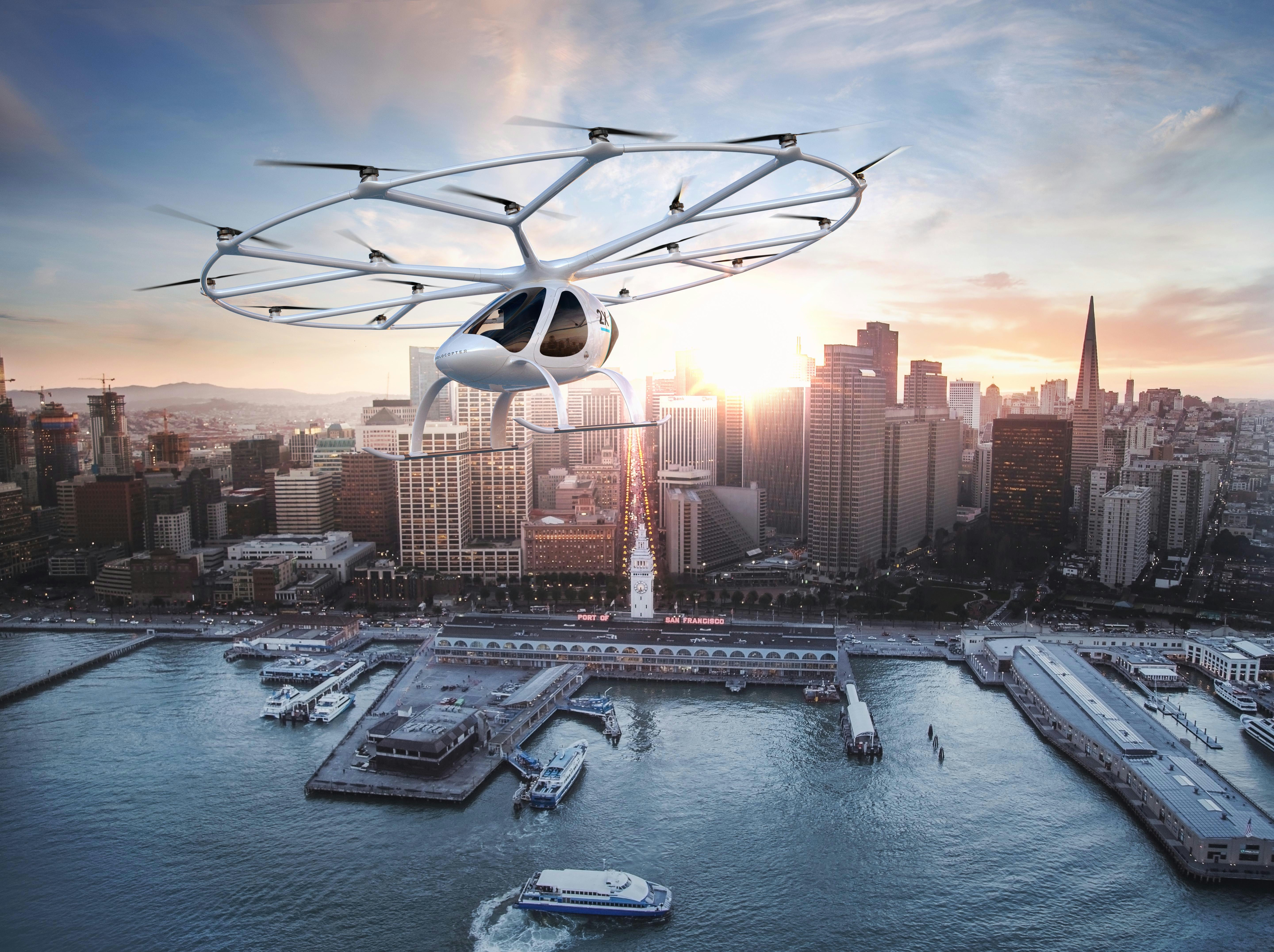
The Confederation of Indian Industry (CII) has recently proposed the establishment of pilot air taxi corridors utilizing electric vertical take-off and landing aircraft (eVTOLs), aiming to transform urban transportation. These aircraft, capable of vertical ascent like helicopters and designed for short urban routes, could potentially reduce travel times between key locations such as Gurugram and central Delhi or Connaught Place and Jewar airport to under 30 minutes. The Directorate General of Civil Aviation (DGCA) has already issued preliminary guidelines concerning vertiport infrastructure and eVTOL certification, indicating a growing regulatory focus. Industry stakeholders, including InterGlobe Enterprises in collaboration with US-based Archer Aviation, have announced intentions to launch electric air taxi services in India. Concurrently, start-ups supported by institutions like IIT-Madras are developing indigenous prototypes, signaling a burgeoning domestic interest in this emerging sector.
Global Progress and Persistent Challenges
While the conceptual framework for urban air mobility is taking shape worldwide, air taxis remain distant from becoming a routine mode of daily commuting. In the United States, the Federal Aviation Administration (FAA) is actively developing certification protocols and conducting pilot programs, yet large-scale commercial passenger operations await final regulatory approval. The United Kingdom’s Vertical Aerospace anticipates commencing operations in the latter half of this decade. Dubai has initiated vertiport construction and test flights, cautiously projecting commercial launches. Saudi Arabia has entered agreements with Joby Aviation, and China is advancing rapidly on certification processes. Despite these developments, no major global city currently offers regular, scaled air taxi services to the public.
Market responses to these advancements are varied. Companies such as Archer Aviation and Vertical Aerospace have made notable progress, while others face delays and skepticism. Eve Air Mobility is progressing with flight testing and customer acquisition, but even leading firms like Joby Aviation acknowledge the inherent risks and complexities involved in launching aerial ridesharing services. Nevertheless, the urban air mobility sector continues to attract significant investment and sustained interest.
India’s Position: Navigating Between Progress and Challenges
India occupies a middle ground in the global air taxi race, neither trailing significantly nor leading. While the requisite technology exists, the primary challenge lies in developing a safe, affordable, and equitable ecosystem. Urban airspace in India is already congested with commercial aircraft, helicopters, drones, and defense operations. Integrating potentially dozens or hundreds of daily low-altitude eVTOL flights will necessitate a sophisticated urban air traffic management system. Although India’s regulatory framework is evolving, it remains under development, with certification processes expected to span several years. The seamless integration of eVTOL operations with existing aviation systems adds further layers of complexity.
Infrastructure and Accessibility Concerns
The CII’s proposal to utilize rooftops as vertiports offers an efficient use of urban space but raises significant practical challenges. Rooftops are not inherently suitable for aviation operations; they require structural reinforcement, comprehensive fire safety measures, emergency evacuation protocols, controlled access, passenger handling facilities, and high-capacity charging infrastructure. Urban local bodies would need to revise building regulations to accommodate these requirements, prompting questions about the financial responsibility for such modifications—whether it would fall on private developers or state authorities.
Industry projections in India suggest that initial fares for short inter-city air taxi trips could amount to several thousand rupees. While some developers argue that scaling operations could eventually reduce costs, early services are expected to be premium offerings, likely accessible only to a wealthy minority. This raises critical questions about whether air taxis will effectively alleviate urban congestion or remain a luxury mode of transport for the affluent.
The Road Ahead
Significant challenges persist, including regulatory hurdles, safety concerns, and potential opposition from local communities. Although electric propulsion eliminates tailpipe emissions, the overall environmental impact depends on factors such as battery production and lifecycle emissions. As India and the global community observe the unfolding of urban air mobility, the promise of air taxis remains compelling but far from assured.

Etihad Airways Suspends Airbus A380 Flights on Key Route

Aditya Birla Group Seeks Approval for Aircraft Leasing in GIFT City

Qatar Airways Highlights Innovation and Connectivity at Arabian Travel Market 2026

Hong Kong's Five-Year Plan Includes Andrew Fan's Aircraft Parts Processing Hub Proposal

ACIA Aero Leasing Delivers ATR72-600 to Air Nostrum

RTX Appoints Jill Albertelli as Head of Pratt & Whitney

TAT Technologies Joins Beyond Aero Hydrogen Aircraft Program

AURAK Study Highlights Barriers to Air Taxi Adoption in Emerging Economies

Xiamen Air Selects Altitude for 787 Maintenance at Heathrow

Etihad and Swissport Extend Global Partnership
