
AeroGenie — Ihr intelligenter Copilot.

Trends
Categories
Senators Budd, Welch, Luján, and Curtis Introduce Bipartisan Aviation Support Bill
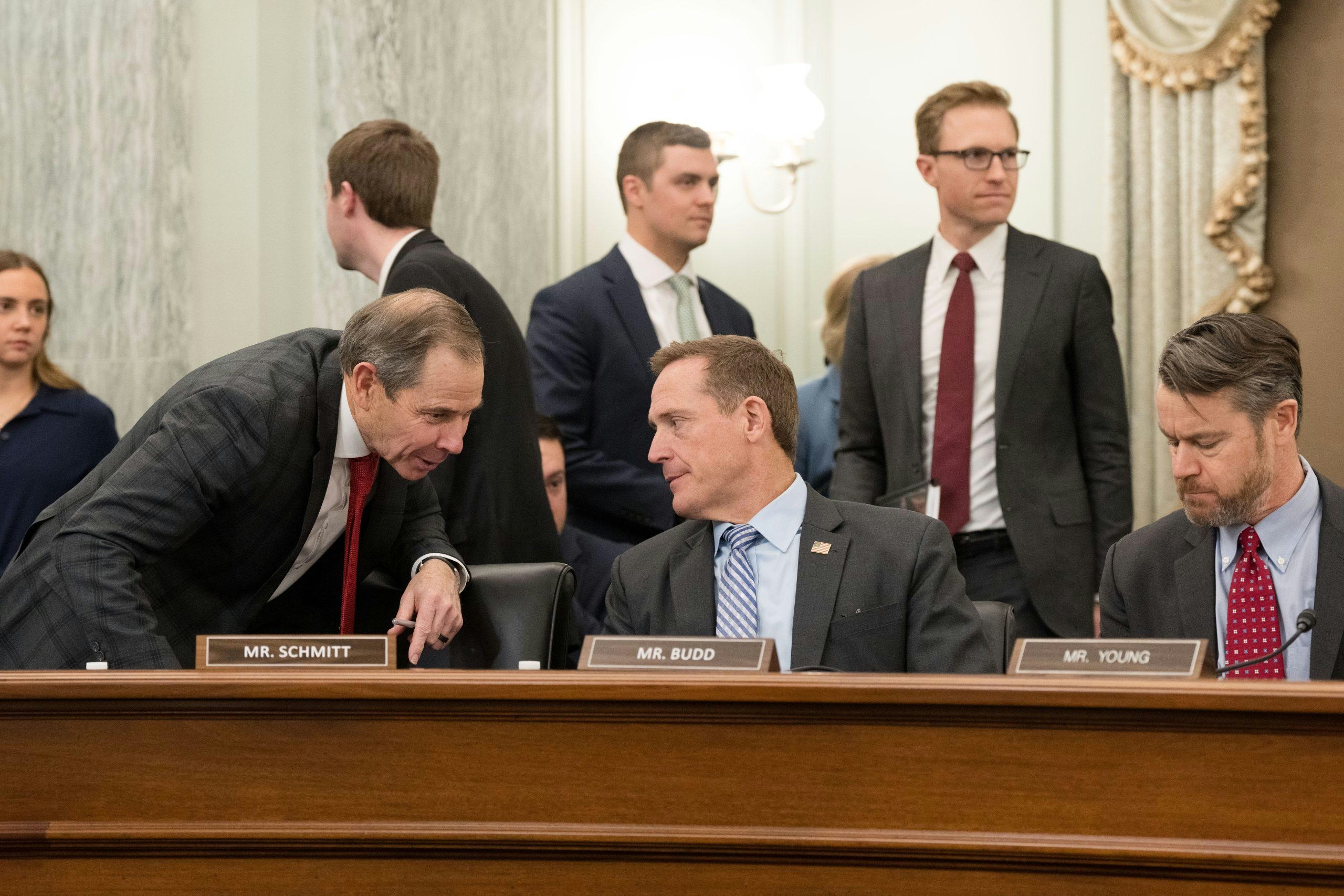
Senators Introduce Bipartisan Bill to Streamline FAA Certification for Advanced Air Mobility
Washington, D.C. — A bipartisan coalition of senators has introduced the Aviation Innovation and Global Competitiveness Act, a legislative effort aimed at modernizing and accelerating the Federal Aviation Administration’s (FAA) type certification process for Advanced Air Mobility (AAM) aircraft. Spearheaded by Senator Ted Budd (R-N.C.), the bill is co-sponsored by Senators Peter Welch (D-Vt.), Ben Ray Luján (D-N.M.), and John Curtis (R-Utah). The legislation seeks to establish clear timelines and standards for FAA certification, reduce bureaucratic delays, and improve transparency for industry applicants, all while upholding stringent air safety requirements.
Addressing Industry Challenges and Innovation
The bill emerges amid growing pressure on the aviation sector to adapt to rapid technological advancements, particularly in electric vertical take-off and landing (eVTOL) aircraft. Advocates contend that streamlining the certification process is essential for American AAM companies to remain competitive on the global stage and to sustain the United States’ leadership in aviation innovation.
Senator Budd emphasized the transformative potential of emerging aircraft technologies, noting that the current certification process lacks clarity and efficiency, which hampers the development of next-generation aviation solutions. “This legislation will ensure the FAA prioritizes timely certification, allowing manufacturers to focus on developing groundbreaking technology rather than navigating bureaucratic hurdles,” he stated.
Senator Welch underscored the importance of supporting emerging companies, referencing Vermont-based Beta Technologies’ milestone electric flight. He argued that enhancing FAA certification transparency and reducing procedural gridlock are critical to maintaining the nation’s competitive edge. “This bipartisan legislation will bolster America’s legacy of global leadership in aviation and support American ingenuity and jobs,” Welch said.
Senator Curtis highlighted the necessity of regulatory frameworks that keep pace with innovation. He described the bill as a means to bring greater clarity and accountability to the FAA certification process, thereby enabling AAM companies to compete effectively and sustain U.S. leadership in the future of flight.
Broad Support and Ongoing Challenges
The legislation has attracted backing from a wide array of lawmakers, including Senators Cynthia Lummis (R-Wyo.), Tim Sheehy (R-Mont.), Jerry Moran (R-Kan.), Alex Padilla (D-Calif.), and Todd Young (R-Ind.). In the House of Representatives, companion legislation has been introduced by Representatives Troy E. Nehls (R-Texas-22), Jimmy Panetta (D-Calif.-19), and Jay Obernolte (R-Calif.-23).
Industry groups and major manufacturers have also expressed support for the bill. Endorsers include the Aerospace Industries Association, Airports Council International – North America, Archer Aviation, Beta Technologies, Boeing, among others, reflecting a broad consensus on the need for regulatory modernization.
Despite this support, the bill faces challenges inherent in navigating the complex regulatory environment of the aviation industry. Balancing the interests of airlines, manufacturers, labor unions, and other stakeholders remains a delicate task. While some industry voices praise the bill’s potential to stabilize and foster growth, others have raised concerns regarding funding details and the extent of regulatory reforms. Competitors and advocacy groups may scrutinize whether the legislation sufficiently addresses their interests and maintains an equitable balance between industry demands and regulatory oversight.
As the United States continues to lead in AAM technology development, lawmakers and industry leaders recognize that aligning the bill with broader federal budget priorities and stakeholder concerns will be critical to its successful implementation. The Aviation Innovation and Global Competitiveness Act represents a significant legislative effort to promote innovation, economic growth, and sustained American leadership in the evolving aviation sector.

Student Pilot Causes Fuel Starvation Due to Improper Fuel Management

Japanese eVTOL to Enhance Inter-Island Emergency Medical Transport

Air Taxis: Innovation or Overhyped Promise?

Amazon to Launch Drone Delivery in Chicago Suburbs

Examining Aviation Liberalization Within SAATM

Air Force Collaborates with Collins and Shield AI to Develop Software for Combat Cloud Applications

FL Technics Acquires Job Air Technic

Joby Aviation Gains Manufacturing Support from Toyota

Sheltair Opens New MRO Hangar at Tampa International Airport

Crystal Cabin Award 2026 Showcases Innovation in Aircraft Interiors
