
KI-Erkenntnisse in konkrete Maßnahmen überführen

Trends
Categories
Airbus Reports Cost-Cutting Measures Amid Supply Chain Challenges
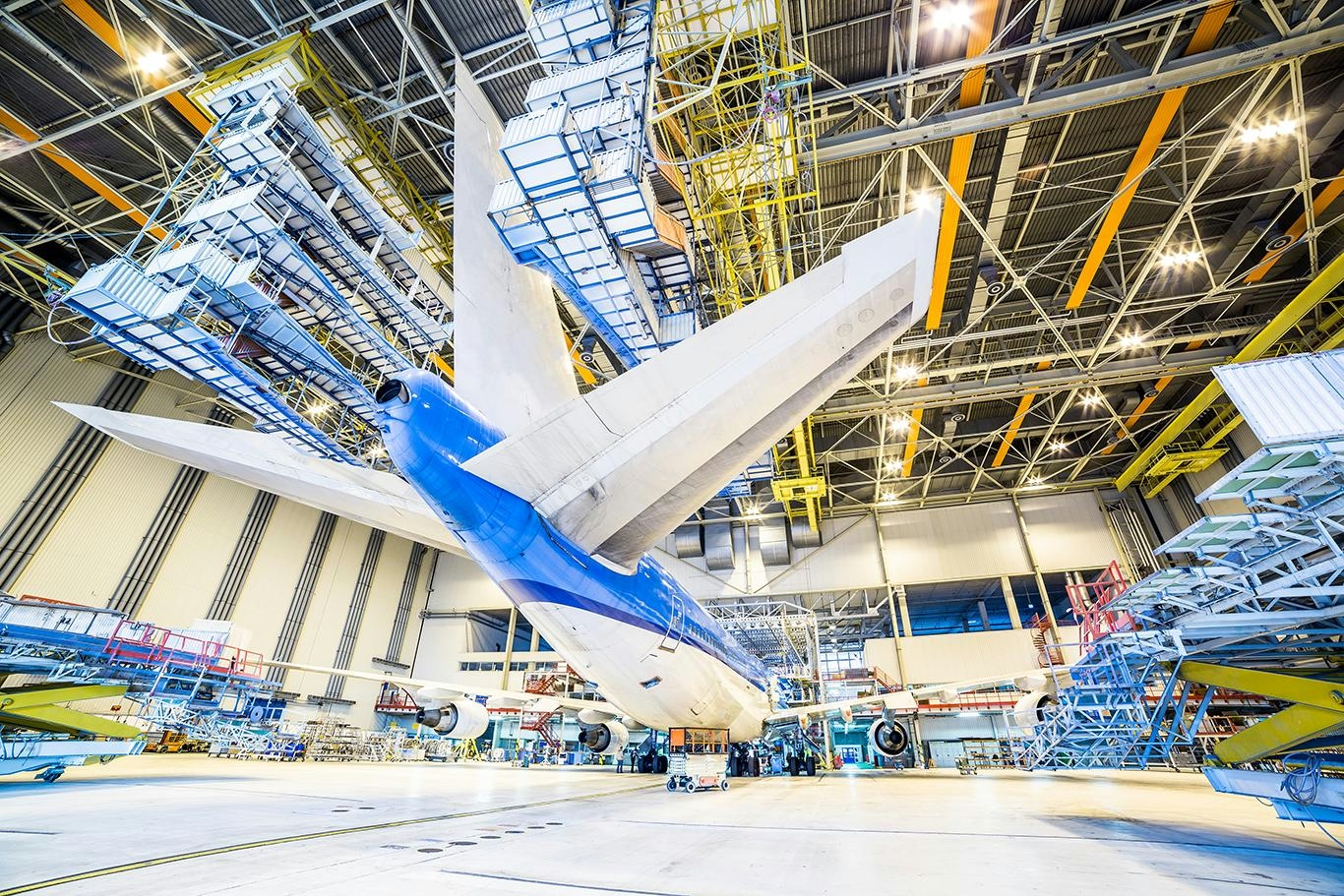
Airbus Implements Cost-Cutting Measures Amid Persistent Supply Chain Disruptions
Airbus has announced plans to reduce costs by 10% as it contends with ongoing global uncertainties and significant supply chain challenges affecting the aerospace industry. This strategic initiative, first reported by Reuters on May 19, 2026, reflects the company’s intensified focus on preserving operating margins amid production bottlenecks and shortages of critical components.
Operational Challenges and Financial Impact
Sources cited by Reuters and Investing.com reveal that Airbus has instructed thousands of employees to implement spending cuts of 10%. The directive comes in response to continued supply chain difficulties, notably the insufficient delivery of Pratt & Whitney engines, which have hindered the company’s ability to meet production targets. Airbus faces the complex task of balancing cost reductions with the imperative to fulfill delivery commitments, a challenge that resonates across the aerospace sector.
The financial strain from these operational headwinds was evident in Airbus’s first-quarter results for the period ending March 31, 2026. The company reported revenue of $14.80 billion and earnings per share of $0.22, representing an 11% decline in revenue and an 84% drop in adjusted earnings compared to previous periods. These figures highlight the pressure exerted by slowed aircraft deliveries and escalating production costs.
Business Segments and Market Position
Airbus’s primary business remains the production of commercial aircraft, with its narrow-body and wide-body programs driving order volumes and delivery forecasts. The company also maintains a presence in the helicopter, defense, and space sectors, which provide some revenue diversification through long-term contracts and government procurement. Additionally, recurring services such as maintenance and upgrades contribute to a degree of stability, generating demand even when new aircraft deliveries fluctuate.
For investors in the United States, Airbus is a significant player not only as a leading European industrial firm but also as a direct competitor to Boeing in the global commercial aviation and defense markets. Its performance is closely monitored by those tracking airline fleet renewals, capital expenditures, and the broader aerospace supply chain. The recent cost-cutting measures introduce a new variable to the company’s stock outlook, especially as both Airbus and Boeing confront similar supply chain constraints and may need to reconsider value-based pricing strategies to maintain the financial viability of future aircraft programs.
As Airbus navigates these challenges, the success of its cost-control initiatives will be pivotal in sustaining profit margins and converting its substantial order backlog into revenue. The evolving situation remains a critical focus for investors and industry observers as the aerospace sector continues to adapt to ongoing disruptions and competitive pressures.

Etihad Airways Suspends Airbus A380 Flights on Key Route

Aditya Birla Group Seeks Approval for Aircraft Leasing in GIFT City

Qatar Airways Highlights Innovation and Connectivity at Arabian Travel Market 2026

Hong Kong's Five-Year Plan Includes Andrew Fan's Aircraft Parts Processing Hub Proposal

ACIA Aero Leasing Delivers ATR72-600 to Air Nostrum

RTX Appoints Jill Albertelli as Head of Pratt & Whitney

TAT Technologies Joins Beyond Aero Hydrogen Aircraft Program

AURAK Study Highlights Barriers to Air Taxi Adoption in Emerging Economies

Xiamen Air Selects Altitude for 787 Maintenance at Heathrow

Etihad and Swissport Extend Global Partnership
