
KI-Erkenntnisse in konkrete Maßnahmen überführen

Trends
Categories
China Develops General Aviation Turboprop Engine
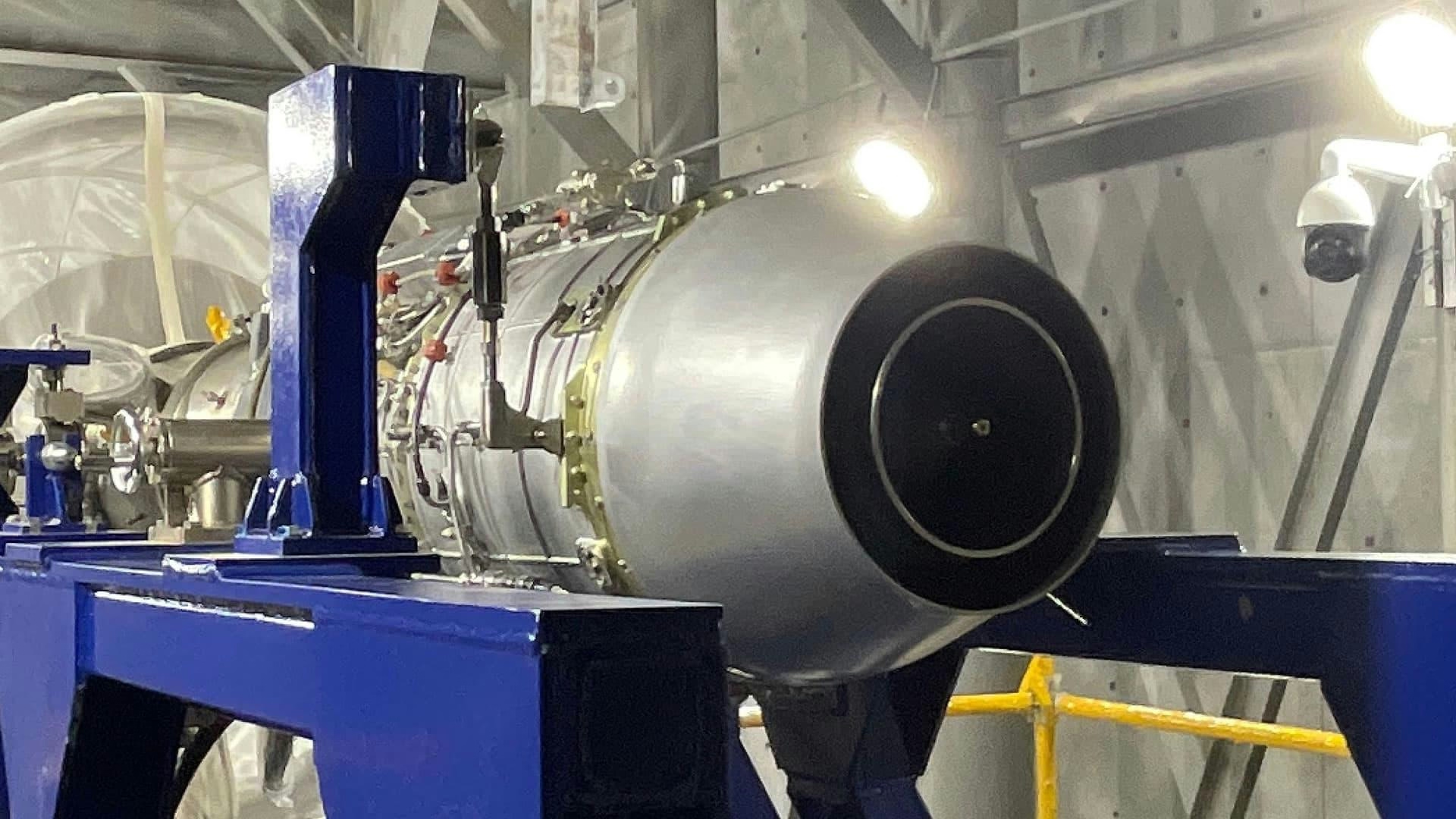
China Develops New Turboprop Engine for General Aviation
AEP20: A Potential Game-Changer in Light Aircraft Propulsion
A Chinese aerospace company has introduced a new small turboprop engine designed to replace high-performance piston engines in light aircraft and drones, signaling a notable development in the general aviation (GA) sector. The Aero Engine Corporation’s AEP20 delivers approximately 320 horsepower while weighing only one-third as much as comparable gasoline engines. According to company representatives, the engine is engineered to last twice as long as traditional piston counterparts, offering a compelling combination of power, weight reduction, and durability.
Xie Li, spokesperson for the Hunan Aviation Powerplant Research Institute, which is collaborating on the project, emphasized the market demand for the AEP20. “We have seen great potential in the new type in the market. Many aircraft makers have reached out to us to discuss their intent to buy it,” Xie stated. The engine is scheduled for its maiden flight on a drone next year, with significant interest anticipated from GA aircraft manufacturers seeking alternatives to conventional piston engines.
Market Prospects and Certification Challenges
Priced at approximately $170,000, the AEP20 is roughly twice as expensive as the most popular high-performance piston engines. However, Aero Engine Corporation asserts that the operating cost per hour could be comparable due to the engine’s enhanced efficiency and extended service life. The company has already secured a substantial order from a drone manufacturer, involving the purchase of “hundreds” of engines valued at around $99 million.
Despite these promising developments, the AEP20 faces critical challenges before entering widespread service. Achieving international certification remains a primary hurdle, with the company targeting certification by 2026 and commercial deployment the following year. Industry experts highlight that successful certification will be essential for the engine’s acceptance in global markets and its broader adoption.
Implications for the Global General Aviation Market
The introduction of the AEP20 is expected to intensify competition within the turboprop trainer and light aircraft segments. Reports indicate that the United Arab Emirates is considering the engine as a potential replacement for its existing fleet, underscoring growing international interest. This development may prompt established manufacturers to accelerate their own propulsion technology initiatives. For instance, Airbus is actively exploring future engine and wing technologies, while GE Aerospace continues to advance propulsion systems such as the F110 engine, recently selected for Shield AI’s X-Bat drone.
As China advances the AEP20 project, the global general aviation market could witness increased innovation and competition, driven by the pursuit of more efficient and durable alternatives to traditional piston engines.

Etihad Airways Suspends Airbus A380 Flights on Key Route

Aditya Birla Group Seeks Approval for Aircraft Leasing in GIFT City

Qatar Airways Highlights Innovation and Connectivity at Arabian Travel Market 2026

Hong Kong's Five-Year Plan Includes Andrew Fan's Aircraft Parts Processing Hub Proposal

ACIA Aero Leasing Delivers ATR72-600 to Air Nostrum

RTX Appoints Jill Albertelli as Head of Pratt & Whitney

TAT Technologies Joins Beyond Aero Hydrogen Aircraft Program

AURAK Study Highlights Barriers to Air Taxi Adoption in Emerging Economies

Xiamen Air Selects Altitude for 787 Maintenance at Heathrow

Etihad and Swissport Extend Global Partnership
