
KI-Erkenntnisse in konkrete Maßnahmen überführen

Trends
Categories
Delta Boeing 767 Over 30 Years Old Returns to Origin Airport
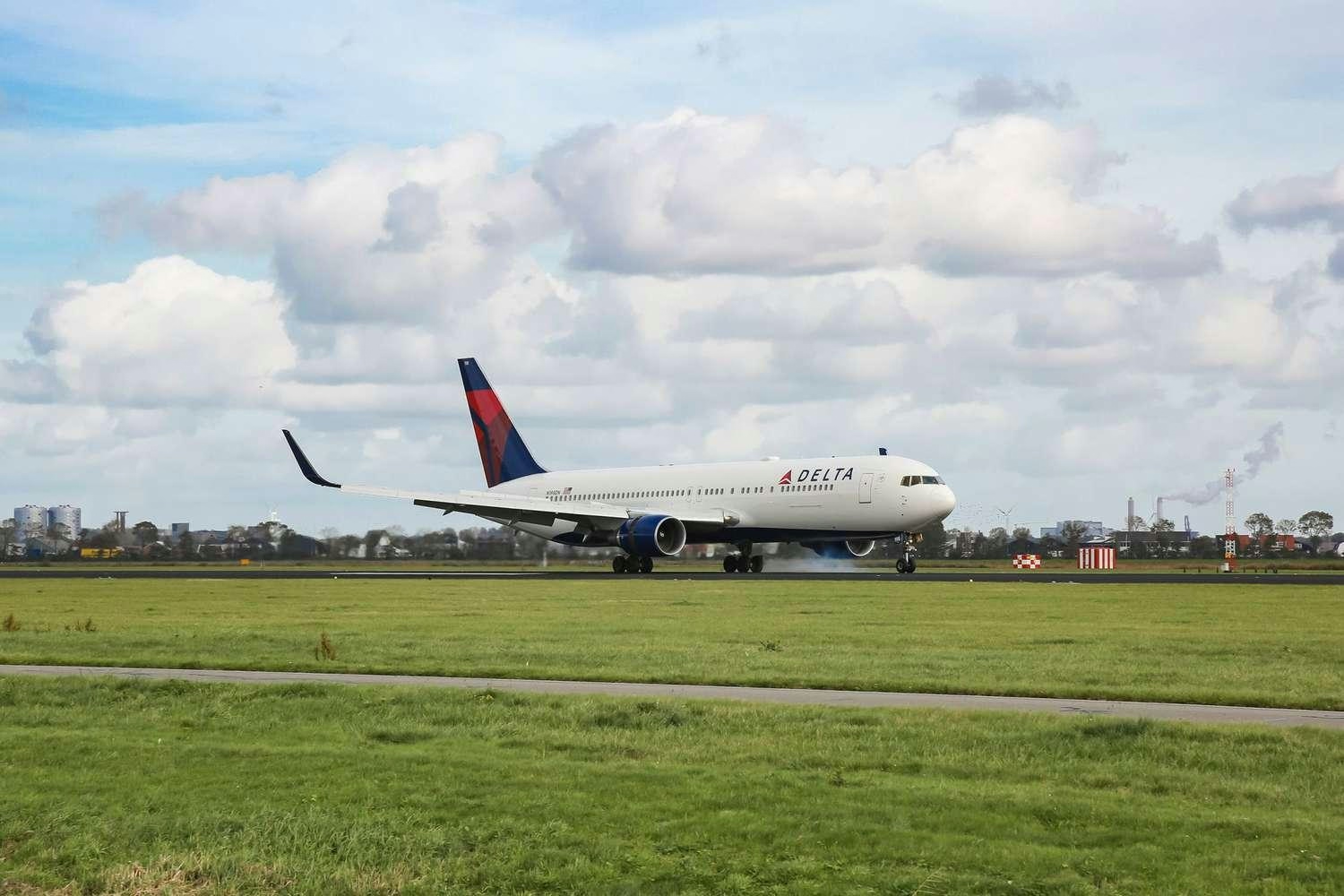
Delta Boeing 767 Returns to JFK Following Mechanical Issue
A Delta Air Lines Boeing 767, over three decades old, was compelled to return to New York’s John F. Kennedy International Airport (JFK) on Saturday, April 25, 2026, after encountering a mechanical problem shortly after takeoff. The incident has intensified scrutiny over the reliability of Delta’s aging widebody fleet and sparked debate about the continued deployment of older aircraft on international routes.
Flight Incident and Immediate Response
Delta Flight DL92, operated by a Boeing 767-300ER registered as N185DN, departed JFK at approximately 9:30 PM, destined for Berlin Brandenburg Airport (BER). Following a routine ascent from Runway 4L, the aircraft reached a cruising altitude of 33,000 feet over the Atlantic Ocean. Less than an hour into the flight, the flight crew identified a technical anomaly and, prioritizing passenger safety, elected to abort the transatlantic crossing. The pilots executed a turnaround maneuver and safely returned to JFK, landing approximately 90 minutes after departure. All 200 passengers and crew members disembarked without injury.
Delta confirmed the diversion, attributing it to a “mechanical issue.” The aircraft remains grounded in New York as maintenance teams conduct a comprehensive inspection.
Implications of an Aging Fleet
The Boeing 767 involved in the incident, N185DN, is 31 years old, ranking it among the oldest aircraft in Delta’s active fleet. While many major U.S. carriers have transitioned to newer, more fuel-efficient models for long-haul operations, Delta continues to rely heavily on the 767-300ER for certain transatlantic routes. Aviation analysts have noted an increase in technical returns and diversions involving Delta’s 767 fleet over the past 18 months, highlighting the operational challenges inherent in maintaining older aircraft.
The advanced age of these jets not only raises the probability of mechanical faults but also invites heightened regulatory scrutiny and public concern. Passengers may question the safety of flying on older planes, compelling airlines to reinforce their commitment to rigorous maintenance and safety standards. Concurrently, competitors may leverage their investment in modern fleets to attract travelers, potentially influencing market dynamics.
Delta’s Strategy and Industry Outlook
Delta has initiated the gradual introduction of newer widebody aircraft, including the Airbus A330neo and A350, yet the 767 remains integral to serving “thin” long-haul markets where passenger demand does not justify larger aircraft. The airline faces the complex task of balancing operational requirements with maintaining passenger confidence and meeting evolving market expectations.
As the aviation industry advances toward fleet modernization, incidents such as this recent diversion may intensify calls for accelerated renewal of aging aircraft. Meanwhile, Delta’s maintenance teams continue their thorough examination of the veteran 767, as the airline seeks to reassure both passengers and regulators of its unwavering commitment to safety.

Etihad Airways Suspends Airbus A380 Flights on Key Route

Aditya Birla Group Seeks Approval for Aircraft Leasing in GIFT City

Qatar Airways Highlights Innovation and Connectivity at Arabian Travel Market 2026

Hong Kong's Five-Year Plan Includes Andrew Fan's Aircraft Parts Processing Hub Proposal

ACIA Aero Leasing Delivers ATR72-600 to Air Nostrum

RTX Appoints Jill Albertelli as Head of Pratt & Whitney

TAT Technologies Joins Beyond Aero Hydrogen Aircraft Program

AURAK Study Highlights Barriers to Air Taxi Adoption in Emerging Economies

Xiamen Air Selects Altitude for 787 Maintenance at Heathrow

Etihad and Swissport Extend Global Partnership
