Bild

Erschließen Sie sich mit KI das Dreifache Ihres Umsatzes bei der Angebotserstellung!

Nehmen Sie an unserer 30-minütigen Live-Demo zur Angebotsautomatisierung teil.

Trends

Categories

Europe Faces Potential Jet Fuel Shortage in Coming Weeks
April 10, 2026By ePlane AI
Europe Faces Potential Jet Fuel Shortage in Coming Weeks
0
0
Jet Fuel Supply
Strait Of Hormuz
European Aviation

Europe Faces Potential Jet Fuel Shortage in Coming Weeks

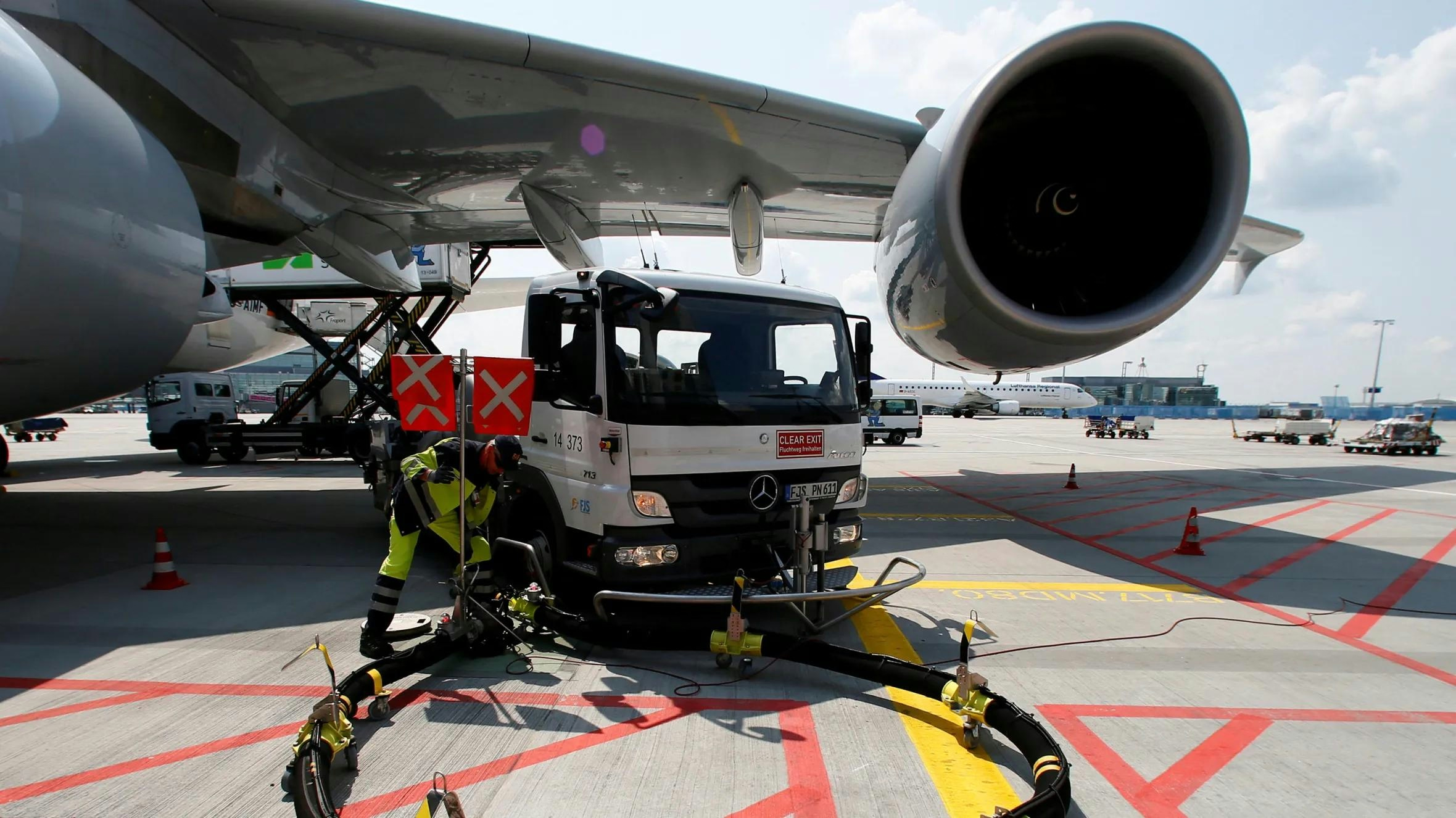
Europe is confronting the prospect of a significant jet fuel shortage in the near term, triggered by the closure of the Strait of Hormuz, a vital conduit in the continent’s aviation supply chain. This disruption is exerting unprecedented pressure across the entire network, affecting Gulf refineries, maritime shipping routes, European terminals, pipelines, and regional airports, all coinciding with the peak summer travel period.

Disruption of Supply Chains and Rising Prices

Approximately half of Europe’s jet fuel imports originate from the Persian Gulf, with 40 to 50 percent of these shipments passing through the Strait of Hormuz. Since the onset of the conflict and the effective closure of the strait, no jet fuel cargoes destined for Europe have transited this route. This has compelled traders to deplete existing reserves and urgently seek alternative supply channels from other regions. The resulting supply constraints have propelled European jet fuel prices to unprecedented levels, currently about 120 percent higher than pre-conflict prices. This sharp increase reflects tangible physical shortages rather than speculative market behavior.

Industry Warnings and Operational Challenges

Leading industry organizations, including the International Air Transport Association (IATA) and Airports Council International (ACI), have issued warnings regarding the escalating risk of jet fuel shortages. Their concerns are heightened by the surge in demand associated with the summer holiday season. Several airports have already reported precautionary flight cancellations, while airlines are vigilantly monitoring their fuel inventories to mitigate potential disruptions.

Although some analysts believe that Europe’s existing jet fuel stocks may suffice for the immediate future, there is widespread consensus on the critical need to reopen the Strait of Hormuz to avert systemic shortages. The prevailing uncertainty has compelled airlines, airports, and fuel suppliers to rapidly adjust their logistics and contingency strategies.

As the situation develops, the aviation sector faces a pivotal challenge in maintaining operational continuity. The coming weeks will be crucial in determining whether Europe can secure adequate jet fuel supplies to sustain flight operations or if travelers will encounter further disruptions during the height of the summer travel season.

More news
Air Taxi Maker Archer Reports Smaller Q1 Loss, Plans U.S. City Operations This Year

Air Taxi Maker Archer Reports Smaller Q1 Loss, Plans U.S. City Operations This Year

Archer Aviation Reports Narrower Q1 Loss and Plans U.S. City Operations Archer Aviation announced a smaller-than-expected loss for the first quarter as it prepares to launch its air taxi services in U.S. cities later this year. Following the earnings release, the company’s shares rose by more than 4% in after-hours trading, reflecting cautious investor optimism. For the quarter, Archer reported an adjusted operating loss of $172.5 million, closely aligning with Wall Street’s estimate of $173 million and within the company’s forecast range of $160 million to $180 million. The loss translated to $0.28 per share, outperforming analysts’ expectations of a $0.31 per-share loss, according to FactSet data. Archer ended the period with $1.78 billion in cash, cash equivalents, and short-term investments, marking a decline of approximately 10% from the previous quarter. Looking forward, the company anticipates a second-quarter loss between $170 million and $200 million, with the midpoint slightly above analysts’ consensus estimate of $177.7 million. Advancing Commercial Launch Amid Industry Rivalry and Regulatory Challenges Archer’s plans to initiate its Midnight air taxi operations in American cities are progressing under the White House’s eVTOL Integration Pilot Program (eIPP). The company is also preparing to serve as the Official Air Taxi Provider for the LA28 Olympic Games, coordinating closely with the U.S. Department of Transportation and the Federal Aviation Administration to facilitate regulatory approvals. Additionally, Archer recently announced a pathway to commence limited commercial operations in the United Arab Emirates, although it has not disclosed a specific timeline for this expansion. The competitive environment remains intense, with Archer’s primary rival, Joby Aviation, reporting $2.5 billion in liquidity and $24.2 million in revenue for the first quarter. Joby, however, posted a net loss of $109.9 million, largely due to substantial expenditures on certification and manufacturing as it accelerates efforts to bring its air taxi service to market. Industry tensions have heightened following Archer’s recent complaint to the U.S. International Trade Commission, alleging that Joby violated the U.S. Tariff Act of 1930 by importing aircraft components infringing on Archer’s patents. This investigation could have significant repercussions for Joby’s operations and its partnership with Delta Air Lines, which has expressed concerns about the potential impact on its collaboration with Joby. Despite Archer’s operational progress, its shares have declined by more than 13% year to date and have fallen over 50% from their peak last October. As the company approaches the commercial launch of its services, it faces considerable regulatory challenges and stiff competition within the rapidly evolving urban air mobility sector.
288 Evacuated After Fire on Turkish Airlines Airbus A330

288 Evacuated After Fire on Turkish Airlines Airbus A330

288 Evacuated After Fire on Turkish Airlines Airbus A330 in Kathmandu Turkish Airlines successfully evacuated 288 individuals following a fire that erupted on the landing gear of one of its Airbus A330-300 aircraft upon arrival at Tribhuvan International Airport in Kathmandu, Nepal. The incident occurred on the morning of May 11, 2026, as Flight TK726, arriving from Istanbul, had just landed and was taxiing when smoke and flames were detected emanating from the right landing gear. The cabin crew promptly initiated an emergency evacuation using inflatable slides, while airport firefighters responded swiftly to contain the fire. Emergency Response and Operational Impact All 277 passengers and 11 crew members disembarked safely without injury. The fire prompted Nepalese aviation authorities to temporarily suspend airport operations for approximately two hours, during which emergency teams extinguished the blaze and cleared the runway. This closure caused delays for several regional and international flights, underscoring the operational challenges faced by Kathmandu’s single-runway airport during such emergencies. Initial investigations by Turkish Airlines indicate that the fire originated from a technical malfunction involving a hydraulic pipe. Video footage circulating online showed smoke billowing from beneath the aircraft as emergency vehicles surrounded the scene. Fire crews successfully contained the fire before it could spread beyond the landing gear area. Investigation and Safety Considerations Yahya Ustun, senior vice president of Turkish Airlines, confirmed that technical inspections are currently underway and that arrangements are being made for a return flight. The airline has launched a formal investigation in accordance with international aviation safety regulations. This incident highlights the complexities airlines face following such emergencies, including potential aircraft damage, insurance considerations, and the imperative to adhere strictly to safety protocols. It may also prompt increased scrutiny from aviation authorities and raise passenger concerns regarding safety. Competitors might review their own safety procedures in response, and any significant operational disruptions could influence broader market dynamics. The Importance of Emergency Evacuation Procedures The event draws attention to the critical role of emergency evacuation protocols in commercial aviation. International standards mandate that a fully loaded aircraft must be evacuated within 90 seconds using only half of the available exits. Widebody aircraft such as the Airbus A330 are equipped with multiple inflatable slides, illuminated escape-path lighting, and robust emergency-exit systems designed to facilitate rapid evacuation. Cabin crew undergo rigorous and regular training to manage scenarios involving smoke-filled cabins and blocked exits. In emergencies involving landing gear or brake fires, pilots and crew must quickly determine whether immediate evacuation is safer than remaining onboard. Airports routinely conduct emergency response drills to ensure seamless coordination among airlines, firefighters, medical teams, and air traffic controllers. The successful evacuation in Kathmandu demonstrates the effectiveness of these procedures while emphasizing the ongoing necessity of preparedness and rapid response to safeguard passenger safety. Turkish Airlines continues to work closely with aviation authorities as technical inspections proceed to ensure full compliance with safety standards and to determine the precise cause of the fire.
Lufthansa Orders 10 Airbus and 10 Boeing Long-Haul Aircraft

Lufthansa Orders 10 Airbus and 10 Boeing Long-Haul Aircraft

Lufthansa Confirms Order for 20 New Long-Haul Aircraft from Airbus and Boeing Deutsche Lufthansa AG’s Supervisory Board has approved a significant fleet expansion, authorizing the purchase of 20 new long-haul aircraft. The order comprises ten Airbus A350-900s and ten Boeing 787-9s, with deliveries scheduled between 2032 and 2034. This acquisition forms a key part of Lufthansa’s ongoing fleet modernization strategy aimed at enhancing efficiency and sustainability. Strategic Investment in Fleet Modernization and Sustainability Carsten Spohr, Chairman of the Executive Board and CEO of Lufthansa, highlighted the strategic significance of the order, describing it as a sustainable investment in the airline’s future. He underscored the commitment to maintaining a modern fleet that prioritizes premium quality and the reduction of CO2 emissions. Spohr noted that incorporating the latest aircraft technology is essential for advancing climate-friendly air travel, positioning Lufthansa at the forefront of environmental responsibility within the aviation industry. The new Airbus and Boeing aircraft will replace older, less efficient models, including the airline’s remaining Airbus A340-600s, which are scheduled for retirement. This transition aligns with Lufthansa’s broader efforts to reduce capacity and phase out inefficient aircraft amid rising fuel prices and persistent labor challenges. These factors have compelled the airline to streamline operations and focus on cost reduction. Competitive Pressures and Operational Efficiency Lufthansa’s investment also reflects the intensifying competition within the global aviation sector. Rival carriers, such as El Al, have recently placed substantial orders for similar aircraft, with El Al acquiring six Boeing 787-9s. Industry analysts suggest that other airlines may follow suit, adopting comparable strategies to mitigate escalating operational costs. This trend is expected to foster a more dynamic and competitive market environment. The planned fleet standardization is anticipated to yield multiple operational benefits for Lufthansa. By reducing complexity, the airline aims to improve efficiency and operational stability. Additionally, the new aircraft are expected to lower maintenance and operating expenses, while generating synergies in areas such as crew licensing and spare parts management. With this latest order, the Lufthansa Group’s backlog now includes 232 new aircraft, of which 107 are next-generation long-haul jets. The precise allocation of the newly ordered aircraft across Lufthansa’s various airlines and hubs will be determined in due course.
PlaneSense Receives First PC-12 PRO Aircraft

PlaneSense Receives First PC-12 PRO Aircraft

PlaneSense Takes Delivery of First PC-12 PRO Aircraft PlaneSense, the fractional ownership specialist based in Portsmouth, has received its first PC-12 PRO aircraft, marking a pivotal step in its ongoing fleet expansion strategy. The aircraft, registered as N971AF (msn 3071), departed Pilatus Aircraft’s production facility in Buochs on May 1 and arrived in Portsmouth on May 2 after stopovers in Glasgow Prestwick, Reykjavik Domestic, Kangerlussuaq, and Goose Bay. This delivery, which occurred ahead of the initially anticipated second quarter of 2026, signals an acceleration in PlaneSense’s plans to modernize its fleet. Chief Executive George A. Antoniadis confirmed to ch-aviation that additional PC-12 PRO aircraft are scheduled for delivery throughout the year. These new additions will increase the company’s capacity incrementally rather than replace the existing PC-12 and PC-12NGX models currently in service. Strategic Context and Market Implications PlaneSense’s acquisition of the PC-12 PRO comes amid intensifying competition within the fractional ownership sector. Competitors such as Wheels Up have recently upgraded their fleets with Phenom 300 and Challenger 300 business jets, targeting clients who prioritize newer and more technologically advanced aircraft. Meanwhile, HansJet has reported strong demand for its PC-12 fractional ownership program in Europe, further heightening competitive pressures. Industry analysts suggest that PlaneSense’s early adoption of the PC-12 PRO may prompt rival operators to accelerate their own fleet modernization efforts or implement targeted marketing strategies to protect their market share. The broader business aviation market is also undergoing significant shifts, exemplified by Gulfstream Aerospace’s record first-quarter deliveries, a factor likely to influence strategic decisions across the sector. As PlaneSense integrates the PC-12 PRO into its operations, the company aims to meet evolving client expectations and strengthen its position in a rapidly changing market. The ongoing fleet expansion is expected to enhance service offerings and support sustained growth within the fractional ownership industry.
TruVideo Expands AI Video Services from Automotive to Aviation and Insurance

TruVideo Expands AI Video Services from Automotive to Aviation and Insurance

TruVideo Expands AI Video Services from Automotive to Aviation and Insurance WELLESLEY, MA – May 11, 2026 – TruVideo, a leader in AI-powered video technology within the automotive sector, is broadening its reach into the aviation and insurance industries. The company aims to apply its advanced video intelligence solutions to sectors where operational efficiency and precision are paramount. The Wellesley-based firm has introduced two new platforms: **TruVideo AOG** for aviation and **TruVideo Clarity** for insurance. Both services utilize guided, verifiable video capture through standard smartphones, allowing remote experts to access high-quality visual data. This capability facilitates faster and more accurate decision-making processes across these industries. Expanding Expertise Beyond Automotive TruVideo’s expansion reflects a growing trend of adapting specialized AI technologies across diverse sectors. In automotive service centers, video documentation has become a critical tool for repair verification and enhancing customer communication. Building on this foundation, TruVideo is now targeting aviation and insurance, industries where remote visual verification can significantly impact operational outcomes and cost savings. By entering these new markets, TruVideo positions itself as a versatile player in the expanding digital transformation landscape. The company’s core competency lies in converting raw video footage into secure, structured, and actionable insights, thereby enabling businesses to optimize their operations through enhanced data intelligence. Addressing Aviation’s Most Costly Downtime In aviation, the term “Aircraft on Ground” (AOG) denotes situations where grounded aircraft incur substantial financial losses, with costs ranging from $10,000 to $150,000 per hour. A significant portion of these expenses arises from the time required to diagnose issues and coordinate repairs. TruVideo’s **AOG** platform seeks to mitigate these costs by guiding on-site personnel through a structured video capture process of potential problems. Remote specialists can then instantly review the footage, enabling quicker troubleshooting, evidence-based decision-making, and more efficient maintenance scheduling. Emerging Challenges in AI Risk Management TruVideo’s foray into aviation and insurance also brings to light the evolving challenges associated with AI adoption. As these industries increasingly integrate AI-driven tools, concerns regarding accountability, liability, and insurability are becoming more pronounced. Existing insurance policies may not adequately cover AI-related risks, potentially exposing businesses to coverage gaps and unforeseen exclusions. Industry analysts emphasize that this regulatory and insurance ambiguity could lead to unexpected liabilities for companies embracing AI technologies. In response, insurers and competitors are expected to develop specialized AI insurance products or enhance current policies to address these emerging risks comprehensively, thereby safeguarding businesses as AI integration accelerates. A Strategic Move Amidst Industry Transformation TruVideo’s expansion highlights the rising demand for digital solutions that provide verifiable and actionable data in high-stakes environments. While the company’s technology offers the promise of streamlined operations and cost reductions, its success in aviation and insurance will depend not only on continued technical innovation but also on how these industries navigate the new risks and responsibilities introduced by AI integration.
How Aircraft Engine Leasing Has Become One of the Most Reliable Income-Generating Asset Classes in Alternative Finance

How Aircraft Engine Leasing Has Become One of the Most Reliable Income-Generating Asset Classes in Alternative Finance

How Aircraft Engine Leasing Has Become a Reliable Income-Generating Asset in Alternative Finance In the specialized realm of aviation finance, aircraft engine leasing has quietly established itself as one of the most dependable income-generating asset classes within alternative finance. While the spotlight has traditionally been on leasing entire aircraft, it is the engines—housed in maintenance facilities from Miami to Singapore to Dublin—that are driving significant growth in this sector. These engines, often valued higher than prime commercial real estate, provide consistent rental income even when grounded, making them highly attractive to investors seeking stable and resilient cash flows. Institutional Investment and Market Dynamics Over the past five years, institutional capital has increasingly flowed into engine leasing. Pension funds, which once approached aviation assets with caution, now hold substantial stakes in engine portfolios. Sovereign wealth funds from the Gulf region have made significant investments in spare-engine pools, while family offices, traditionally conservative in their approach, are backing green-time leasing platforms. The appeal lies in the predictable revenue model: leased engines generate monthly rental income under multi-year contracts, complemented by quarterly maintenance reserve payments from airlines to cover future overhauls. This financial structure has demonstrated remarkable stability, even amid industry disruptions. For instance, during the COVID-19 pandemic, while passenger aircraft remained largely grounded, cargo operators continued flying, allowing engine lessors to maintain steady payment streams and underscoring the asset class’s resilience. A distinct advantage of engine leasing is the inherent mobility of the asset. Unlike entire aircraft, which face complex certification, configuration, and registration hurdles, engines can be rapidly redeployed across different fleets and geographic regions. An engine from a Boeing 737 operating in Indonesia can be installed on another 737 in Brazil within weeks. This flexibility enables lessors to treat engines as independent financial instruments, each with its own revenue stream, residual value trajectory, and remarketing strategy. The adoption of power-by-the-hour (PBH) contracts has further enhanced the predictability of returns. Under these agreements, airlines pay a fixed rate per flight hour, effectively converting unpredictable overhaul expenses into manageable, utility-like costs. For investors, this arrangement mitigates the risk of sudden, costly maintenance events that could otherwise diminish returns. Challenges and Industry Developments Despite its strengths, the engine leasing model faces several challenges. Industry participants continue to debate whether maintenance reserves adequately reflect current inflationary pressures on parts and labor. Mispricing PBH contracts can quickly erode profit margins. Additionally, broader risks such as supply chain disruptions, regulatory changes, and volatile fuel prices can impact engine availability and operating costs. Nevertheless, the market response remains overwhelmingly positive, driven by the sector’s predictable revenue streams and relatively modest capital requirements. Competition within the sector is intensifying. Companies like AerFin are expanding their service offerings and technical capabilities, while DTX Aerospace’s recent partnership with Liebherr-Aerospace signals a trend toward integrated maintenance, repair, and overhaul (MRO) solutions. Despite ongoing geopolitical tensions and persistent supply chain challenges, the MRO sector anticipates continued growth and a stable operating environment in the near term. As legacy engines such as the CFM56 and V2500—once expected to become obsolete—continue to deliver strong returns, aircraft engine leasing has emerged as a discreet yet powerful pillar in alternative finance. It offers investors a unique combination of resilience, asset mobility, and contractual cash flow stability.
The Role of Connected Data in AI’s Success in Aviation

The Role of Connected Data in AI’s Success in Aviation

The Role of Connected Data in AI’s Success in Aviation Data Quality and the Challenge of Fragmentation Discussions surrounding artificial intelligence in aviation have traditionally focused on data quality. While ensuring clean and accurate data remains essential, a more complex and costly challenge has emerged: the fragmentation of data across isolated silos. As AI technologies are set to revolutionize various aspects of the aviation industry—from passenger booking systems to real-time disruption management—the critical question is whether the data underpinning these AI systems is truly fit for purpose. Industry analyses have highlighted the risks posed by flawed, biased, or outdated data, particularly in an environment where zero defects are imperative. Poor data quality can undermine even the most advanced AI initiatives. However, accuracy alone is insufficient. Data fragmentation presents a significant risk; even perfectly accurate schedule data can lead to erroneous AI outputs if it is incomplete or disconnected. The completeness and integration of data are as vital as its accuracy. Efforts to Overcome Data Silos and Enhance Connectivity The aviation sector is actively addressing the issue of data silos. Nearly half of airlines—46%—are currently upgrading their flight operations systems to improve consistency and connectivity across platforms. The consequences of failing to unify data are evident in the struggles of budget carriers such as Spirit Airlines, which have experienced declines in market share and profitability. These challenges underscore the broader impact on both airlines and cost-conscious travelers when data-driven decision-making is compromised. In response, many industry players are intensifying their data strategies. Approximately 83% of airlines are pursuing fleet renewal programs, while 89% of airports are prioritizing data-driven approaches to bolster operational resilience. These initiatives reflect a growing consensus that connected, high-quality data is indispensable for AI to fulfill its transformative potential. The Path Forward: Integration and Accessibility Despite these efforts, a significant gap remains in data readiness for AI adoption. Only 7% of aviation enterprises report that their data is fully prepared to support AI systems. This shortfall highlights the urgent need for data that is not only clean but also integrated and accessible. Without such connectivity, even the most sophisticated AI technologies will struggle to generate reliable and actionable insights. As the aviation industry accelerates its digital transformation, success will hinge on investments in both data quality and connectivity. The competitive advantage will belong to those organizations that can effectively link, share, and leverage data across their operations, rather than simply amassing large volumes of information.
Inside the Airbus A350F’s Cargo Door Designed to Accommodate Jet Engines

Inside the Airbus A350F’s Cargo Door Designed to Accommodate Jet Engines

Inside the Airbus A350F’s Cargo Door Designed to Accommodate Jet Engines When Airbus revealed the main deck cargo door for its new A350F freighter, the dimensions immediately captured attention: approximately 14.7 feet (4.5 meters) wide and 14.1 feet (4.3 meters) high, large enough to accommodate entire jet engines. However, the true engineering accomplishment extends beyond the door’s sheer size. The primary challenge lay in integrating such a substantial opening into a pressurized aircraft fuselage without compromising safety, structural integrity, or durability. This engineering feat is central to Airbus’s strategy to compete with Boeing in the long-haul freighter market. The A350F is engineered to carry a payload of around 245,000 pounds (111,000 kilograms), promising enhanced efficiency and reduced emissions. These benefits, however, depend heavily on the aircraft’s capacity to reliably transport oversized cargo, a mission contingent on the flawless operation of its complex cargo door through thousands of flight cycles. Engineering a Door in a Pressurized Fuselage Aircraft fuselages operate as pressurized cylinders, maintaining cabin pressure significantly higher than the external atmosphere at cruising altitudes. This pressure differential generates outward forces distributed across the fuselage structure, enabling it to bear loads efficiently with minimal weight. The skin, frames, and stringers collectively resist circumferential and longitudinal stresses, forming a lightweight yet robust shell. Introducing a garage-sized opening for the cargo door disrupts this structural equilibrium. Removing such a large section of load-bearing skin creates concentrated stresses at the door’s edges, which can lead to fatigue damage as the aircraft undergoes repeated pressurization and depressurization cycles. To mitigate these effects, Airbus engineers redesigned the load paths surrounding the door. Reinforced frames, longitudinal beams, and localized strengthening elements now redirect forces smoothly around the opening, while carefully contoured edges reduce stress concentrations. Advanced materials are integral to this solution. The A350F, derived from the A350 passenger jet, extensively employs carbon-fiber-reinforced polymer instead of traditional aluminum. This composite construction allows engineers to tailor the structure precisely, aligning fibers to carry loads efficiently and reinforcing only where necessary. Composites also offer reduced weight, enhanced fatigue resistance, and superior corrosion protection—critical advantages for aircraft subjected to high-cycle freighter operations. Challenges of Composite Structures While composites provide significant benefits, they also introduce unique complexities. Unlike aluminum, which exhibits gradual deformation before failure, composite materials are less forgiving and can suffer damage such as delamination or fiber breakage with minimal visible warning. This characteristic makes the design and integration of large structural openings, such as the A350F’s cargo door, particularly demanding. The process requires meticulous engineering and manufacturing precision to ensure safety and longevity. Market Response and Industry Implications Despite these technical challenges, the market response to the A350F has been encouraging. Air China Cargo recently confirmed additional orders, reflecting strong confidence in the aircraft’s capabilities and the reliability of its innovative cargo door. Concurrently, the competitive landscape is evolving, with companies like ITP Aero expanding their roles in the geared turbofan (GTF) aftermarket to support new-generation aircraft such as the A350F. This development highlights the broader industry effort to enhance support and operational capabilities for advanced freighters entering service. The success of the A350F—and its ability to safely and efficiently transport oversized cargo—ultimately depends on the seamless integration of cutting-edge materials, structural innovation, and precise engineering, all exemplified by its remarkable cargo door.
Delta Marks Earth Month with Innovation Initiatives

Delta Marks Earth Month with Innovation Initiatives

Delta Marks Earth Month with Innovation Initiatives Delta Air Lines is concluding Earth Month by showcasing a range of technological advancements aimed at reducing its carbon footprint and reshaping the travel experience. While Earth Month serves as a platform to highlight environmental progress, Delta stresses that its dedication to sustainability is continuous, focusing on the aircraft it operates, the manner in which it flies, and the fuels it employs. Advancements in Fleet Efficiency: VCT Finlets Installation In a significant move to enhance fuel efficiency, Delta has completed the installation of Vortex Control Technologies (VCT) finlets across its entire fleet of Boeing 737-800 and 737-900ER aircraft, encompassing 240 planes. This initiative is intended to lower fuel consumption and carbon emissions while improving operational efficiency—an imperative amid persistent fuel supply challenges. The decision followed comprehensive in-service evaluations, including flight testing and computational fluid dynamics analyses. By investing in proven technologies such as VCT finlets, Delta demonstrates its commitment to achieving tangible environmental and operational gains without compromising safety, reliability, or customer experience. Digital Twin Technology Enhances Operations at Atlanta Hub Delta has introduced an innovative digital twin of its Atlanta hub, developed in collaboration with the Aerospace Systems Design Laboratory at Georgia Tech. This virtual model replicates a full day of airport operations under various conditions, allowing teams to optimize decision-making and evaluate the impact of operational choices on fuel consumption before aircraft depart the gate. The technology offers substantial benefits, including significant fuel savings given that dual-engine taxiing consumes approximately three gallons of fuel per minute. With nearly 1,000 daily flights at Atlanta, even modest efficiency improvements can lead to considerable reductions in fuel use. Additionally, the digital twin enhances operational resilience by enabling teams to simulate recovery strategies during irregular operations, thereby improving reliability amid disruptions. These advancements not only support Delta’s sustainability objectives but also improve the customer experience by reducing taxi times and facilitating smoother recovery during adverse weather events. Building on the success in Atlanta, Delta plans to extend this technology to its operations at JFK Airport, one of the world’s most complex ramp environments. Air Taxi Ambitions Amid Industry Challenges Delta’s collaboration with Joby Aviation, initiated in 2023 through its Sustainable Skies Lab, seeks to transform airport access by introducing electric air taxis. However, this initiative faces uncertainty due to an ongoing U.S. Trade Commission investigation that threatens to disrupt the partnership and potentially hinder Delta’s air taxi ambitions. These challenges arise as the airline industry’s commitment to achieving net-zero emissions by 2050 encounters growing scrutiny. Delta has recently withdrawn a key climate target and moderated another, signaling a retreat from some of its more ambitious environmental goals. This shift underscores the complex dynamics between innovation, regulatory pressures, and market forces as Delta navigates its evolving sustainability strategy. Looking Ahead Despite these obstacles, Delta continues to invest in technologies and operational enhancements that deliver both environmental benefits and improved customer experiences. The airline’s approach reflects the broader challenges and opportunities confronting the aviation sector as it strives to balance innovation, regulatory compliance, and shifting climate commitments.
EUROCONTROL Enhances Air Traffic Systems to Integrate AI

EUROCONTROL Enhances Air Traffic Systems to Integrate AI

EUROCONTROL Enhances Air Traffic Systems to Integrate AI Modernizing Europe’s Air Traffic Infrastructure EUROCONTROL, the agency responsible for coordinating air traffic across 42 European states, has embarked on a significant digital modernization initiative to overhaul its aging infrastructure. In collaboration with Red Hat, EUROCONTROL plans to replace its 25-year-old technology backbone with a state-of-the-art, cloud-enabled platform. This new system is designed to support real-time data analysis and facilitate the future integration of artificial intelligence (AI) tools, marking a pivotal step toward modernizing Europe’s air traffic management. Antonio Licu, Head of Technology Division at EUROCONTROL, emphasized the benefits of this transition, stating that leveraging cloud technology for mission-critical systems will enhance the network’s capacity to safely and efficiently scale operations in response to fluctuating air traffic volumes. Addressing the Challenges of Increasing Air Traffic Europe’s air traffic management is confronting growing complexity as flight volumes continue to rise. EUROCONTROL managed 11.12 million flights in 2025 and projects this figure to reach 12.4 million by 2031. This surge places considerable strain on legacy systems, which must process extensive operational, routing, and network data in real time. By adopting Red Hat’s OpenShift platform, EUROCONTROL aims to consolidate fragmented data streams into a unified management environment. This integration is expected to serve as a foundation for advanced automation, operational analytics, and AI-assisted tools. Leonard Bodmer, vice president at Red Hat, highlighted the collaboration as a demonstration of how open hybrid cloud solutions can transform critical infrastructure while maintaining full control over the technology stack. Operational Advantages of the Cloud-Based Platform The transition to a hybrid cloud infrastructure offers several key operational improvements. EUROCONTROL anticipates enhanced scalability, allowing air traffic operations to expand or contract dynamically in response to real-time traffic conditions across European airspace. The platform will enable immediate data analysis, replacing processes that previously required days to complete. Furthermore, the integration of AI and machine learning tools is expected to optimize flight paths, potentially improving fuel efficiency and reducing environmental impact. The modernization effort also involves replacing outdated legacy systems, including NOTAM and aeronautical data platforms, thereby improving overall system resilience. The hybrid cloud infrastructure is designed to bolster operational continuity during disruptions or periods of high traffic demand. Industry Challenges and Perspectives on AI Integration Despite the promising outlook, EUROCONTROL and the wider aviation sector face significant challenges in integrating AI into existing air traffic management systems. Technical complexities, cybersecurity concerns, and the substantial financial investment—estimated to reach up to $10 billion for AI software—pose considerable hurdles. There remains industry skepticism regarding the role of AI, particularly fears that it might supplant human air traffic controllers. Transportation Secretary Sean Duffy has clarified that AI is intended to function as an assistive tool, complementing rather than replacing human expertise. Meanwhile, competition in the global air traffic management market is intensifying. Companies such as Palantir, Thales, and Air Space Intelligence are actively competing for major contracts, including the FAA’s SMART AI system, each proposing distinct approaches to government AI procurement. As EUROCONTROL advances its modernization program, the agency is focused on balancing technological innovation with operational safety and resilience, ensuring that Europe’s airspace remains efficient and secure amid increasing demand and rapid technological evolution.
line










