Bild

AeroGenie — Ihr intelligenter Copilot.

Fragen Sie alles. Analysieren Sie alles. Handeln Sie sofort.

Trends

Categories

Fifteen Emerging Technologies Transforming Aviation
January 21, 2026By ePlane AI
Fifteen Emerging Technologies Transforming Aviation
0
0
Emerging Technologies
Aviation Innovation
Sustainable Aviation

Fifteen Emerging Technologies Transforming Aviation

The global aviation industry is undergoing a significant transformation driven by a suite of emerging technologies that are reshaping the design, construction, and operation of aircraft. Faced with increasing demands to enhance efficiency, reduce costs, and lower carbon emissions, manufacturers and airlines are embracing innovations that promise safer, cleaner, and more intelligent air travel.

Modern aircraft have evolved into complex digital ecosystems, integrating advanced materials, artificial intelligence, data analytics, and novel propulsion systems. These technologies not only improve operational performance and passenger comfort but also contribute to minimizing environmental impact. Furthermore, they are influencing airline business models, reflecting broader global priorities such as climate action, energy efficiency, and digital transformation.

Key Technologies Shaping Aviation’s Future

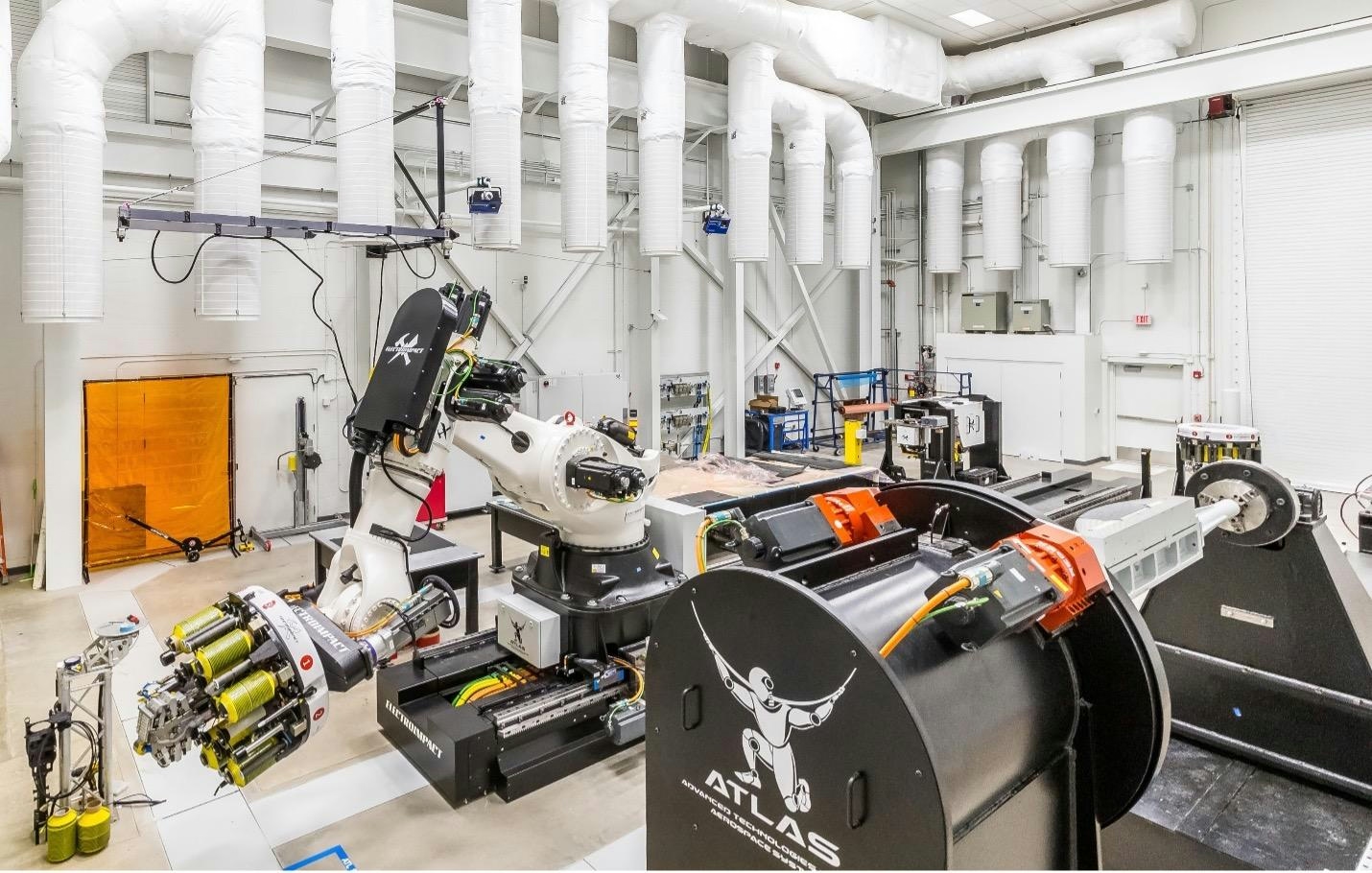
One of the most transformative developments is the use of advanced composite materials, particularly carbon-fibre-reinforced polymers. These materials are increasingly replacing traditional aluminum alloys in critical aircraft components such as fuselages, wings, and tails. Composites offer superior strength-to-weight ratios, enhanced resistance to corrosion and fatigue, and contribute to reduced fuel consumption, extended range, and lower operating costs. Aircraft models like the Boeing 787 Dreamliner and Airbus A350 exemplify this shift, with composites also significantly decreasing long-term maintenance requirements.

Another pivotal innovation is the transition toward more-electric aircraft systems. Modern designs are moving away from hydraulic and pneumatic mechanisms in favor of electrically powered alternatives for functions including brakes, wing actuators, and cabin pressurization. This electrification reduces mechanical complexity and weight, while enhancing energy efficiency and system reliability. It also lays the groundwork for future hybrid-electric propulsion technologies, which are expected to further reduce fuel consumption.

Sustainable Aviation Fuels (SAF) represent a critical component in the industry’s decarbonization strategy. Derived from renewable sources such as waste oils and agricultural residues, SAF can reduce lifecycle carbon emissions by up to 80% compared to conventional jet fuel. Increasingly, modern engines are certified to operate on higher blends of SAF, allowing airlines to lower emissions using existing fleets as new technologies continue to develop. As production capacity expands and costs decline, SAF is anticipated to become central to achieving aviation’s environmental targets.

Navigating Challenges Amid Transformation

Despite the promise of these technologies, their widespread adoption faces several challenges. Operational disruptions, particularly those linked to supply chain constraints, have become more frequent, complicating the integration of new systems and materials. Additionally, global market volatility—exacerbated by factors such as shifts in U.S. Federal Reserve policies—introduces uncertainty that may affect investment decisions and the pace of technological adoption.

The competitive landscape within aviation is also evolving. Private and business aviation sectors are encountering operational difficulties that necessitate greater flexibility and cost efficiency. These pressures are likely to influence how airlines and manufacturers approach technological innovation. In this context, collaboration among governments, regulatory bodies, manufacturers, and airlines is essential to ensure that advancements align with overarching goals of safety, affordability, and sustainability.

Aviation stands at the cusp of a new era where technology plays a role as critical as aerodynamics. The integration of advanced materials, electrification, and sustainable fuels is setting the foundation for a future characterized by enhanced efficiency and environmental stewardship. However, realizing this vision will require careful navigation of complex operational, economic, and competitive challenges as the industry moves toward a more sustainable trajectory.

More news
Turnaround Time Consistency to Shape MRO Competitiveness in 2026

Turnaround Time Consistency to Shape MRO Competitiveness in 2026

Turnaround Time Consistency to Shape MRO Competitiveness in 2026 Suresh Iyer, Founder and CEO of Impresa Corp, brings over thirty years of leadership experience across aerospace, defence, logistics, and digital manufacturing. As a pioneer in maintenance, repair, and overhaul (MRO) and digital twin technologies, Iyer has played a pivotal role in helping MRO providers reduce turnaround time (TAT), enhance regulatory compliance, and improve profit margins. However, as the aviation industry looks toward 2026, the emphasis on speed is giving way to a more critical priority: consistency. The Growing Importance of Predictability in MRO Operations For airline operations leaders, the primary concern is no longer a single extended maintenance event but the unpredictability of aircraft redelivery dates. When an aircraft expected back on a Tuesday returns only on Friday, it disrupts crew scheduling, triggers a cascade of timetable adjustments, and incurs unforeseen costs. Such disruptions are becoming increasingly common as demand for MRO services grows faster than available capacity, compounded by aging fleets that require more complex and time-intensive maintenance checks. The structural challenges confronting the MRO sector are intensifying. Global commercial fleets continue to expand, with narrowbody aircraft operating at high utilization rates. The average age of in-service fleets now exceeds 11 years, pushing more aircraft into heavy maintenance cycles that demand intricate coordination of labour, parts, tooling, and regulatory compliance. Despite this growing workload, capacity has not kept pace. Acute workforce shortages persist, with industry estimates projecting a need for tens of thousands of additional technicians by the end of the decade. The certification process remains lengthy, training is resource-intensive, and experienced personnel are increasingly difficult to replace. Supply Chain Constraints and Their Impact on Turnaround Times Supply chain disruptions further complicate the MRO landscape. Although some improvements have been made, bottlenecks persist, particularly for rotable components and specialised materials. The scarcity of legacy engine parts adds another layer of complexity, making it more challenging for MRO providers to meet delivery commitments. Airlines and lessors have little tolerance for unpredictability, as delayed maintenance can lead to flight cancellations, wet-lease expenses, crew reassignments, and widespread network disruptions. For lessors, delays interfere with aircraft transitions, complicate remarketing efforts, and negatively affect asset utilisation and valuation. Average turnaround time figures, frequently cited in reports and proposals, can be misleading. Two MRO providers may advertise identical average TATs yet deliver vastly different customer experiences. One may consistently meet committed deadlines, enabling predictable planning and stable economics, while the other may introduce volatility that forces customers to build in buffers, absorb delays, and manage ongoing uncertainty. As operational pressures intensify, this distinction is becoming a decisive factor in competitive positioning. Strategies to Enhance Consistency and Reliability In response to these challenges, MRO providers are increasingly investing in advanced technologies and workforce training aimed at improving consistency and reliability. Strategic partnerships and collaborations are also being formed to bolster supply chain resilience and operational efficiency. In a market where demand outstrips capacity and operational margins are under pressure, the ability to deliver not only speed but also predictable and repeatable turnaround times will be the defining characteristic of MRO competitiveness in 2026.
Electric air taxis: Paris’ future in the skies and what it means for luxury travel

Electric air taxis: Paris’ future in the skies and what it means for luxury travel

Electric Air Taxis: Paris’ Future in the Skies and What It Means for Luxury Travel Although electric air taxi services did not make their anticipated debut at the Paris 2024 Olympics, the vision of urban air mobility remains a significant element in shaping the city’s transportation future. Parisian authorities and developers had aimed to showcase electric vertical take-off and landing (eVTOL) aircraft—commonly referred to as “air taxis”—during the Games, offering a glimpse of a cleaner, faster, and more exclusive mode of urban transport. While these plans were postponed, ongoing development efforts indicate that Paris continues to position itself at the forefront of next-generation mobility, with a potential commercial launch now targeted for 2026. Delays in Olympic Debut: Regulatory and Technical Challenges The absence of air taxis during the Olympics resulted from a combination of regulatory, technical, and operational challenges. Securing certification from both the European Union Aviation Safety Agency (EASA) and the French Directorate General for Civil Aviation (DGAC) proved more time-consuming than initially expected, delaying the commercial rollout. Developers also encountered unresolved issues related to battery performance, motor reliability, and overall operational safety—critical factors for gaining public trust and regulatory approval. In addition to these technical hurdles, concerns were raised by local officials and residents regarding environmental impact, noise pollution, and the integration of air taxis into Paris’s dense urban environment. Although vertiport infrastructure, including a floating platform on the Seine, was prepared, the full-scale commercial operation of air taxis could not be safely or reliably launched during the Olympic Games. The Path Forward: Opportunities Amidst Ongoing Challenges Despite the missed opportunity to debut at the Olympics, Paris continues to invest heavily in electric air mobility. Vertiports are operational, and test flights are ongoing, positioning the city as a global leader in urban air transport innovation. However, significant challenges remain. Regulatory hurdles must be fully addressed before commercial services can commence, and market skepticism—particularly among luxury travelers, a key target demographic—persists until air taxis demonstrate proven safety, reliability, and seamless integration with existing travel networks. Furthermore, Paris faces increasing competition as other cities and companies accelerate their own urban air mobility projects. In this rapidly evolving market, exclusivity and innovation will be crucial differentiators for Paris to maintain its competitive edge. Implications for Luxury Tourism Electric air taxis hold considerable promise for the luxury travel sector. They offer the potential for faster, quieter transfers, enabling premium guests to enjoy swift, stress-free connections between airports, hotels, and regional destinations while avoiding road congestion. Moreover, these services are likely to appeal to affluent travelers seeking unique and cutting-edge transportation experiences as part of bespoke travel itineraries. As Paris continues to refine its approach to electric air taxis, the city’s embrace of this technology could redefine luxury mobility. However, the realization of this vision depends on overcoming the regulatory, technical, and market challenges that currently stand in the way. The coming years will be decisive in determining whether the French capital’s skies become a new frontier for high-end travel or remain an aspirational concept.
Cavorite X7 Hybrid-Electric eVTOL Introduces Split-Wing Design to Enhance Takeoff and Speed

Cavorite X7 Hybrid-Electric eVTOL Introduces Split-Wing Design to Enhance Takeoff and Speed

Cavorite X7 Hybrid-Electric eVTOL Introduces Split-Wing Design to Enhance Takeoff and Speed Innovative Design and Technical Advancements The Cavorite X7, a hybrid-electric eVTOL developed by Horizon Aircraft, is attracting significant attention in the regional air mobility sector due to its pioneering split-wing design. This unique configuration allows the aircraft’s wings to slide open during takeoff, exposing twelve battery-powered electric fans—five embedded in each main wing and one in each forward canard. These fans provide vertical lift, enabling the X7 to operate from compact pads or helipads. Once airborne, the wing panels close smoothly over the fans, and propulsion transitions to a rear gas-powered propeller, facilitating efficient wing-borne flight. Recent enhancements to the X7 include the standardization of fan sizes, which improves operational smoothness and simplifies maintenance. Each fan is equipped with dual motors to ensure redundancy in the event of a failure. Aerodynamic refinements to the canards and tail surfaces have reduced drag, thereby increasing stability and efficiency during extended flights. Passenger comfort has also been addressed, with an expanded cabin space and larger windows offering a more spacious and panoramic environment. Performance and Operational Capabilities The X7 boasts a cruising speed of 280 miles per hour and a range of approximately 500 miles, inclusive of reserves. It accommodates one pilot and six passengers or can carry up to 680 kilograms of useful load in vertical flight mode. Its forward-swept wings contribute to improved low-speed handling and facilitate a seamless transition from hover to cruise flight. The hybrid propulsion system combines electric power for vertical lift with a gas turbine for forward flight, extending the aircraft’s range beyond that of purely battery-powered eVTOLs while simultaneously reducing fuel consumption. A near-production prototype successfully demonstrated the transition from hover to wing-borne flight in 2025, marking a significant milestone for fan-in-wing technology. Construction of the full-scale model is currently underway, with ground testing scheduled for 2027. Horizon Aircraft has prioritized safety by incorporating multiple redundancies and deliberately avoiding the complex tilting mechanisms common in other eVTOL designs. Market Prospects and Challenges Designed for demanding missions such as medical evacuations and cargo transport to remote locations, the X7’s ability to land on small, unprepared sites and reach destinations rapidly offers distinct advantages over many existing helicopters and electric aircraft. However, the path to commercial deployment remains challenging. The innovative split-wing design and advanced hybrid propulsion system must undergo rigorous regulatory approval and safety certification processes. Integrating these novel technologies within existing aviation frameworks will require close collaboration with regulatory authorities. Market reception has been mixed, with some traditional aviation stakeholders expressing skepticism toward emerging eVTOL entrants. Established competitors, including Bombardier and Textron Aviation, continue to expand their business and defense portfolios, while industry leaders such as Embraer and Boeing are intensifying research and development efforts and forging strategic partnerships to maintain their competitive positions. As testing advances, the Cavorite X7 aspires to establish a new benchmark for practical vertical flight. Its ultimate success will depend on overcoming regulatory hurdles and securing acceptance within a highly competitive and rapidly evolving aviation landscape.
Joby Aviation's Commitment to Safety in Electric Air Taxis

Joby Aviation's Commitment to Safety in Electric Air Taxis

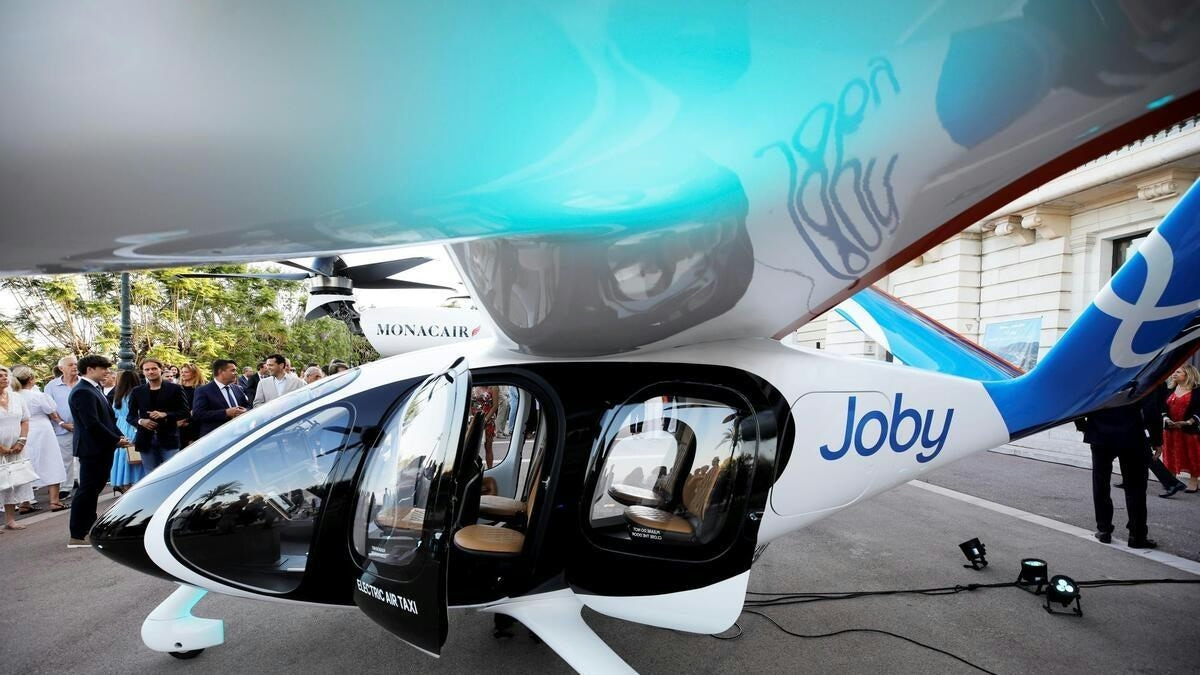
Joby Aviation's Commitment to Safety in Electric Air Taxis Prioritizing Safety in Urban Air Mobility Joby Aviation, a frontrunner in the development of electric vertical takeoff and landing (eVTOL) aircraft, has firmly positioned safety as the cornerstone of its mission to transform urban air mobility. The company maintains that every facet of its operations is governed by a fundamental principle: safety above all else. As aviation technology advances, Joby insists that these innovations must adhere to safety standards that surpass those of traditional aircraft. To realize this vision, Joby has implemented a proactive and collaborative safety framework, encompassing guiding principles, processes, and systems that are subject to continuous refinement. The company underscores that safety is a collective responsibility shared across all organizational levels. Employees are encouraged to report unsafe conditions or behaviors through a voluntary and confidential reporting system. Importantly, Joby assures that no disciplinary measures will be taken against those who raise safety concerns, except in instances involving illegal activities, deliberate regulatory breaches, or willful neglect of safety protocols. Workforce Training and Supplier Standards Joby is committed to equipping its workforce with the expertise necessary to oversee safety effectively. All safety-related data is rigorously protected and leveraged to drive ongoing improvements. Furthermore, the company mandates that all external suppliers comply with stringent safety requirements, ensuring that safety standards are maintained throughout the supply chain. Navigating Industry Challenges and Regulatory Hurdles Despite its robust safety framework, Joby faces considerable challenges amid a rapidly evolving industry landscape. The company is navigating complex regulatory processes to secure approval for commercial eVTOL operations within FAA-controlled airspace. Competition is intensifying, notably from Archer Aviation, which has engaged Joby in legal disputes over trade secrets while advancing its own plans to launch eVTOL air taxi services in the United Kingdom by 2029. Market anticipation is mounting as Joby prepares for the inaugural eVTOL air taxi flight in regulated U.S. airspace. The company has announced ambitious plans to double its production capacity, targeting the manufacture of four aircraft per month by 2027. This expansion signals growing confidence in the sector, although the industry continues to confront challenges related to affordability and broad public accessibility. Initial demand for air taxi services is expected to be driven primarily by high-net-worth individuals, with widespread adoption projected as a longer-term objective. Leadership and Safety Culture Throughout these developments, Joby’s leadership remains steadfast in its commitment to safety as the foundation of all operations. JoeBen Bevirt, Chief Executive Officer of Joby Aviation, emphasized that “all activities are conducted with safety as the first consideration.” The company’s ongoing efforts to cultivate a just culture and prioritize continuous improvement highlight its determination to establish new safety benchmarks in the emerging electric air taxi market.
Morocco Advances Aviation Sector with Euroairlines Investment in Infrastructure and AI

Morocco Advances Aviation Sector with Euroairlines Investment in Infrastructure and AI

Morocco Advances Aviation Sector with Euroairlines Investment in Infrastructure and AI Morocco is intensifying its efforts to establish itself as a premier aviation hub in the region through substantial investments in airport infrastructure and advanced technologies. Central to this ambition is the Airports 2030 strategy, which envisions accommodating 95 million passengers by 2035. This plan involves the modernization and expansion of airport facilities, the introduction of new domestic and international routes, and the enhancement of passenger services. An initial investment of MAD 38 billion (approximately $3.8 billion) is earmarked to lay the foundation for sustained growth, aiming to improve connectivity and reduce travel costs for Moroccan citizens. Euroairlines’ Role in Morocco’s Aviation Transformation Spanish aviation distribution specialist Euroairlines is playing a critical role in Morocco’s evolving aviation landscape. Drawing on its expertise in travel and service distribution, Euroairlines is partnering with local entities to streamline operations and broaden market access. The company’s involvement is expected to support the rising demand for air travel and contribute to the modernization of airport operations, thereby facilitating Morocco’s broader aviation ambitions. Airports 2030: Enhancing Global Connectivity The Airports 2030 initiative forms a key pillar of Morocco’s economic development strategy, focusing on upgrading airport infrastructure to meet increasing passenger volumes and shifting travel dynamics. Planned developments include the construction of new terminals at major international airports and the enhancement of air traffic control systems. These improvements are designed to position Moroccan airports as efficient, globally connected gateways capable of managing the anticipated surge in post-pandemic travel and bolstering the country’s tourism industry. Integrating Artificial Intelligence to Boost Competitiveness In response to intensifying global competition in the aviation sector, Morocco is adopting artificial intelligence (AI) technologies across its aviation industry. AI applications are being deployed to optimize pricing strategies, streamline booking processes, and manage passenger flows more effectively. These innovations aim to increase operational efficiency, reduce delays, and enhance the overall customer experience. Euroairlines is actively supporting the integration of AI solutions, which are expected to strengthen the competitiveness of local airlines and accommodate the growing demand driven by tourism. Challenges Facing Morocco’s Aviation Sector Despite these promising developments, Morocco’s aviation sector confronts several challenges. Global uncertainties, particularly in markets such as Latin America and the Caribbean, complicate forecasting and investment decisions. Airlines worldwide face extended waiting periods for new aircraft deliveries, which constrain expansion plans. The private aviation sector is also grappling with operational difficulties, with taxation projected to become a significant cost factor by 2026. Furthermore, supply chain disruptions, tariffs, and embargoes pose risks to the consistent availability of aviation components. Competition is intensifying as other nations, notably Turkey, invest strategically in digital infrastructure and data centers to enhance connectivity and establish themselves as vital digital corridors between Europe and the Middle East. Morocco’s emphasis on digital transformation and AI integration is therefore essential to maintaining its competitive position in this rapidly evolving environment. Outlook With substantial investment, strategic partnerships, and a strong commitment to technological innovation, Morocco is well-positioned to reinforce its status as a regional aviation leader. However, successfully navigating global uncertainties and industry challenges will be crucial to fully realizing the ambitious goals set forth in the Airports 2030 vision.
Amazon Prime Air Airbus A330 Makes Emergency Landing in Cincinnati After Bird Strike Causes Engine Fire

Amazon Prime Air Airbus A330 Makes Emergency Landing in Cincinnati After Bird Strike Causes Engine Fire

Amazon Prime Air Airbus A330 Makes Emergency Landing in Cincinnati After Bird Strike Causes Engine Fire Incident Overview and Flight Details On Wednesday, January 28, 2026, an Amazon Prime Air Airbus A330-300 freighter was compelled to execute an emergency landing shortly after takeoff from Cincinnati/Northern Kentucky International Airport (CVG). Flight AS-2616, operated by an Amazon air carrier partner and destined for Houston’s George Bush Intercontinental Airport (IAH), departed CVG at 3:05 p.m. local time. The aircraft, registered as N5827K, ascended normally until reaching approximately 3,000 feet when the crew reported a significant bird strike involving the No. 1 (left) engine. The ingestion of the bird caused the engine to lose power and subsequently catch fire, filling the cockpit with smoke. Air traffic control (ATC) communications captured the urgency of the situation as the pilots calmly declared an emergency, requesting immediate return to the airport. Within eight minutes of departure, the aircraft completed a rapid left turn and safely landed back at CVG at 3:13 p.m., where it was met by a substantial response from Crash Fire Rescue (CFR) units. Emergency Response and Crew Safety Measures Upon landing, the flight crew halted the aircraft on the runway, expressing concern over the structural integrity of the damaged engine and the potential for fire or toxic fumes to spread. Rather than initiate a slide evacuation, the pilots requested extraction via ladder, specifying the right side door to avoid the fire on the left. CFR teams confirmed that although flames were visible during the aircraft’s approach, onboard fire suppression systems and the engine shutdown had effectively contained the fire by the time the plane came to a stop. The aircraft was subsequently towed to Amazon’s Global Air Hub at CVG for a thorough inspection. No injuries were reported among the crew or ground personnel. An FAA spokesperson confirmed the safe outcome, and Amazon issued a statement emphasizing that the aircraft returned as a precaution and is currently undergoing inspection. Industry Implications and Safety Considerations This incident highlights the persistent risks bird strikes pose to cargo operations at major airports. It underscores the critical importance of rigorous engine testing and certification to withstand such events, a challenge recently addressed through successful PD-8 engine trials at the Saturn facility. As the air cargo industry continues to evolve, this event may prompt heightened scrutiny of both conventional aircraft and emerging technologies, including Amazon Prime Air’s drone delivery systems. Safety concerns arising from such incidents could delay the deployment of drone fleets, while competitors may accelerate their own technological advancements to maintain market competitiveness. Meanwhile, traditional airlines such as Delta are reaffirming their commitment to widebody aircraft, as evidenced by recent orders for Airbus A330s and A350s, signaling a continued reliance on established air freight solutions amid ongoing safety challenges.
MQ-25 Stingray Begins Taxi Tests

MQ-25 Stingray Begins Taxi Tests

MQ-25 Stingray Completes Initial Taxi Tests, Advancing Toward U.S. Navy Deployment The U.S. Navy’s MQ-25 Stingray, its first production-representative unmanned aerial refueling tanker, has successfully completed its initial low-speed taxi test. Conducted at Boeing’s facility at MidAmerica Airport near St. Louis, Missouri, this milestone represents a crucial step forward in the program’s development. The test paves the way for the drone’s anticipated first flight, now scheduled for early this year following a delay from the Navy’s original target of late 2025. Testing and Operational Validation The taxi test involved Navy personnel from Air Test and Evaluation Squadron 23 (VX-23) and the uncrewed systems-focused Squadron 24 (UX-24). Air Vehicle Pilots remotely controlled the MQ-25 as it autonomously taxied and performed a series of maneuvers designed to validate its ground handling capabilities and system functionality. Taxi testing, which requires the aircraft to move under its own power on the runway, is a vital precursor to flight, ensuring safety and operational readiness. Although the exact date of the test was not disclosed, Boeing had announced the commencement of ground testing for the production-representative MQ-25 last summer. The program has benefited from extensive prior testing with the T1 demonstrator, a prototype that, while valuable, does not fully represent the production-standard aircraft. Design Features and Program Evolution Boeing released footage highlighting the MQ-25’s distinctive design elements, including its top-mounted ‘flush’ air inlet and inset engine exhaust. These features suggest some low observable characteristics, although stealth is not the primary focus of the program. The MQ-25’s design draws on concepts from the Navy’s earlier Unmanned Carrier Launched Airborne Surveillance and Strike (UCLASS) program, which aimed to develop a stealthy, carrier-based drone capable of strike and intelligence missions. However, the Navy ultimately redirected its efforts toward the MQ-25’s role as an uncrewed aerial refueling tanker. Challenges and Industry Impact As the MQ-25 progresses toward its first flight, several challenges remain. Integrating the drone into existing aircraft carrier operations will require meticulous coordination to ensure safety and reliability, particularly during autonomous taxiing and refueling procedures. Additionally, technical challenges related to the drone’s autonomous systems and refueling capabilities must be resolved to meet operational standards. The MQ-25’s advancement has attracted significant attention within the defense sector. Market interest in competing drone systems, such as those developed by Lockheed Martin, has increased, potentially influencing future defense spending priorities. Other industry players, including General Atomics Aeronautical Systems, continue to develop their own unmanned aerial vehicles like the MQ-9B and MQ-20 Avenger, reflecting a broader shift toward autonomous military aviation platforms. With the successful completion of its taxi test, the MQ-25 Stingray moves closer to becoming the first operational carrier-based uncrewed tanker, a development that promises to reshape naval aviation and the integration of unmanned systems.
Archer Aviation vs. EHang: Who Has the Edge in Future Air Mobility?

Archer Aviation vs. EHang: Who Has the Edge in Future Air Mobility?

Archer Aviation vs. EHang: Who Has the Edge in Future Air Mobility? The burgeoning electric vertical takeoff and landing (eVTOL) industry is rapidly evolving, driven by increasing demand for cleaner and more efficient urban transportation. At the forefront of this transformation are two prominent companies: Archer Aviation, based in the United States, and China’s EHang Holdings. Each pursues distinct strategies aimed at revolutionizing city travel by alleviating congestion and reducing commute times. Archer Aviation’s Strategic Advances and Challenges Archer Aviation is progressing steadily toward Federal Aviation Administration (FAA) approval for its Midnight aircraft, with ambitions to launch commercial air taxi services across the United States. The company has secured a prominent role as the official air taxi provider for the 2028 Los Angeles Olympics, underscoring its position as a key player in the future air mobility sector. Archer’s vision centers on offering short, competitively priced flights designed to transform urban commuting. Its Hawthorne Airport facility in Los Angeles serves as both an operational hub and a testing ground for artificial intelligence-driven aviation technologies. In January 2026, Archer announced plans to integrate next-generation AI capabilities through the NVIDIA IGX Thor platform. This initiative aims to enhance aircraft safety, improve airspace integration, and develop autonomy-ready systems. On the international front, Archer has expanded its footprint through a strategic partnership with the Government of Serbia, which has designated Archer as its preferred eVTOL partner. Serbia may acquire up to 25 Midnight aircraft, subject to regulatory approval, marking a significant step in Archer’s efforts to penetrate the European urban air mobility market. Despite these promising developments, Archer faces notable obstacles. Community concerns in Los Angeles have emerged regarding noise pollution, low-flying aircraft, and a perceived lack of public engagement. These issues highlight the challenges of securing public acceptance, which could influence the pace and scope of urban air taxi service deployment. EHang’s Autonomous Approach and Global Expansion In contrast, EHang is concentrating on fully autonomous, pilotless eVTOL aircraft and has achieved a regulatory milestone by becoming the first company to receive type certification for an autonomous eVTOL from China’s aviation authority. This early regulatory endorsement positions EHang to accelerate commercial operations within China and internationally. EHang is also pursuing global expansion. In January 2026, it signed a Memorandum of Understanding with Spain’s Real Automóvil Club de España to explore collaborative initiatives in advanced air mobility and next-generation mobility services. The company’s EH216 series pilotless eVTOL recently completed a successful 22-kilometer point-to-point flight across China’s Qiongzhou Strait, slashing travel time from up to 90 minutes by ferry to just 18 minutes by air. Furthermore, Saudi Arabia has opened regulatory pathways for EHang’s eVTOL aircraft as part of its Vision 2030 initiative, facilitating early operations in major cities through strategic partnerships and evolving regulatory frameworks. Navigating Regulatory and Public Acceptance Challenges Both Archer and EHang have attracted strong investor interest and made significant technological strides. However, they continue to confront complex regulatory landscapes and the critical challenge of achieving broad public acceptance. As the global eVTOL market expands, the competition between these two innovators remains in its early stages. The ultimate success of either company will depend on their ability to effectively address regulatory, operational, and community concerns in the rapidly evolving urban air mobility sector.
Aircraft on Static Display at Singapore Airshow 2026

Aircraft on Static Display at Singapore Airshow 2026

Aircraft on Static Display at Singapore Airshow 2026 The Singapore Airshow (SAS) remains Asia’s foremost aviation and defence exhibition, attracting leading figures from the global aerospace industry, military delegations, and government representatives. The 2026 edition, scheduled from February 3 to 8 at the Changi Exhibition Center near Singapore Changi Airport, is set to deliver an extensive program of flying and static displays, exhibitions, and networking events. This biennial event underscores Singapore’s position as a pivotal hub in aerospace and defence, supported by strong government backing and world-class manufacturing and maintenance, repair, and overhaul (MRO) facilities. Attendees will have the opportunity to witness high-speed aerobatic demonstrations featuring precision stunts, alongside close-up views of the latest commercial, military, and general aviation aircraft. The event is expected to draw over 50,000 trade visitors, including more than 100 commercial and cargo operators, as well as numerous original equipment manufacturers (OEMs). Public access is limited to the final two days, February 7 and 8. Static Aircraft Display Highlights The static display, located adjacent to the main exhibition hall and hospitality chalets, will present a diverse array of aircraft spanning commercial, military, and business aviation sectors. Commercial Aviation Airbus will showcase both ends of its product spectrum with the A350-1000, its largest production aircraft, and the smaller A220-300. The presence of China’s COMAC C909 and C919 models highlights the manufacturer’s growing ambitions in the Asia-Pacific market. As of December 2025, COMAC has delivered 175 C909 regional jets and 32 C919 aircraft, primarily to Chinese carriers. Both the Airbus A350-1000 and COMAC C919 are also slated for flying demonstrations during the show. Reflecting the evolving competitive landscape, Boeing will present the BBJ ‘Freedom Plane’ on static display as part of its efforts to regain market share in the narrowbody segment, where Airbus currently dominates single-aisle sales. Embraer’s E190-E2 will also be featured, emphasizing the intensifying rivalry among manufacturers. Additionally, long-haul business jets from Gulfstream, Dassault, and Bombardier will be on display, targeting the expanding Asia-Pacific business aviation market and underscoring the sector’s strategic significance. Military Aviation The military static display will feature a broad spectrum of manned and unmanned aircraft. Manned platforms include the Embraer KC-390 tactical airlifter, the GAF A400M, and a range of combat and support aircraft from the Republic of Singapore Air Force (RSAF) such as the F-35A, F-15SG, F-16C, and A330 MRTT. The United States Air Force (USAF) will contribute with the F-35A, P-8A Poseidon maritime patrol aircraft, and KC-46 tanker. Unmanned aerial systems will also be prominently featured, with Airbus presenting the SIRTAP, Flexrotor, and ALIACA models. The RSAF will display Elbit Hermes 900 and ORBITER 4 drones, while the USAF will showcase the combat-proven MQ-9 Reaper, demonstrating the latest advancements in autonomous and remotely piloted technologies. Helicopters The helicopter segment will include Airbus models such as the H160 O&G and H145M, alongside RSAF rotary-wing assets, highlighting capabilities across both civilian and military applications. Industry Challenges and Outlook As the global aerospace community convenes in Singapore, manufacturers face significant challenges. Airbus and Boeing are under pressure to increase production rates while making critical decisions regarding future aircraft development. Boeing, in particular, is striving to reclaim its position in the narrowbody market, where Airbus currently leads. The competitive dynamics on display at SAS 2026 will provide valuable insights into the future trajectory of the global aviation industry. For industry professionals, enthusiasts, and the general public, the Singapore Airshow 2026 offers a unique platform to observe the latest technological innovations and strategic maneuvers shaping the aerospace sector.
The Last Three-Engine Aircraft Still in Operation

The Last Three-Engine Aircraft Still in Operation

The Last Three-Engine Aircraft Still in Operation Three-engine aircraft, commonly known as trijets, once represented a significant phase in the evolution of commercial aviation. Positioned between early twin-engine jets and larger four-engine airliners, trijets such as the Boeing 727, McDonnell Douglas DC-10, and MD-11 provided airlines with a distinctive combination of redundancy, range, and operational flexibility. Their capability to operate from shorter runways and serve remote airports made them invaluable during an era when engine reliability was less assured and regulatory constraints limited twinjets, while four-engine aircraft were often too large or expensive for many routes. By the early 21st century, however, advancements in engine technology, stricter noise regulations, and the relaxation of Extended-range Twin-engine Operational Performance Standards (ETOPS) significantly diminished the role of trijets in passenger service. The emergence of highly efficient twinjets, driven by fuel economy and lower operating costs, led to the gradual retirement of most trijet models from commercial fleets. Nevertheless, as of 2026, a small number of these aircraft continue to operate, primarily in cargo transport, government service, military roles, and specialized missions, underscoring the enduring utility of the trijet configuration. The Boeing 727: An Enduring Icon Among trijets, the Boeing 727 stands out as the most iconic and widely produced model, with 1,832 units delivered between its maiden flight in 1963 and the conclusion of its production run. Engineered to meet the demands of the expanding domestic jet market, the 727 featured three rear-mounted Pratt & Whitney JT8D engines, a distinctive T-tail, and an integrated airstair, enabling it to access shorter runways and less-developed airports. Throughout the 1970s and 1980s, major carriers including United Airlines, American Airlines, Eastern Airlines, Pan Am, and Northwest Airlines relied heavily on the 727, making it a cornerstone of mid-20th-century air travel. Despite its early success, the 727 encountered increasing challenges by the late 1980s. Rising fuel prices, more stringent noise regulations, and the improved reliability and extended range of twin-engine jets—facilitated by expanded ETOPS certifications—accelerated the aircraft’s withdrawal from passenger service. By the early 2010s, scheduled passenger flights using the 727 had effectively ceased. As of January 2026, several operators continue to utilize the Boeing 727 in various capacities. These include 2Excel Aviation in the United Kingdom, which operates a B727-200F for special missions and testing; Air Class in Uruguay, with two B727-200Fs dedicated to cargo transport; and the Force Aérienne du Congo, which employs two B727-100Cs for military transport. Additional operators include the Guardia Nacional Mexicana in Mexico, RTX Corporation in the United States using a B727-200 as a testbed for research and development, USA Jet Airlines with two B727-200Fs for cargo, and the Zero Gravity Corporation, which uses a B727-200F for parabolic flight and testing purposes. Trijets Amidst a Shifting Aviation Landscape The persistence of these remaining trijets occurs against the backdrop of a rapidly changing aviation industry. The Federal Aviation Administration’s recent removal of production caps on Boeing’s 737 MAX, coupled with increased production rates, reflects a highly competitive market in which Boeing is striving to regain ground against Airbus. Concurrently, Embraer’s strategic emphasis on expanding sales of its E2 family rather than developing new airliners signals evolving priorities among aircraft manufacturers. Operational challenges persist as well, exemplified by increased ground time for CFM56-powered narrowbody aircraft, which raises concerns about reliability and influences perceptions of safety and efficiency. Within this dynamic context, the last operational trijets serve as both historical artifacts and functional assets. Their continued deployment in specialized roles highlights the robustness of their original engineering and the adaptability required to maintain relevance amid ongoing industry transformation. Although their numbers continue to decline, the legacy of three-engine aircraft remains a significant chapter in the history of aviation.
line