
KI-Erkenntnisse in konkrete Maßnahmen überführen

Trends
Categories
GKN Focuses on Maximizing Returns from Aerospace Programs
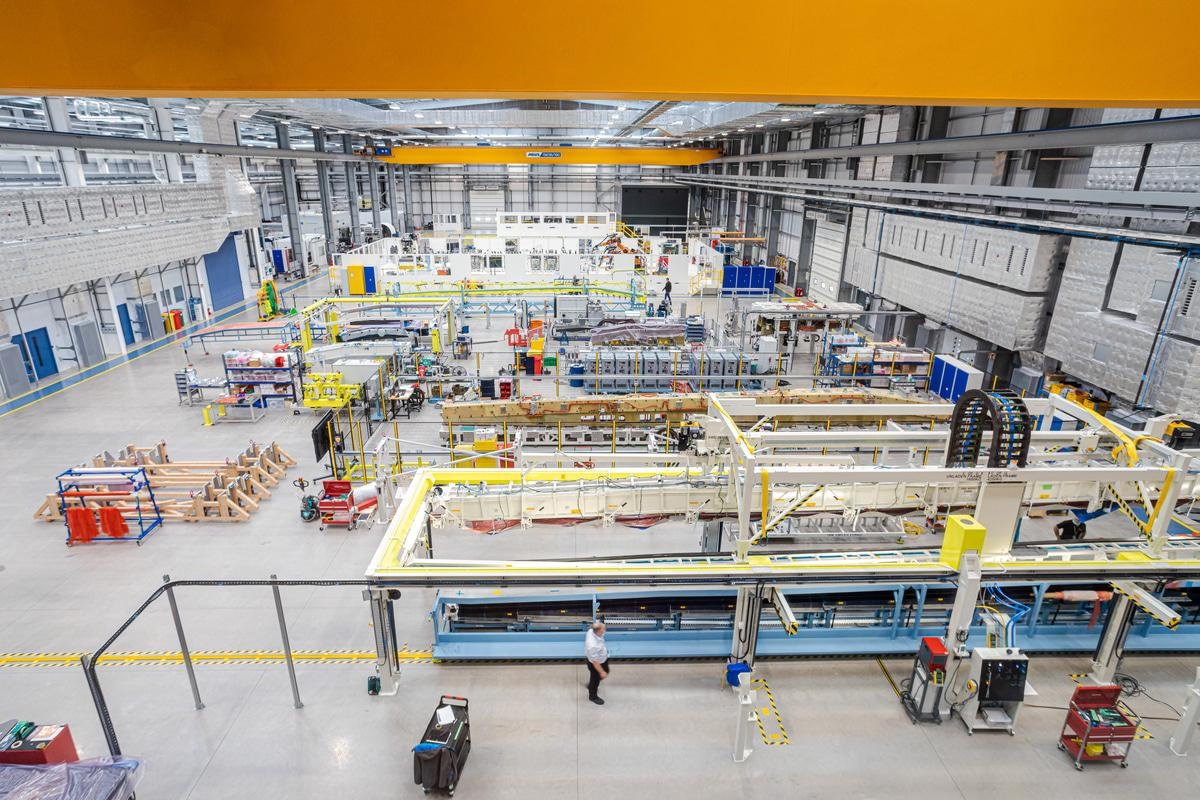
GKN Focuses on Maximizing Returns from Aerospace Programs
Strategic Shift Amid Industry Challenges
GKN Aerospace is recalibrating its strategic priorities to enhance returns from its core aerospace programs in response to ongoing industry challenges and shifting market conditions. The company has encountered significant obstacles in advancing its hydrogen initiatives, primarily due to delays in Airbus’s ZEROe program. These setbacks have adversely affected GKN’s research and development efforts in sustainable aviation technologies, compelling a reassessment of its innovation roadmap.
Continued Commitment to Innovation
Despite these difficulties, GKN remains steadfast in its commitment to pioneering advancements in aerospace propulsion. The company continues its collaboration with Airbus on the ICEFlight Project, which focuses on the development of cryogenic technologies to support hydrogen-powered flight. This partnership highlights GKN’s dedication to next-generation propulsion systems, even as certain projects are scaled back in light of program delays.
Industry-Wide Reassessment and Financial Implications
The postponement of the ZEROe program has led GKN and its competitors to reevaluate their strategic focus, with many industry players likely to prioritize established aerospace programs to secure more reliable financial returns and operational stability. This strategic pivot is expected to influence investor sentiment, as market participants closely watch how these developments affect GKN’s financial performance and long-term strategic positioning.
As the aerospace sector grapples with technological transitions and uncertain timelines for alternative propulsion systems, GKN’s approach exemplifies a careful balance between fostering innovative partnerships and strengthening its core business operations. This recalibrated strategy reflects a broader industry trend of adapting to immediate market realities while positioning for future opportunities in sustainable aviation.

Etihad Airways Suspends Airbus A380 Flights on Key Route

Aditya Birla Group Seeks Approval for Aircraft Leasing in GIFT City

Qatar Airways Highlights Innovation and Connectivity at Arabian Travel Market 2026

Hong Kong's Five-Year Plan Includes Andrew Fan's Aircraft Parts Processing Hub Proposal

ACIA Aero Leasing Delivers ATR72-600 to Air Nostrum

RTX Appoints Jill Albertelli as Head of Pratt & Whitney

TAT Technologies Joins Beyond Aero Hydrogen Aircraft Program

AURAK Study Highlights Barriers to Air Taxi Adoption in Emerging Economies

Xiamen Air Selects Altitude for 787 Maintenance at Heathrow

Etihad and Swissport Extend Global Partnership
