
KI-Erkenntnisse in konkrete Maßnahmen überführen

Trends
Categories
New Sub-Segments Reshaping the Aviation High-Speed Motor Market
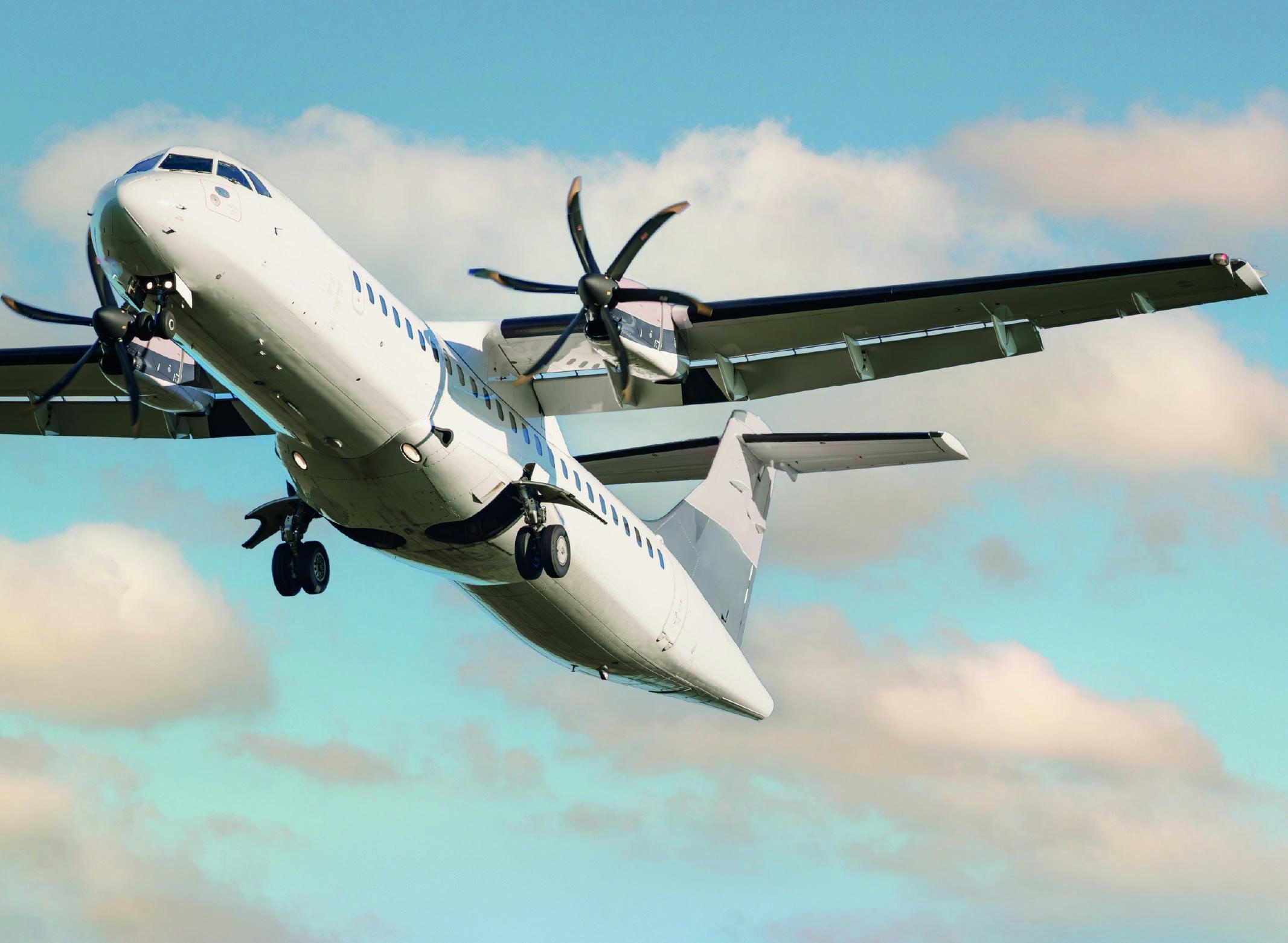
New Sub-Segments Reshaping the Aviation High-Speed Motor Market
The aviation high-speed motor market is experiencing a significant transformation, driven by rapid technological advancements, sustainability imperatives, and shifting industry requirements. As the aerospace sector increasingly embraces hybrid-electric and fully electric aircraft, the demand for efficient, high-performance motors is intensifying. This evolution is creating new opportunities for growth and collaboration among key industry players.
Market Growth and Emerging Trends
Industry forecasts project the aviation high-speed motor market to reach a valuation of $4.05 billion by 2030, expanding at a compound annual growth rate (CAGR) of 6.5%. This expansion is largely fueled by the growing adoption of electric propulsion systems, which necessitate advanced high-speed motors capable of meeting rigorous performance and efficiency criteria. The drive toward energy-efficient solutions is further reinforced by operators’ efforts to reduce operating costs and adhere to increasingly stringent environmental regulations.
Several critical trends are shaping the market landscape. There is a rising demand for ultra-high-speed propulsion systems specifically designed for next-generation electric aircraft. Innovations in thermal management technologies are enabling motors to sustain higher rotational speeds without compromising reliability. The integration of lightweight composite materials into motor components is becoming more prevalent, contributing to overall weight reduction and enhanced performance. Additionally, advancements in high-efficiency inverters and power electronics are improving motor control and energy conversion. The industry is also witnessing a shift toward modular motor designs, which facilitate easier maintenance and scalability.
Government policies promoting sustainable aviation are catalyzing investments in next-generation motor technologies. Concurrently, more rigorous certification processes for electric aviation are accelerating the commercial adoption of these advanced propulsion systems.
Industry Leaders and Strategic Developments
Several prominent companies are leading innovation and market expansion in the aviation high-speed motor sector. Notable players include Xoar International LLC, Emrax d.o.o., Windings Inc., ARC Systems Inc., Safran Electrical & Power, MagniX, MGM COMPRO, H3X Technologies Inc., Allied Motion Technologies, Meggitt PLC, Pipistrel d.o.o., Honeywell International, and Yaskawa Electric Corporation.
A landmark development occurred in October 2023 when French aerospace giant Safran S.A. acquired Thales Avionics Electrical Systems and Motors, the aeronautical electrical systems division of Thales S.A. This strategic acquisition enhances Safran’s capabilities across the aircraft electrical chain, encompassing electric conversion, power generation, and motor technologies. It underscores Safran’s commitment to aviation decarbonization and strengthens its competitive position in the evolving market.
Strategic partnerships are also instrumental in driving innovation and expanding operational capabilities. For instance, in June 2023, Indian airline SpiceJet entered into a partnership with FTAI Aviation Ltd., a U.S.-based aerospace engine service provider, aimed at bolstering its technical expertise and operational efficiency.
Market Challenges and Competitive Dynamics
Despite promising growth prospects, the aviation high-speed motor market faces several challenges. Intense competition in the acquisition of used aircraft and engines has created a highly competitive feedstock environment, as noted by industry participants such as AerSale. In response, companies are increasing investments in alternative sourcing strategies and expanding capacity at maintenance, repair, and overhaul (MRO) facilities. Additionally, market players are adopting more disciplined procurement practices and diversifying supply chains to mitigate volatility and ensure operational continuity.
Technical challenges persist, particularly in aircraft seat actuation systems, where issues such as excessive push-button force and the need for improved material efficiency are driving further innovation. These technical hurdles are influencing market dynamics and prompting manufacturers to refine their product offerings.
Outlook
As the aviation industry advances toward electrification and sustainability, the high-speed motor market is positioned for steady growth. Continued technological innovation, strategic collaborations, and adaptive responses to emerging challenges will be pivotal in shaping the sector’s development through 2030 and beyond.

Etihad Airways Suspends Airbus A380 Flights on Key Route

Aditya Birla Group Seeks Approval for Aircraft Leasing in GIFT City

Qatar Airways Highlights Innovation and Connectivity at Arabian Travel Market 2026

Hong Kong's Five-Year Plan Includes Andrew Fan's Aircraft Parts Processing Hub Proposal

ACIA Aero Leasing Delivers ATR72-600 to Air Nostrum

RTX Appoints Jill Albertelli as Head of Pratt & Whitney

TAT Technologies Joins Beyond Aero Hydrogen Aircraft Program

AURAK Study Highlights Barriers to Air Taxi Adoption in Emerging Economies

Xiamen Air Selects Altitude for 787 Maintenance at Heathrow

Etihad and Swissport Extend Global Partnership
