
KI-Erkenntnisse in konkrete Maßnahmen überführen

Trends
Categories
Philippine Airlines Considers Order for Up to 20 Widebody Aircraft
Philippine Airlines Considers Order for Up to 20 Widebody Aircraft
Fleet Modernization Amidst Industry Challenges
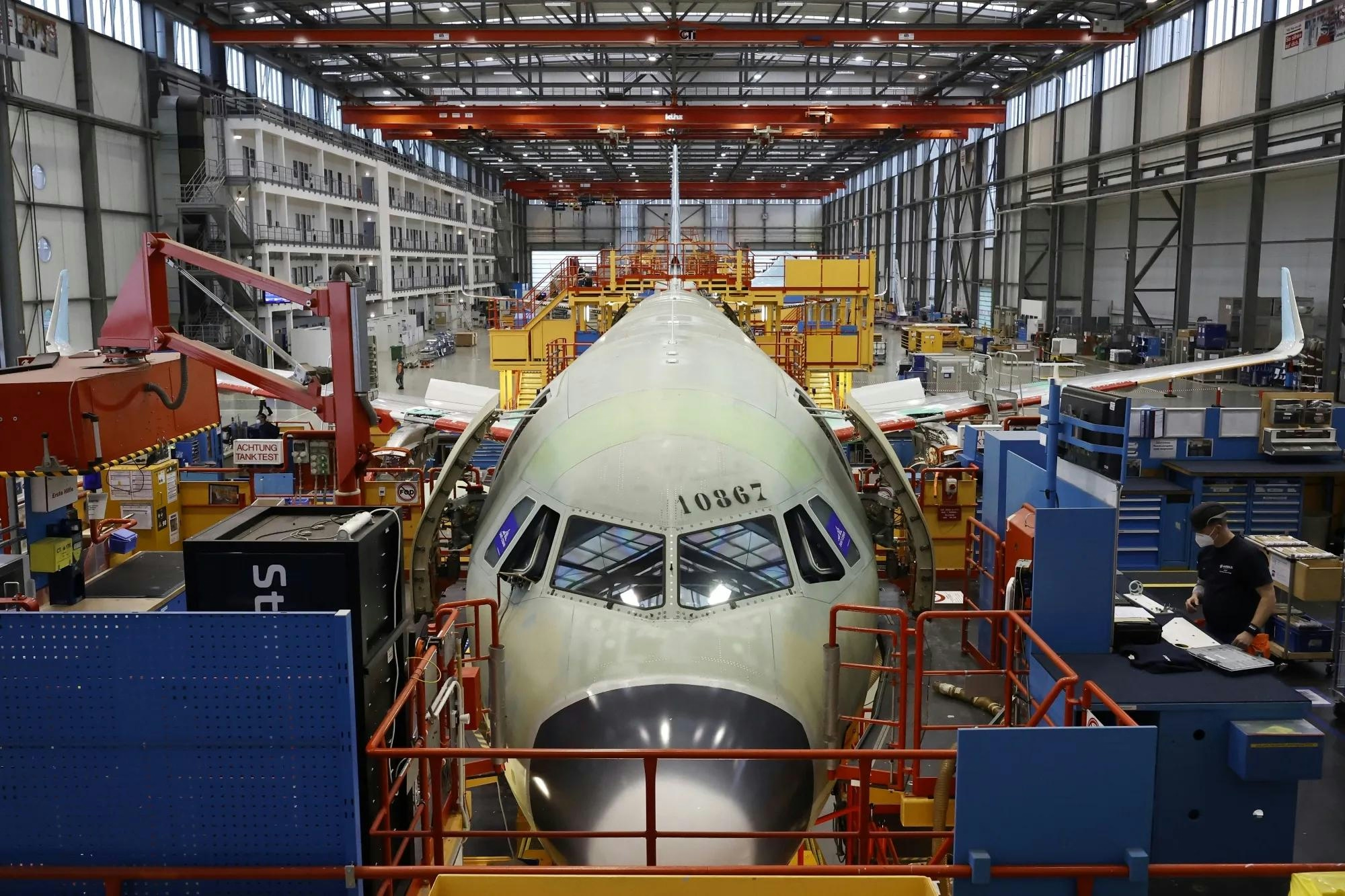
Philippine Airlines (PR, Manila Ninoy Aquino International) is reportedly evaluating a potential order for as many as 20 widebody aircraft as part of its ongoing efforts to modernize its fleet and replace aging Airbus A330-300s and Boeing 777-300ERs. Sources cited by Bloomberg indicate that the airline is exploring options from both Boeing and Airbus, including the Boeing 787 and Airbus A330neo and A350 families. However, no final decision has been reached regarding the manufacturer or specific aircraft models. Notably, the Boeing 777X is not under consideration due to its size, which is deemed unsuitable for operations at Manila Ninoy Aquino International Airport.
This fleet renewal initiative coincides with Philippine Airlines’ planned entry into the Oneworld alliance by mid-2027, positioning the carrier to better compete in a rapidly evolving global aviation market. The airline’s deliberations take place amid heightened competition, with other major carriers such as Qantas, Ethiopian Airlines, and Scandinavian Airlines also negotiating significant widebody aircraft orders. This surge in demand is expected to drive up prices and extend delivery timelines, complicating Philippine Airlines’ strategy for fleet renewal. Competitors may respond by leveraging strategic pricing, fleet commonality, or alliance partnerships to maintain their market positions.
Operational Constraints and Strategic Focus
At the International Air Transport Association (IATA) Annual General Meeting in Rio de Janeiro, Philippine Airlines president Richard Nuttall highlighted the operational challenges faced at the country’s primary gateway. He explained that capacity constraints at Manila Ninoy Aquino International Airport are prompting the airline to focus on increasing aircraft size and expanding intercontinental flight operations. “What it really means is that we're concentrating more on increasing the size of our aircraft and operating more intercontinental flights,” Nuttall stated, underscoring the strategic shift toward larger aircraft to maximize limited airport capacity.
Currently, Philippine Airlines and its regional subsidiary PAL Express operate a diverse fleet comprising 18 A320-200s, 22 A321-200s, 6 A321-200Ns, 2 A321-200NXs, 11 A330-300s, 2 A350-900s, 2 A350-1000s, 10 B777-300ERs, and 11 DHC-8-Q400s. According to ch-aviation data, the carrier has outstanding orders for seven A350-1000s and thirteen A321-200NX aircraft, although deliveries of these narrowbody jets have been delayed from their original schedules.
Economic Pressures and Fleet Renewal Plans
Philippine Airlines’ fleet renewal plans are further influenced by broader economic pressures. The airline has temporarily reduced capacity by 15 percent and deferred approximately USD 100 million in capital expenditure to prioritize cash management amid elevated fuel prices. Nuttall emphasized that these deferrals are temporary but acknowledged that fluctuating fuel costs and economic uncertainties continue to pose significant challenges as the airline evaluates its next steps.
Requests for comment on the potential widebody aircraft order have been made to Philippine Airlines, Airbus, and Boeing through ch-aviation.

Etihad Airways Suspends Airbus A380 Flights on Key Route

Aditya Birla Group Seeks Approval for Aircraft Leasing in GIFT City

Qatar Airways Highlights Innovation and Connectivity at Arabian Travel Market 2026

Hong Kong's Five-Year Plan Includes Andrew Fan's Aircraft Parts Processing Hub Proposal

ACIA Aero Leasing Delivers ATR72-600 to Air Nostrum

RTX Appoints Jill Albertelli as Head of Pratt & Whitney

TAT Technologies Joins Beyond Aero Hydrogen Aircraft Program

AURAK Study Highlights Barriers to Air Taxi Adoption in Emerging Economies

Xiamen Air Selects Altitude for 787 Maintenance at Heathrow

Etihad and Swissport Extend Global Partnership
