
KI-Erkenntnisse in konkrete Maßnahmen überführen

Trends
Categories
Qantas 737 Crew Responds Swiftly to Engine Failure During Takeoff
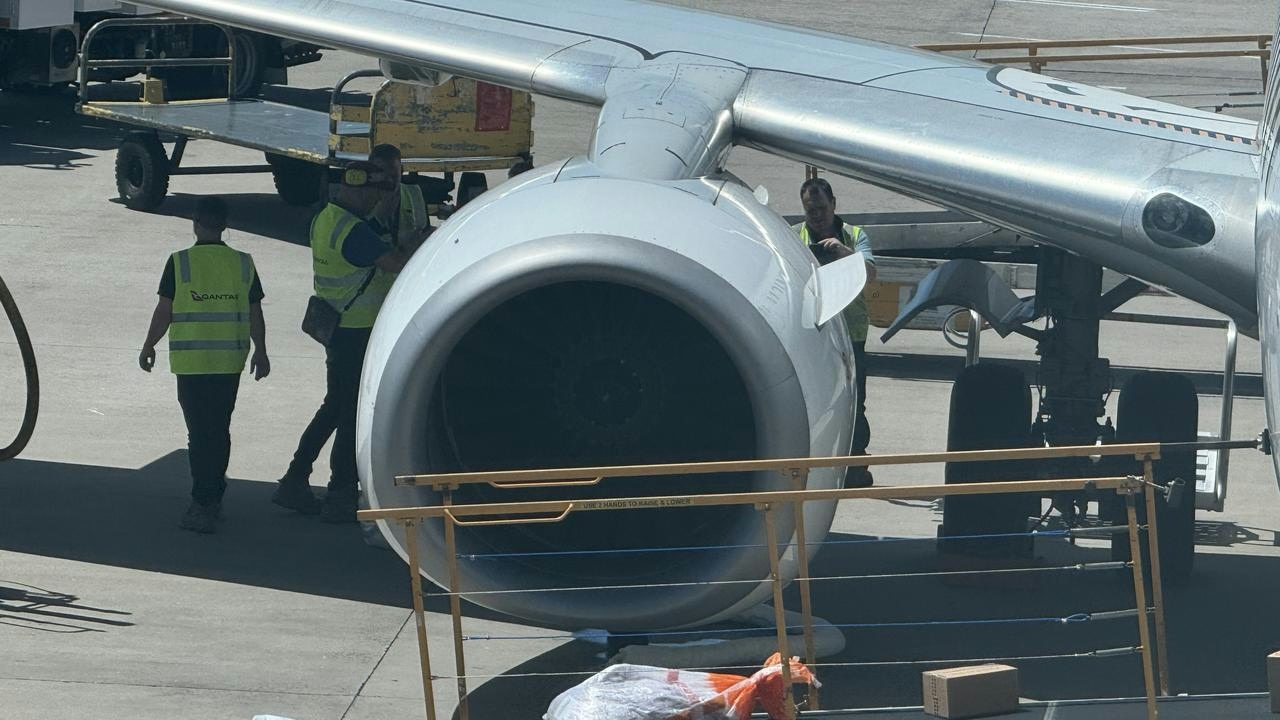
Qantas 737 Crew Praised for Swift Response to Engine Failure During Takeoff
Australian aviation safety authorities have lauded the prompt and decisive actions of a Qantas Boeing 737-800 flight crew following an engine failure during takeoff at Sydney Airport. The incident, which occurred on 8 November 2024, underscores the vital importance of rigorous crew training and effective decision-making in maintaining aviation safety.
Incident Overview and Crew Response
Qantas flight VH-VYH was departing Sydney for Brisbane when, as the aircraft reached V1 speed—the critical point beyond which takeoff must continue—the right-hand CFM56 engine suffered a sudden failure accompanied by a loud bang. Despite this unexpected malfunction, the pilots maintained composure, continued the takeoff, declared an emergency, and promptly communicated the situation to air traffic control. The aircraft subsequently landed safely on runway 34L operating on a single engine. Although the crew initially requested to land on runway 30R, it was unavailable due to debris from the failed engine. All six crew members and 175 passengers disembarked without injury.
Investigation Findings and Technical Details
The Australian Transport Safety Bureau’s (ATSB) final investigation identified the cause of the engine failure as a fatigue crack in the dovetail of one of the 76 high-pressure turbine (HPT) blades. This crack originated at the blade’s thinnest section and propagated through approximately 80% of the blade before it detached from the HPT disc, also damaging an adjacent blade. The defect was not detectable through standard borescope inspections and would have required a complete engine teardown to identify. This particular blade design has a documented history of similar failures across the wider CFM56-7B engine fleet.
The affected engine was scheduled for removal just 13 days after the incident, in accordance with a recently issued service bulletin that had lowered the recommended removal threshold from 20,000 to 17,900 cycles to address such risks.
Industry Implications and Safety Considerations
The ATSB commended the coordinated efforts of the flight crew, cabin crew, air traffic control, and aviation rescue firefighting services, emphasizing their collective role in ensuring the aircraft’s safe return to Sydney Airport. The incident highlights the ongoing operational challenges airlines face in managing technical failures and maintaining safety standards.
Furthermore, the event draws attention to broader industry concerns regarding engine reliability. Manufacturers such as GE Aerospace are actively working to enhance the durability of their engines, including the Leap series, by reviewing safety protocols and maintenance procedures. Concurrently, Qantas’ recent network adjustments, influenced by rising jet fuel costs linked to geopolitical tensions in the Middle East, may affect competitive dynamics as airlines strive to balance operational efficiency with service reliability.
This episode reaffirms the critical importance of comprehensive crew training and robust emergency protocols in safeguarding passengers during unforeseen technical emergencies.

Etihad Airways Suspends Airbus A380 Flights on Key Route

Aditya Birla Group Seeks Approval for Aircraft Leasing in GIFT City

Qatar Airways Highlights Innovation and Connectivity at Arabian Travel Market 2026

Hong Kong's Five-Year Plan Includes Andrew Fan's Aircraft Parts Processing Hub Proposal

ACIA Aero Leasing Delivers ATR72-600 to Air Nostrum

RTX Appoints Jill Albertelli as Head of Pratt & Whitney

TAT Technologies Joins Beyond Aero Hydrogen Aircraft Program

AURAK Study Highlights Barriers to Air Taxi Adoption in Emerging Economies

Xiamen Air Selects Altitude for 787 Maintenance at Heathrow

Etihad and Swissport Extend Global Partnership
