Bild

AeroGenie — Ihr intelligenter Copilot.

Fragen Sie alles. Analysieren Sie alles. Handeln Sie sofort.

Trends

Categories

RESIDCO Raises $100 Million to Expand Engine Acquisitions
January 7, 2026By ePlane AI
RESIDCO Raises $100 Million to Expand Engine Acquisitions
0
0
RESIDCO
Aircraft Engine Leasing
Aviation Financing

RESIDCO Secures $100 Million Facility to Expand Aircraft Engine Acquisitions

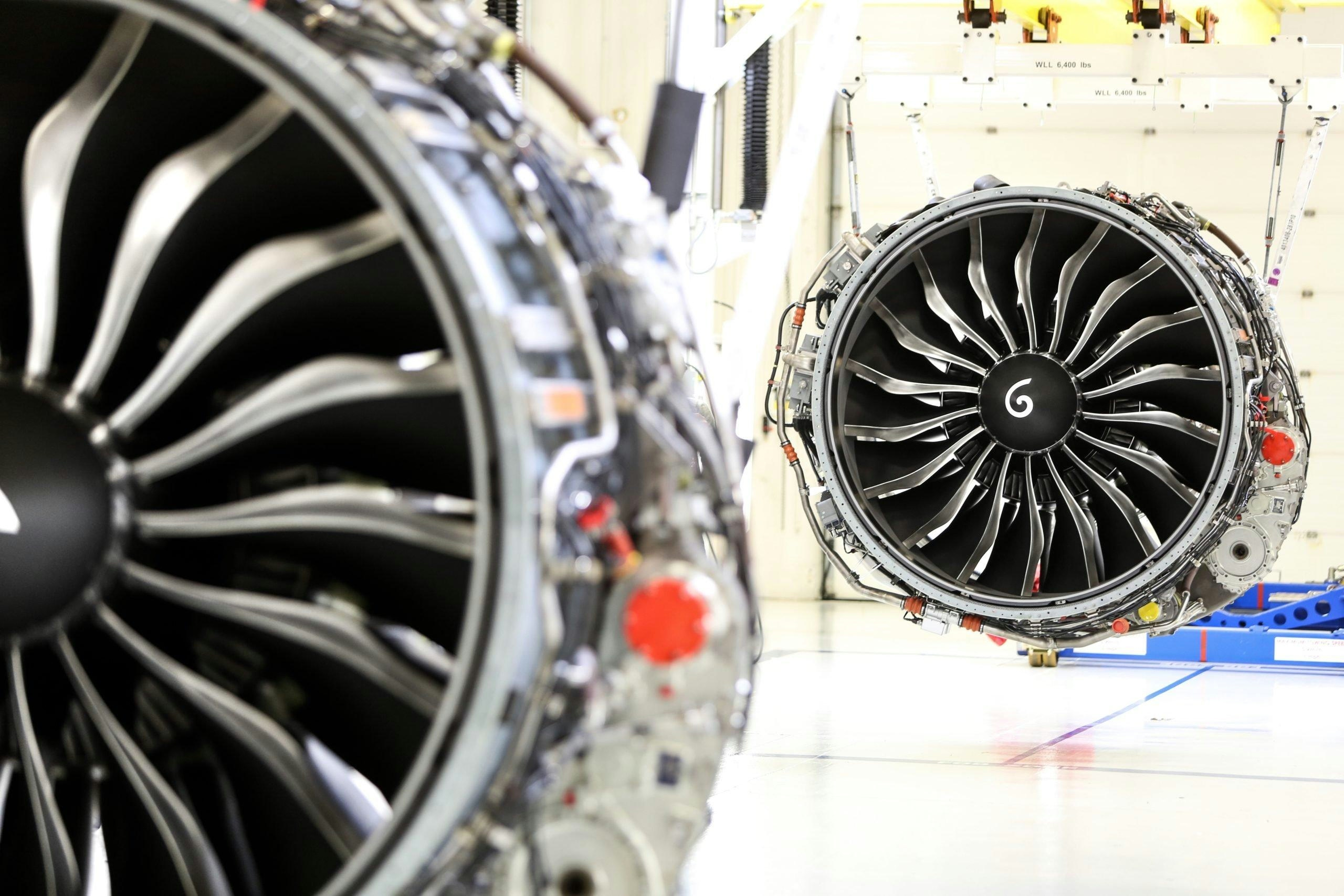
RESIDCO has successfully closed a $100 million commercial aircraft engine acquisition facility, supported by Huntington National Bank, a regional lender with $223 billion in assets headquartered in Columbus, Ohio. This newly established debt facility is designed to accelerate RESIDCO’s strategic growth within the global aviation secondary market, focusing primarily on acquiring high-demand commercial aircraft engines.

Strategic Growth and Industry Context

Scott Daniels, Managing Director Aviation at RESIDCO, emphasized the timing of the facility, noting the robust recovery of the aviation industry and the increasing demand for engine leasing solutions and liquidity. He highlighted the confidence Huntington has placed in RESIDCO’s aircraft engine leasing platform, stating that the capital infusion will enable the company to execute its growth strategy and continue delivering value to its global airline and trading partners.

Michael Yovkovich, President of RESIDCO, described the financing as a significant milestone, reflecting the dedication and expertise of the company’s team. He expressed enthusiasm about establishing a long-term partnership with Huntington and acknowledged the lender’s confidence in RESIDCO’s business model and personnel.

Market Position and Challenges Ahead

The facility will allow RESIDCO to leverage its technical expertise and asset management capabilities more effectively, positioning the company to seize near-term market opportunities and expand its portfolio of mid- to late-life commercial aircraft engines. This expansion aligns with RESIDCO’s objective to strengthen its role as a key provider of engine leasing solutions to airlines and trading partners worldwide.

Nevertheless, the $100 million raise occurs within a competitive and evolving market environment. Industry analysts caution that RESIDCO may encounter challenges stemming from heightened regulatory scrutiny, intensifying competition, and potential shifts in market dynamics. Competitors might respond with aggressive pricing or innovative strategies to protect their market share, while broader market reactions could include fluctuations in stock prices and investor sentiment as stakeholders evaluate the sector’s outlook.

Despite these potential obstacles, RESIDCO’s leadership remains confident that the new facility will reinforce the company’s position in the secondary aviation market and support its continued growth trajectory.

More news
Dubai Aviation Nears Acquisition of Macquarie Aircraft Leasing Unit

Dubai Aviation Nears Acquisition of Macquarie Aircraft Leasing Unit

Dubai Aviation Nears Acquisition of Macquarie Aircraft Leasing Unit A Dubai-based aircraft leasing company is reportedly close to acquiring Macquarie AirFinance’s leasing operations, amid a surge in global demand for commercial aircraft and ongoing production challenges faced by manufacturers. Industry sources familiar with the negotiations indicate that DAE Capital, headquartered in Dubai, is nearing an agreement to assume control of Macquarie AirFinance’s portfolio. Neither DAE Capital nor Macquarie has publicly commented on the potential transaction. Competitive Bidding and Market Context The prospective acquisition follows a competitive bidding process initiated earlier this year, with DAE Capital advancing to the final selection round in January. The Dubai firm competed against Saudi Arabia’s AviLease and Qatar’s Lesha Bank, underscoring the intense interest in aircraft leasing assets within a market constrained by limited supply. This transaction occurs at a time when leading manufacturers such as Boeing and Airbus are struggling to meet the escalating demand for new jets. Persistent supply chain disruptions have impeded production, a challenge highlighted recently by Airbus CEO Guillaume Faury, who emphasized ongoing difficulties in sourcing critical components. These shortages have increased the value of leased aircraft, creating lucrative opportunities for lessors and accelerating consolidation within the sector. Strategic and Operational Implications If completed, DAE Capital will face the complex task of integrating Macquarie’s diverse aircraft portfolio into its existing operations. Successfully managing this integration, alongside navigating continued supply chain uncertainties, will be critical for the Dubai-based firm. Market analysts are expected to closely evaluate the strategic alignment and financial ramifications of the acquisition, particularly as investors assess the risks and potential rewards of expansion in a volatile environment. The move may also prompt competitors to intensify efforts to secure market share, potentially triggering further strategic realignments among leading aircraft lessors and manufacturers. This development aligns with a broader trend of consolidation in the aerospace industry, as evidenced by recent mergers and acquisitions activity through late 2025, with larger entities seeking to reinforce their market positions amid heightened competition. DAE Capital’s parent company, Dubai Aerospace Enterprise, has a track record of significant acquisitions, including its 2017 purchase of Dublin-based AWAS, then ranked as the world’s tenth-largest aircraft lessor. The potential acquisition of Macquarie AirFinance’s leasing unit would further solidify Dubai’s standing as a key player in the global aircraft leasing market, while presenting new operational and strategic challenges in an evolving industry landscape.
Airbus: Latest Developments and the Future of Aviation

Airbus: Latest Developments and the Future of Aviation

Airbus: Latest Developments and the Future of Aviation Airbus continues to play a pivotal role in shaping the future of air travel through its commitment to innovation, sustainability, and engineering excellence. As the aviation sector navigates a complex landscape of opportunities and challenges, Airbus remains at the forefront by introducing new aircraft models, advancing green technologies, and maintaining a competitive edge in the global market. Advancements in Aircraft Design The breadth of Airbus’s fleet, ranging from the efficient A220 to the iconic double-decker A380, reflects the company’s dedication to combining advanced engineering with passenger comfort. The A350 exemplifies this approach by incorporating state-of-the-art materials and aerodynamic enhancements that improve fuel efficiency and reduce emissions. At the Hamburg facility, the A321XLR is driving innovation with its extended range and operational efficiency, setting new benchmarks in the single-aisle segment and reinforcing Airbus’s leadership in this market. Commitment to Innovation and Sustainability Airbus is investing significantly in next-generation technologies that promise to transform aviation’s environmental footprint. The company is actively exploring electric and hydrogen-powered aircraft, aiming to develop quieter, emission-free flights that could redefine sustainable air travel. Research into sustainable aviation fuel (SAF), derived from renewable sources, remains a strategic priority. Airbus is dedicated to integrating SAF across its fleet and promoting its wider adoption throughout the industry. In addition to environmental initiatives, Airbus is enhancing the passenger experience by improving cabin configurations, entertainment systems, and connectivity options, ensuring that technological progress translates into greater comfort and convenience for travelers. Addressing Industry Challenges Despite its strong position, particularly with the A320 family dominating single-aisle sales, Airbus faces significant challenges. Scaling up production to meet rising demand is a complex endeavor, especially as the industry recovers from recent disruptions. Strategic decisions regarding future aircraft development require balancing innovation with the realities of global supply chains and evolving market dynamics. Competition remains intense. Boeing, while struggling to regain its narrowbody market share, continues to hold a strong position in the widebody segment. External factors, such as former President Trump’s call to revoke certificates for all Bombardier Global jets, add further complexity to the competitive environment. Looking Forward Airbus’s vision extends beyond traditional aircraft to include new modes of air mobility. Projects such as electric vertical takeoff and landing (eVTOL) aircraft have the potential to revolutionize urban transportation by providing faster and more environmentally friendly ways to navigate cities. As production accelerates and technological innovations advance, Airbus is well-positioned to lead the next chapter of aviation. Its focus on sustainability, innovation, and adaptability ensures that the company will continue to set the pace in an industry characterized by rapid change and high expectations.
Qantas and Union Clash Over Job Security Amid AI Advances

Qantas and Union Clash Over Job Security Amid AI Advances

Qantas and Union Clash Over Job Security Amid AI Advances Rising Tensions Over Job Cuts and AI Integration Qantas and the Australian Services Union (ASU) are embroiled in a dispute over job security following recent redundancies at the airline’s Sydney headquarters. Last week, Qantas announced the elimination of 30 positions at its Mascot, New South Wales, office as part of a broader management restructure. The ASU alleges that some of these roles are being replaced by artificial intelligence, although it has not provided concrete evidence to substantiate this claim. Qantas, for its part, denies that AI was the direct cause of the job cuts but acknowledges that technological changes played a role in the decision-making process. This conflict unfolds against a backdrop of growing global concern about the impact of AI on employment across various sectors. The airline industry is no exception, with investors reacting to the potential disruption AI may bring to traditional services. Software stocks have recently experienced declines as market participants reassess the future landscape. Meanwhile, competitors such as Skygen.AI are advancing AI technology with enhanced security measures, including a multi-tier security architecture for autonomous AI agents, reflecting the increasing focus on safe AI deployment. Upcoming Consultations and Union Demands Qantas and the ASU are scheduled to meet for formal consultations to discuss the redundancies, focusing on the possibility of redeploying affected employees and the terms of redundancy payments. The union is also seeking assurances about whether these initial job cuts represent the beginning of a larger wave of redundancies. Angus McFarland, the ASU’s NSW ACT secretary, has warned that unless Qantas engages in meaningful dialogue and reverses its current stance, the union may escalate the matter by lodging a dispute with the Fair Work Commission. McFarland emphasized the importance of transparency, stating that workers need clarity on job security, entitlements, and access to retraining opportunities. The roles impacted by the restructure span several departments, including freight, crew support, finance, and airport services. The ASU has expressed skepticism regarding the genuineness of Qantas’ offers to redeploy staff, raising concerns about the quality and stability of alternative positions within the company. Corporate Response and Industry Implications Qantas maintains that the company is expanding in other areas and that no further job cuts are planned as part of the current restructure, which was initially announced in December 2025. A company spokesperson confirmed that Qantas informed the ASU of the changes last week and is committed to working with the union to mitigate the impact on employees. This includes exploring redeployment opportunities into newly created roles or other positions across the group. The dispute highlights the broader challenges faced by industries worldwide in managing the legal and operational consequences of AI integration. Even regulatory bodies such as the Fair Work Commission have encountered difficulties adapting to AI-assisted processes, underscoring the complexity of this technological transition. As Qantas and the ASU prepare for further negotiations, the outcome may influence how Australian companies and unions address the evolving dynamics of AI-driven workplace transformation.
What Is the Salary of Widebody Pilots?

What Is the Salary of Widebody Pilots?

What Is the Salary of Widebody Pilots? Widebody pilots, who operate the largest aircraft on long-haul international routes, occupy one of the most prestigious and demanding positions within the aviation industry. These professionals bear significant responsibility, managing complex aircraft across vast distances and often adhering to rigorous schedules. Alongside the challenges of the role, there is considerable interest in understanding the compensation associated with such a high-level position. This article explores the salary ranges for widebody pilots and the factors influencing their pay. Salary Ranges and Industry Trends At major U.S. legacy carriers such as Delta Air Lines, United Airlines, and American Airlines, senior widebody captains typically earn between $350,000 and $500,000 annually. This broad range is influenced by several factors, including the specific aircraft type, years of experience, and the extent of premium or overtime flying undertaken. First officers on widebody fleets also command substantial salaries, generally ranging from $150,000 to $320,000, positioning them among the highest-paid pilots worldwide. Recent years have seen a marked increase in these figures, driven largely by post-pandemic contract negotiations and a persistent shortage of qualified long-haul pilots. To attract and retain talent amid an impending wave of retirements among senior pilots, major airlines have raised pay by 30 to 40 percent. By comparison, regional pilots often begin their careers earning around $90,000, making the transition to a widebody fleet at a major airline a significant financial advancement—often doubling their income. A decade ago, a $300,000 salary was considered the upper echelon for pilots; today, it frequently represents the baseline for mid-career widebody captains. The combination of strong passenger demand and intense competition for experienced crew members has elevated widebody pilots to some of the most valuable roles in commercial aviation. Compensation Structure and Market Influences Widebody pilot compensation differs from traditional salaried roles, as it is calculated on a trip-by-trip basis. Pilots are paid for "block time," which spans from the moment an aircraft’s brakes are released at the departure gate until they are set at the arrival gate. Time spent in pre-flight briefings, airport terminals, or layovers is generally unpaid. Beyond base hourly rates, pilots receive per diem allowances and international overrides, which can substantially increase total earnings, particularly on long-haul and overnight flights. The salary environment is also shaped by broader industry dynamics, notably the competition between aircraft manufacturers Airbus and Boeing. In January 2026, Boeing delivered eight widebody aircraft compared to just one from Airbus, highlighting Boeing’s current dominance in this market segment. This dominance has heightened demand for Boeing-trained pilots, potentially driving their salaries higher as airlines vie for qualified personnel. Looking ahead, the landscape may evolve as Airbus’s new head of commercial aircraft, Lars Wagner, has announced plans to significantly increase widebody production. Should Airbus succeed in expanding its market share, demand for Airbus-qualified pilots could rise, potentially altering salary structures and opportunities across the sector. Conclusion The financial rewards for widebody pilots reflect both the expertise required and the competitive forces within the aviation industry. As airlines and manufacturers continue to compete and adapt, pilot salaries will remain a critical factor in attracting and retaining talent at cruising altitudes.
Challenges Faced by Lockheed in Designing the L-1011 TriStar

Challenges Faced by Lockheed in Designing the L-1011 TriStar

Challenges Faced by Lockheed in Designing the L-1011 TriStar Historical Context and Lockheed’s Commercial Aviation Legacy The contemporary commercial aircraft market is largely dominated by a handful of manufacturers, with Boeing and Airbus leading the narrowbody and widebody sectors, while regional players such as Embraer and ATR serve smaller market segments. This contrasts sharply with the more diverse landscape of previous decades, when companies like McDonnell Douglas and Lockheed were significant contributors to the development of commercial aviation. Over time, McDonnell Douglas merged with Boeing, and Lockheed eventually withdrew from the passenger aircraft market altogether. Lockheed’s departure from commercial aviation was not due to a lack of expertise. Established in 1926, the company quickly earned a reputation for innovation, producing aircraft such as the Vega, which was favored by pioneering aviators including Amelia Earhart and Wiley Post. In the 1930s, Lockheed expanded its portfolio with the Electra series, notably the Model 10 Electra and Model 14 Super Electra, the latter serving as the foundation for the Hudson bomber during World War II. Despite wartime demands, Lockheed maintained a commercial presence, most prominently through its collaboration with Trans World Airlines (TWA) on the L-049 Constellation. The Constellation, distinguished by its triple-tail design, long range, and higher cruising speeds, set new standards for passenger comfort and performance, solidifying Lockheed’s standing in civil aviation. Post-War Challenges and the L-1011 TriStar Program The post-war period introduced new challenges for Lockheed as the commercial aviation market grew increasingly competitive. The company’s L-188 Electra, launched in the late 1950s, suffered from early structural failures that severely damaged its reputation and sales prospects. By the early 1960s, Lockheed had become more dependent on military contracts to maintain financial stability, though it continued to pursue commercial ambitions. These ambitions culminated in the development of the L-1011 TriStar, a widebody airliner designed to reestablish Lockheed’s foothold in the passenger aircraft sector. Designing the L-1011 TriStar proved to be a complex and demanding endeavor. Lockheed confronted significant logistical and financial obstacles, many of which were influenced by broader industry dynamics. U.S. protectionist policies and escalating trade tensions between the United States and China created an unpredictable business environment, raising concerns about supply chain reliability and market access—issues that remain pertinent for aerospace manufacturers today, as underscored by recent statements from Airbus leadership. Furthermore, Lockheed grappled with rising supply chain costs and increased production support expenses, challenges that have similarly affected competitors such as Boeing, which recently reported a $565 million loss on its KC-46 program due to comparable pressures. These combined factors fostered a highly competitive and financially constrained environment for Lockheed. Despite its history of innovation and prior commercial achievements, the company struggled to reconcile the demands of developing a cutting-edge aircraft with the realities of a shifting global market. The difficulties encountered during the L-1011 TriStar program highlighted the profound challenges facing aerospace manufacturers—challenges that continue to influence the industry today.
Seven Airlines That Previously Operated the McDonnell Douglas MD-11

Seven Airlines That Previously Operated the McDonnell Douglas MD-11

Seven Airlines That Previously Operated the McDonnell Douglas MD-11 The McDonnell Douglas MD-11 represents the final chapter in the era of three-engine commercial airliners. Introduced during the late Cold War period, the aircraft was conceived as a modern successor to the DC-10, featuring a stretched fuselage, winglets, updated avionics, and a two-pilot cockpit. On paper, the MD-11 promised enhanced range and improved fuel efficiency compared to earlier widebody aircraft, while retaining the cargo capacity and runway performance that made it attractive for long-haul operations. In practice, however, the MD-11 became a transitional model. The 1990s saw a shift in airline economics favoring more efficient, long-range twin-engine jets, which gradually eroded the MD-11’s appeal. Many major carriers initially adopted the type to bridge fleet renewal and growth cycles, but most retired it earlier than anticipated as ETOPS-certified twins such as the Boeing 777 and Airbus A330/A340 demonstrated superior cost-effectiveness. Rising fuel prices and the industry’s drive toward fleet simplification accelerated the MD-11’s withdrawal from passenger service. Nevertheless, its robust payload capacity and structural durability ensured a prolonged second life in cargo operations, where it remained valued long after passenger airlines had moved on. The following seven airlines, spanning North America, Europe, and Asia, illustrate the MD-11’s operational trajectory—from early enthusiasm to eventual retirement amid broader industry transformations. Their experiences also highlight the significant financial and operational challenges involved in phasing out the MD-11, including substantial write-downs and market adjustments. For instance, UPS Airlines recorded a $137 million after-tax charge upon retiring its MD-11 fleet, underscoring the financial impact of such transitions. As these airlines replaced the MD-11 with newer Boeing and Airbus models, competitors often capitalized on the opportunity to offer alternative services or aircraft, intensifying market competition. Additionally, safety concerns and subsequent groundings of the MD-11 prompted a wider industry reassessment of the operational viability of aging aircraft. American Airlines American Airlines operated the MD-11 as a high-capacity, long-range workhorse throughout the 1990s, filling a niche for international routes that required more lift than a Boeing 767 but less than a 747. The MD-11 introduced cockpit commonality and strong cargo capabilities, making it well-suited for trunk routes and peak schedules. However, as fuel costs increased and twin-engine jets advanced, the economics of operating tri-jets became unsustainable. American Airlines retired its MD-11 fleet in 2001, reflecting the broader industry shift toward more flexible and cost-efficient twin-engine aircraft. China Airlines For China Airlines, the MD-11 was a targeted solution rather than a core fleet component. Operated through its subsidiary Mandarin Airlines, the MD-11 supported long-haul expansion by adding capacity where necessary, balancing passenger volume with belly cargo potential. The airline retired its MD-11s in 2002 amid growing concerns over fleet complexity and capital allocation during a period of rapid market change. --- The operational history of the MD-11 across these seven airlines underscores the evolving technological and economic landscape of commercial aviation. It also highlights the complex strategic decisions airlines face when retiring legacy aircraft. As the industry continues to evolve, the MD-11 remains a significant case study in adaptation, transition, and the enduring influence of fleet strategy on airline performance.
Factors Behind the Airbus A350’s Short Takeoff Distance

Factors Behind the Airbus A350’s Short Takeoff Distance

Factors Behind the Airbus A350’s Short Takeoff Distance The Airbus A350 and Boeing 787 represent two of the foremost widebody aircraft in commercial aviation, each distinguished by unique features and capabilities. While passengers often notice the Boeing 787 Dreamliner’s notably large, automatically dimming windows, a less conspicuous yet strategically important difference lies in the A350’s ability to achieve takeoff from shorter runways when operating at maximum takeoff weight. Determinants of Takeoff Distance The runway length required for an aircraft to become airborne depends on a combination of intrinsic aircraft characteristics and external environmental conditions. Key aircraft-specific factors include engine thrust, overall weight, and wing surface area. External influences such as air density, runway surface conditions—whether wet or dry—and prevailing weather also significantly affect takeoff performance. In industry practice, the Takeoff Field Length (TOFL) is the standard metric used to assess runway requirements. TOFL measures the distance needed to clear a 35-foot obstacle, incorporating safety margins and typically assumes operations at sea level, with no wind and dry runway conditions. Engineering Advantages of the A350 Introduced in 2015 as Airbus’s flagship widebody following the conclusion of the A380 program, the A350 family includes the A350-900 and the larger A350-1000 variants, as well as the ultra-long-range A350-900ULR capable of flying up to 9,700 nautical miles. Despite its considerable size, the A350 distinguishes itself with a relatively short takeoff roll compared to the Boeing 787. This performance edge is largely attributable to the exclusive use of Rolls-Royce Trent XWB turbofan engines. The A350-900 is powered by the XWB-84 engine, delivering 84,000 pounds of thrust, while the A350-1000 employs the more powerful XWB-97, rated at 97,000 pounds of thrust. Both engines feature a 118-inch fan diameter and a high bypass ratio of 9.6:1, which enhances fuel efficiency and thrust performance. These engineering attributes enable the A350 to operate from shorter runways, granting airlines increased operational flexibility in route planning and airport selection. Market Implications and Industry Dynamics The A350’s capability for short takeoff distances extends beyond technical merit, influencing airline operations and competitive market positioning. For instance, Air Canada has emphasized the A350-1000’s extended range and operational versatility as critical factors in expanding its network to new destinations. This capability allows carriers to access routes and airports that were previously inaccessible to aircraft of similar size. Airbus is currently gauging customer interest in a potential stretched version beyond the existing A350-1000, indicating ongoing development considerations. Concurrently, Boeing is responding to competitive pressures by concentrating efforts on regaining market share in the narrowbody segment, while Airbus continues to innovate with models such as the A321XLR. These competitive dynamics have prompted both manufacturers to increase production rates and prioritize strategic decisions regarding future aircraft programs, underscoring the significant market impact of the A350’s performance advantages. Conclusion Although the Airbus A350 and Boeing 787 are closely matched in many respects, the A350’s shorter takeoff distance—enabled by advanced engine technology and aerodynamic design—provides airlines with tangible operational benefits. As Airbus explores further enhancements and competitors adjust their strategies, the A350’s takeoff performance remains a pivotal factor influencing the evolution of long-haul commercial aviation.
Archer Aviation Partners with NVIDIA to Advance Aviation AI Technology

Archer Aviation Partners with NVIDIA to Advance Aviation AI Technology

Archer Aviation Partners with NVIDIA to Advance Aviation AI Technology Archer Aviation has announced a strategic partnership with NVIDIA aimed at accelerating the development of artificial intelligence technologies within the aviation sector. This collaboration combines Archer’s expertise in electric vertical takeoff and landing (eVTOL) aircraft with NVIDIA’s leadership in AI hardware and software, marking a significant advancement toward autonomous flight and next-generation air mobility. The Significance of AI in Aviation The partnership emerges amid growing recognition of AI as a transformative force across multiple industries. Prominent figures such as Amazon CEO Andy Jassy have described generative AI as a “once-in-a-lifetime” technology that is already reshaping customer experiences. Industry leaders including Bill Gates and Elon Musk have expressed similar views, with Musk forecasting that AI-driven robotics could generate a $250 trillion market by 2040. Consulting firms like PwC and McKinsey also project that AI will unlock multi-trillion-dollar value in the coming decades, underscoring its vast economic potential. Market response to Archer’s announcement has been largely positive, reflecting confidence in the reputations of both companies. Investors view the partnership as a strategic move that could position Archer at the forefront of aviation innovation, potentially enhancing its stock performance. Nevertheless, the aviation sector’s inherent volatility and the complexities involved in integrating advanced AI into flight systems introduce elements of uncertainty. Regulatory scrutiny is anticipated, particularly concerning safety standards and data privacy, as authorities evaluate the implications of AI-powered aviation technologies. Industry Implications and Competitive Dynamics Competitors are expected to respond proactively to this development. Industry analysts predict that rival firms will intensify their own AI and autonomous flight initiatives to maintain competitiveness. This dynamic may trigger a wave of consolidation within the sector, as companies seek to acquire or partner with technology leaders to bolster their capabilities. While much attention has been focused on major technology companies such as NVIDIA, Tesla, and Microsoft, the Archer-NVIDIA partnership highlights the increasing importance of collaboration between established tech firms and emerging players in specialized fields. As AI continues to redefine business operations and consumer experiences, such alliances are poised to play a critical role in shaping the future of transportation. The aviation industry stands on the cusp of a new era, with AI-driven innovation promising enhancements in safety, efficiency, and sustainability. Archer Aviation’s collaboration with NVIDIA underscores the sector’s commitment to adopting cutting-edge technology, even as it confronts challenges related to integration, competition, and regulation. As the race to develop autonomous flight intensifies, the progress and impact of these advancements will be closely monitored by investors, regulators, and industry stakeholders worldwide.
Chennai Startup to Develop India’s First Electric Air Taxi

Chennai Startup to Develop India’s First Electric Air Taxi

Chennai Startup to Develop India’s First Electric Air Taxi Pioneering Digital Validation for Safety The ePlane Company, a Chennai-based startup, is making significant strides toward developing India’s first electric air taxi. Bakthakolahalan Shyamsundar, the company’s principal engineer for Avionics Systems and Autonomy, highlights the firm’s use of an advanced simulation system that enables their electric air taxi to “live a thousand lives” digitally before it ever takes flight. This rigorous virtual validation process accelerates innovation while ensuring that every operational decision undergoes thorough safety testing. The company aims to establish a new benchmark for uncompromising safety in physical operations through this meticulous approach. Navigating Regulatory and Competitive Challenges Despite its technological advancements, The ePlane Company faces a complex array of challenges. Regulatory frameworks for electric vertical take-off and landing (eVTOL) vehicles remain underdeveloped in India, with aviation authorities yet to finalize comprehensive guidelines. Securing approval for commercial operations will require the startup to navigate evolving safety standards and compliance requirements carefully. In addition to regulatory hurdles, the company confronts intense competition from global players such as Archer Aviation and Joby Aviation, who are aggressively advancing their own eVTOL technologies. The sector has already witnessed legal disputes over trade secrets and intellectual property, underscoring the high stakes involved. These competitors are expected to continue pushing rapid technological innovation and marketing efforts to capture early market share and influence public perception. Market Acceptance and Future Prospects Market acceptance remains a critical challenge for The ePlane Company. While the concept of electric air taxis has generated considerable excitement, skepticism persists regarding their feasibility and safety. Convincing potential customers and investors of the reliability and practicality of this new mode of transport will be essential for achieving widespread adoption. Nonetheless, The ePlane Company is positioning itself at the forefront of India’s emerging eVTOL sector. By leveraging cutting-edge digital validation tools and closely monitoring global industry developments, the startup aims to keep pace with international competitors while addressing safety and reliability concerns. The coming years will be pivotal as the company endeavors to transform its vision of electric air mobility into a tangible reality for Indian cities.
Factors Positioning Airbus for Leadership in 2026

Factors Positioning Airbus for Leadership in 2026

Factors Positioning Airbus for Leadership in 2026 Airbus approaches the latter half of the 2020s with considerable industrial and commercial momentum. Having successfully navigated supply chain disruptions, surges in post-pandemic demand, and ongoing geopolitical uncertainties, the European aerospace manufacturer has solidified its leadership position in the global sector. Airlines around the world are actively modernizing their fleets, and Airbus remains central to this transformation, supported by a diverse product portfolio and an extensive global production footprint. A Manufacturing Network Built for Scale At the core of Airbus’s growth strategy lies its expansive and geographically diversified production infrastructure. By 2026, Airbus will operate one of the most extensive final assembly networks in the aerospace industry, spanning Europe, North America, and Asia. A significant milestone is the planned launch of a second A320 family final assembly line (FAL) in Tianjin, China, expected to reach full operational capacity in early 2026. This new facility will complement existing assembly lines in Hamburg, Toulouse, Mobile (Alabama), and the original Tianjin site, bringing the total number of final assembly lines worldwide to ten. China, as one of the fastest-growing aviation markets, plays a pivotal role in Airbus’s strategy. Expanding local assembly capabilities not only increases production capacity near key customers but also enhances Airbus’s resilience amid shifting global trade dynamics. This approach reduces logistical complexities and enables Airbus to respond swiftly to regional demand, particularly for the A320neo family, which continues to dominate global aircraft orders. Airbus has reaffirmed its target to produce 75 A320-family aircraft per month by 2027, with the expanded assembly capacity serving as a critical enabler of this ambition. Delivery Momentum and Market Confidence Aircraft deliveries remain the most tangible measure of aerospace execution. In 2025, Airbus delivered 793 commercial aircraft to 91 customers, marking a 4% increase year-on-year and slightly exceeding its revised guidance. This sustained delivery pace, up from 766 aircraft in 2024, underscores Airbus’s ability to maintain operational performance despite ongoing supply chain and quality-control challenges. Consistent deliveries reinforce airline confidence, as carriers typically plan fleet acquisitions several years in advance. Navigating Competitive and Market Challenges Looking ahead to 2026, Airbus faces a range of challenges. Increasing production rates and making strategic decisions regarding future aircraft models will be central to management’s agenda. Meanwhile, competitors remain active. Boeing is intensifying efforts to regain narrowbody market share, while Embraer is concentrating on E2 sales rather than launching new airliner programs. The competitive environment is further complicated by political developments, including calls in the United States to revoke certificates for Bombardier Globals until Canada approves Gulfstream’s large-cabin models. The business jet segment is also undergoing significant shifts. Gulfstream, Dassault, and Bombardier are all targeting the Asia Pacific market for long-haul business jets, reflecting broader changes in global demand patterns. Outlook Despite these challenges, Airbus’s robust manufacturing network, strong order backlog, and proven delivery performance position the company well for continued leadership in 2026. Its capacity to adapt to evolving market conditions, expand in high-growth regions, and maintain airline confidence will be critical as the competitive landscape continues to evolve.
line










