Bild

AeroGenie — Ihr intelligenter Copilot.

Fragen Sie alles. Analysieren Sie alles. Handeln Sie sofort.

Trends

Categories

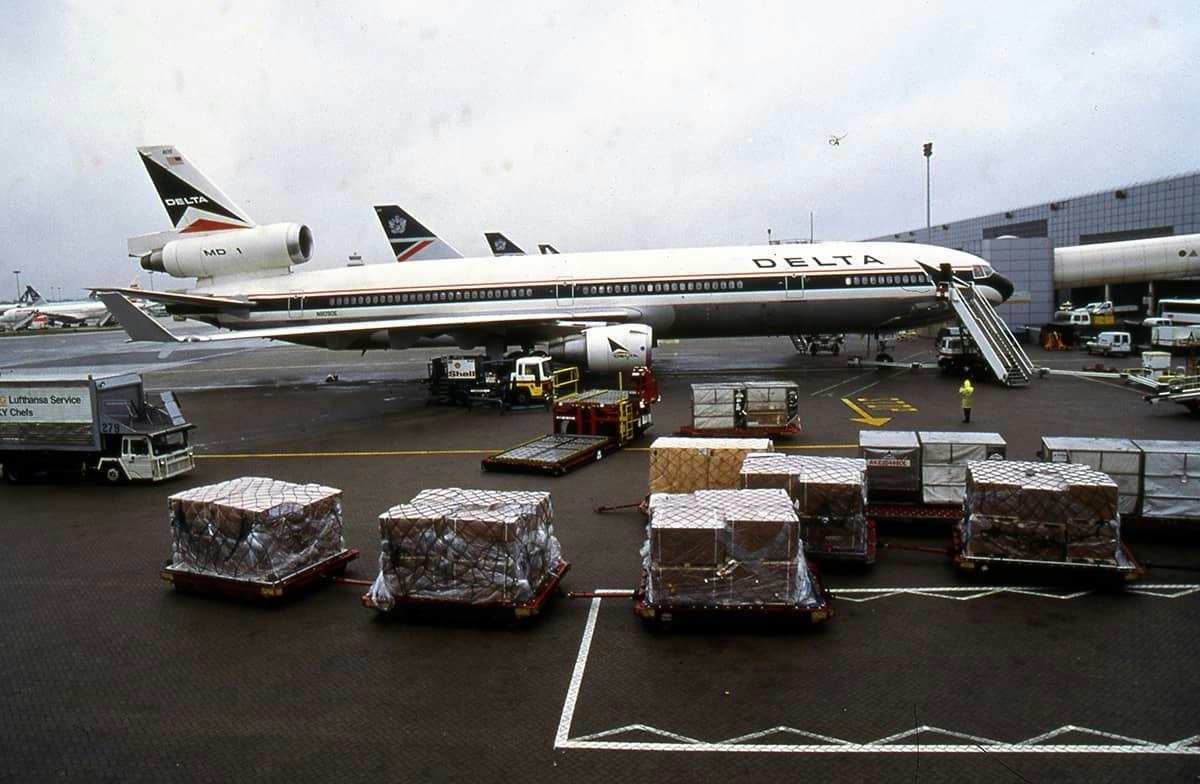
Seven Airlines That Previously Operated the McDonnell Douglas MD-11
February 21, 2026By ePlane AI
Seven Airlines That Previously Operated the McDonnell Douglas MD-11
0
0
McDonnell Douglas MD-11
Widebody Aircraft
Airline Fleet History

Seven Airlines That Previously Operated the McDonnell Douglas MD-11

The McDonnell Douglas MD-11 represents the final chapter in the era of three-engine commercial airliners. Introduced during the late Cold War period, the aircraft was conceived as a modern successor to the DC-10, featuring a stretched fuselage, winglets, updated avionics, and a two-pilot cockpit. On paper, the MD-11 promised enhanced range and improved fuel efficiency compared to earlier widebody aircraft, while retaining the cargo capacity and runway performance that made it attractive for long-haul operations.

In practice, however, the MD-11 became a transitional model. The 1990s saw a shift in airline economics favoring more efficient, long-range twin-engine jets, which gradually eroded the MD-11’s appeal. Many major carriers initially adopted the type to bridge fleet renewal and growth cycles, but most retired it earlier than anticipated as ETOPS-certified twins such as the Boeing 777 and Airbus A330/A340 demonstrated superior cost-effectiveness. Rising fuel prices and the industry’s drive toward fleet simplification accelerated the MD-11’s withdrawal from passenger service. Nevertheless, its robust payload capacity and structural durability ensured a prolonged second life in cargo operations, where it remained valued long after passenger airlines had moved on.

The following seven airlines, spanning North America, Europe, and Asia, illustrate the MD-11’s operational trajectory—from early enthusiasm to eventual retirement amid broader industry transformations. Their experiences also highlight the significant financial and operational challenges involved in phasing out the MD-11, including substantial write-downs and market adjustments. For instance, UPS Airlines recorded a $137 million after-tax charge upon retiring its MD-11 fleet, underscoring the financial impact of such transitions. As these airlines replaced the MD-11 with newer Boeing and Airbus models, competitors often capitalized on the opportunity to offer alternative services or aircraft, intensifying market competition. Additionally, safety concerns and subsequent groundings of the MD-11 prompted a wider industry reassessment of the operational viability of aging aircraft.

American Airlines

American Airlines operated the MD-11 as a high-capacity, long-range workhorse throughout the 1990s, filling a niche for international routes that required more lift than a Boeing 767 but less than a 747. The MD-11 introduced cockpit commonality and strong cargo capabilities, making it well-suited for trunk routes and peak schedules. However, as fuel costs increased and twin-engine jets advanced, the economics of operating tri-jets became unsustainable. American Airlines retired its MD-11 fleet in 2001, reflecting the broader industry shift toward more flexible and cost-efficient twin-engine aircraft.

China Airlines

For China Airlines, the MD-11 was a targeted solution rather than a core fleet component. Operated through its subsidiary Mandarin Airlines, the MD-11 supported long-haul expansion by adding capacity where necessary, balancing passenger volume with belly cargo potential. The airline retired its MD-11s in 2002 amid growing concerns over fleet complexity and capital allocation during a period of rapid market change.


The operational history of the MD-11 across these seven airlines underscores the evolving technological and economic landscape of commercial aviation. It also highlights the complex strategic decisions airlines face when retiring legacy aircraft. As the industry continues to evolve, the MD-11 remains a significant case study in adaptation, transition, and the enduring influence of fleet strategy on airline performance.

More news
APOC Aviation to Support USM Stock Through A320-200 Teardown

APOC Aviation to Support USM Stock Through A320-200 Teardown

APOC Aviation to Support USM Stock Through A320-200 Teardown Strategic Expansion Amid Market Competition APOC Aviation, a specialist in aircraft, engine, and landing gear trading, leasing, and part-out, has announced the acquisition of a 15-year-old Airbus A320-200 from FTAI for teardown. The aircraft, previously operated by Jetstar Pacific Airlines, is slated for disassembly this May at the Tarmac Aerosave Toulouse-Francazal facility in France. This move forms part of APOC’s broader strategy to diversify and strengthen its inventory of used serviceable material (USM) amid intensifying competition in the aviation aftermarket. Craig Skilton, vice president of components at APOC Aviation, emphasized the company’s intent to expand its portfolio to serve a wide range of customers. He explained that APOC is increasing its stock of both mature and newer assets to cater to top-tier carriers as well as operators seeking parts for legacy equipment. Skilton also highlighted the launch of a new exchange service this month, which will incorporate comprehensive inventory from recent A319 teardown activities in the UK. The addition of components from the latest A320-200 teardown, following repair and re-certification, will further enhance APOC’s offerings. Market Dynamics and Competitive Pressures APOC’s core customer base remains focused on the narrowbody sector, where demand for USM continues to be robust. The company also provides a range of widebody and narrowbody landing gear, alongside CFM56-3/5A/5B/7B and V2500-A5 engines, available for exchange, lease, and parts services. However, this expansion occurs against a backdrop of heightened competition within the USM market. Industry participants such as AerSale have expressed concerns over a hypercompetitive feedstock environment, marked by increased scrutiny and pressure on pricing as more companies enter the teardown sector. Competitors are responding with ambitious growth strategies. For instance, EirTrade Aviation recently announced plans to increase the size of its teardown facility fivefold, signaling a concerted effort to capture a larger share of the market. This intensifying rivalry underscores the challenges faced by companies like APOC as they seek to scale operations and maintain competitive advantage. Commitment to Growth and Operational Excellence Karolis Jurkevičius, vice president of landing gear and major assets at APOC Aviation, reaffirmed the company’s dedication to expanding its disassembly programme. He noted that APOC is making significant investments supported by strong financial backing, enabling a transformative enhancement of its market offering. Jurkevičius also pointed to the growing team of aviation specialists at APOC, who are prepared to address emerging challenges with energy and collaboration. As APOC Aviation accelerates its teardown and USM initiatives, it navigates a rapidly evolving and increasingly competitive market landscape, balancing opportunities for growth with the demands of a dynamic industry environment.
Duncan Aviation Automates Cabin Refurbishment Workflow

Duncan Aviation Automates Cabin Refurbishment Workflow

Duncan Aviation Automates Cabin Refurbishment Workflow Duncan Aviation has partnered with Razorleaf to automate its product lifecycle management (PLM) workflow, achieving a 75% reduction in project-scoping time and significantly improving data accessibility across departments involved in business jet interior refurbishment. As the largest privately owned business aircraft maintenance, repair, and overhaul (MRO) provider in the United States, Duncan Aviation operates major facilities in Michigan, Nebraska, and Utah, alongside regional shops and mobile teams. The company delivers comprehensive nose-to-tail services for private and commercial business jets from leading manufacturers including Embraer, Gulfstream, Textron, Dassault, and Learjet. Streamlining Engineering and Certification Processes Aaron Lane, alterations planning team and certification coordinator at Duncan Aviation’s Lincoln, Nebraska facility, emphasizes the company’s broad capabilities: “We do everything but build planes from scratch. Duncan Aviation is an innovative company, always embracing new technologies and new ways of thinking about business.” The engineering and certification group manages customer-driven modifications ranging from upgrading analog cockpit displays to glass touchscreen controls, as well as modernizing cabin lighting, sound systems, and connectivity solutions such as Starlink and Gogo. A recent collaboration with product-development firm BorromeodeSilva on a Gulfstream V refurbishment exemplifies the company’s design innovation. The project featured a yacht-inspired interior with porthole windows, deck-grade wood flooring, and custom seating. The design process advanced from digital renderings to 3D CAD and ERP software, generating the technical data necessary for production and Federal Aviation Administration (FAA) certification. Lane highlights the critical importance of regulatory compliance: “There are very stringent rules for safety of the aircraft. It’s our job in Engineering and Certification to understand those rules, design to them, inspect the product regularly, and guarantee that design and outcome match.” Integrating Systems for Enhanced Efficiency Customer projects initiate within Duncan Aviation’s enterprise resource planning (ERP) system, where sales teams generate quotes accessible through a customer portal. These quotes are shared with engineering and certification teams and form the foundation for projects established in the Aras Innovator PLM platform, with application programming interfaces (APIs) linking both systems. Lane explains, “The official work scope generated by our ERP system is the document that everyone in Duncan Aviation then uses. We take that information and translate it into engineering tasks. The departments meet around it and nail down the interrelated factors that arise from the choices made by the customer.” A pivotal element of the workflow is the project data list (PDL), which consolidates all parts, documents, design data, analyses, and reports derived from the ERP sales and project-scoping process. These components are compiled into a master data list (MDL), forming the technical data package (TDP) delivered to customers and regulatory agencies. Previously, the creation of a PDL was a manual and time-intensive task. To address this, Aras recommended Razorleaf, a specialist in PLM implementation and middleware development, to automate the workflow through templated pathways. Challenges and Industry Impact While automation promises enhanced efficiency and improved service delivery, Duncan Aviation faces challenges in integrating new technology with existing processes, maintaining compliance with stringent aviation industry standards, and managing the transition to prevent service disruptions. Nevertheless, the initiative has sparked increased interest from clients seeking faster and more efficient refurbishment solutions. Competitors may respond by advancing their own automation capabilities or enhancing service offerings. Recent milestones, including Duncan Aviation’s completion of its first key Falcon 8X check and technician training for PW308 engines, further demonstrate the company’s commitment to innovation and continuous improvement. These developments strengthen its market position and reinforce client confidence in its technical expertise and service quality.
Digital Supply Chains Reshape Aviation Parts Procurement

Digital Supply Chains Reshape Aviation Parts Procurement

Digital Supply Chains Reshape Aviation Parts Procurement The aviation industry relies heavily on precision, efficiency, and reliability, with each aircraft requiring thousands of components to operate safely. Historically, managing the availability of these parts has been a complex endeavor, often dependent on manual processes, paper documentation, and fragmented communication among suppliers, distributors, and maintenance teams. However, the emergence of digital supply chains is fundamentally transforming how aviation organizations procure and manage their inventory, introducing new levels of efficiency and transparency. The Digital Supply Chain Advantage Digital supply chains integrate advanced technologies such as cloud computing, real-time data analytics, artificial intelligence, and automated inventory systems to streamline procurement processes. Unlike traditional methods that depend on disconnected systems and manual communication, digital platforms enable manufacturers, suppliers, and maintenance teams to share information instantaneously. This real-time transparency offers comprehensive visibility into inventory levels, supplier availability, shipment tracking, and delivery schedules, allowing organizations to make faster and more informed sourcing decisions. By linking procurement platforms with inventory management systems, aviation companies can automate many tasks that were previously manual, thereby reducing administrative burdens and enhancing accuracy. Automation facilitates the management of purchase orders, shipment tracking, supplier certification verification, and delivery timeline monitoring with minimal human intervention. Additionally, digital marketplaces provide instant access to verified suppliers, enabling quick comparisons of pricing, availability, and lead times, which further streamlines the procurement process. Navigating Ongoing Supply Chain Challenges Despite these technological advancements, the aviation sector continues to confront significant supply chain disruptions. The industry is still recovering from the impacts of the COVID-19 pandemic, with manufacturers—particularly those involved in widebody freighter production—facing capacity constraints, extended lead times, and more stringent supply commitments. Frequent supplier adjustments and shifts in geographic sourcing illustrate a supply chain that remains dynamic and adaptive, though this flexibility can sometimes delay innovation and discourage investment. These challenges have heightened demand for maintenance, repair, and operations (MRO) parts. In response, companies such as Boeing Global Services are investing in artificial intelligence, used serviceable materials (USM), and advanced inventory management systems to mitigate ongoing constraints. Competitors are similarly expanding their networks and developing innovative solutions to ensure the timely delivery of parts and to meet evolving customer requirements. Enhancing Visibility and Predictive Procurement One of the most significant benefits of digital supply chains is the enhanced visibility they provide across the procurement network. Real-time tracking and monitoring capabilities allow procurement teams to oversee shipments from suppliers to distribution centers and maintenance facilities, enabling swift responses to any disruptions. Improved data sharing fosters stronger collaboration between aviation organizations and their suppliers, reducing misunderstandings and boosting operational efficiency. Moreover, data analytics plays a transformative role by collecting and analyzing vast amounts of information. Predictive tools enable organizations to anticipate demand, optimize inventory levels, and make proactive sourcing decisions—advantages that are particularly critical as the industry continues to adapt to post-pandemic realities. As the aviation sector evolves, digital supply chains are becoming indispensable for managing complexity, mitigating risks, and ensuring the reliable delivery of essential aircraft components.
Indonesia to Receive First KF-21 Fighter Jet from South Korea

Indonesia to Receive First KF-21 Fighter Jet from South Korea

Indonesia to Receive First KF-21 Fighter Jet from South Korea Milestone in Joint Fighter Development Program South Korea and Indonesia have reached a significant milestone in their collaborative fighter jet development program with the impending transfer of Indonesia’s first KF-21 Boramae prototype. This handover, contingent upon Indonesia completing its outstanding payment, marks a critical transition from the development phase to production. It underscores the commitment of both nations to modernize their air forces and enhance their defense capabilities. The aircraft designated for transfer is the fifth single-seat KF-21 prototype, which has successfully passed essential verification tests, including aerial refueling, confirming its readiness for operational use. Indonesian officials will receive a flight-tested platform, facilitating further training, evaluation, and eventual integration into the Indonesian Air Force. Financial and Diplomatic Challenges The agreement, finalized during working-level talks in February and confirmed by South Korea’s Defense Acquisition Program Administration (DAPA), reflects a revised financial arrangement. Indonesia has paid 536 billion won of its 600 billion won commitment, with the remaining balance due by June, coinciding with the scheduled conclusion of the KF-21 development phase. This adjustment reduces Indonesia’s financial share while covering the aircraft, development costs, and technical documentation. Despite this progress, the program has encountered significant challenges. Disputes over development costs and allegations of stolen data have strained relations between Jakarta and Seoul at various points, resulting in protracted negotiations and modifications to financial obligations and technology transfer expectations. Nonetheless, both countries have maintained momentum, demonstrating a shared interest in advancing the project. Strategic and Market Implications Launched by South Korea in 2015, the KF-21 Boramae program aims to develop a supersonic multirole fighter to replace aging F-4 and F-5 fleets and to strengthen the domestic aerospace industry. Indonesia joined as a development partner under a cost-sharing agreement, seeking to bolster its own defense capabilities. The progress of the KF-21 has attracted increased international attention to South Korea’s aerospace sector, reflecting the country’s growing ambitions as a global defense exporter. However, Indonesia continues to explore contracts with other suppliers, including Dassault Aviation and Turkish Aerospace, potentially diversifying its future fighter fleet. Looking ahead, discussions are underway for Indonesia to purchase 16 production KF-21 fighters, which could constitute the first export order for the Boramae. Officials from both countries remain optimistic about finalizing a production contract that would enhance Indonesia’s air force with advanced avionics, twin engines, and multirole capabilities. The transfer of the KF-21 prototype not only advances Indonesia’s military modernization but also highlights the strategic importance of industrial and defense partnerships in the Indo-Pacific region. As the KF-21 moves toward mass production, South Korea’s position in the global aerospace market is poised to strengthen, even as both partners navigate ongoing challenges and competitive pressures.
Basil David Anthony Addresses Aviation Leaders at African MRO Conference 2026

Basil David Anthony Addresses Aviation Leaders at African MRO Conference 2026

Basil David Anthony Addresses Aviation Leaders at African MRO Conference 2026 Ghanaian entrepreneur and CEO of Ticket Ghana Ltd., Basil David Anthony, played a significant role at the inaugural African MRO Conference 2026, held at the Skylight Hotel in Addis Ababa, Ethiopia. The event, themed “Building Africa’s Sustainable MRO Ecosystem,” brought together over 300 aviation leaders, regulators, and global service providers to deliberate on the future of Maintenance, Repair, and Overhaul (MRO) capabilities across the continent. Advancing Africa’s MRO Infrastructure Organised by the African Airlines Association (AFRAA) in collaboration with Ethiopian Airlines MRO, Kenya Airways MRO, and South African Airways Technical, the conference emphasized the urgent need for substantial investment in MRO infrastructure. This investment is critical to enhancing the competitiveness of African airlines on the global stage. Delegates addressed persistent structural challenges within the sector, including regional supply chain disruptions and the necessity of establishing a robust network of MRO service providers throughout Africa. On the sidelines of the conference, Basil David Anthony underscored the importance of cultivating a sustainable and self-reliant aviation ecosystem. He highlighted the imperative for stronger collaboration among operators, technical partners, and policymakers. Anthony remarked, “Africa’s aviation future depends not only on connectivity, but also on our ability to build strong technical and operational foundations within the continent. Events like this create the platform to align stakeholders and drive that vision forward.” Collaboration and Innovation in Focus Throughout the conference, Anthony engaged in high-level business-to-business meetings with airlines, MRO providers, and other key aviation stakeholders. These discussions centered on opportunities for collaboration, knowledge exchange, and the development of structured service contracts—an area identified by market observers as vital for establishing a self-reliant aftermarket ecosystem in Africa. Industry panels and technical sessions explored emerging technologies, workforce development, and supply chain resilience. Participants were given the opportunity to tour Ethiopian MRO facilities, gaining firsthand insight into best practices and innovation within the sector. A notable topic of discussion was the anticipated MRO bottleneck in the rapidly evolving electric vertical takeoff and landing (EVTOL) industry, prompting dialogue on maintenance and repair strategies tailored to these new aviation technologies. As Africa positions itself for enhanced global connectivity, the conference highlighted both the opportunities and challenges that lie ahead. The ongoing structural crisis and the pressing need for a coordinated network of MRO providers to mitigate regional disruptions were recurrent themes. Basil David Anthony’s active involvement reflected a growing commitment among African entrepreneurs to contribute to thought leadership, foster collaboration, and support the long-term development of the continent’s aviation industry.
Next-Generation Aircraft Key to Airlines’ Efforts to Cut Fuel Use and Emissions

Next-Generation Aircraft Key to Airlines’ Efforts to Cut Fuel Use and Emissions

Next-Generation Aircraft Key to Airlines’ Efforts to Cut Fuel Use and Emissions The global aviation industry is undergoing a significant transformation as airlines increasingly adopt next-generation, fuel-efficient aircraft to address rising operational costs and meet stringent environmental targets. Modern widebody jets, particularly the Boeing 787 Dreamliner and Airbus A350, are leading this shift by delivering approximately 20% lower fuel consumption per seat compared to older models such as the Boeing 777 and Airbus A330. This advancement is critical as airlines seek to balance economic pressures with sustainability commitments. Fleet Modernization: From Competitive Edge to Business Necessity Fuel expenses typically represent about a quarter of an airline’s operating costs, making improvements in fuel efficiency essential amid soaring jet fuel prices. The ongoing conflict in Iran has more than doubled fuel costs, posing a serious threat to industry profitability, with projections indicating potential losses by 2026 if prices remain elevated. In response, airlines have implemented measures including flight reductions, surcharges, and fare increases to mitigate financial strain. Traditional revenue streams such as baggage fees and ancillary charges, once effective buffers against cost volatility, are now insufficient to offset the escalating expenses. Consequently, fleet modernization has evolved from a strategic advantage into an operational imperative. Airlines investing in Boeing 787s and Airbus A350s benefit not only from reduced fuel consumption and emissions but also from enhanced financial resilience. However, the substantial acquisition cost—exceeding $350 million per aircraft—limits aggressive modernization to well-capitalized carriers, thereby widening the competitive divide between industry leaders and financially constrained operators. Industry-Wide Implications and Regulatory Challenges The drive toward fuel-efficient fleets is further influenced by tightening environmental regulations and increasing consumer demand for sustainable travel options. European carriers, for instance, have called for revisions to the ReFuelEU initiative, which mandates greater use of sustainable aviation fuels, citing concerns over administrative complexity and conflicts with existing emissions trading schemes. At the same time, geopolitical tensions continue to disrupt fuel markets, adding layers of uncertainty to airline operating costs. Major international airlines are prioritizing orders for widebody aircraft to maintain long-term competitiveness and regulatory compliance. This transition is reshaping traditional revenue models by reducing dependence on ancillary fees and enabling more competitive pricing on routes marketed for their environmental credentials. The Road Ahead: Innovation and Sustainability While next-generation jets currently represent the most effective means of reducing emissions and operational costs, the aviation industry is also investing in emerging technologies. Electric and hybrid-electric propulsion systems are under development, promising further carbon reductions, though their commercial viability remains several years away. As established carriers accelerate the retirement of less efficient aircraft, passengers may benefit from more competitive fares alongside a smaller environmental footprint. Nevertheless, the financial and regulatory complexities associated with fleet modernization suggest that the pace of change will vary significantly across the sector.
Inside Three Innovative eVTOL Aircraft

Inside Three Innovative eVTOL Aircraft

Inside Three Innovative eVTOL Aircraft This week, we examine three pioneering personal flight concepts that span from entry-level electric vertical takeoff and landing (eVTOL) designs to more advanced models currently pursuing certification. These vehicles provide a revealing glimpse into the rapidly evolving eVTOL sector, highlighting both the technological progress and the challenges that remain before such aircraft can become a practical part of everyday transportation. Technological and Regulatory Challenges The promise of eVTOL aircraft lies in their potential to offer quiet, efficient, and transformative solutions for urban mobility. However, the journey toward widespread adoption is complex. The Federal Aviation Administration (FAA) has recognized the significant opportunities presented by eVTOL technology but also underscores the necessity for rigorous testing and the establishment of comprehensive regulatory frameworks. Safety remains paramount, with both regulators and manufacturers committed to ensuring that these new aircraft meet stringent standards prior to entering commercial service. Integrating advanced propulsion systems, battery technologies, and sophisticated flight control software presents considerable technical challenges. Developers must achieve a delicate balance between innovation, reliability, and scalability. Furthermore, the integration of eVTOLs into existing airspace and infrastructure demands close collaboration with aviation authorities and other stakeholders to ensure seamless and safe operations. Market Dynamics and Industry Response Reactions within the aviation industry to these innovations have been varied. Established aviation companies often express skepticism regarding the readiness of eVTOLs for commercial use and their potential disruption to traditional markets. Conversely, some industry players are responding with a mix of collaboration and competition. For instance, Eve Air Mobility has recently accelerated its flight testing programs, signaling confidence in its technological capabilities and development timelines. Meanwhile, Archer Aviation is engaged in legal disputes with competitors, underscoring the intense competition and high stakes involved in this emerging sector. Despite these obstacles, momentum in eVTOL development continues to grow. As manufacturers advance toward certification and real-world deployment, the coming years will be crucial in determining whether these innovative aircraft can fulfill their promise and redefine the future of personal and urban aviation.
Aircraft Shortage Delays Retirement of Aging Fleets Worldwide

Aircraft Shortage Delays Retirement of Aging Fleets Worldwide

Aircraft Shortage Forces Airlines to Extend Service of Aging Fleets A persistent global shortage of new aircraft is compelling airlines to retain older, less efficient planes in active service far beyond their intended retirement schedules. This phenomenon, driven by ongoing supply chain disruptions and manufacturing delays, is significantly altering fleet renewal strategies across the aviation industry. Supply Chain Disruptions and Manufacturing Delays The aviation sector currently faces a substantial deficit, with approximately 5,300 fewer aircraft delivered than manufacturers had originally committed. Despite around 16,000 planes remaining on order worldwide, the imbalance between supply and demand has created a challenging environment for airlines. The surge in post-pandemic travel demand has intensified the need for new jets, yet delivery delays have transformed aging aircraft from retirement candidates into operational necessities. Leading manufacturers such as Boeing and Airbus continue to grapple with supply chain bottlenecks, labor shortages, and residual impacts from pandemic-related production halts. The International Air Transport Association (IATA) Director General Willie Walsh recently underscored ongoing difficulties in freighter manufacturing supply chains, cautioning that widebody airfreight capacity will remain constrained through 2026 and beyond. Additionally, Boeing’s recent wiring issues are expected to postpone some 737 Max deliveries, although the company remains confident in meeting its 2026 sales target of approximately 500 Max jets. Impact on Airlines and Fleet Retirement Decisions Faced with delayed deliveries, airlines have been forced to postpone or cancel retirement plans for aging aircraft, including models that have long surpassed their prime operational years. This trend is particularly pronounced in the United States, where American Airlines risks losing ground to competitors such as Delta and United, having placed fewer new widebody orders in recent years. The continued operation of older aircraft carries notable financial and environmental consequences. These planes generally consume more fuel, incur higher maintenance expenses, and produce greater carbon emissions compared to newer models. However, elevated fuel prices have narrowed the cost advantage of newer, more maintenance-intensive engines, rendering the temporary retention of older jets a more economically viable option for many carriers. Temporary Setback with Future Recovery Expected Industry analysts and major aircraft lessors, including Avolon, emphasize that the current slowdown in fleet retirements is a temporary setback. As Boeing and Airbus address supply chain challenges and increase production rates, the backlog of undelivered aircraft is expected to diminish. This improvement will likely accelerate the retirement of the oldest and least efficient planes. Nevertheless, the extended use of aging fleets is exerting pressure on airline profit margins and may prompt carriers to introduce higher baggage fees or other ancillary charges to offset rising operating costs. Furthermore, delays in fleet modernization hinder airlines’ progress toward decarbonization goals and broader sustainability commitments. Outlook for Fleet Modernization The aircraft shortage is anticipated to persist for several years, sustaining upward pressure on retirement timelines. Once manufacturing normalizes and new deliveries resume at scale, airlines are expected to expedite the transition to more fuel-efficient and environmentally compliant fleets, restoring momentum to fleet modernization efforts. --- **Frequently Asked Questions** **Why aren’t airlines retiring older aircraft?** Airlines face a shortfall of approximately 5,300 aircraft deliveries compared to expectations, making it impractical to retire functioning planes when replacements remain unavailable due to manufacturing delays. **How does this affect airline costs and ticket prices?** Operating older aircraft increases fuel consumption and maintenance costs, which may lead airlines to raise fares or introduce additional fees to manage higher operational expenses.
African Airlines Warn of Growing Supply Chain Challenges

African Airlines Warn of Growing Supply Chain Challenges

African Airlines Warn of Growing Supply Chain Challenges African airlines are raising urgent alarms over a convergence of supply chain disruptions that threaten to undermine the continent’s aviation recovery. A combination of jet fuel volatility, shortages of aircraft parts, and ongoing geopolitical tensions is placing significant pressure on regional air connectivity and trade. Industry leaders and analysts warn that these challenges could lead to route reductions, increased airfares, and a slowdown in the sector’s rebound, even as global air traffic surpasses pre-pandemic levels. Fuel Market Volatility and Its Impact on Air Connectivity The recent instability in global oil markets is having a pronounced effect on African aviation. Heightened tensions involving Iran and disruptions near the Strait of Hormuz have driven crude oil prices upward, tightening supplies of refined jet fuel essential to African hubs that depend heavily on imports. Reports from Nairobi and other key regional centers reveal that airlines are now operating with shorter planning horizons for fuel procurement, with some airports maintaining only minimal stock reserves. Carriers with limited capacity to hedge fuel costs and those operating in countries with weaker local currencies face heightened vulnerability. These airlines must purchase fuel in US dollars while generating most of their revenue in local currencies, exposing them to significant financial risk. Kenya, home to the critical Jomo Kenyatta International Airport, is particularly susceptible. Local media have highlighted concerns that a tightening jet fuel supply could disrupt services during peak tourism and business travel seasons, potentially affecting connectivity across Africa and beyond. In response, airlines and airport operators have implemented contingency measures, including increased fuel uplift at alternative airports, tactical schedule adjustments, and enhanced coordination with suppliers. Nevertheless, industry observers caution that if geopolitical tensions persist into 2026, African carriers may struggle to protect passengers from network disruptions and fare increases. Aircraft Parts Shortages and Operational Strain In addition to fuel challenges, persistent shortages of aircraft spare parts and limited maintenance capacity are emerging as critical obstacles. Analyses from the International Airlines Technical Pool (IATP) and the International Air Transport Association (IATA) indicate that African airlines are experiencing extended turnaround times, material scarcities, and constrained engine shop availability. These difficulties stem from global supply chain disruptions initiated during the pandemic and exacerbated by ongoing geopolitical instability, resulting in delayed deliveries of engines, components, and avionics. Kenya Airways exemplifies the operational and financial pressures these issues impose. The airline’s 2025 financial disclosures reveal that several widebody aircraft have been grounded for prolonged periods due to delayed engine overhauls and parts shortages. These groundings, combined with rising maintenance costs, have contributed to renewed financial losses despite robust demand. Similar challenges are reported across the continent, with other carriers forced to postpone fleet expansions or refurbishments as manufacturers and maintenance providers contend with significant backlogs. African operators frequently find themselves at a disadvantage compared to larger global airlines, which benefit from greater bargaining power and higher-volume orders. The slow production of widebody freighters and a backlog of aircraft orders continue to constrain capacity and growth within the region’s air cargo sector. Wider Economic Implications The supply chain disruptions extend beyond airline operations, with rising costs for transport, energy, and raw materials—aggravated by geopolitical instability in key trade corridors such as the Middle East—expected to further strain airline finances. These pressures may also contribute to increased prices for consumer goods across Africa. As airlines, industry groups, and regulators pursue collaborative solutions, the outlook remains uncertain. Without significant improvements in supply chain resilience, African aviation faces a prolonged period of operational vulnerability and constrained growth.
Aviation Titanium Alloy Demand Expected to Rise Through 2035 with New Aircraft Production

Aviation Titanium Alloy Demand Expected to Rise Through 2035 with New Aircraft Production

Aviation Titanium Alloy Demand Set to Rise Through 2035 with New Aircraft Production The global aviation titanium alloy market is projected to experience sustained growth through 2035, driven primarily by increasing demand for next-generation commercial and military aircraft. According to the latest IndexBox report, the sector entering 2026 is characterized by solid demand fundamentals, more disciplined procurement practices, and a geographically diversified supply base. Drivers of Market Expansion The growth in titanium alloy demand is largely fueled by the ramp-up in production of advanced commercial aircraft such as the Boeing 787 and Airbus A350. These models incorporate significantly higher titanium content to achieve weight reduction and enhanced corrosion resistance. In addition, military aviation modernization programs, particularly the acquisition of fifth- and sixth-generation fighter jets, alongside the rapid expansion of the space launch and satellite sectors, are contributing to increased consumption of high-performance titanium alloys. Further momentum arises from the expansion of business and general aviation markets, especially in emerging economies, coupled with increasingly stringent fuel efficiency regulations that encourage the use of lightweight materials in airframe design. Technological advancements, including additive manufacturing or 3D printing, are enabling the fabrication of complex titanium components, thereby broadening the scope of applications within the aerospace industry. Market Challenges and Dynamics Despite these positive trends, the titanium alloy market faces several challenges. Volatility in raw material prices, particularly for titanium sponge, and the complexity of geopolitically sensitive supply chains present ongoing risks. Disruptions in supply and rising input costs have led industry players to consider increased investments in titanium alloy production facilities and to explore more sustainable sourcing strategies. The sector is also marked by high barriers to entry, with stringent certification requirements and lengthy qualification processes for new alloys and suppliers. The capital-intensive nature of titanium production, combined with the need for substantial investment in emerging technologies, continues to constrain market expansion. Additionally, competition from advanced composite materials in certain structural applications exerts further pressure on titanium alloy demand. Industry Responses and Strategic Developments In response to these challenges, companies within the sector are pursuing strategic partnerships, mergers, and acquisitions to enhance market share and technological capabilities. The supply side remains dominated by a limited number of integrated producers controlling the entire value chain from sponge production to melting and primary mill operations. However, forging and precision machining segments are witnessing greater diversification. Pricing trends are expected to reflect fluctuations in titanium sponge and energy costs, tempered by long-term contractual agreements. Geopolitical developments and evolving trade policies are influencing supply chain configurations, prompting a degree of regionalization of production closer to major aerospace manufacturing hubs. Technological innovation is focused on developing alloys with improved strength-to-weight ratios and enhanced high-temperature performance, particularly for next-generation engine designs. Outlook Through 2035 The baseline forecast for 2026 to 2035 anticipates steady, technology-driven growth closely aligned with commercial aerospace production cycles and defense procurement budgets. Military modernization initiatives in the United States, Europe, and the Asia-Pacific region are expected to provide a stable demand base for high-specification titanium alloys. The market will continue to be shaped by high entry barriers and a strong emphasis on innovation, with significant opportunities emerging across both commercial and military aviation sectors. As the industry contends with supply chain complexities and rising costs, strategic investments and technological advancements will be essential to meeting the evolving requirements of the global aviation sector.
line










