
KI-Erkenntnisse in konkrete Maßnahmen überführen

Trends
Categories
Singapore Aims to Enhance Sustainability and Aviation Capabilities
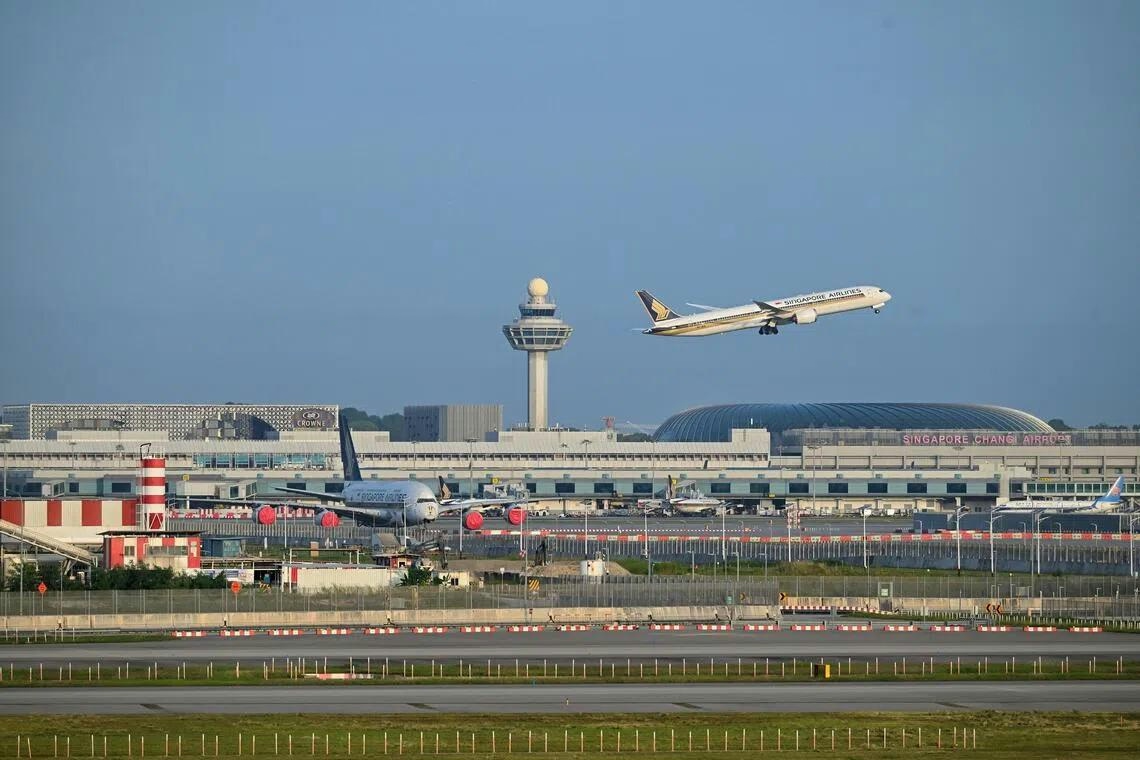
Singapore Advances Sustainability and Aviation Innovation Amid Regional Competition
Singapore is intensifying its focus on sustainability, aviation innovation, and human capital development as it confronts an increasingly complex global environment. This strategic shift follows a landmark year for the city-state’s aviation sector, which recorded unprecedented passenger traffic in 2025, even as it faces growing challenges from geopolitical tensions, economic fragmentation, and rapid technological change.
Record Passenger Traffic and Emerging Challenges
At a media briefing on 29 January, Han Kok Juan, director-general of the Civil Aviation Authority of Singapore (CAAS), highlighted the robust performance of Singapore’s air hub. Changi Airport handled nearly 70 million passenger movements in 2025, marking a 3.4% increase from the previous year and setting a new all-time high. Han described this achievement as a testament to the resilience and strength of Singapore’s aviation sector amid a volatile global landscape.
Despite this success, Han warned of “more turbulent skies ahead,” pointing to intensifying competition from regional hubs such as Indonesia, which is rapidly modernizing its airpower and upgrading aviation infrastructure. He also emphasized the imperative for Singapore to keep pace with global shifts toward sustainable aviation technologies to maintain its competitive edge.
“In a more uncertain and potentially fractured world, aviation remains a unifying force that brings people together,” Han remarked. “But we cannot take our success for granted. That is why this year, we are stepping up investments to build new capabilities in sustainability, innovation, and human capital.”
Strategic Initiatives and Global Partnerships
Singapore’s approach involves strengthening global partnerships to safeguard its connectivity and relevance. During the upcoming Changi Aviation Summit, held as part of the Singapore Airshow from 1 to 2 February, CAAS plans to formalize nine agreements with various partners. A key highlight is a joint agreement with its subsidiary, the Singapore Sustainable Aviation Fuel Company (SAFCo), to launch the country’s first voluntary sustainable aviation fuel (SAF) procurement trial. This initiative seeks to consolidate voluntary SAF demand ahead of Singapore’s target to increase SAF usage by 1% this year.
Additional agreements will address aviation innovation, workforce training, and manpower development, reflecting Singapore’s comprehensive strategy to future-proof its aviation sector.
Industry Response and Regional Dynamics
Reactions to Singapore’s initiatives have been mixed. While global aviation companies have expressed growing interest in the city-state’s sustainability agenda, some industry analysts remain cautious about the practicality of meeting ambitious environmental targets. Meanwhile, competitors in Southeast Asia are accelerating their own efforts to enhance aviation infrastructure and sustainability programs, intensifying the race to attract business and investment.
Han underscored the necessity of adaptability and collaboration in this evolving landscape. “In a very uncertain and fractured world, we must remain connected and maintain our relevance,” he said, reaffirming Singapore’s commitment to leading the region in sustainable and innovative aviation.

Etihad Airways Suspends Airbus A380 Flights on Key Route

Aditya Birla Group Seeks Approval for Aircraft Leasing in GIFT City

Qatar Airways Highlights Innovation and Connectivity at Arabian Travel Market 2026

Hong Kong's Five-Year Plan Includes Andrew Fan's Aircraft Parts Processing Hub Proposal

ACIA Aero Leasing Delivers ATR72-600 to Air Nostrum

RTX Appoints Jill Albertelli as Head of Pratt & Whitney

TAT Technologies Joins Beyond Aero Hydrogen Aircraft Program

AURAK Study Highlights Barriers to Air Taxi Adoption in Emerging Economies

Xiamen Air Selects Altitude for 787 Maintenance at Heathrow

Etihad and Swissport Extend Global Partnership
