
Orquesta conocimientos de IA para convertirlos en acción

Tendencias
Categories
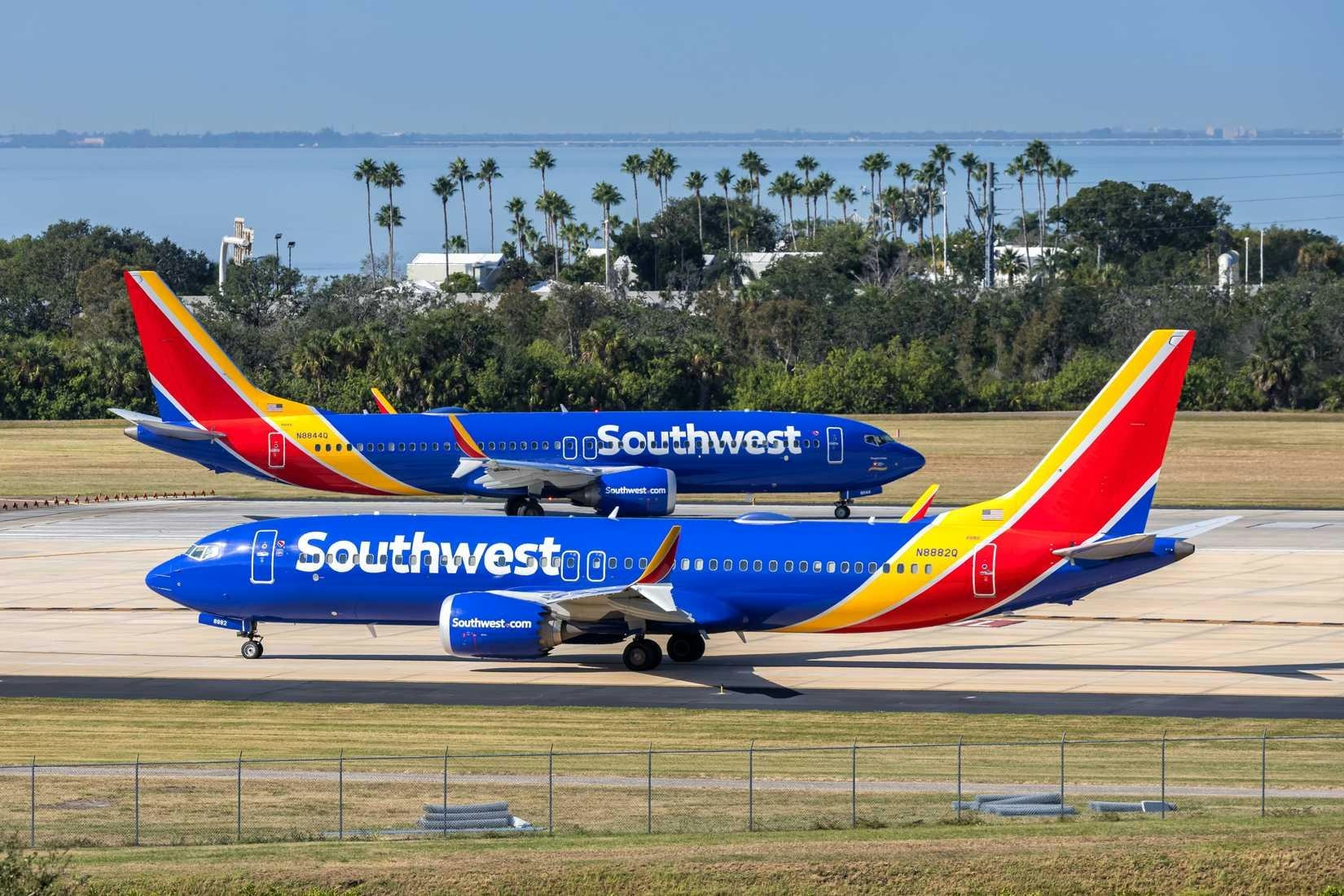
Can the Boeing 737 Dump Fuel?
Can the Boeing 737 Dump Fuel?
Fuel Dumping and Aircraft Design
Fuel dumping is a critical safety procedure employed by many large commercial aircraft to reduce landing weight and minimize structural stress during emergency returns to the airport. Pilots are trained to shut down malfunctioning engines, climb to a safe altitude, and jettison fuel if necessary before landing. However, this standard safety measure is not available on the Boeing 737, one of the world’s most widely used commercial jets. From the original 737-100 introduced in 1968 to the latest 737 MAX variants, no model in the 737 family is equipped with a fuel jettison system.
This absence often surprises those outside the aviation industry, given the prominence of fuel dumping in high-profile emergencies. Yet, for pilots and industry insiders, it is a well-understood characteristic shared by many smaller and medium-range jets, including the Airbus A220, A320, Boeing 717, and 757, which also lack this capability.
Regulatory and Historical Context
The reason for this design choice is rooted in regulatory history and aircraft specifications. In the mid-20th century, the Federal Aviation Administration (FAA) mandated that aircraft with a maximum takeoff weight (MTOW) exceeding 105% of their maximum landing weight (MLW) must be equipped with fuel jettison systems. This requirement applied primarily to long-range aircraft such as the Boeing 707 and Douglas DC-8, as well as the medium-range Boeing 727. In contrast, regional and short-haul jets like the Boeing 737 and McDonnell Douglas DC-9 were designed with MLWs much closer to their MTOWs, rendering fuel dumping unnecessary under these regulations.
Consequently, these aircraft are certified to perform overweight landings in emergencies, with actual landing weights typically only marginally above certified limits. This approach poses less risk to the airframe compared to larger, long-range jets, where the weight difference is more significant.
As the 737 and DC-9 families evolved through the 1960s and 1970s, manufacturers increased their range and gross weight. However, incorporating a fuel jettison system would have introduced additional development costs and complexity. Therefore, the original design philosophy remained intact, and the absence of fuel dumping capability has become standard for most narrowbody and regional jets.
Implications Amid the 2026 Fuel Crisis
The technical limitation of the Boeing 737’s inability to dump fuel has gained renewed attention amid the ongoing global fuel crisis of 2026. Jet fuel prices have doubled within eight weeks, sharply increasing operating costs for airlines and compelling carriers to reassess fuel management strategies. This crisis has already precipitated significant industry changes; for instance, Ascend Airways recently returned its Boeing 737 MAX fleet and relinquished its UK Air Operator Certificate, citing unsustainable costs and structural challenges.
In response, airlines are exploring all possible measures to manage fuel expenses, including theoretical considerations of fuel dumping to reduce weight and consumption. However, for operators of the 737, this option remains unavailable due to the aircraft’s design constraints.
The aviation sector continues to grapple with unprecedented supply shortages and limited policy tools, compounded by geopolitical tensions, particularly involving China, which add further uncertainty. While Boeing has not reported any immediate impacts on aircraft deliveries to Middle Eastern customers, the volatile fuel market highlights the operational limitations inherent in aircraft like the 737. As airlines navigate these challenges, the longstanding absence of a fuel dumping system on the Boeing 737 remains a significant, if often overlooked, factor.

Etihad Airways Suspends Airbus A380 Flights on Key Route

Aditya Birla Group Seeks Approval for Aircraft Leasing in GIFT City

Qatar Airways Highlights Innovation and Connectivity at Arabian Travel Market 2026

Hong Kong's Five-Year Plan Includes Andrew Fan's Aircraft Parts Processing Hub Proposal

ACIA Aero Leasing Delivers ATR72-600 to Air Nostrum

RTX Appoints Jill Albertelli as Head of Pratt & Whitney

TAT Technologies Joins Beyond Aero Hydrogen Aircraft Program

AURAK Study Highlights Barriers to Air Taxi Adoption in Emerging Economies

Xiamen Air Selects Altitude for 787 Maintenance at Heathrow

Etihad and Swissport Extend Global Partnership
