
Orquesta conocimientos de IA para convertirlos en acción

Tendencias
Categories
GE Aerospace Investigates Automation in Engine Repairs
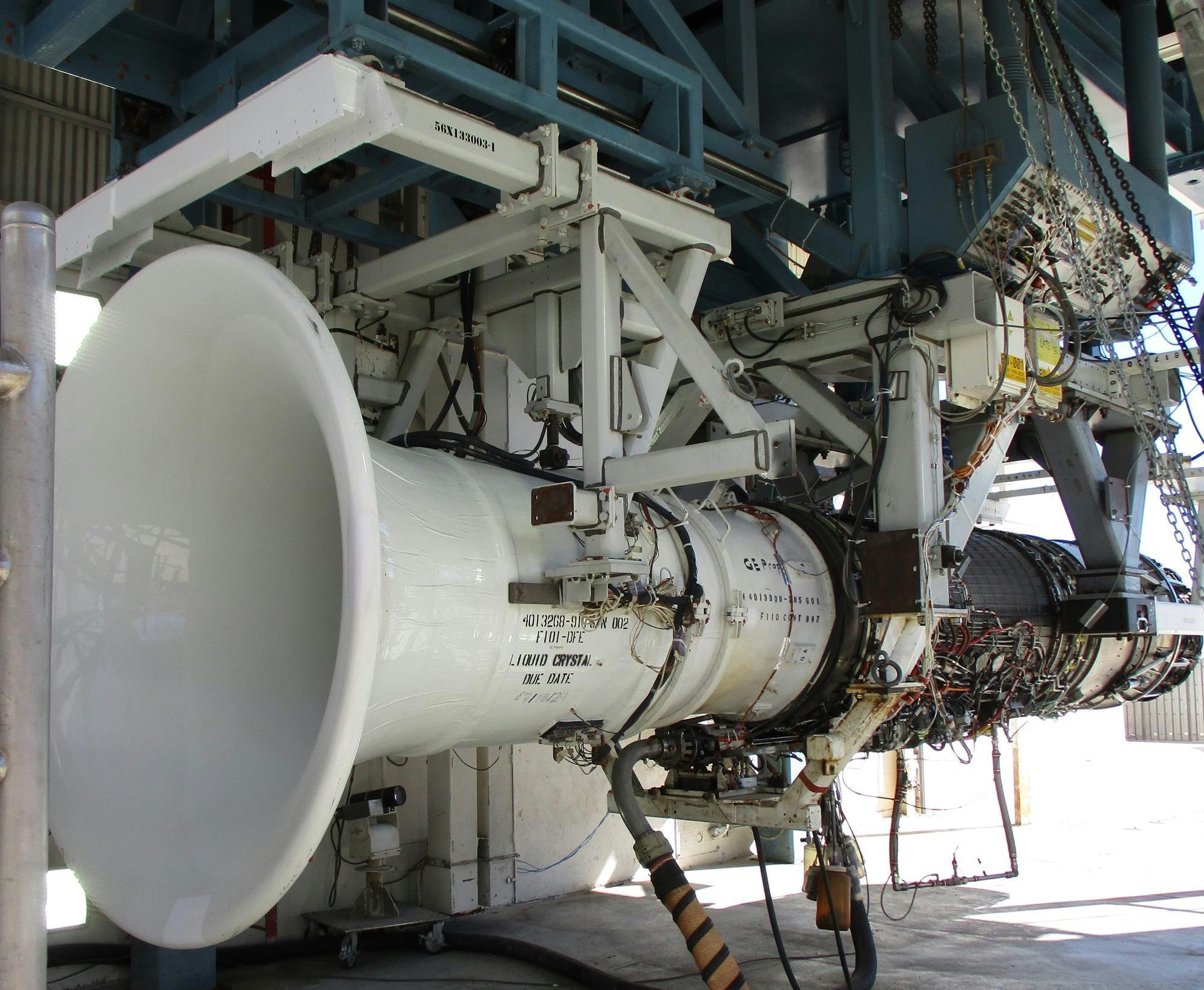
GE Aerospace Advances Automation at Singapore Engine Repair Facility
GE Aerospace is significantly expanding the use of automation, robotics, and process enhancements at its engine component repair facility in Singapore. This strategic move aims to increase maintenance capacity and reduce turnaround times amid growing global demand for engine servicing and parts. With airlines extending aircraft operational periods while awaiting maintenance, GE is reorganizing workflows, redesigning floor layouts, and integrating automated systems—all within the existing facility footprint.
Enhancing Efficiency Through Automation
The Singapore facility, which employs approximately 2,000 workers, serves as a central element of GE’s broader investment plan that could total up to $300 million. Over the past five years, the site has experienced a 46% increase in maintenance, repair, and overhaul (MRO) activities, accompanied by a 24% reduction in turnaround time. These improvements underscore the significant impact of automation on operational efficiency.
Among the key advancements is the automation of repair processes that were traditionally manual, such as the reshaping of compressor blades and other precision components. Technician Suresh Sinnaiyan highlighted the complexity of these tasks, noting that until now, they were performed entirely by hand. The facility is also adopting continuous improvement methodologies and expanding its capabilities to service newer engine models entering overhaul cycles.
Challenges and Industry Implications
Despite the clear benefits, the transition to automation presents several challenges. The substantial upfront investment required for advanced automation and artificial intelligence technologies is considerable. Additionally, there is a pressing need for skilled personnel to operate and maintain these sophisticated systems. Resistance from traditional technicians concerned about potential job displacement further complicates the transformation process. Nevertheless, market responses have been largely favorable, as automation is expected to further decrease turnaround times and costs—critical factors for airlines aiming to maximize fleet availability.
Competitors in the aerospace sector may respond by pursuing similar automation initiatives to maintain competitiveness or by emphasizing service quality and customer support as differentiators. GE Aerospace CEO Larry Culp emphasized that the company’s strategy focuses on sustained, long-term operational improvements rather than short-term financial targets. “It’s not about sprinting at quarter’s end to make a Wall Street guide,” Culp stated. “It is making every hour and every day count.”
As GE Aerospace continues to modernize and automate its Singapore operations, it is positioning itself to meet escalating industry demands while managing the complexities inherent in technological transformation within aircraft engine maintenance.

Etihad Airways Suspends Airbus A380 Flights on Key Route

Aditya Birla Group Seeks Approval for Aircraft Leasing in GIFT City

Qatar Airways Highlights Innovation and Connectivity at Arabian Travel Market 2026

Hong Kong's Five-Year Plan Includes Andrew Fan's Aircraft Parts Processing Hub Proposal

ACIA Aero Leasing Delivers ATR72-600 to Air Nostrum

RTX Appoints Jill Albertelli as Head of Pratt & Whitney

TAT Technologies Joins Beyond Aero Hydrogen Aircraft Program

AURAK Study Highlights Barriers to Air Taxi Adoption in Emerging Economies

Xiamen Air Selects Altitude for 787 Maintenance at Heathrow

Etihad and Swissport Extend Global Partnership
