
Orquesta conocimientos de IA para convertirlos en acción

Tendencias
Categories
How Many Boeing 767s Does UPS Airlines Operate?
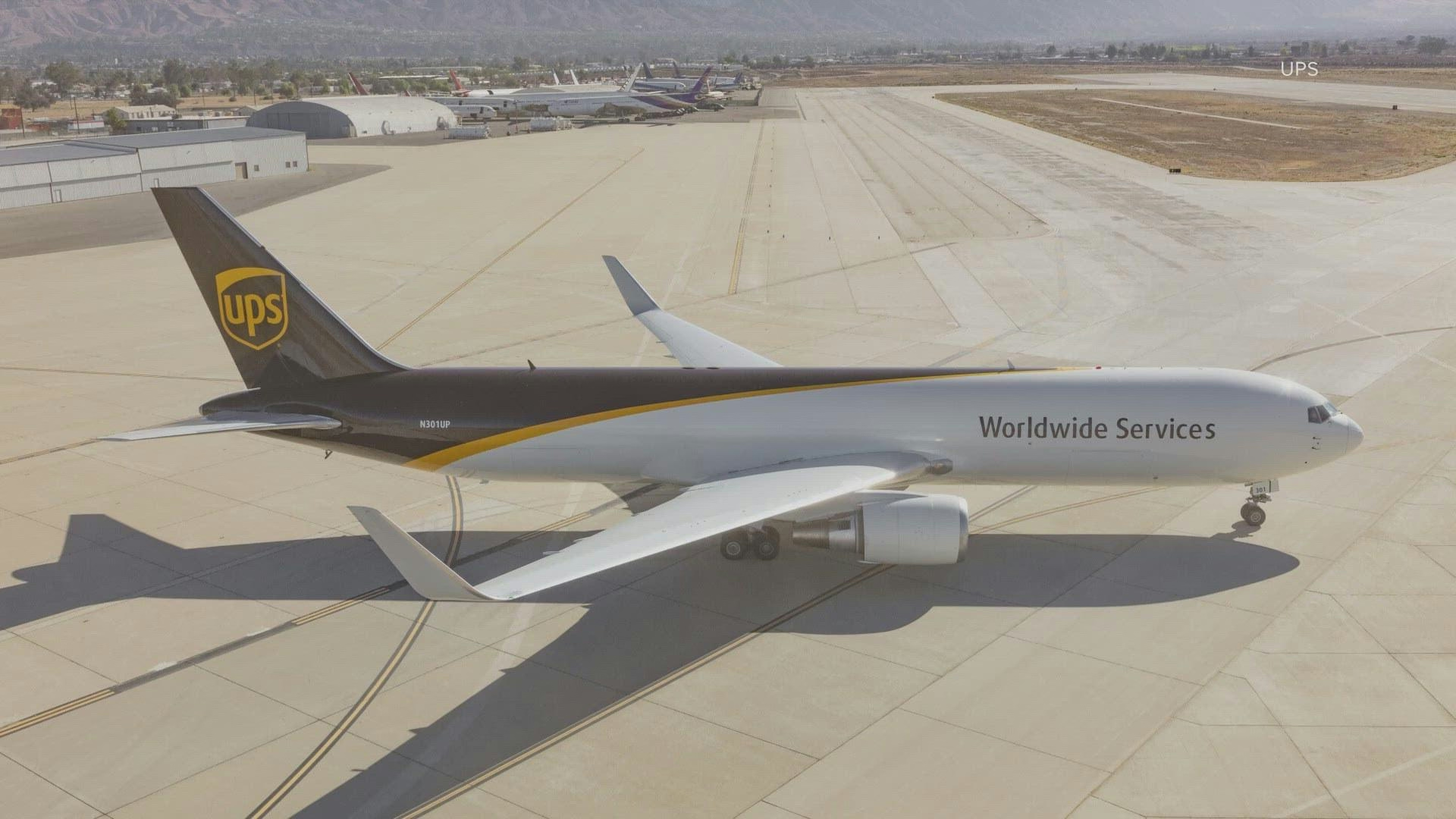
UPS Airlines and Its Boeing 767 Fleet
UPS Airlines stands as one of the world’s foremost operators of the Boeing 767, having transformed this aircraft from its original passenger configuration into a critical component of its global cargo network. As Boeing prepares to conclude commercial production of the 767, the size and significance of UPS’s 767 fleet highlight the aircraft’s essential role in maintaining international supply chains.
Based at its extensive Worldport hub in Louisville, Kentucky, UPS Airlines operates a complex hub-and-spoke system. Unlike passenger airlines that often prioritize younger, more fuel-efficient fleets, UPS employs a buy-and-hold strategy, owning its aircraft outright to accommodate the lower daily utilization typical of cargo operations. This approach allows UPS to optimize its fleet for long-term operational efficiency rather than short-term market trends.
The Composition and Scale of UPS’s 767 Fleet
As of early 2026, UPS Airlines operates a total of 99 Boeing 767-300 aircraft. This fleet comprises 90 factory-built 767-300F freighters alongside 9 passenger-to-freighter conversions. The 767-300F, with a payload capacity of 119,049 pounds (54,000 kilograms) and a range of 3,255 nautical miles, serves as the backbone for UPS’s medium-demand routes. It effectively bridges the gap between the larger Boeing 747-8F and the smaller Boeing 757, enabling UPS to tailor capacity to specific route requirements.
The 767 fleet is part of a broader and diverse aircraft portfolio that includes 43 Boeing 747-8F and -400 models, 75 Boeing 757-200s, and 52 Airbus A300-600s. This variety allows UPS to deploy aircraft that best match the demands of its extensive global network, ensuring operational flexibility and efficiency.
Fleet Expansion and Operational Considerations
UPS’s 767 fleet is poised for further growth, with 17 additional 767-300Fs currently on firm order. These deliveries are scheduled to arrive before Boeing ceases commercial 767 production, securing UPS’s position as the largest global operator of the type for the foreseeable future.
Operational realities, however, mean that not all aircraft are always active. For example, on February 14, 2026, UPS temporarily grounded 24 of its 767s for mandatory maintenance following a routine technical inspection. While these aircraft remain part of the overall fleet count, such maintenance cycles can significantly affect daily fleet availability and operational planning.
The 767’s Ascendancy Following the MD-11 Retirement
The prominence of the 767 in UPS’s fleet has increased notably following the accelerated retirement of the McDonnell Douglas MD-11. After the tragic crash of UPS Flight 2976 in Louisville in November 2025, which resulted in 15 fatalities, UPS expedited its fleet modernization efforts by permanently grounding its remaining 26 MD-11 trijets. The 767-300F has since emerged as the primary successor, solidifying its role as the workhorse of UPS’s cargo operations.
Boeing’s Market Position Amid Industry Shifts
UPS’s evolving fleet strategy unfolds against a backdrop of broader changes in the aviation industry. Boeing continues to face strong competition from Airbus, particularly in the narrowbody segment where Airbus currently leads in deliveries. Nonetheless, Boeing’s recent financial recovery, increased production rates of the 737 MAX, and renewed emphasis on safety have helped stabilize its standing in the global aerospace market.
Conclusion
With 99 Boeing 767-300s currently in operation and additional aircraft on order, UPS Airlines remains heavily reliant on this versatile freighter as the cornerstone of its cargo operations. As Boeing phases out 767 production, UPS’s sustained commitment to the aircraft ensures its continued prominence in global logistics for years to come.

Etihad Airways Suspends Airbus A380 Flights on Key Route

Aditya Birla Group Seeks Approval for Aircraft Leasing in GIFT City

Qatar Airways Highlights Innovation and Connectivity at Arabian Travel Market 2026

Hong Kong's Five-Year Plan Includes Andrew Fan's Aircraft Parts Processing Hub Proposal

ACIA Aero Leasing Delivers ATR72-600 to Air Nostrum

RTX Appoints Jill Albertelli as Head of Pratt & Whitney

TAT Technologies Joins Beyond Aero Hydrogen Aircraft Program

AURAK Study Highlights Barriers to Air Taxi Adoption in Emerging Economies

Xiamen Air Selects Altitude for 787 Maintenance at Heathrow

Etihad and Swissport Extend Global Partnership
