Imagen

AeroGenie — Tu copiloto inteligente.

Pregunta cualquier cosa. Analiza todo. Actúa al instante.

Tendencias

Categories

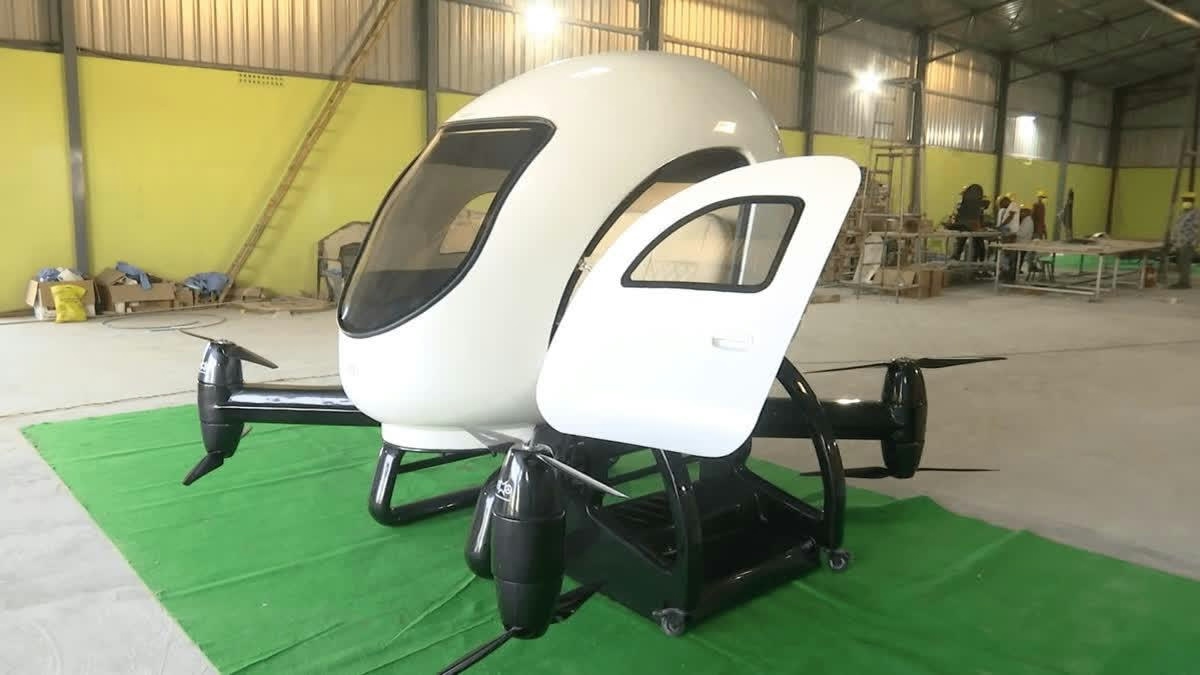
Sharjah Initiates Feasibility Study for Air Taxi and Cargo Transport
February 17, 2026By ePlane AI
Sharjah Initiates Feasibility Study for Air Taxi and Cargo Transport
0
0
Air Taxi
Cargo Transport
Sharjah Aviation

Sharjah Advances Housing and Air Transport Initiatives

Land Allocation to Support Housing and Investment

Under the leadership of Sheikh Sultan Bin Mohammed Bin Sultan Al Qasimi, Crown Prince and Deputy Ruler of Sharjah, the Sharjah Executive Council has approved the initial allocation of 1,200 land plots for Emirati citizens, scheduled for distribution in 2026. This allocation comprises 490 plots designated for residential purposes and 710 earmarked for investment, reflecting the emirate’s strategic commitment to enhancing citizens’ quality of life and fostering economic participation.

The initiative forms part of a comprehensive housing and urban development strategy aimed at addressing the increasing demand for residential land while stimulating local investment and sustainable growth. By providing accessible land ownership opportunities, Sharjah seeks to support family stability and encourage entrepreneurial activity. The investment plots are expected to attract private-sector involvement, contributing to the diversification of the emirate’s economic landscape.

Feasibility Study for Air Taxi and Cargo Transport

In parallel with the land allocation programme, the Executive Council has approved a feasibility study for an advanced air transport project. This study will evaluate the potential introduction of cutting-edge air taxi services and modern cargo transportation solutions, positioning Sharjah as a regional hub for innovative mobility and logistics. The initiative aligns with global trends emphasizing smart mobility, sustainability, and the adoption of advanced aviation technologies.

The study will examine the technical, economic, and operational viability of implementing air taxi and cargo services within the emirate. Development efforts are expected to involve collaboration with leading international partners specializing in next-generation aviation and urban air mobility systems. The project aims to enhance intercity connectivity, facilitate efficient cargo movement, and offer fast, environmentally conscious transportation options. These advancements are intended to complement Sharjah’s long-term vision for smart infrastructure, innovation, and sustainable urban expansion.

Challenges and Regional Context

Despite its promising outlook, the air transport initiative faces several challenges, including regulatory complexities, integration with existing airport infrastructure, and competition from established regional players such as Dubai. The announcement has already generated interest within the tourism and business sectors, while competitors like Dubai and Ras Al Khaimah may respond by accelerating their own air taxi projects and expanding vertiport infrastructure to maintain regional leadership.

Together, the land allocation programme and the proposed air transport project underscore Sharjah’s ongoing efforts to invest in infrastructure, empower its citizens, and reinforce its position as a forward-looking economic and logistical centre in the Gulf region.

More news
Pegasus Airlines to Open New MRO Center by Fourth Quarter 2026

Pegasus Airlines to Open New MRO Center by Fourth Quarter 2026

Pegasus Airlines to Launch Advanced MRO Facility by Late 2026 Pegasus Airlines has unveiled plans to establish a comprehensive maintenance, repair, and overhaul (MRO) center at Istanbul Sabiha Gökcen Airport, targeting full operational status by the fourth quarter of 2026. This strategic development, announced by Chairman Mehmet Nane, represents a major enhancement of the airline’s technical infrastructure, aimed at reinforcing its competitive stance within the dynamic global MRO market. Facility Specifications and Expansion Plans The forthcoming MRO center will encompass 18,000 square meters of enclosed workspace alongside a 25,000-square-meter apron. It will include two hangars capable of simultaneously supporting line and base maintenance for up to five narrowbody aircraft. The facility’s certifications will cover A320ceo/neo and B737NG-family aircraft, reflecting Pegasus Airlines’ existing fleet composition. A second phase, anticipated for completion by late 2026, will introduce an additional hangar, effectively doubling the base maintenance capacity to service five more narrowbody aircraft. Looking further ahead, a third phase is planned within four to five years, which will expand the center’s capabilities to accommodate maintenance operations for up to ten narrowbody aircraft concurrently. Industry Context and Competitive Challenges Pegasus Airlines’ expansion occurs amid intensifying competition in the MRO sector both domestically and internationally. Leading industry players are accelerating their investments, exemplified by RTX’s recent $139 million commitment to MRO operations in Singapore. Concurrently, major aircraft manufacturers such as Airbus and Boeing are contending with operational challenges that may influence the competitive dynamics of the MRO landscape by 2026. This initiative also aligns with broader industry trends, including the resolution of Pratt & Whitney’s GTF engine grounding issues and an increasing focus on digitalization and efficiency in maintenance workflows. As Pegasus Airlines advances its MRO capabilities, it will face scrutiny regarding operational efficiency and cost management, factors that will be critical in determining the new center’s market success. Pegasus Airlines’ investment highlights its dedication to expanding in-house maintenance capacity and ensuring the long-term reliability of its fleet. The new MRO center is set to become a cornerstone of the airline’s growth strategy as it navigates an increasingly competitive and technologically sophisticated maintenance environment.
Diehl Aviation Advances to Crystal Cabin Award Finals with AURS Accessibility Innovation

Diehl Aviation Advances to Crystal Cabin Award Finals with AURS Accessibility Innovation

Diehl Aviation’s AURS Innovation Advances to Crystal Cabin Award Finals Diehl Aviation has been named a finalist for the esteemed Crystal Cabin Award, recognized for its Adaptive User Routing System (AURS) in the Accessibility category. This nomination underscores the company’s sustained dedication to fostering barrier-free and inclusive air travel, building on its previous success in the same category in 2025. AURS: Redefining Accessibility in Aircraft Cabins The AURS system represents a significant advancement in accessible cabin design by transforming aircraft lavatories into independently navigable spaces for passengers with visual or hearing impairments. Developed in close collaboration with travelers who have sensory disabilities, the system combines an accessible physical layout with a smart digital interface tailored to individual needs. Key features include high-contrast surfaces, tactile guidance elements, Braille signage, and uniquely shaped controls that facilitate intuitive orientation. Safety announcements are visually presented on an integrated mirror screen, ensuring critical information is accessible beyond traditional audio cues. Additionally, adaptive lighting and optional audio prompts provide further assistance to passengers with low vision. Built upon Diehl’s connected-cabin technology, AURS is fully certifiable and technically prepared for airline integration. The system is currently undergoing trials with accessibility groups, aiming to restore independence and dignity in one of the most challenging onboard environments. Carsten Laufs, Senior Vice President of Product Innovation and Digitalization at Diehl Aviation, emphasized the significance of the recognition: “Being named a finalist again is a strong endorsement of our commitment to inclusive innovation. With AURS, accessibility is not an add-on, it is an integral part of the cabin experience. We are very proud of the team behind this innovation, and we are looking forward to the final round of the CCA.” Industry Context and Competitive Landscape Diehl’s progress arrives amid intensifying competition within the aviation sector. Major manufacturers such as Airbus and Boeing continue to advance innovations across both single-aisle and widebody aircraft markets, while business aviation leaders including Gulfstream and Bombardier are making notable strides in accessibility and cabin technology. As the industry responds to rising production rates and evolving passenger expectations, competitors are expected to increase investments in accessibility solutions and broaden their market strategies. This competitive environment highlights the growing importance of inclusive design as airlines and manufacturers seek to differentiate themselves while meeting regulatory requirements and customer demands. The winners of the Crystal Cabin Award will be announced at the forthcoming Aircraft Interiors Expo in Hamburg. About Diehl Aviation Diehl Aviation is a global partner to the aviation industry, renowned for pioneering innovations that shape the future of flight. Employing over 5,400 people and generating annual revenues exceeding 1.2 billion euros, Diehl Aviation—together with Diehl Aerospace, its joint venture with Thales—supplies avionics, aircraft systems, and cabin solutions to leading manufacturers including Airbus, Boeing, Bombardier, and Embraer, as well as military and eVTOL partners, airlines, and operators worldwide. The company remains committed to making air travel safer, more comfortable, and more accessible for all.
How Many Boeing 767s Does UPS Airlines Operate?

How Many Boeing 767s Does UPS Airlines Operate?

UPS Airlines and Its Boeing 767 Fleet UPS Airlines stands as one of the world’s foremost operators of the Boeing 767, having transformed this aircraft from its original passenger configuration into a critical component of its global cargo network. As Boeing prepares to conclude commercial production of the 767, the size and significance of UPS’s 767 fleet highlight the aircraft’s essential role in maintaining international supply chains. Based at its extensive Worldport hub in Louisville, Kentucky, UPS Airlines operates a complex hub-and-spoke system. Unlike passenger airlines that often prioritize younger, more fuel-efficient fleets, UPS employs a buy-and-hold strategy, owning its aircraft outright to accommodate the lower daily utilization typical of cargo operations. This approach allows UPS to optimize its fleet for long-term operational efficiency rather than short-term market trends. The Composition and Scale of UPS’s 767 Fleet As of early 2026, UPS Airlines operates a total of 99 Boeing 767-300 aircraft. This fleet comprises 90 factory-built 767-300F freighters alongside 9 passenger-to-freighter conversions. The 767-300F, with a payload capacity of 119,049 pounds (54,000 kilograms) and a range of 3,255 nautical miles, serves as the backbone for UPS’s medium-demand routes. It effectively bridges the gap between the larger Boeing 747-8F and the smaller Boeing 757, enabling UPS to tailor capacity to specific route requirements. The 767 fleet is part of a broader and diverse aircraft portfolio that includes 43 Boeing 747-8F and -400 models, 75 Boeing 757-200s, and 52 Airbus A300-600s. This variety allows UPS to deploy aircraft that best match the demands of its extensive global network, ensuring operational flexibility and efficiency. Fleet Expansion and Operational Considerations UPS’s 767 fleet is poised for further growth, with 17 additional 767-300Fs currently on firm order. These deliveries are scheduled to arrive before Boeing ceases commercial 767 production, securing UPS’s position as the largest global operator of the type for the foreseeable future. Operational realities, however, mean that not all aircraft are always active. For example, on February 14, 2026, UPS temporarily grounded 24 of its 767s for mandatory maintenance following a routine technical inspection. While these aircraft remain part of the overall fleet count, such maintenance cycles can significantly affect daily fleet availability and operational planning. The 767’s Ascendancy Following the MD-11 Retirement The prominence of the 767 in UPS’s fleet has increased notably following the accelerated retirement of the McDonnell Douglas MD-11. After the tragic crash of UPS Flight 2976 in Louisville in November 2025, which resulted in 15 fatalities, UPS expedited its fleet modernization efforts by permanently grounding its remaining 26 MD-11 trijets. The 767-300F has since emerged as the primary successor, solidifying its role as the workhorse of UPS’s cargo operations. Boeing’s Market Position Amid Industry Shifts UPS’s evolving fleet strategy unfolds against a backdrop of broader changes in the aviation industry. Boeing continues to face strong competition from Airbus, particularly in the narrowbody segment where Airbus currently leads in deliveries. Nonetheless, Boeing’s recent financial recovery, increased production rates of the 737 MAX, and renewed emphasis on safety have helped stabilize its standing in the global aerospace market. Conclusion With 99 Boeing 767-300s currently in operation and additional aircraft on order, UPS Airlines remains heavily reliant on this versatile freighter as the cornerstone of its cargo operations. As Boeing phases out 767 production, UPS’s sustained commitment to the aircraft ensures its continued prominence in global logistics for years to come.
How Meta’s XR and AI Technologies Are Transforming Aviation

How Meta’s XR and AI Technologies Are Transforming Aviation

How Meta’s XR and AI Technologies Are Transforming Aviation At the CAPA Airline Leader Summit – World in December 2025, Meta presented an ambitious vision for integrating extended reality (XR) and artificial intelligence (AI) within the aviation industry. Moving beyond experimental phases, these technologies are now generating tangible benefits across crew training, operational efficiency, and passenger experience, marking a significant step toward digital transformation in aviation. Revolutionizing Training and Operations Airlines are increasingly adopting XR to transform crew training by utilizing highly realistic and repeatable simulations. These immersive environments enhance safety protocols, accelerate the learning curve for personnel, and reduce associated costs. Complementing this, AI-driven content creation and analytics are streamlining airline operations by enabling personalized services, anticipating operational demands, and optimizing performance on a large scale. For passengers, the integration of immersive in-flight entertainment and bring-your-own-device strategies is redefining engagement, offering richer and more customized experiences without adding weight or complexity to aircraft cabins. A central element of Meta’s strategy is the development of next-generation augmented reality (AR) devices, notably the Orion smart glasses. These devices aim to provide contextual, real-time information directly within crew workflows and passenger interactions. Potential applications include interactive navigation, service guidance, and immersive previews of destinations, all of which promise to transform how travelers engage with airlines and their environments. Strategic Shifts and Market Challenges Meta’s recent strategic realignment, characterized by reductions in its Reality Labs division and a renewed focus on AR and AI, reflects both the opportunities and challenges inherent in this sector. While AR smart glasses and AI-powered tools hold promise for enhancing pilot training, maintenance, and operational efficiency, the company’s pivot has sparked concerns about a potential “VR winter.” Analysts highlight the limited mainstream appeal of VR headsets, and skepticism remains among some competitors regarding the long-term viability of AR glasses in aviation. Meanwhile, other industry players are developing their own AR solutions, underscoring a fragmented and competitive landscape. Investor response has been measured. Although sales of Meta’s smart glasses tripled last year, raising interest, questions persist about the broader adoption of AI glasses and the regulatory implications of their widespread use in aviation settings. Despite these uncertainties, Meta’s continued investment and real-world deployments demonstrate that XR and AI technologies have moved beyond futuristic concepts to become practical tools delivering value today. The company’s aviation strategy offers insight into how immersive technology could influence airline competitiveness, operational resilience, and customer engagement in the coming years, even as the industry contends with evolving market dynamics and regulatory scrutiny.
Ohio Seeks Federal Electric Aircraft Testing Program

Ohio Seeks Federal Electric Aircraft Testing Program

Ohio Positions Itself for Federal Electric Aircraft Testing Program TOLEDO, Ohio – Ohio is emerging as a leading contender to become a national center for electric aircraft testing and development, as the Federal Aviation Administration (FAA) prepares to launch a new pilot initiative aimed at advancing next-generation air mobility technologies. The FAA’s Electric Vertical Takeoff and Landing Integration Pilot Program (eIPP) will select five sites across the United States to test and develop electric, often automated, vertical takeoff and landing (eVTOL) aircraft, commonly referred to as air taxis. These innovative vehicles are anticipated to revolutionize the transportation of medical supplies, emergency response services, and package delivery. State officials emphasize the immediacy of this technological shift. “It’s already here. It’s already coming. It’s just a matter of how closely we get tied to it,” said State Representative Bernie Willis (R-Springfield). Ohio’s proposal highlights a rapid deployment strategy, aiming to commence operations within three months of approval. The initial focus will be on transporting critical medical cargo, including organs and biospecimens. Bob Tanner, advanced air mobility director for the Ohio Department of Transportation, explained, “We’re going to demonstrate through actual flight how these aircraft can move efficiently, quietly, cost-effectively for the transportation of organs, biospecimens, and the like.” Regional Collaboration and Strategic Advantages Ohio is adopting a regional approach by collaborating with neighboring states Michigan, Indiana, and Kentucky to bolster its application. This coalition seeks to leverage the combined strengths of the region’s aviation infrastructure and expertise. State Representative Michele Grim (D-Toledo) noted that participation in the program aligns with Ohio’s longstanding aviation heritage. The Ohio House of Representatives recently passed a unanimous resolution endorsing the state’s bid, underscoring Ohio’s extensive airspace infrastructure, partnerships with the U.S. Air Force, private aerospace investments, and its historical contributions to aviation. “We built the foundation of flight, we’ve strengthened American aerospace leadership throughout the 20th century, and now we’re ready to lead the next chapter,” Willis added. Despite Ohio’s strong positioning, competition remains intense as other states and regions vie for inclusion in the FAA’s pilot program. The selection outcome is expected to influence market dynamics significantly, potentially attracting increased investment in Ohio’s advanced air mobility infrastructure if successful. Major aerospace corporations such as Airbus and Boeing are closely observing the process, with the possibility of accelerating their own electric aircraft development or intensifying lobbying efforts to influence federal funding and regulatory frameworks. If selected, Ohio’s participation in the pilot program would span three years, serving as a critical proving ground for integrating electric aircraft into the national airspace system. State officials anticipate that the FAA will announce the chosen sites in the first week of March.
NASA Studies Public Response to Air Taxi Noise

NASA Studies Public Response to Air Taxi Noise

NASA Studies Public Response to Air Taxi Noise Investigating Community Reactions to Emerging Air Mobility As advanced air mobility (AAM) aircraft prepare to enter U.S. airspace, NASA is conducting research to understand how communities might respond to the novel sounds these vehicles will introduce. The focus of this investigation is on air taxis—small aircraft intended for short-distance passenger transport, including personal travel and emergency medical services. NASA’s aeronautics division recently completed a study designed to assess public annoyance and sensitivity to these new noise sources. The research, titled the Varied Advanced Air Mobility Noise and Geographic Area Response Difference (VANGARD) test, involved 359 participants from Los Angeles, New York City, and Dallas-Fort Worth. Conducted between late August and September 2025, the study exposed participants to 67 simulated aircraft sounds derived from NASA and industry concept designs. To ensure impartial feedback, participants were not informed of the manufacturers nor shown images of the aircraft. This methodology aimed to isolate auditory perception from visual or brand biases. Key Findings and Methodology Preliminary results indicate that residents in noisier urban environments reported higher levels of annoyance from air taxi sounds compared to those living in quieter suburban areas. While researchers continue to analyze the data, early interpretations suggest that individuals accustomed to elevated background noise may exhibit increased sensitivity to additional sound disturbances. Participants rated their annoyance after hearing each aircraft flyover simulation and provided their zip codes, allowing researchers to classify their home environments by ambient noise levels. Most participants completed the study remotely using personal audio devices, while a control group of 20 individuals participated on-site at NASA’s Langley Research Center using standardized listening equipment. The consistency of responses between these groups reinforces the reliability of the findings. Addressing Public Concerns Amid Industry Progress The introduction of air taxis has sparked community opposition in certain regions, notably Southern California, where petitions have circulated expressing concerns over noise pollution and the impact of low-flying aircraft. These public apprehensions underscore the significance of NASA’s research in guiding both industry stakeholders and policymakers. Despite skepticism, companies such as Vertical Aerospace and Archer Aviation continue to advance their air taxi initiatives, aiming to secure regulatory certifications from the Federal Aviation Administration (FAA) and UK authorities by 2028. Their progress highlights the pressing need to understand and mitigate community reactions to the noise generated by these emerging aircraft. NASA’s ongoing studies, including the VANGARD test, seek to facilitate the safe and considerate integration of air taxis into communities. The insights gained are expected to inform future aircraft design and operational strategies, balancing technological innovation with the comfort and well-being of residents.
Linear Air Updates Membership Program

Linear Air Updates Membership Program

Linear Air Revamps Membership Program Amid Intensifying Competition Boston-based Linear Air, a broker specializing in regional private charter flights, has relaunched and rebranded its membership program to better address the evolving needs of frequent flyers. This strategic update follows the return of Justin Nihon as CEO six months ago and underscores the company’s commitment to refining its service offerings in a competitive market. Membership Structure and Fleet Composition Linear Air operates a significant portion of its flights using air taxis, which it categorizes into five distinct classes: Air Taxi, Premium Air Taxi, Midsize Air Taxi, Large Air Taxi, and Executive Air Taxi. The Executive Air Taxi category includes turboprop aircraft such as the King Air and Pilatus PC-12, accommodating up to eight passengers. The remaining categories primarily feature single- and twin-engine piston aircraft, including models like the Cirrus SR-22 and Cessna 172 Skyhawk, typically seating between two and six passengers. The company’s revamped membership program, branded as the Arrow Club, introduces two principal tiers. The Core membership requires a $24,000 upfront payment or $2,000 monthly installments, offering members a 5% discount on flight costs and guaranteed availability when booking at least 72 hours in advance, excluding weekends and holidays. The Premium tier, priced at $48,000 upfront or $4,000 per month, increases the discount to 10% and reduces the booking window to 48 hours. Premium members also benefit from coordinated ground transportation and catering services provided at cost. Additionally, a bespoke tier is available to accommodate corporate clients. All membership levels incorporate dynamic pricing and permit penalty-free cancellations up to 48 hours before departure, although more stringent terms may apply for turboprop and jet charters. The program primarily targets the piston aircraft segment, which Nihon identifies as a key growth area, particularly for travelers seeking efficient alternatives to lengthy drives or commercial flights on short regional routes. Digital Innovation and Market Differentiation Linear Air distinguishes itself through its instant online booking platform, enabling customers to secure next-day flights with ease. Approximately half of all bookings are now completed digitally. When a preferred aircraft category is unavailable, the company offers alternative options at adjusted rates, enhancing flexibility for members. Nihon highlights that frequent flyers increasingly value the convenience and immediacy of online booking. The company’s focus on air taxis sets it apart from many brokers and fixed-rate programs that predominantly emphasize jet charters. Linear Air anticipates growing demand as high-net-worth individuals prioritize time efficiency and experiential travel, such as making multiple same-day stops or returning home for family commitments following business engagements. Competitive Landscape and Market Challenges The overhaul of Linear Air’s membership program occurs amid intensifying competition from established operators like Wheels Up, which has recently announced ambitious expansion plans. Industry analysts suggest that competitors may initially adopt a cautious stance but could respond by enhancing their own membership offerings or adjusting pricing strategies to protect market share. Moreover, broader economic and geopolitical uncertainties—including fluctuating interest rates and inflationary pressures—pose potential challenges to consumer behavior and the private aviation sector at large. As Linear Air seeks to solidify its position within the charter market, its ability to navigate competitive pressures and adapt to shifting market dynamics will be critical to its future success.
MRO Strengthens Mexico’s Aerospace Industry

MRO Strengthens Mexico’s Aerospace Industry

MRO Drives Growth and Diversification in Mexico’s Aerospace Industry Mexico’s aerospace sector is increasingly embracing maintenance, repair, and overhaul (MRO) services as a strategic pathway for expansion, according to the Federación Mexicana de la Industria Aeroespacial (FEMIA). Traditionally centered on manufacturing components for original equipment manufacturers (OEMs), the industry is now capitalizing on the rising global air traffic and the consequent surge in demand for aircraft maintenance, which is opening new opportunities within the aftermarket. MRO activities encompass a broad spectrum of services, including preventive and corrective maintenance, component overhauls, engine servicing, avionics support, and regulatory inspections. These operations are subject to stringent oversight by regulatory bodies such as the U.S. Federal Aviation Administration and Mexico’s Agencia Federal de Aviación Civil, making technical expertise and certification essential prerequisites for market participation. Unlike aircraft manufacturing, which is often cyclical, MRO generates recurring demand throughout an aircraft’s operational life, offering a more stable revenue stream and greater resilience against economic volatility. For Mexican suppliers, this segment presents multiple avenues for diversification, ranging from engine and composite work to electronic systems and ground support equipment. By advancing along the value chain, companies can solidify their presence in the North American aviation market. Challenges and Strategic Responses Despite its potential, the expansion of MRO services in Mexico faces notable challenges. Industry experts highlight workforce shortages and the need to enhance regional capacity as significant obstacles. Overcoming these issues will require sustained investment in infrastructure, workforce training, and regulatory compliance. Additionally, companies must cultivate a nuanced understanding of regional maintenance hubs and adapt their technical capabilities to meet the evolving requirements of airlines and operators. The sector’s growth is closely linked to fleet activity in both Mexico and the United States, where high aircraft utilization continues to drive demand for specialized maintenance services. In response, market participants are increasing investments in the aviation aftermarket, with particular emphasis on integrating advanced technologies and sustainable practices to boost competitiveness. Meanwhile, global competitors are also adjusting their strategies. Some are leveraging regional strengths and expanding their footprint in markets such as the Middle East, especially in widebody MRO, to capture a larger share of the growing demand. While manufacturing remains a foundational element of Mexico’s aerospace industry, analysts concur that future growth will increasingly depend on after-sales services. By expanding into MRO, Mexican suppliers can access a more stable, high-value segment of the global aerospace market, positioning themselves for long-term success amid shifting industry dynamics.
Georgia’s Real Challenge Is Execution, Not Deliveries

Georgia’s Real Challenge Is Execution, Not Deliveries

Georgia’s Real Challenge Is Execution, Not Deliveries Recent shipment figures from Georgia’s general aviation sector indicate a stable and active market, often viewed as a key indicator of industry health. However, industry leaders emphasize that beneath these encouraging numbers lie significant operational challenges that could determine the sector’s future trajectory. At the General Aviation Manufacturers Association (GAMA) State of the Industry press conference, executives highlighted that workforce development, certification timelines, supply chain reliability, and airspace modernization are now more critical concerns than the volume of deliveries alone. Workforce Pressures and Operational Capacity One of the most pressing constraints facing Georgia’s aviation industry is the recruitment and training of skilled workers, particularly in specialized manufacturing and maintenance roles. Although interest in aviation careers remains robust, the lengthy process required to train and retain qualified personnel continues to limit production capacity. Ron Draper, GAMA Chairman and President and CEO of Textron Aviation, noted that supply chain fragility often stems from workforce shortages rather than purely technical issues. This challenge reflects broader demographic trends affecting technical professions, including accelerated retirements and the urgent need to establish sustainable talent pipelines. In response, companies are increasingly investing in apprenticeship programs, internships, and partnerships with educational institutions to cultivate future talent. Nicolas Chabbert, CEO of Daher, emphasized the importance of engaging young individuals early to foster long-term career development within the industry. Supporting these efforts, recent surveys from the Aviation Technician Education Council (ATEC) and TBX’s State of GA Maintenance Annual Survey reveal a growing shortage of aviation maintenance technicians. Two-thirds of respondents identified rising costs, supply chain disruptions, and staffing shortages as their primary concerns. Industry leaders agree that recruitment alone is insufficient; effective training, mentorship, and knowledge transfer are essential to enable new hires to contribute meaningfully. Execution Over Deliveries: The Broader Context Georgia’s challenges mirror trends observed in other sectors, such as African tourism, where the fundamental issue is not demand or branding but the capacity to execute operationally. Sustainable growth in aviation depends on the ability to scale reliable operations, develop mid-market infrastructure, and cultivate globally competitive talent. For Georgia, the critical test will be its success in implementing and expanding these operational systems to ensure resilience and future growth. Market responses to Georgia’s initiatives will hinge on how effectively these execution challenges are addressed. Meanwhile, competitors may intensify their investments in workforce development and operational infrastructure to protect or increase their market share. Certification and Modernization Pace Technology Beyond workforce concerns, certification capacity has emerged as a pivotal factor influencing the speed at which new technologies reach the market. Rapid advancements in aircraft systems—particularly in avionics, automation, and safety—require regulatory processes to evolve accordingly. The industry’s focus is shifting from merely delivering aircraft to ensuring that the necessary systems and skilled personnel are in place to support sustainable and scalable growth. Georgia’s aviation sector, like others worldwide, stands at a critical juncture. While delivery numbers remain strong, the true challenge lies in execution: building a capable workforce, modernizing systems, and expanding operational capacity to meet both current demand and future innovation.
Royal Navy Extends AI Predictive Maintenance to Fixed-Wing Aircraft

Royal Navy Extends AI Predictive Maintenance to Fixed-Wing Aircraft

Royal Navy Advances AI Predictive Maintenance to Fixed-Wing Aircraft Expanding the Motherlode Analytics Platform The Royal Navy is accelerating its integration of artificial intelligence to improve the reliability and availability of its frontline aircraft through the latest iteration of its Motherlode analytics platform. Developed collaboratively by the 1710 Naval Air Squadron (NAS) and Defence Equipment & Support’s Automation and AI team, Motherlode Version 3 represents a significant advancement in data-driven maintenance. The platform is designed to predict component failures, reduce unnecessary maintenance tasks, and enhance overall fleet readiness within the Fleet Air Arm. Originally tailored for rotary-wing aircraft, the upgraded Motherlode system is set to expand in 2026 to include fixed-wing fleets such as the Poseidon maritime patrol aircraft, the E-7 Wedgetail airborne early warning fleet, and the Protector remotely piloted air system. This expansion reflects a broader strategic shift within UK defence, moving artificial intelligence from experimental applications toward becoming an integral operational tool for engineers and planners. Transforming Data into Operational Insight At its core, Motherlode Version 3 processes extensive aircraft and maintenance data to generate actionable insights for engineers, airworthiness teams, and programme managers. The platform’s AI models are capable of identifying components at risk of failure prior to deployment, detecting environmental factors that accelerate wear, and pinpointing maintenance activities that consistently fail to uncover faults. This data-driven approach enables support teams to optimize inspection schedules and allocate resources more effectively. During the “Innovation at the Core” event held at HMNB Portsmouth, Motherlode demonstrated its capacity to enhance detachment planning through predictive spares modelling. This capability allows units to deploy with more precise logistics packages, improving operational efficiency. Lieutenant Commander Sam Budd of 1710 NAS highlighted the platform’s role in providing maintainers with enhanced situational awareness of aircraft health. He stated, “We are giving maintainers the data, context and confidence they need to make rapid, informed decisions,” emphasizing the tool’s potential to increase aircraft availability while alleviating the workload on engineering personnel. Strategic Implications and Challenges While earlier versions of Motherlode primarily supported the Royal Navy’s helicopter fleet—including Merlin, Wildcat, Apache, and Chinook—Version 3’s extension to fixed-wing aircraft marks a strategic evolution. The Royal Navy, alongside the wider defence sector, increasingly regards predictive analytics not as a specialized tool but as a foundational digital infrastructure for aviation support. By providing plain-language explanations alongside technical outputs, Motherlode seeks to bridge the divide between complex data science and the practical demands of flight-line maintenance. Nonetheless, the adoption of AI-driven predictive maintenance for fixed-wing aircraft presents challenges. Industry analyses, such as those from Aviation Week, have underscored ongoing privacy and security concerns associated with these technologies, even as their use expands in sectors like business aviation. As the Royal Navy advances its AI capabilities, it is anticipated that competitors may adopt similar technologies to maintain operational parity. This dynamic is likely to stimulate increased investment across the defence and aviation sectors in AI-driven maintenance solutions aimed at enhancing efficiency and reducing downtime. The Role of 1710 Naval Air Squadron The leadership of the 1710 Naval Air Squadron in this initiative highlights its distinctive position within UK military aviation. Based in Portsmouth and operating without its own aircraft or pilots, the squadron specializes in deployable scientific and engineering support. This unique role places 1710 NAS at the forefront of the Royal Navy’s efforts to embed artificial intelligence into routine aviation operations, underscoring the service’s commitment to leveraging advanced technologies to sustain and improve fleet performance.
line










