
Orquesta conocimientos de IA para convertirlos en acción

Tendencias
Categories
Solar-powered floating airports: The missing link for air taxis?
Solar-Powered Floating Airports: A Potential Breakthrough for Air Taxi Infrastructure
AutoFlight Aviation Technology has introduced an innovative solution to one of the most pressing challenges in the development of air taxis: the availability of suitable landing sites. The company’s newly unveiled vertiport is a self-propelled, solar-powered barge designed to function as a mobile landing platform for electric vertical takeoff and landing (eVTOL) aircraft. This concept aims to address a critical bottleneck in urban air mobility by providing flexible and accessible infrastructure for the emerging air taxi market.
Addressing Urban Air Mobility Constraints
Historically, helicopters promised to transform urban travel during the mid-20th century but were hindered by the scarcity of appropriate landing locations, which were largely limited to skyscraper rooftops or repurposed piers. Today’s eVTOL air taxis, including AutoFlight’s six-passenger Prosperity I, face similar limitations. Without adaptable infrastructure, the vision of rapid, congestion-free urban and regional air travel remains elusive. AutoFlight’s floating vertiport, officially named the Integrated Sea–Air Low-Altitude Economy Solution, seeks to overcome these constraints by offering a versatile platform that can be deployed wherever waterfront access is available.
The barge is equipped with a solar panel-covered landing pad and a cabin that serves dual functions as a departure lounge and technical operations room. Its mobility allows it to accommodate not only passenger eVTOLs but also cargo and commercial rotorcraft, such as AutoFlight’s White Shark and CarryAll models. This flexibility could prove essential in expanding the operational scope of urban air mobility beyond traditional city centers.
Broader Applications and Demonstration
Beyond urban commuting, AutoFlight envisions the floating vertiport serving a variety of roles, including offshore maintenance, search and rescue missions, and air tourism. The ability to rapidly deploy and cluster multiple vertiports could also facilitate the management of sudden increases in passenger or cargo demand, enhancing operational responsiveness.
A public demonstration of the vertiport took place on November 22, 2025, at Dianshan Lake in Shanghai, where an eVTOL successfully landed on the solar-powered barge. While the event showcased the concept’s potential, significant challenges remain. Integrating solar energy systems with floating platforms involves complex technological hurdles, and regulatory frameworks for such infrastructure are still evolving. Ensuring the safety and reliability of air taxi operations on water-based platforms is another critical area requiring attention.
Industry Response and Market Outlook
Reactions within the market have been mixed. Some investors are attracted by the sustainability aspects of the floating vertiport, while others express skepticism regarding its commercial viability and scalability. Established aviation companies are beginning to adjust their strategies to incorporate sustainable technologies, while new entrants focus on advancing eVTOL vehicles and the necessary supporting infrastructure.
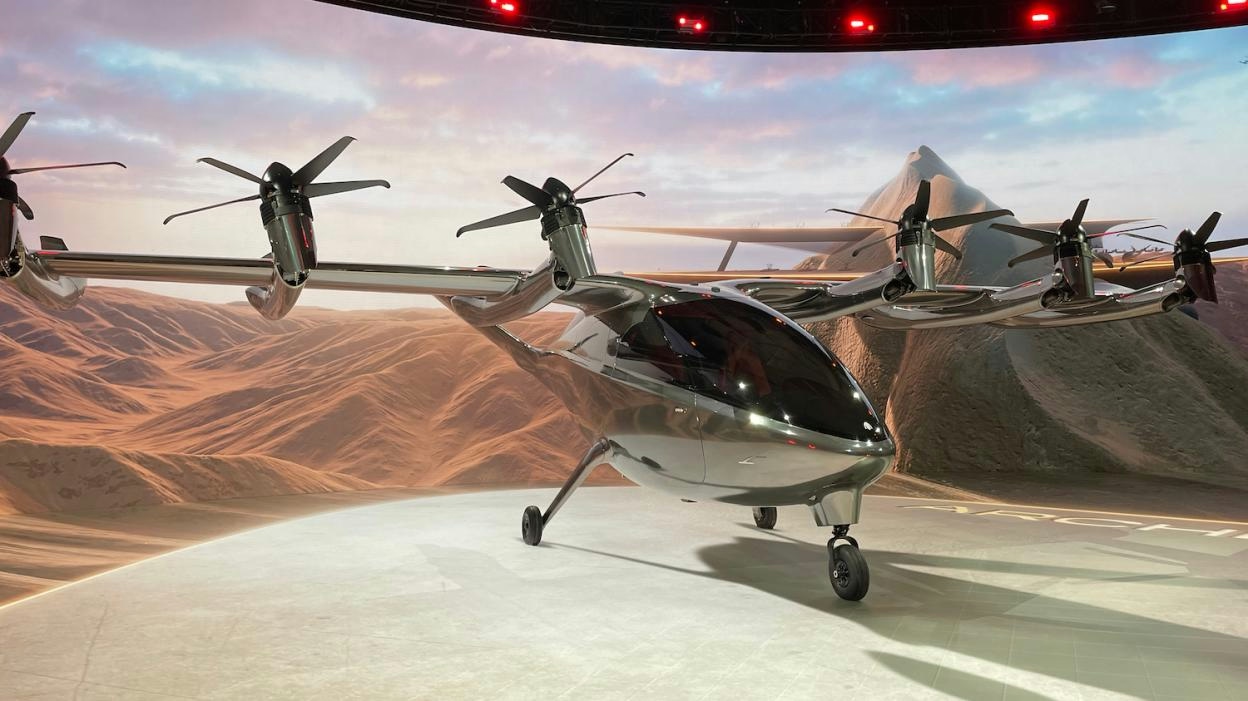
Recent developments in the industry highlight growing momentum toward sustainable urban mobility. Companies such as Archer Aviation have made substantial investments and formed partnerships aimed at accelerating the adoption of electric air taxis and their infrastructure. As competition intensifies, the race to develop practical and scalable solutions for urban air mobility is gaining urgency.
AutoFlight’s solar-powered floating vertiport represents a bold and innovative step forward. However, the path to widespread air taxi adoption will depend on overcoming significant technical, regulatory, and market challenges. For now, this floating airport offers a compelling glimpse into the potential future of urban aviation, contingent on the industry’s ability to bridge the remaining gaps.

Etihad Airways Suspends Airbus A380 Flights on Key Route

Aditya Birla Group Seeks Approval for Aircraft Leasing in GIFT City

Qatar Airways Highlights Innovation and Connectivity at Arabian Travel Market 2026

Hong Kong's Five-Year Plan Includes Andrew Fan's Aircraft Parts Processing Hub Proposal

ACIA Aero Leasing Delivers ATR72-600 to Air Nostrum

RTX Appoints Jill Albertelli as Head of Pratt & Whitney

TAT Technologies Joins Beyond Aero Hydrogen Aircraft Program

AURAK Study Highlights Barriers to Air Taxi Adoption in Emerging Economies

Xiamen Air Selects Altitude for 787 Maintenance at Heathrow

Etihad and Swissport Extend Global Partnership
