
Orquesta conocimientos de IA para convertirlos en acción

Tendencias
Categories
The Case for Aircraft Ownership by Nigerian Banks

The Case for Aircraft Ownership by Nigerian Banks
Aviation’s Strategic Role in Nigeria’s Economy
Commercial aviation in Nigeria extends beyond mere transportation; it constitutes a fundamental pillar of the nation’s economic infrastructure. The connectivity provided by airlines linking Lagos, Abuja, Port Harcourt, Kano, and other key commercial centers supports vital sectors such as oil and gas logistics, financial services, trade, tourism, and regional business development. As Africa’s largest economy, Nigeria relies heavily on robust air transport networks, which serve as the backbone of its commercial activities.
Despite this strategic importance, a significant imbalance persists in the ownership of aircraft operating within Nigerian airspace. The majority of these aircraft are financed and leased by foreign leasing companies and international banks rather than Nigerian institutions. This dynamic results in substantial monthly lease payments being made in foreign currency, thereby exerting pressure on Nigeria’s foreign exchange reserves and channeling financial benefits to overseas entities instead of domestic stakeholders.
The Case for Domestic Aircraft Ownership
This situation prompts a critical question for Nigerian financial institutions: why should the aircraft that drive the nation’s economy be owned abroad? In more developed markets, leading financial institutions such as Wells Fargo, Bank of China, MUFG, SMBC, and BNP Paribas regard aircraft as structured, income-generating infrastructure assets. When managed effectively, aircraft provide predictable lease income, operate under internationally harmonized regulatory frameworks, and maintain measurable resale value. In essence, they function as mobile infrastructure assets.
Nigerian banks already play a significant role in financing key infrastructure sectors including power generation, telecommunications, oil and gas, commercial real estate, and major industrial projects. Compared to many fixed infrastructure investments, aircraft offer a distinct advantage in flexibility. Unlike refineries or power stations, which are immobile and location-dependent, aircraft can be redeployed or leased to other qualified operators within Nigeria or internationally, allowing for dynamic asset management in response to market demand.
The Nigerian aviation market is sufficiently large and dynamic to support structured aircraft ownership. The Lagos–Abuja route remains one of the busiest domestic corridors in Africa, regional connectivity across West Africa is expanding, and cargo demand is increasing in tandem with trade and e-commerce growth. As airlines respond to these trends, fleet expansion is inevitable. Yet, the majority of fleet financing continues to originate from outside Nigeria.
Opportunities and Challenges for Nigerian Banks
There is no inherent structural barrier preventing Nigerian banks from participating directly in aircraft ownership. Rather than limiting their role to lenders, financial institutions could acquire aircraft and lease them to qualified operators under structured agreements. Typical lease contracts span 10 to 15 years, generating recurring income while the aircraft remains a globally transferable asset. Nigerian banks could also explore forward orders for new-generation narrow-body aircraft from manufacturers such as Boeing and Airbus, securing early delivery slots and structuring long-term leases with domestic and regional airlines. These newer aircraft models offer enhanced fuel efficiency, extended maintenance intervals, and stronger residual values, benefiting both airlines and asset owners.
Nonetheless, several challenges must be addressed. Nigerian banks would need to navigate complex regulatory frameworks, manage currency risks, and ensure sufficient financial backing. The market itself is evolving, with increased interest from lessors and banks enhancing the attractiveness of African carriers. Industry observers, including Raphael Haddad of Jetcraft, note this growing momentum. Regional airlines such as Enugu Air are rapidly expanding their fleets, exemplified by recent acquisitions of Embraer 195 aircraft. Meanwhile, the broader aerospace market demonstrates renewed confidence, evidenced by a 71% surge in aircraft orders in January 2026 despite ongoing supply chain constraints.
Direct aircraft ownership would elevate Nigerian banks from mere financiers to holders of critical infrastructure assets within the aviation sector. This strategic shift has the potential to reduce foreign exchange outflows, diversify banking portfolios, and strengthen institutional balance sheets, all while supporting the sustained growth and resilience of Nigeria’s aviation industry.
Linking Ireland’s Aircraft Leasing Industry to Elite Football
Airbus A380 at Tarbes Yields Over 90% of Parts for Active Fleets Through Careful Dismantling
BBN Airlines Becomes IATA Member
FAA Orders Breeze Airways and Delta to Inspect Airbus A220 Fuel Hoses

Philippine Aviation Navigates Expansion and Costs Amid Fuel Price Volatility
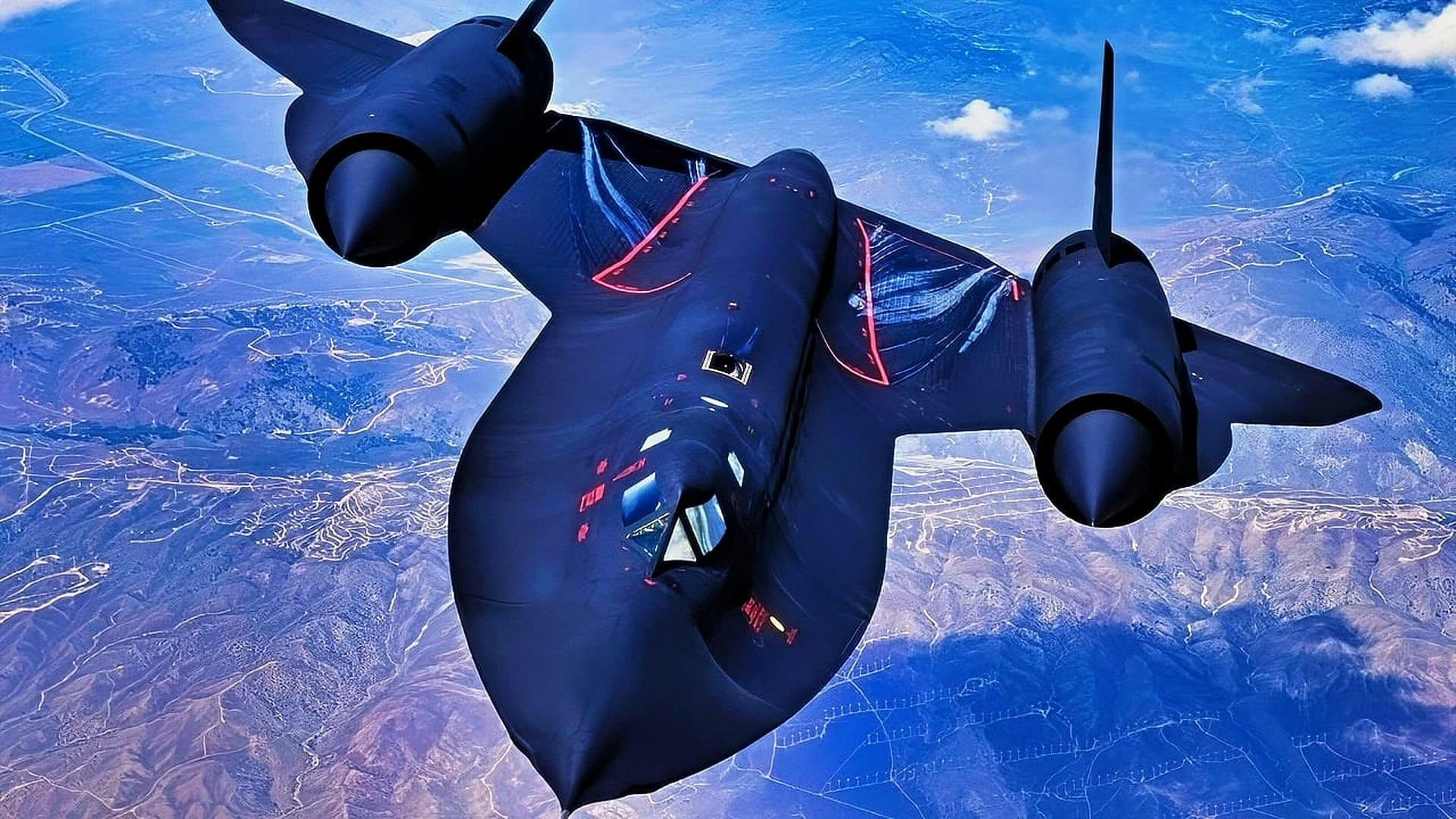
On April 26, 1971, an SR-71 Blackbird Flew Over 15,000 Miles in 10.5 Hours, Limited by Liquid Nitrogen Supply
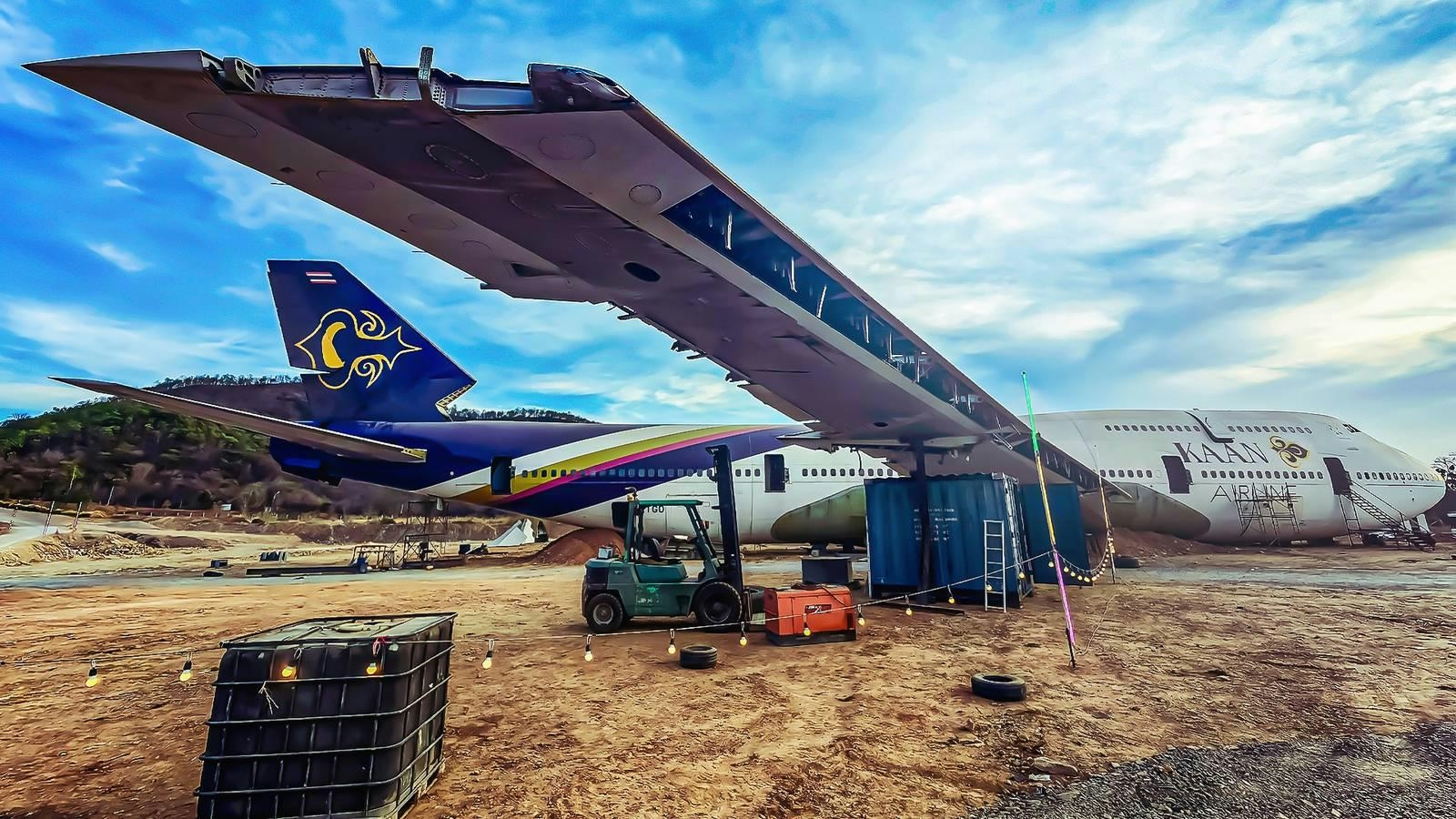
Boeing 747 Airframe Valued Less Than One Landing Gear Component

The Rear-Fan Engine Behind the Crash of the World's Fastest Airliner

Morphing Aircraft Skin Improves Safety and Fuel Efficiency
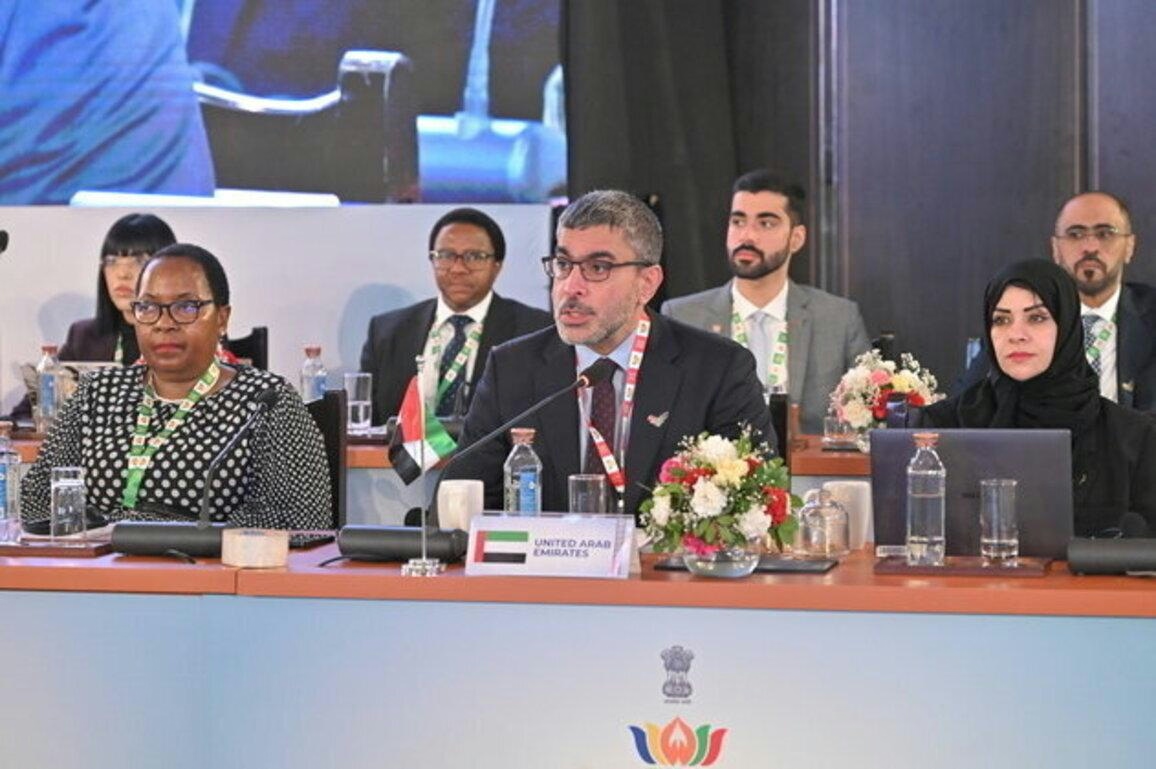
BRICS Nations Commit to Enhanced Cooperation on Sustainable Transport and Green Aviation
