
Orchestrer les insights d’IA pour les transformer en actions

Tendances
Categories
AirAsia Orders 150 Airbus A220 Jets Equipped with Pratt & Whitney GTF Engines
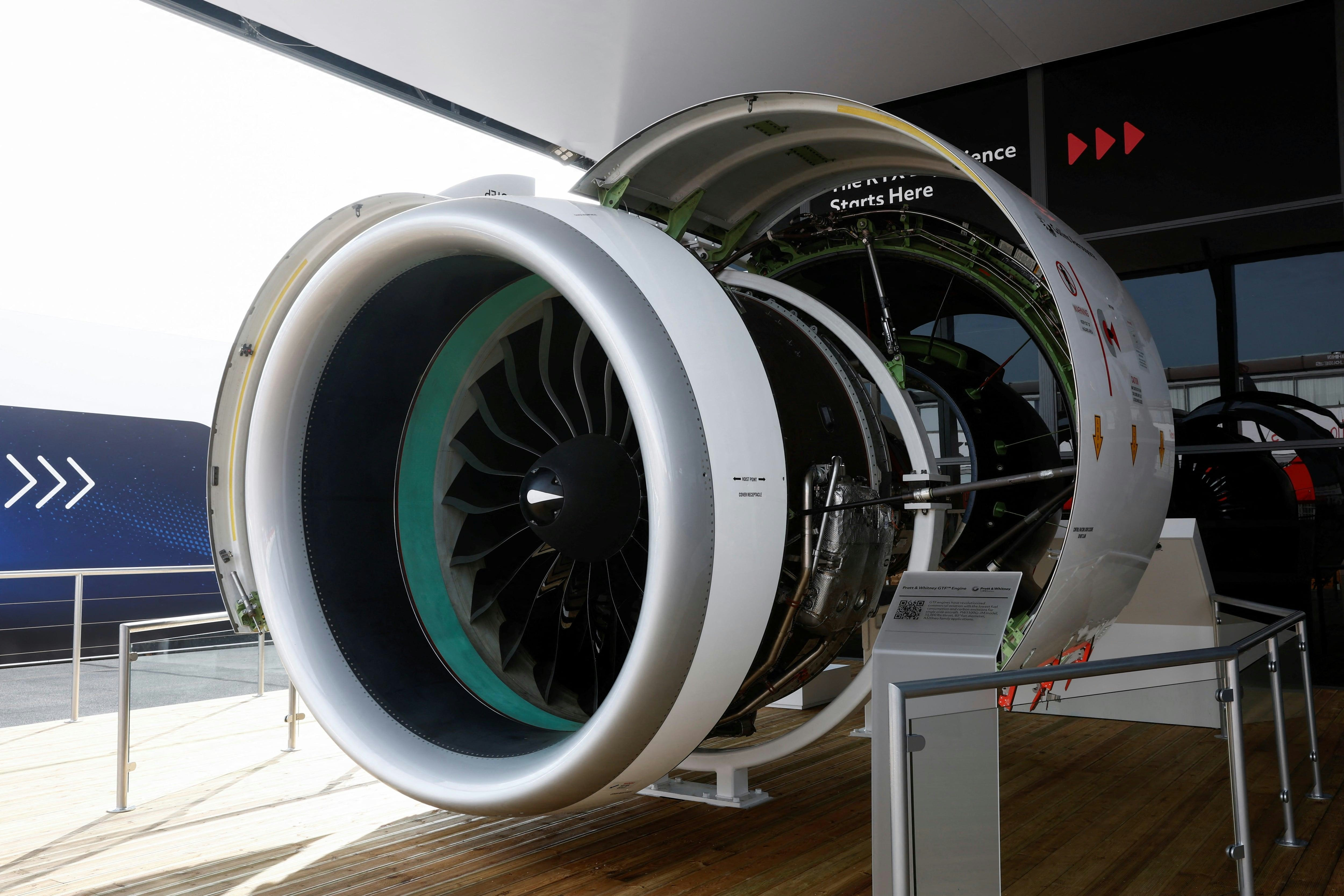
AirAsia Commits to 150 Airbus A220 Jets Powered by Pratt & Whitney GTF Engines
AirAsia X has announced a landmark order for 150 Airbus A220 aircraft, all equipped with Pratt & Whitney’s latest-generation GTF™ engines. This agreement, which includes a comprehensive 12-year EngineWise® maintenance contract, represents a pivotal move in AirAsia’s ongoing fleet modernization and expansion efforts. Deliveries are scheduled to commence in 2028, signaling a significant upgrade to the airline’s operational capabilities.
Strategic Implications and Operational Benefits
Rick Deurloo, president of Commercial Engines at Pratt & Whitney, a division of RTX, emphasized the significance of the deal, noting that it underscores AirAsia’s confidence in the GTF engine’s superior fuel efficiency and reduced noise emissions. He described the partnership as a foundation for sustained growth in the years ahead.
AirAsia Group CEO Bo Lingam elaborated on the strategic value of the new aircraft, highlighting its ability to support the airline’s ambition to build the largest and densest network in the region. With a range of up to seven hours enabled by the GTF engines, the A220 offers the flexibility to match capacity with demand more precisely and increase flight frequencies. Lingam underscored the airline’s mission to democratize travel across Asia by opening routes previously deemed unfeasible, and expressed intentions to extend this approach globally.
Market Impact and Challenges Ahead
The introduction of the A220 is expected to enhance AirAsia’s competitive position within the low-cost carrier segment by improving operational efficiency and passenger experience. Industry analysts predict a favorable market response, though the scale of the acquisition entails considerable financial investment. The airline will also face the challenge of training pilots and crew to operate the new aircraft and managing the logistical complexities of integrating the A220s into its existing fleet.
Competitors are likely to respond by accelerating their own fleet renewal initiatives or placing similar aircraft orders to maintain market share. While traditional carriers may focus on upgrading their fleets, other low-cost airlines could follow AirAsia’s lead in adopting more efficient aircraft.
Engine Performance and Industry Context
Pratt & Whitney’s GTF engines are recognized for delivering approximately 20% lower fuel consumption and a 75% reduction in noise footprint compared to previous engine generations. However, the engine has faced scrutiny due to reported reliability and maintenance challenges by some operators, raising concerns about potential operational impacts and long-term maintenance costs for AirAsia.
Globally, the GTF engine powers over 2,700 aircraft operated by more than 90 customers. Since its introduction a decade ago, the GTF fleet has accumulated 50 million flight hours, transported 1.9 billion passengers, and achieved fuel savings of 3 billion gallons. Pratt & Whitney has secured over 13,000 orders and commitments for GTF engines to date.
As a leading manufacturer of aircraft engines and auxiliary power units, Pratt & Whitney supports a global fleet of more than 90,000 in-service engines through its extensive maintenance network, reinforcing its position as a key partner in the aviation industry.

Etihad Airways Suspends Airbus A380 Flights on Key Route

Aditya Birla Group Seeks Approval for Aircraft Leasing in GIFT City

Qatar Airways Highlights Innovation and Connectivity at Arabian Travel Market 2026

Hong Kong's Five-Year Plan Includes Andrew Fan's Aircraft Parts Processing Hub Proposal

ACIA Aero Leasing Delivers ATR72-600 to Air Nostrum

RTX Appoints Jill Albertelli as Head of Pratt & Whitney

TAT Technologies Joins Beyond Aero Hydrogen Aircraft Program

AURAK Study Highlights Barriers to Air Taxi Adoption in Emerging Economies

Xiamen Air Selects Altitude for 787 Maintenance at Heathrow

Etihad and Swissport Extend Global Partnership
