
Orchestrer les insights d’IA pour les transformer en actions

Tendances
Categories
Amazon and Boeing Executives Launch Sustainable Aviation Accelerator
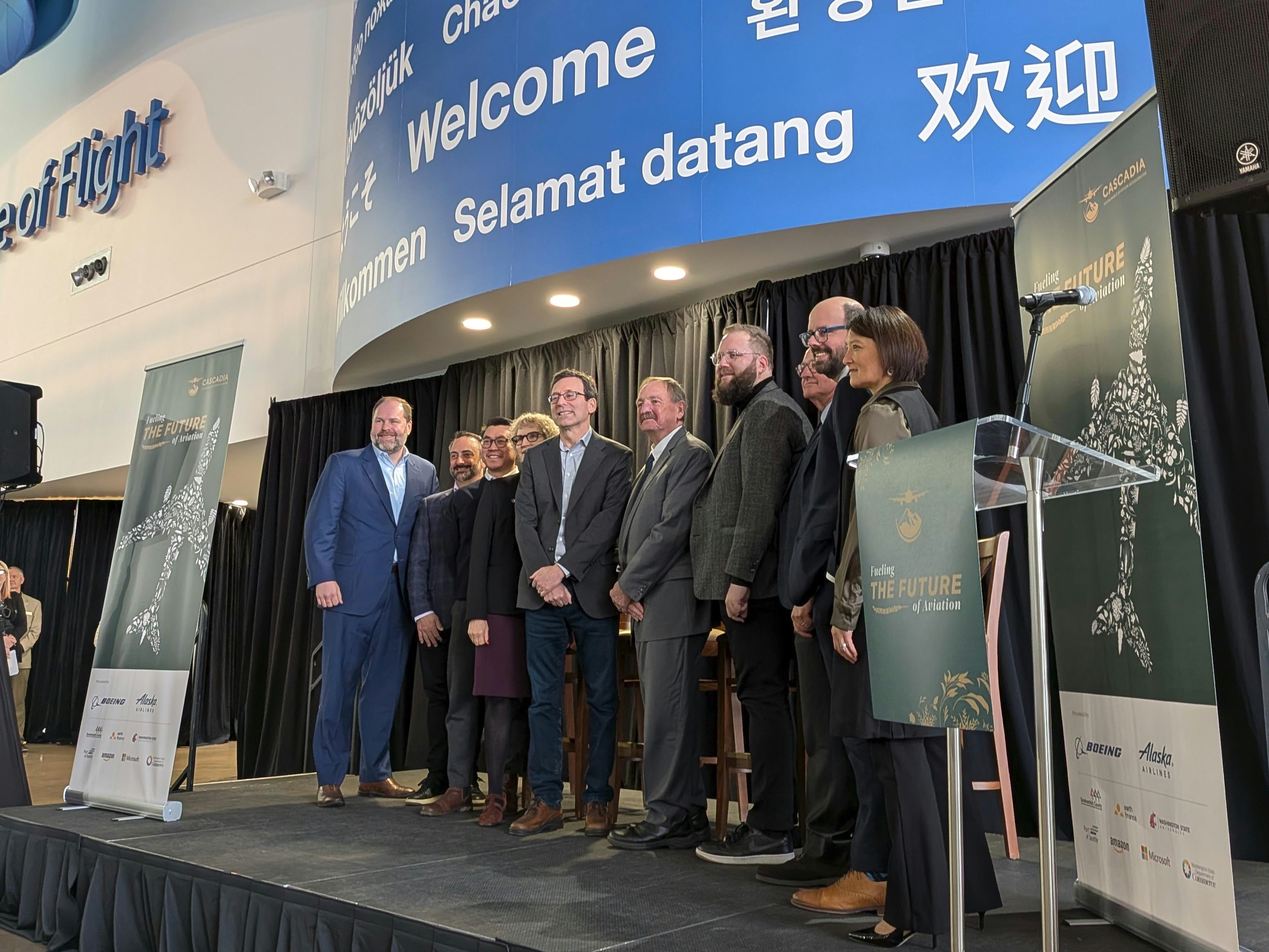
Amazon and Boeing Executives Launch Sustainable Aviation Accelerator
A Regional Initiative to Advance Sustainable Aviation Fuel
MUKILTEO, Wash. — Industry leaders from the Pacific Northwest convened on Thursday at the Boeing Future of Flight Aviation Center to inaugurate the Cascadia Sustainable Aviation Accelerator, a new initiative designed to establish the region as a leader in sustainable aviation fuel (SAF) innovation. The event brought together elected officials, corporate executives, and academic figures to emphasize the region’s commitment to advancing cleaner aviation technologies.
Washington Governor Bob Ferguson emphasized the unique economic opportunity presented by the accelerator, stating, “We have all the pieces in place to ensure this once-in-a-generation economic opportunity is realized, and this accelerator will make that happen.” The initiative aims to overcome existing barriers to SAF adoption by fostering a robust marketplace, closing the price gap with conventional jet fuel, and increasing production capacity.
Addressing Challenges in Sustainable Aviation Fuel Adoption
Sustainable aviation fuel, typically derived from plant-based sources and waste materials, is widely regarded as the most promising and scalable solution to reduce carbon emissions in the aviation sector. Despite its potential, SAF remains at least twice as expensive as traditional jet fuel, limiting its widespread use even as airlines and logistics companies commit to sustainability goals.
The Cascadia Sustainable Aviation Accelerator launches with a combined $20 million in funding, including $10 million from the state and an equal amount from philanthropic sources. Amazon’s director of public policy, Guy Palumbo, highlighted the company’s role as a major SAF customer, noting Amazon’s planned purchase of 3.7 million gallons of SAF in 2024 to reduce the carbon footprint of its air cargo operations. Palumbo underscored the systemic nature of the challenge, stating, “This is a systems issue that no one company can solve. You’ve got great companies up here in this room right now that are ready to use this fuel, but we have to make it available.”
The launch event showcased the accelerator’s public-private partnership model, featuring remarks from Washington State Department of Commerce Director Joe Nguyen, Washington State University President Elizabeth Cantwell, and executives from Alaska Airlines, Boeing, and SkyNRG. A panel discussion included representatives from Amazon, SkyNRG, the Machinists Union, and the Port of Seattle, reflecting the broad coalition supporting the initiative.
Strategic Focus and Industry Outlook
The accelerator’s strategy encompasses several key areas: providing research and development resources to startups and fuel manufacturers; advocating for SAF-friendly policies at both state and federal levels; facilitating funding and purchase agreements for producers; developing supply chains for diverse feedstocks such as agricultural waste, algae, cooking oils, and animal fats; and supporting infrastructure for transporting and blending low-carbon fuels with conventional aviation fuels.
Despite the Pacific Northwest’s strong aerospace heritage and concentration of industry leaders, significant challenges persist. Regulatory dependencies and protracted certification processes remain critical concerns, particularly for Boeing, whose future earnings and cash flow are closely linked to the commercial viability of SAF. Market responses to the accelerator’s launch have been mixed, with demand for freighter aircraft providing some support amid broader economic uncertainties influenced by Federal Reserve policy debates and fluctuating economic indicators.
Global competition is also intensifying. European governments and the European Space Agency are increasing investments in space and aviation technologies, while Amazon’s Leo space communications business competes against both established and emerging players in the sector.
Proponents of the Cascadia Sustainable Aviation Accelerator argue that the Pacific Northwest’s deep aerospace roots and collaborative ecosystem uniquely position it to become a hub for sustainable aviation fuel. Nonetheless, realizing this vision will require navigating complex regulatory, economic, and competitive challenges in the years ahead.

Etihad Airways Suspends Airbus A380 Flights on Key Route

Aditya Birla Group Seeks Approval for Aircraft Leasing in GIFT City

Qatar Airways Highlights Innovation and Connectivity at Arabian Travel Market 2026

Hong Kong's Five-Year Plan Includes Andrew Fan's Aircraft Parts Processing Hub Proposal

ACIA Aero Leasing Delivers ATR72-600 to Air Nostrum

RTX Appoints Jill Albertelli as Head of Pratt & Whitney

TAT Technologies Joins Beyond Aero Hydrogen Aircraft Program

AURAK Study Highlights Barriers to Air Taxi Adoption in Emerging Economies

Xiamen Air Selects Altitude for 787 Maintenance at Heathrow

Etihad and Swissport Extend Global Partnership
