
Orchestrer les insights d’IA pour les transformer en actions

Tendances
Categories
American Airlines AI Reassigned Seats Despite On-Time Arrival at Gate
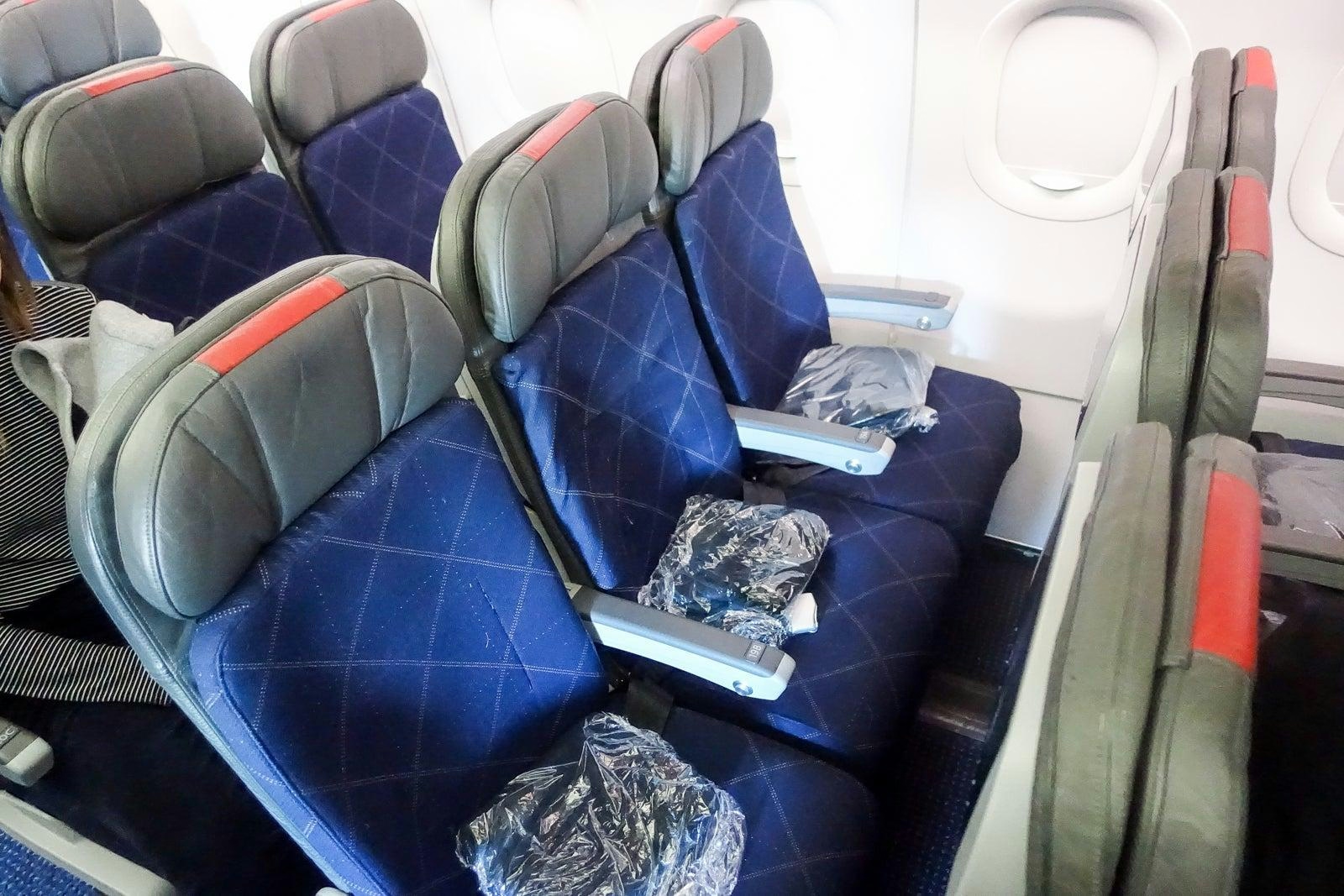
American Airlines AI System Reassigns Seats, Stranding Passengers Despite On-Time Arrival
Passengers Left Stranded at Gate Amid On-Time Flight Arrival
A recent incident involving American Airlines passengers traveling from Miami to Boston has drawn widespread attention after several travelers were left stranded at the gate despite their flight arriving on time. Witnesses, including Reuters White House correspondent Jacob Bogage, reported that passengers who reached the gate before departure were told by a gate agent that the flight was closed. This occurred even as other customers continued to board. The gate agent reportedly declined to provide any documentation or assistance and subsequently walked away, leaving affected passengers frustrated and without support. Some missed significant events, including a wedding, due to the unexpected denial of boarding.
Automation and Operational Challenges at Miami Hub
The episode has intensified scrutiny of American Airlines’ customer service, particularly at its Miami hub, where the airline has increasingly integrated automation into its operations. Central to this is the AURA system (AUtomated ReAccommodation), an automated rebooking tool designed to streamline passenger management by reallocating seats for travelers whose connecting flights are delayed or canceled. AURA employs a method known as “discovered inventory” to identify passengers at risk of missing connections and reallocates their seats to standby travelers or those seeking upgrades.
While intended to improve efficiency and reduce gate congestion, this automation can inadvertently penalize passengers who arrive on time for their flights. In the Miami case, travelers arriving from delayed inbound flights found their seats reassigned despite the aircraft door remaining open and boarding continuing. The lack of immediate assistance from gate staff compounded the problem, leaving passengers with limited options.
Broader Implications Amid Merger and Regulatory Scrutiny
This incident emerges at a critical juncture for American Airlines, which is under increased regulatory scrutiny due to its proposed merger with United Airlines. If approved, the merger would consolidate control over major airport hubs and approximately 40% of the domestic market share. Critics argue that such consolidation risks reducing competition, increasing consumer prices, and diminishing service quality. Competitors have responded with intensified marketing campaigns and lobbying efforts opposing the merger, while consumer advocates warn of potential negative impacts on passengers.
The Miami gate incident highlights the potential pitfalls of over-reliance on automated systems in customer service, especially as airlines seek cost reductions and operational efficiencies. With growing passenger dissatisfaction and complaints being filed with the Department of Transportation, American Airlines faces mounting pressure to reconcile automation with the need for responsive, human-centered service—an imperative that will only grow more urgent as the airline navigates the complexities of a transformative merger.

Etihad Airways Suspends Airbus A380 Flights on Key Route

Aditya Birla Group Seeks Approval for Aircraft Leasing in GIFT City

Qatar Airways Highlights Innovation and Connectivity at Arabian Travel Market 2026

Hong Kong's Five-Year Plan Includes Andrew Fan's Aircraft Parts Processing Hub Proposal

ACIA Aero Leasing Delivers ATR72-600 to Air Nostrum

RTX Appoints Jill Albertelli as Head of Pratt & Whitney

TAT Technologies Joins Beyond Aero Hydrogen Aircraft Program

AURAK Study Highlights Barriers to Air Taxi Adoption in Emerging Economies

Xiamen Air Selects Altitude for 787 Maintenance at Heathrow

Etihad and Swissport Extend Global Partnership
