
Orchestrer les insights d’IA pour les transformer en actions

Tendances
Categories
American Airlines and Google Announce Major SAF Agreement
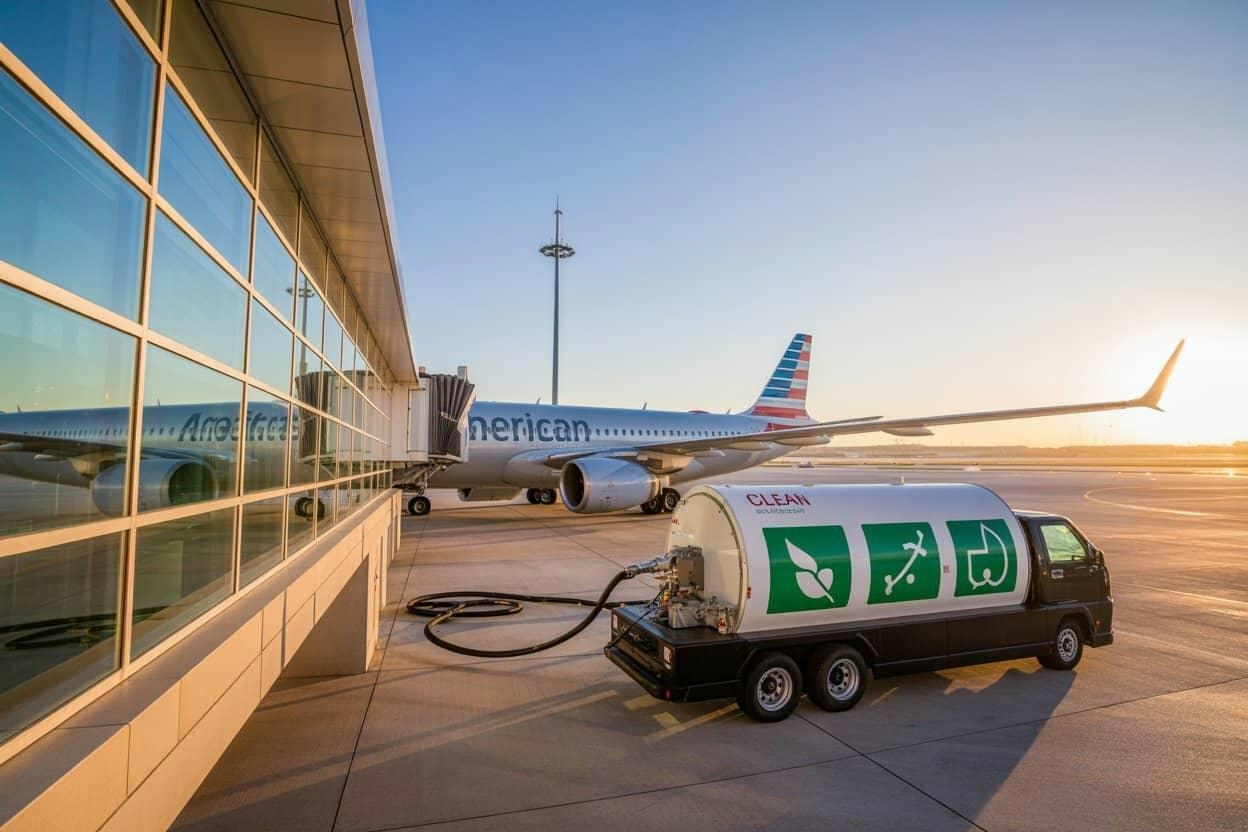
American Airlines and Google Announce Major Sustainable Aviation Fuel Agreement
American Airlines and Google have unveiled the largest publicly disclosed sustainable aviation fuel certificate (SAFc) agreement to date between an airline and a single corporate customer. This landmark deal represents a significant advancement in the aviation sector’s ongoing efforts to reduce carbon emissions. Over the course of three years, the agreement will support the use of 35 million gallons (132 million litres) of sustainable aviation fuel (SAF), which is expected to reduce carbon dioxide equivalent (CO2e) emissions by nearly 300,000 metric tonnes.
Details of the Agreement and Its Impact
Under the terms of the agreement, American Airlines will purchase and physically receive SAF at Chicago O’Hare International Airport through existing fuel infrastructure. The fuel, derived from waste-based feedstocks such as used cooking oil, will be supplied via a new off-take arrangement with Valero Marketing and Supply Company. Google will obtain the associated environmental attributes through the SAFc Registry, a transparent and traceable book-and-claim system for SAF certificates. This mechanism allows Google to offset emissions related to employee business travel, aligning with the company’s broader sustainability objectives.
Kate Brandt, Chief Sustainability Officer at Google, highlighted the significance of the partnership, stating, “This strategic collaboration with American Airlines demonstrates how companies can work together to scale critical sustainability technologies. By making this long-term commitment, we are sending an important demand signal to encourage investment and bring more SAF to market.”
Challenges and Industry Implications
Sustainable aviation fuel is widely recognized as one of the most promising avenues for reducing aviation emissions, with the potential to lower lifecycle greenhouse gas emissions by up to 80% compared to conventional jet fuel. SAF is produced from renewable feedstocks such as waste oils and fats, and can also be synthesized using captured carbon dioxide and renewable electricity. Despite its promise, the industry faces considerable challenges in scaling production. Currently, SAF constitutes only 0.8% of the global jet fuel supply, while the aviation sector’s target of achieving net zero emissions by 2050 depends on SAF fulfilling 65% of its fuel requirements—a goal that remains distant given current production capabilities.
The limited availability of SAF underscores the importance of long-term agreements like the one between American Airlines and Google, which can stimulate investment and help expand supply. Market analysts suggest that this landmark deal may encourage other corporations to increase their demand for SAF as part of their efforts to reduce aviation-related emissions. Competitors may respond by pursuing similar agreements with SAF suppliers or by investing in alternative low-carbon fuels, such as hydrogen, to advance their sustainability agendas.
The partnership between American Airlines and Google thus exemplifies both the progress achieved and the challenges that persist as the aviation industry strives toward a more sustainable future.

Etihad Airways Suspends Airbus A380 Flights on Key Route

Aditya Birla Group Seeks Approval for Aircraft Leasing in GIFT City

Qatar Airways Highlights Innovation and Connectivity at Arabian Travel Market 2026

Hong Kong's Five-Year Plan Includes Andrew Fan's Aircraft Parts Processing Hub Proposal

ACIA Aero Leasing Delivers ATR72-600 to Air Nostrum

RTX Appoints Jill Albertelli as Head of Pratt & Whitney

TAT Technologies Joins Beyond Aero Hydrogen Aircraft Program

AURAK Study Highlights Barriers to Air Taxi Adoption in Emerging Economies

Xiamen Air Selects Altitude for 787 Maintenance at Heathrow

Etihad and Swissport Extend Global Partnership
