
Orchestrer les insights d’IA pour les transformer en actions

Tendances
Categories
American Airlines Software Glitch Disrupts Thanksgiving Travel
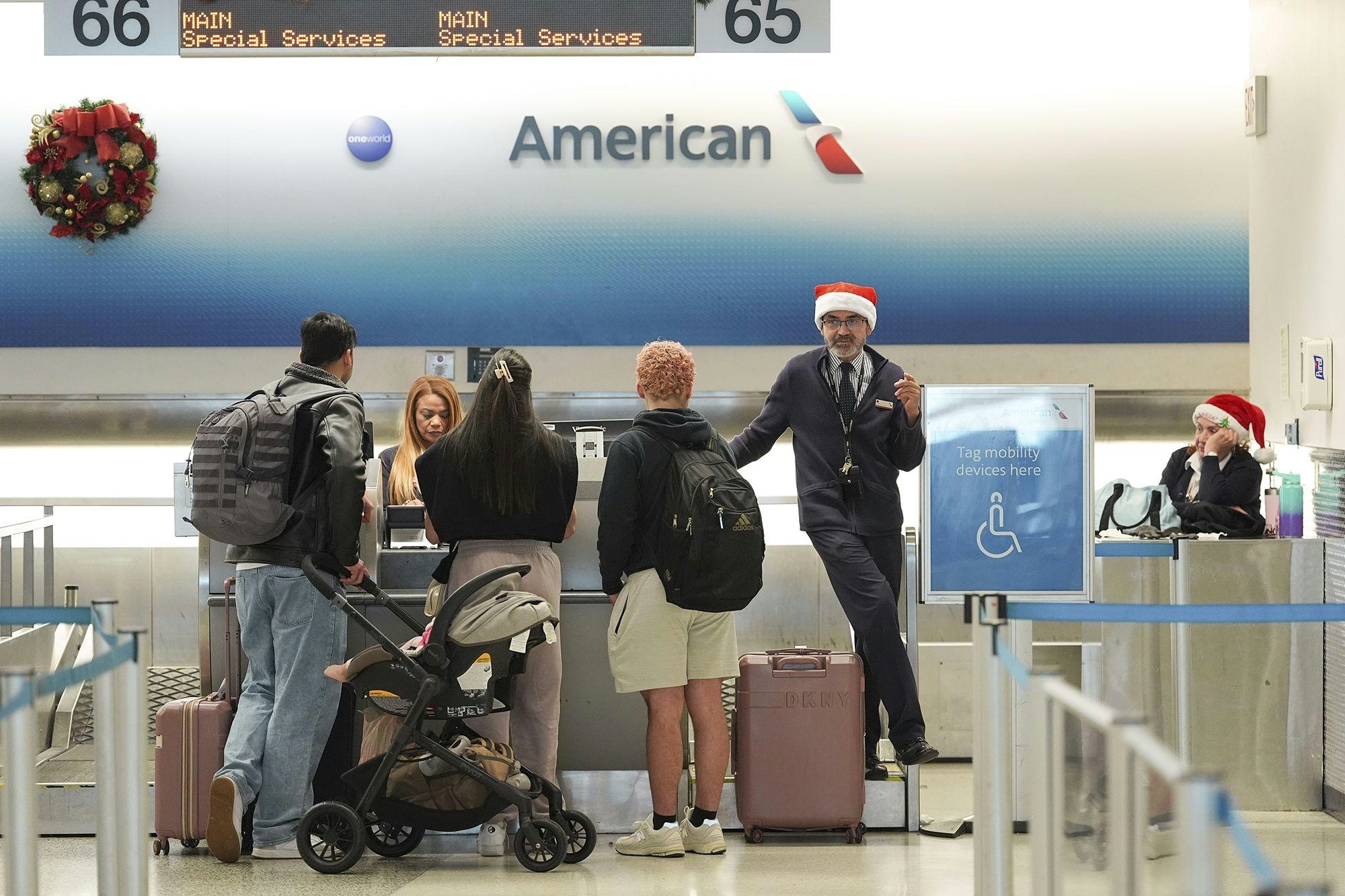
American Airlines Software Glitch Disrupts Thanksgiving Travel
American Airlines is confronting a major software malfunction that has grounded over 200 of its Airbus A320 aircraft, causing significant disruption amid the peak Thanksgiving travel period. Initially, the problem was believed to affect 340 planes, but subsequent inspections reduced the number to 209. This incident comes at a critical time when millions of Americans are traveling for the holiday, intensifying the impact on air travel and tourism.
Cause and Response to the Software Issue
The glitch has been traced to a vulnerability in the aircraft’s software, linked to intense solar radiation that can corrupt data essential for flight controls. This discovery prompted a global recall and urgent software updates across the affected fleets. American Airlines crews have been working tirelessly to implement these fixes, with fewer than 150 jets still awaiting updates as of Friday night. The airline has reiterated its commitment to passenger safety and is making every effort to restore full operational capacity before the height of holiday travel.
The disruption extends beyond American Airlines. Delta Air Lines has issued warnings that some of its aircraft may also be affected, though it anticipates only minor operational disturbances. United Airlines reported that six of its planes require software updates, with minimal expected delays. International carriers, including the European low-cost airline Wizz Air, have also begun rolling out necessary patches to prevent similar issues.
Impact on Travel and Airport Operations
The timing of this software glitch poses a significant challenge for the tourism sector, which depends heavily on seamless air travel during Thanksgiving. With approximately six million travelers expected to fly for family reunions and vacations, delays and cancellations are placing considerable strain on airport operations nationwide. According to FlightAware, more than 3,700 flights within the United States were delayed on Friday, and nearly 100 were canceled, leaving thousands of passengers scrambling for alternatives.
Major travel hubs such as New York, Los Angeles, and Orlando are experiencing heightened congestion as travelers face uncertainty regarding their flight schedules. The ripple effects extend beyond American Airlines, with airports across the country managing backlogs and longer wait times. Passengers are being advised to monitor their flight status closely, arrive at airports early, and consider travel insurance to mitigate the financial consequences of cancellations.
Broader Implications for the Aviation Industry
This incident underscores the increasing reliance of the aviation industry on complex technology and the challenges airlines face in maintaining operational reliability during peak travel periods. While airlines and ground crews are working urgently to resolve the issue, the disruption highlights the vulnerability of modern air travel to unforeseen technical problems, particularly during critical holiday seasons.

Etihad Airways Suspends Airbus A380 Flights on Key Route

Aditya Birla Group Seeks Approval for Aircraft Leasing in GIFT City

Qatar Airways Highlights Innovation and Connectivity at Arabian Travel Market 2026

Hong Kong's Five-Year Plan Includes Andrew Fan's Aircraft Parts Processing Hub Proposal

ACIA Aero Leasing Delivers ATR72-600 to Air Nostrum

RTX Appoints Jill Albertelli as Head of Pratt & Whitney

TAT Technologies Joins Beyond Aero Hydrogen Aircraft Program

AURAK Study Highlights Barriers to Air Taxi Adoption in Emerging Economies

Xiamen Air Selects Altitude for 787 Maintenance at Heathrow

Etihad and Swissport Extend Global Partnership
