
Orchestrer les insights d’IA pour les transformer en actions

Tendances
Categories
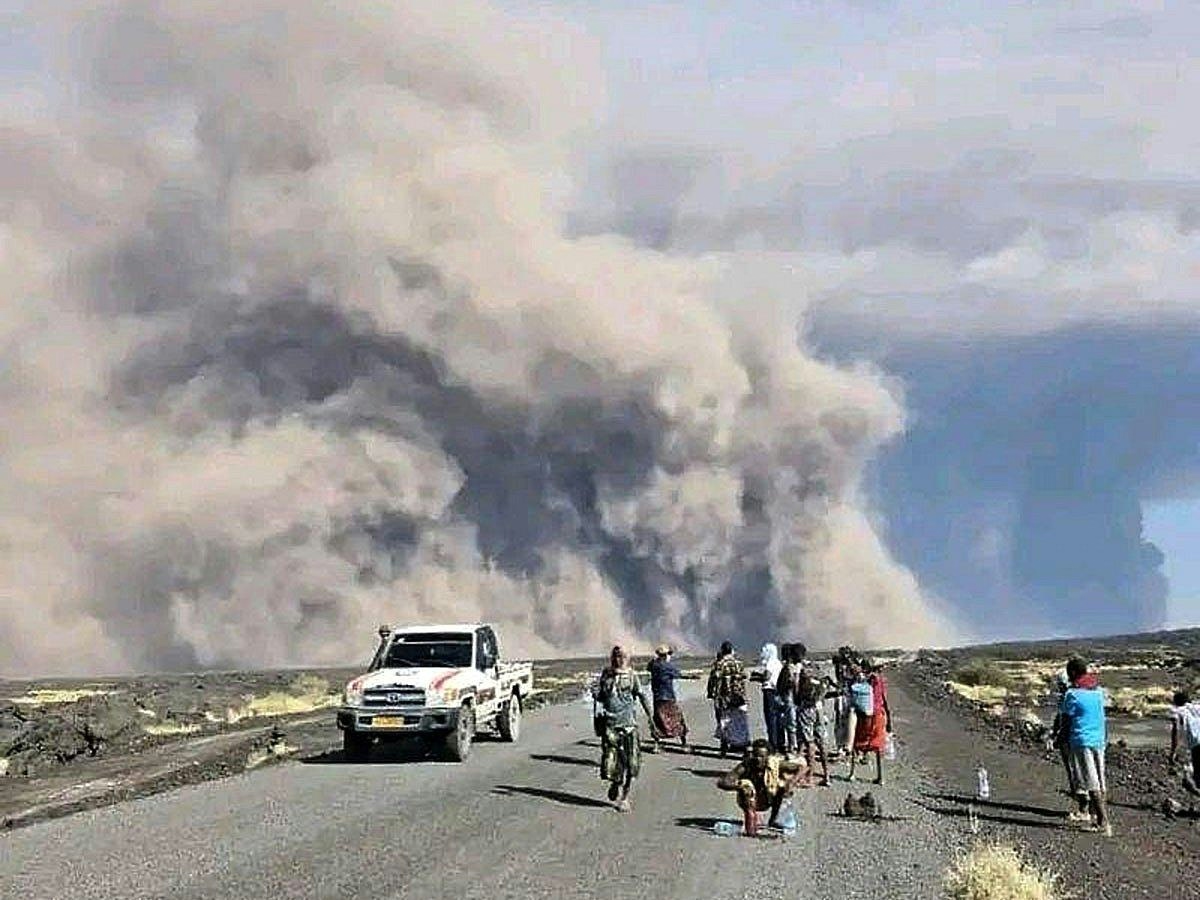
Ethiopia Volcanic Ash Plume Poses Risk to Aviation, DGCA Issues Warning
Ethiopia Volcanic Ash Plume Poses Risk to Aviation, DGCA Issues Warning
Disruption to Airline Operations Across India
A significant volcanic ash plume originating from Ethiopia’s Hayli Gubbi volcano has caused widespread disruption to airline operations across several regions of India. The eruption, which began in the Afar region of Ethiopia, has propelled ash clouds at high altitudes and considerable speed, prompting urgent safety advisories from aviation authorities. The Directorate General of Civil Aviation (DGCA) swiftly issued an advisory instructing airlines and airports to avoid flight levels and airspace affected by the ash plume.
The ash cloud was first detected near Jamnagar in Gujarat around 5:30 pm and has since moved eastward, impacting airspace over Rajasthan, Delhi, Haryana, and Punjab. Airports along the plume’s projected path have been directed to inspect runways for ash contamination and suspend operations if necessary. Major carriers, including Air India and Akasa Air, have responded by canceling or rerouting flights as a precautionary measure.
Aviation Hazards and Historical Context
The volcanic ash plume, tracked by the Toulouse Volcanic Ash Advisory Centre, extends beyond Ethiopia, affecting airspace over Yemen, Oman, India, and northern Pakistan. Meteorological officials have warned that the ash may cause hazy skies in the affected regions. Volcanic ash poses a severe hazard to aircraft due to its composition of fine glass, rock, and mineral particles. When ingested by jet engines, these abrasive particles can melt under high temperatures and then solidify on turbine blades, risking engine stall or complete shutdown. Additionally, ash can erode windscreens and sensors, contaminate cabin air and fuel, and block critical instruments such as pitot tubes, which measure aircraft speed.
The aviation industry has encountered similar crises in the past. The 2010 eruption of Iceland’s Eyjafjallajökull volcano resulted in the largest airspace shutdown since World War II, with over 100,000 flights canceled and approximately 10 million passengers affected across Europe. In 1991, the eruption of Mount Pinatubo in the Philippines sent ash clouds soaring over 100,000 feet into major air routes, damaging several aircraft engines and forcing widespread flight cancellations. In 1982, a British Airways flight temporarily lost all four engines after flying through ash from Indonesia’s Mount Galunggung, though the pilots successfully restarted the engines and landed safely.
Ongoing Monitoring and Safety Measures
Authorities continue to monitor the movement of the Hayli Gubbi ash plume closely. The DGCA and meteorological agencies have maintained ongoing advisories to airlines and airports, emphasizing the need to prioritize safety and adjust flight planning accordingly. Vigilance remains paramount as the situation develops, with officials urging caution in all regions under the ash cloud’s path.

Etihad Airways Suspends Airbus A380 Flights on Key Route

Aditya Birla Group Seeks Approval for Aircraft Leasing in GIFT City

Qatar Airways Highlights Innovation and Connectivity at Arabian Travel Market 2026

Hong Kong's Five-Year Plan Includes Andrew Fan's Aircraft Parts Processing Hub Proposal

ACIA Aero Leasing Delivers ATR72-600 to Air Nostrum

RTX Appoints Jill Albertelli as Head of Pratt & Whitney

TAT Technologies Joins Beyond Aero Hydrogen Aircraft Program

AURAK Study Highlights Barriers to Air Taxi Adoption in Emerging Economies

Xiamen Air Selects Altitude for 787 Maintenance at Heathrow

Etihad and Swissport Extend Global Partnership
