Image

Orchestrer les insights d’IA pour les transformer en actions

Inscrivez-vous dès aujourd’hui sur la liste d’attente d’AeroGenie !

Tendances

Categories

How Modern Engines Are Redefining Narrowbody Aircraft Performance
June 24, 2026By ePlane AI
How Modern Engines Are Redefining Narrowbody Aircraft Performance
0
0
Narrowbody Aircraft
Geared Turbofan Engines
Pratt & Whitney
CFM International

How Modern Engines Are Redefining Narrowbody Aircraft Performance

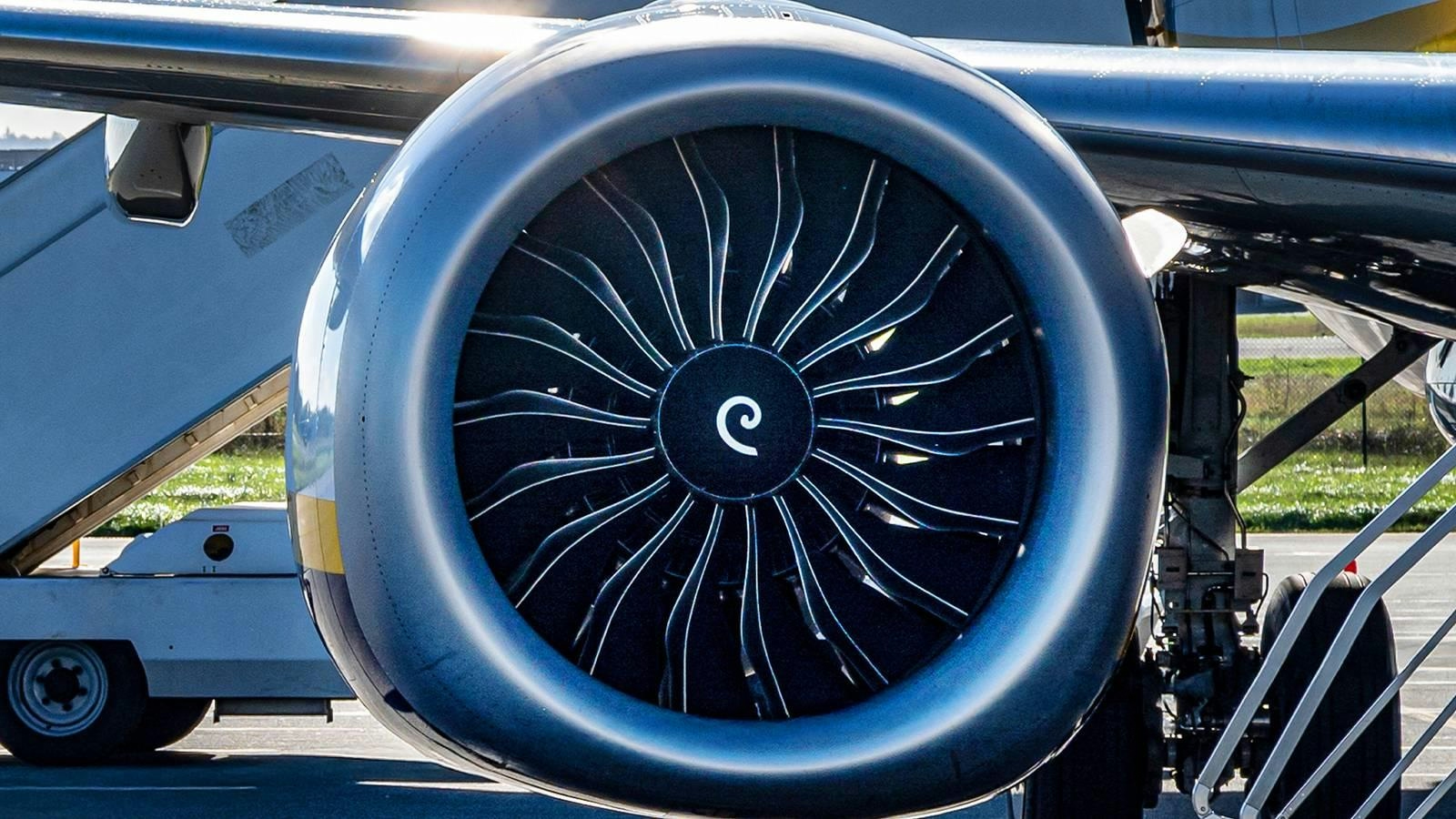
The evolution of aircraft propulsion since the Wright brothers’ first powered flight in 1903 has been nothing short of revolutionary. From a modest four-cylinder engine producing 12.5 horsepower, aviation engines have advanced through successive generations—from early turbojets to high-bypass turbofans and, more recently, geared turbofans. These developments have significantly enhanced fuel efficiency, reliability, and environmental performance. Modern engines consume less fuel, generate lower noise levels, and require fewer unscheduled repairs, achievements made possible by innovations in materials science, digital controls, manufacturing techniques, and aerodynamic design.

Market Leaders and Technological Innovations

Today, the narrowbody aircraft engine market is dominated by two principal manufacturers: Pratt & Whitney and CFM International. These companies supply the majority of engines for the Airbus A320 family and Boeing 737 aircraft globally.

Pratt & Whitney, a subsidiary of RTX Corporation, has a long history dating back to the 1920s when it produced piston engines. Its current focus is the Geared Turbofan (GTF) engine family, which introduces a reduction gearbox between the fan and the low-pressure turbine. This design allows each component to operate at its optimal speed, resulting in improved fuel efficiency and reduced noise emissions. The GTF represents a significant departure from traditional engine architecture and exemplifies Pratt & Whitney’s commitment to innovation.

CFM International, a joint venture between GE Aerospace and Safran Aircraft Engines established in 1973, has been a formidable presence in the industry. Its CFM56 engine powered the Boeing 737 Classic and the original Airbus A320 family. The company’s latest offering, the LEAP engine, is the exclusive powerplant for the Boeing 737 MAX and one of two engine options for the Airbus A320neo. Both Pratt & Whitney and CFM International have earned reputations for reliability and continue to invest heavily in technologies aimed at reducing fuel consumption, lowering emissions, and enhancing operating economics. However, their approaches to innovation differ, with Pratt & Whitney’s GTF challenging conventional engine design paradigms.

Emerging Challenges Amid Technological Progress

Despite the advances in engine technology, the industry faces significant operational challenges. Persistent engine delays and supply chain disruptions have become major concerns for airlines. At the recent International Air Transport Association annual meeting, airline executives highlighted ongoing engine-related issues, including extended wait times for inspections and repairs, as critical operational obstacles. Pratt & Whitney’s manufacturing difficulties have particularly impacted the output of GTF engines, exacerbating these delays.

Compounding these issues is a growing shortage of narrowbody landing gears, especially for newer aircraft models such as the Airbus A320neo and Boeing 737 MAX. This scarcity is placing additional strain on the aftermarket and limiting fleet availability. These supply chain bottlenecks illustrate the complexity inherent in modern engine programs and underscore the necessity for enhanced collaboration across the industry.

In response, competitors are exploring new partnerships and strategic approaches. For instance, MTU Aero Engines is leveraging its technical expertise while adopting a more collaborative mindset to meet the evolving demands of both commercial and defense sectors.

The Path Forward

As engine technology continues to advance, the aerospace industry confronts the dual challenge of achieving greater efficiency and reliability while managing the operational and supply chain complexities that accompany cutting-edge innovation. The future of narrowbody aircraft performance will depend not only on technological breakthroughs but also on the industry’s capacity to adapt and foster collaboration within an increasingly intricate global environment.

More news
Industry Leaders Discuss AI at Scientia 2026

Industry Leaders Discuss AI at Scientia 2026

Industry Leaders Discuss AI at Scientia 2026 On June 18, 2026, Air Link International Aviation College (ALIAC) hosted the Scientia Knowledge Hub Convention 2026, a virtual event that attracted over 680 participants via Zoom. Centered on the theme “Train. Sustain. Explain: Artificial Intelligence for Smarter Skies,” the convention convened leading figures from aviation education, institutional leadership, AI integration, gender equity, and peace education for a day of in-depth dialogue on the evolving role of artificial intelligence in aviation and related sectors. The event commenced at 9 a.m. with Engr. Ivan Lance Casupang and Ms. Ma. Amiella Agpaoa Ablola serving as Masters of Ceremonies. ALIAC President and CEO Atty. Gomeriano Amurao opened the proceedings by reaffirming the institution’s dedication to pioneering advancements in aviation education. This was followed by a succinct overview of Scientia’s history and vision delivered by Dr. Lina Constante, Vice President for Academic Affairs. Navigating AI’s Promise and Challenges The first plenary session featured Mr. Mugunthan Muniandy, founder and CEO of NextGen Pilot Sdn Bhd (Malaysia), who presented “TrAIn: Developing AI-Ready Aviation Professionals.” Muniandy highlighted the pervasive integration of AI within aviation, noting its critical role in adaptive pilot training, predictive maintenance, fuel optimization, and real-time safety monitoring. He cautioned, however, that while automation reshapes human responsibilities, it does not absolve them. Introducing the T.R.A.I.N. Framework—comprising Technical Foundations, Risk and Decision Thinking, Adaptability, Interaction with AI Systems, and Non-Technical Skills—he advocated for a human-centered approach to AI adoption that balances technological innovation with human oversight. This perspective resonated with broader industry debates observed throughout the convention. Participants expressed divergent views: some emphasized AI’s capacity to enhance productivity, while others raised concerns about reputational risks and the imperative for transparency. Media organizations such as USA Today Co. utilize AI to improve operational efficiency but underscore the necessity of accuracy and openness. In the hospitality sector, AI has become indispensable for distribution and customer experience, with transparent AI interactions emerging as a competitive advantage. Similarly, the travel industry is undergoing transformation as AI reshapes customer engagement and operational processes, though challenges in deployment remain. The insurance sector, meanwhile, confronts a digital divide, as AI-driven search results frequently overlook specific brands, presenting opportunities for companies willing to strengthen their digital presence. Diversity, Ethics, and AI’s Role in Aviation’s Future The second plenary session was delivered by Mireille Goyer, founder and CEO of the Institute for Women of Aviation Worldwide (iWOAW). Drawing on her transition from information technology to aviation, Goyer emphasized the critical intersection of AI, sustainability, and inclusion. She argued that diversity extends beyond fairness, serving as a fundamental driver of safety, innovation, and resilience within the industry. Goyer urged students and professionals alike to prioritize ethics and responsibility, underscoring that the future of aviation will be shaped as much by values as by technological advancements. The convention’s plenary sessions concluded with a presentation by Dr. Ma. Eugenia M. Yangco, President of Rizal Technological University, titled “AI on the Flight Deck: Your New Co-Pilot.” Dr. Yangco sought to demystify AI for emerging aviation leaders, stressing the importance of practical understanding and responsible application of AI technologies. As Scientia 2026 drew to a close, a clear message emerged: while AI holds transformative potential across industries, its successful integration hinges on a careful balance between technological progress, human judgment, ethical standards, and institutional transparency.
Tail Strikes Ground Boeing 787 and Airbus A350 for Weeks, While 777 Returns to Service in Days

Tail Strikes Ground Boeing 787 and Airbus A350 for Weeks, While 777 Returns to Service in Days

Tail Strikes Ground Boeing 787 and Airbus A350 for Weeks, While 777 Returns to Service in Days Composite Materials and Their Operational Implications Modern widebody aircraft such as the Boeing 787 and Airbus A350 have significantly advanced long-haul air travel through their extensive use of carbon-fiber composite materials. These composites constitute approximately half of each aircraft’s weight, offering substantial advantages including reduced mass, enhanced fuel efficiency, and superior resistance to corrosion. Consequently, both models have become highly favored by major airlines operating global routes. However, the very composite technology that underpins these benefits also introduces distinct challenges when incidents occur. A notable example is the tail strike, an event where the rear fuselage makes contact with the runway during takeoff, landing, or a go-around maneuver. While minor tail strikes may only affect external components such as the tail skid or panels, more severe impacts risk compromising the aircraft’s pressurized structure, raising significant safety concerns. Differences in Damage Assessment and Repair On traditional metal aircraft like the Boeing 777, tail strike damage is often readily apparent through visible dents, cracks, or buckled panels. This visibility allows maintenance teams to assess and address damage relatively quickly, with repairs sometimes completed within days if the impact is limited. In contrast, the composite structures of the 787 and A350 can conceal internal damage beneath superficial surface scratches, complicating inspection and repair processes. As a result, tail strikes on these newer aircraft models can ground them for several weeks, whereas a 777 might return to service in a matter of days under comparable circumstances. Operational and Market Responses This disparity in repair timelines has tangible operational consequences. Airlines such as Qantas have experienced prolonged groundings of their 787 fleets following tail strike incidents, prompting strategic decisions to redeploy these aircraft as new Airbus A350-1000ULRs enter service. The market is responding accordingly; Singapore Airlines is reportedly considering orders for larger aircraft like the Boeing 777X or Airbus A350-1000 to enhance capacity and operational flexibility. Meanwhile, Cathay Pacific has reaffirmed its commitment to the A350 family by extending its order for A350 freighters. Safety Considerations and Industry Adaptation Safety remains paramount in addressing tail strike incidents. Boeing has previously emphasized that unrepaired tail strike damage, particularly to the pressurized fuselage, can escalate into more severe structural issues if not properly managed. This concern was highlighted by a recent incident involving a Lufthansa Boeing 787, where a nose landing gear collapse underscored the critical importance of rigorous inspection and maintenance protocols for composite aircraft. Despite these challenges, the Boeing 787 and Airbus A350 continue to rank among the safest and most technologically advanced aircraft in operation, having successfully passed extensive structural certification tests. Airlines are adapting to these maintenance complexities while maintaining service reliability. For instance, Qatar Airways recently resumed its Doha-Philadelphia route following American Airlines’ withdrawal, demonstrating sustained demand for dependable, long-range widebody jets. The evolution of composite materials has undeniably transformed modern aviation, necessitating new approaches to maintenance and repair, particularly after incidents such as tail strikes. As airlines and manufacturers navigate these challenges, the industry strives to balance innovation with operational resilience and uncompromising safety standards.
FAA Partners with AI and Software Firms to Modernize Air Traffic Control

FAA Partners with AI and Software Firms to Modernize Air Traffic Control

FAA Partners with AI and Software Firms to Modernize Air Traffic Control The Federal Aviation Administration (FAA) has embarked on a major initiative to modernize the United States’ air traffic control system through a 12-year contract valued at nearly $876 million with Air Space Intelligence (ASI). This agreement aims to revamp the FAA’s core technology infrastructure in response to growing demands from airports and industry stakeholders for urgent upgrades to aging systems and enhanced safety protocols. Developing a New Technological Backbone Under the terms of the contract, ASI will create the Flow Management Data Services (FMDS), a centralized data platform designed to proactively identify and manage flight delays. The Department of Transportation (DOT) described FMDS as the “new technological backbone” of the FAA’s Air Traffic Control System Command Center. Transportation Secretary Sean Duffy highlighted ongoing improvements to radars, radios, and telecommunications infrastructure but emphasized that transforming flight management processes is essential to improving the overall flying experience for the public. A critical element of this modernization is the integration of advanced artificial intelligence. ASI will deploy an AI-driven tool within FMDS called Strategic Management of Airspace, Routes, and Trajectories (SMART). This system will enable controllers to visualize weather patterns and other vital data through a unified interface. The FAA anticipates that SMART will begin initial operations by the fall, with full deployment of both FMDS and SMART expected within the next two years. Challenges and Industry Perspectives Despite the promise of these technological advancements, integrating them into existing systems poses significant challenges. Ensuring robust cybersecurity, managing a seamless transition with minimal disruption to current operations, and aligning new tools with legacy infrastructure are critical factors for the project’s success. Industry observers have expressed skepticism regarding the feasibility and timelines of such an ambitious overhaul, while competitors may accelerate their own AI and software initiatives in response. The urgency of modernization was underscored during a recent Senate Commerce Subcommittee hearing on Aviation, Space, and Innovation. Industry leaders stressed the importance of improved safety tools, particularly those providing accurate weather data and real-time situational awareness. Captain Jason Ambrosi, president of the Air Line Pilots Association International, emphasized the necessity of equipping pilots with the best tools to ensure safety, citing weather information as a prime example. The hearing also highlighted the significance of Automatic Dependent Surveillance-Broadcast In (ADSB-In), a technology that allows aircraft to receive data from other planes to enhance collision avoidance. James Viola, president and CEO of the General Aviation Manufacturers Association, referenced last year’s midair collision near Ronald Reagan Washington National Airport, stating, “Everybody here agrees that ADSB-In could have avoided the accident here in D.C. for sure.” Despite concerns over the retrofit cost of approximately $50,000 per plane, lawmakers and industry representatives largely support the investment, describing the technology as “readily available.” The increasing presence of unmanned aircraft systems (UAS) further amplifies the need for enhanced situational awareness. Chris Sununu, president and CEO of Airlines for America, warned that all types of aircraft—commercial airlines, private jets, and UAS—pose risks that must be managed. He stressed that integrating UAS safety regulations into all aspects of national airspace management is essential, leaving no room for regulatory gaps. While the FAA’s substantial investment signals a strong commitment to modernization, the success of these efforts will ultimately depend on overcoming technical, security, and operational challenges to ensure the nation’s airspace remains safe, efficient, and prepared for future demands.
IndiGo Begins AI Trials to Reduce Fuel Use During Take-Off

IndiGo Begins AI Trials to Reduce Fuel Use During Take-Off

IndiGo Launches AI Trials to Enhance Fuel Efficiency During Take-Off Introducing OptiClimb: AI-Driven Climb Optimization In an effort to address rising fuel costs and reduce carbon emissions, IndiGo has initiated trials of an artificial intelligence (AI) system designed to improve fuel efficiency during aircraft take-offs. Beginning Thursday, the airline will deploy the “OptiClimb” solution across its Airbus fleet, encouraging pilots to optimize climb profiles—the phase of flight known for the highest fuel consumption. Developed in collaboration with global flight operations provider SITA, OptiClimb leverages AI-powered analytics to recommend variable climb speeds tailored to real-time conditions. These include aircraft performance metrics, take-off weight, cruise altitude, and atmospheric factors. By moving away from a fixed-speed climb, IndiGo anticipates saving approximately 60 to 65 kilograms of fuel per take-off. Given the airline’s average of 2,000 daily flights, even partial implementation could translate into substantial fuel savings and a meaningful reduction in carbon emissions. Captain Ashim Mittra, IndiGo’s Senior Vice President of Flight Operations, highlighted the initiative’s significance in a message to the airline’s 6,000 pilots. He noted that the airline has been collaborating closely with SITA over recent months to implement this AI-powered flight optimization tool, which aims to reduce fuel burn and emissions during the energy-intensive climb phase. Challenges and Industry Context The climb phase is traditionally the most fuel-intensive segment of a flight. Advances in aircraft performance analytics have recently enabled more precise climb optimization, allowing airlines to reduce fuel consumption and emissions without compromising safety or regulatory compliance. However, integrating AI technology into established flight operations presents challenges. IndiGo must ensure that OptiClimb aligns with aviation regulations and does not disrupt existing procedures. The airline will closely monitor the trial’s effectiveness before deciding on broader adoption. This initiative comes amid significant operational pressures for IndiGo, as soaring fuel prices—exacerbated by ongoing geopolitical tensions in the Middle East—have compelled the carrier to cut routes and slow capacity growth to safeguard its financial stability. While AI-driven solutions like OptiClimb offer promising avenues for cost reduction, their immediate impact may be constrained by these broader market challenges. Industry analysts suggest that IndiGo’s embrace of AI for fuel efficiency could stimulate greater investor interest in similar technologies. Competitors may accelerate their own digital transformation efforts or emphasize alternative fuel-saving measures. The aviation sector has long pursued fuel reduction strategies, ranging from lighter aircraft interiors to more efficient engines, but the arrival of next-generation fuel-saving aircraft remains years away. Until then, data-driven solutions such as OptiClimb represent a significant step toward operational sustainability. Captain Mittra underscored the initiative’s core objectives: enhancing fuel efficiency, reducing the airline’s carbon footprint, and strengthening operational sustainability, all while maintaining full compliance with Air Traffic Control requirements and safe operating practices. As IndiGo advances with these trials, its experience may serve as a benchmark for the wider adoption of AI in aviation fuel management, demonstrating how innovation can be balanced with the realities of a challenging economic environment.
Japan Airlines Flight JL8012 Diverts Across Pacific En Route from Tokyo to Dallas

Japan Airlines Flight JL8012 Diverts Across Pacific En Route from Tokyo to Dallas

Japan Airlines Flight JL8012 Diverts Mid-Pacific Due to Technical Issues Japan Airlines Flight JL8012, operated by a Boeing 787-9, was compelled to divert back to Tokyo Narita on Wednesday, June 24, 2026, after encountering technical difficulties approximately two hours into its trans-Pacific journey from Tokyo to Dallas/Fort Worth. The incident, rare in its nature, underscores the operational challenges airlines face when managing disruptions over vast oceanic routes. Technical Anomaly and Immediate Response Flight telemetry revealed that while cruising within its designated oceanic corridor, automated systems detected a persistent pressure anomaly in the aircraft’s environmental control system (ECS). Prioritizing passenger safety, the flight crew executed a 180-degree turn, opting to return to Tokyo rather than continue the trans-Pacific crossing. The aircraft remained airborne for a total of 4 hours and 12 minutes, including a holding pattern to safely reduce fuel load, a standard precaution for widebody jets operating with heavy fuel reserves. Upon landing, ground teams at Tokyo Narita promptly facilitated the safe and orderly disembarkation of all passengers without incident. The swift response highlighted the airline’s preparedness in handling in-flight emergencies and ensuring passenger welfare. Operational and Industry Implications The diversion presented significant logistical challenges for Japan Airlines, necessitating rapid coordination to deploy a replacement aircraft and crew. The substitute flight departed Tokyo at 11:10 PM JST the same evening, successfully completing the journey to Dallas/Fort Worth and minimizing further disruption to the airline’s long-haul schedule. This event draws attention to the complexities inherent in managing diversions over the Pacific, including navigating unpredictable weather conditions, adhering to international aviation regulations, and rerouting aircraft far from alternate airports. The incident also attracted scrutiny from aviation authorities and raised concerns among passengers regarding safety and operational reliability. In the competitive landscape, rival carriers may leverage the incident to emphasize their own safety records and operational resilience. The timing is particularly significant as Japan Airlines has recently expanded its long-haul operations to meet growing demand and has actively promoted its commitment to sustainable aviation fuel. The diversion may prompt renewed evaluation of these initiatives alongside the airline’s corporate culture, which is noted for transparency and executive accountability, including senior management pay reductions following operational disruptions. Japan Airlines’ rapid and coordinated response to Flight JL8012’s diversion illustrates the critical role of real-time telemetry and integrated operational control systems. By effectively combining live flight data with ground logistics, the airline managed the disruption efficiently, safeguarding passenger safety while maintaining network integrity. As global aviation networks become increasingly interconnected, incidents such as this highlight the essential need for robust contingency planning and transparent communication between airlines and their passengers.
IATA Identifies Four Priorities to Strengthen Aerospace Supply Chain

IATA Identifies Four Priorities to Strengthen Aerospace Supply Chain

IATA Identifies Four Priorities to Strengthen Aerospace Supply Chain The International Air Transport Association (IATA) has called for enhanced collaboration within the aviation industry to tackle ongoing challenges affecting the aerospace supply chain. Speaking at the inaugural IATA World Maintenance and Engineering Symposium (WMES) in Madrid, Stuart Fox, IATA’s director of flight and technical operations, outlined four critical priorities designed to bolster supply chain resilience and reduce operational disruptions across the global fleet. Addressing Persistent Supply Chain Challenges Fox highlighted the increasing uncertainty faced by airlines, driven by issues such as aircraft delivery delays, concerns over engine durability, shortages of spare parts, and constrained maintenance capacity. He emphasized that airlines are often forced to operate without reliable information, stating, “Airlines can’t run global networks on guesswork, but too often that is what they’re being asked to do.” To confront these challenges, IATA has identified four key areas of focus. The first is enhancing supply chain visibility, which calls for greater transparency from manufacturers regarding delivery schedules, repair turnaround times, and parts availability. Improved visibility would enable airlines to better plan maintenance activities and manage fleet operations more effectively. The second priority involves opening up the aftermarket by promoting increased competition and broader access to third-party maintenance, repair, and overhaul (MRO) providers, alternative parts, and approved repairs. Fox argued that this approach would reduce waiting times and costs while providing operators with greater operational flexibility. Thirdly, IATA stresses the importance of unlocking the value of data, digitalization, and artificial intelligence (AI). Closer integration between airline maintenance systems and external market intelligence is seen as essential for optimizing inventory management, identifying material shortages, and supporting informed repair-or-replace decisions. However, Fox cautioned that the effectiveness of AI depends heavily on the quality of the underlying data. The fourth priority focuses on building human capacity. With projections indicating a need for 710,000 new maintenance technicians over the next two decades, Fox called for the evolution of recruitment, training, and licensing processes to attract a more diverse and capable talent pool. Industry Pressures and Calls for Coordinated Action These priorities emerge amid a complex landscape of additional pressures, including technology-related disruptions that can result in revenue losses, geopolitical and operational challenges, and the imperative to comply with increasingly stringent sustainability requirements. The market is responding with a growing demand for resilient supply chains and adaptable fulfillment networks. Competitors are concentrating on operational efficiency, leveraging technology to enhance supply chain coordination, and investing in energy-efficient infrastructure to meet environmental goals. Fox acknowledged the magnitude of these challenges but maintained an optimistic perspective, urging all stakeholders—including original equipment manufacturers (OEMs), suppliers, MROs, lessors, regulators, and airlines—to collaborate on practical solutions. He remarked, “The supply chain is under real pressure, but this is not a reason for pessimism. It is a reason for action.” While recognizing that the four priorities are not exhaustive solutions, he emphasized their importance as foundational steps toward achieving the resilient aerospace supply chains essential for global connectivity. In addition to these recommendations, IATA called on regulators to adopt realistic and globally coordinated timelines for new aircraft equipment and avionics mandates. Fox stressed that compliance deadlines must take into account equipment certification, availability, installation capacity, and broader supply chain conditions. “This is not about delaying safety,” he explained, “It is about making safety deliverable.”
FL Technics Receives FAA Part 145 Approval for Punta Cana Facility

FL Technics Receives FAA Part 145 Approval for Punta Cana Facility

FL Technics Secures FAA Part 145 Approval for Punta Cana Facility FL Technics has achieved a significant milestone with the receipt of a Part 145 Repair Station Certificate from the US Federal Aviation Administration (FAA) for its 20,000-square-metre maintenance facility located in Punta Cana. This certification marks an important step in the company’s strategic expansion across the Americas and follows the facility’s earlier approval by the Dominican Republic’s Civil Aviation Authority (Instituto Dominicano de Aviación Civil - IDAC) on June 16. Expansion and Operational Capabilities The Punta Cana maintenance, repair, and overhaul (MRO) centre is authorised to conduct heavy maintenance on Airbus A320 and Boeing 737 family aircraft. Initially, operations will commence with five maintenance bays, with plans to scale up to 20 bays in response to increasing demand. JetBlue Airways is poised to become the facility’s first client, underscoring the centre’s role in servicing prominent regional carriers. Industry Challenges and Market Context FL Technics’ entry into the Caribbean market coincides with a period of intensified geopolitical tensions that are exerting pressure on global supply chains for MRO providers. According to Aviation Week, these disruptions may complicate the procurement of parts and materials, potentially affecting turnaround times and operational efficiency. In this environment, competitors with established supplier relationships may have an advantage in maintaining service continuity and safeguarding their market share. The broader aviation sector also faces financial uncertainties, exemplified by the recent difficulties encountered by Ascend Airways, a client indebted to FL Technics. Such challenges within airline operations can have direct implications for MRO providers, impacting cash flow and complicating strategic planning. This situation highlights the critical need for robust risk management as FL Technics expands its presence in the region. Despite these challenges, the FAA certification affirms FL Technics’ commitment to high operational standards and positions the company to support a growing customer base in the Americas. The Punta Cana facility is expected to become a vital asset in servicing regional airline fleets, providing essential capacity as the aviation industry continues its recovery.
Lithuania’s Granta Autonomy Unveils AI-Enabled Black Wasp C-UAS Interceptor

Lithuania’s Granta Autonomy Unveils AI-Enabled Black Wasp C-UAS Interceptor

Lithuania’s Granta Autonomy Unveils AI-Enabled Black Wasp C-UAS Interceptor Lithuanian defense technology company Granta Autonomy has introduced the Black Wasp interceptor drone, an advanced unmanned aerial vehicle (UAV) designed to counter a wide range of hostile strike drones, intelligence, surveillance, reconnaissance (ISR) platforms, and loitering munitions, including Shahed-class drones. The Black Wasp incorporates Granta’s battlefield-tested artificial intelligence (AI) and machine learning (ML) flight control system, enabling automated flight operations, precision target tracking, and terminal guidance. Advanced Capabilities and Operational Design Engineered for demanding operational environments, the Black Wasp features vertical take-off and landing (VTOL) capabilities, robust resistance to electronic jamming, and seamless integration with most NATO air-defense radar networks. The system addresses the increasing threat posed by hostile strike drones by offering military forces an affordable, agile, and infrastructure-independent interceptor solution. Designed as a dedicated “kinetic shield,” the Black Wasp complements existing defense architectures by providing automated intercept capabilities even under severe operational constraints. A key innovation lies in its proprietary AI/ML navigation and guidance system, which enhances maneuverability and enables autonomous flight without manual control. In scenarios where electronic warfare disrupts GNSS or GPS signals, the onboard machine learning core ensures mission continuity. The drone’s advanced terminal guidance, powered by computer vision algorithms, allows it to identify, track, and lock onto high-speed targets, ensuring effective engagement in contested airspace. The Black Wasp can be deployed directly from restricted front-line environments by infantry units without requiring specialized launch infrastructure. Upon launch, it rapidly transitions to high-speed intercept flight, efficiently closing the distance to threats. Its hardware and software integrate with most NATO military radar platforms, automatically receiving real-time telemetry updates and providing operators with three-dimensional target position information, thereby streamlining the detection-to-engagement process. Technical Specifications and Market Context The Black Wasp measures 600 by 450 by 450 millimeters, including the propeller arc, and achieves a cruise speed of 160 km/h with a maximum speed of 320 km/h. It offers a standard flight range of 20 kilometers, extendable to 40 kilometers with return capability, and a flight endurance of up to 15 minutes at cruise speed and over six minutes at maximum speed. The drone operates at altitudes up to 7,000 meters above mean sea level, with a climb rate of 30 meters per second. It has a maximum take-off weight of approximately four kilograms and can carry a payload warhead weighing up to 500 grams. The system employs jamming-resilient S-band and C-band data links and is equipped with multiple electro-optical seekers, including daylight and thermal cameras. Despite its advanced features, the Black Wasp enters a competitive counter-unmanned aerial system (C-UAS) market. It faces competition from rival technologies such as MARSS’s Interceptor weapon and Quantum Systems’ Pulse P19 turboprop, both offering robust counter-drone capabilities. Market analysts highlight ongoing scrutiny regarding the reliability and effectiveness of AI-driven autonomy in contested environments, especially following mixed results during NATO testing in Latvia. Competitors are also advancing AI-powered solutions, with systems like Tycho.AI’s Voyager emphasizing precision and reliability in GPS-denied conditions. As militaries worldwide intensify efforts to counter the growing threat of hostile drones, the Black Wasp’s combination of AI-driven autonomy, rapid deployment, and NATO radar integration positions it as a significant contender in the evolving C-UAS landscape. For further details, visit Granta Autonomy.
Airbus and 3M Partner to Enhance A220 Passenger Comfort

Airbus and 3M Partner to Enhance A220 Passenger Comfort

Airbus and 3M Collaborate to Enhance Comfort on the A220 Amid Market Pressures Airbus and 3M have entered into a long-term supply agreement focused on improving passenger comfort and operational performance on the Airbus A220 aircraft. Through this partnership, 3M will supply advanced thermal and acoustic insulation materials designed to create a quieter and more comfortable cabin environment for both passengers and crew, while also contributing to the aircraft’s overall efficiency. Advancing Cabin Comfort and Operational Efficiency The collaboration underscores the commitment of both companies to innovation in aircraft design and the enhancement of the passenger experience. 3M’s thermal insulation products are expected to improve the A220’s operational performance by optimizing temperature regulation, while its acoustic solutions aim to absorb and reduce noise generated by the engines and airframe throughout the cabin. Eric Forbes, vice president of Aerospace and Defense at 3M, emphasized the importance of this partnership, stating that the agreement reflects a deep collaboration that brings advanced materials science to aviation, benefiting both passengers and airlines over the aircraft’s lifecycle. Building on a longstanding relationship, 3M has supported a wide range of Airbus programs beyond the A220. The two companies intend to continue their joint efforts to develop future innovations that will further enhance onboard comfort and address the evolving operational requirements of airlines. Market Challenges and Industry Response The announcement comes at a challenging time for the A220 program. Financial constraints have placed pressure on the project, and Airbus’s hesitation to proceed with a larger, stretched variant of the A220 has resulted in cautious responses from leasing companies. Additionally, the A220 faces intense competition from Brazilian manufacturer Embraer, as airlines carefully consider their fleet expansion strategies. Reactions within the industry to the partnership and the A220’s future remain mixed. Ethiopian Airlines is reportedly evaluating the A220 for its fleet growth but is also considering alternatives from Embraer and Boeing. Meanwhile, the CEO of Air France-KLM has expressed reservations about the timing of a stretched A220 model, contributing to uncertainty surrounding the program. Despite these challenges, Airbus and 3M remain focused on leveraging their combined expertise to deliver meaningful improvements in passenger comfort and aircraft performance. As the aviation sector continues to evolve, both companies are positioning themselves to meet customer demands and respond to competitive pressures through sustained innovation. 3M’s global scale and materials science capabilities, applied across multiple industries, bring valuable resources to this partnership. Its multidisciplinary teams are dedicated to solving complex challenges in aviation, supporting Airbus’s efforts to strengthen its aircraft portfolio in a highly competitive market.
FlyExclusive Revises Jet AI Deal and Strategic Priorities

FlyExclusive Revises Jet AI Deal and Strategic Priorities

FlyExclusive Revises Jet AI Deal and Strategic Priorities Shareholder Approval Delays and Deal Status FlyExclusive’s planned acquisition of Jet AI’s aviation division remains pending after another delay in securing the necessary shareholder approval. The transaction, initially announced in February 2025, requires affirmative votes representing 710,861 shares. However, recent shareholder meetings, including one held yesterday, fell short of this threshold, garnering only 688,285 shares in favor—approximately 48.4% of outstanding shares. While nearly 99% of votes cast supported the merger, overall participation has not met the required level. Consequently, the special shareholder meeting was adjourned and is scheduled to reconvene on July 2, 2026. FlyExclusive Chairman Jim Segrave highlighted the strong backing from participating shareholders, affirming the company’s commitment to completing the transaction and advancing its strategic goals. The company reiterated that the terms, structure, and economics of the merger agreement remain unchanged, with both parties actively working to fulfill the remaining closing conditions. Market Context and Competitive Pressures FlyExclusive is pursuing this acquisition amid a competitive and cautious market environment. Rival operator Elevate Jet recently launched an AI-powered pricing engine for private jet charters, intensifying competition within the sector. At the same time, broader market sentiment toward AI-driven strategies remains guarded. For instance, cybersecurity firm SentinelOne’s recent workforce reduction of 8% and strategic pivot toward AI resulted in an 11% decline in its share price, reflecting investor apprehension. Public trust in AI also remains limited, with research indicating that 80% of Americans distrust AI-generated information, underscoring the importance of transparency and control in any AI applications FlyExclusive may implement. Operational Performance and Strategic Outlook Despite these challenges, FlyExclusive reported a record-breaking May, logging over 7,000 flight hours. Based in Raleigh, North Carolina, the company is on track to become the fourth-largest U.S. charter and fractional operator. Segrave emphasized that the company’s focus throughout 2026 remains on improving profitability, strengthening the balance sheet, increasing aircraft utilization, and creating long-term shareholder value. He described the Jet AI acquisition as one component of a broader strategic framework that includes operational execution across FlyExclusive’s vertically integrated aviation platform, encompassing charter operations, maintenance, repair and overhaul services, aircraft sales, and technology-enabled offerings. As FlyExclusive advances its strategic priorities, it faces the dual challenge of securing shareholder approval for the Jet AI deal while addressing market skepticism toward AI initiatives. The company’s ability to demonstrate operational excellence alongside responsible and transparent AI deployment will be critical to its success.
line