
Orchestrer les insights d’IA pour les transformer en actions

Tendances
Categories
How Qantas' $128 Billion Fleet Renewal Project Is Reshaping The Airline's Future
How Qantas' $128 Billion Fleet Renewal Project Is Reshaping The Airline's Future
Australia’s flag carrier, Qantas, is undertaking one of the most ambitious fleet renewal programs in contemporary aviation history. Valued at $128 billion, this extensive transformation goes far beyond merely replacing aging aircraft. As new jets begin to arrive and long-anticipated projects approach completion, Qantas is fundamentally redefining how it will connect Australia to the global market for decades ahead.
Pillars of Transformation: Four Strategic Projects
Central to this overhaul are four major initiatives: Project Winton, Project Sunrise, Project Fysh, and an emerging widebody acquisition plan. Each project targets a specific segment of Qantas’ operations and future growth strategy.
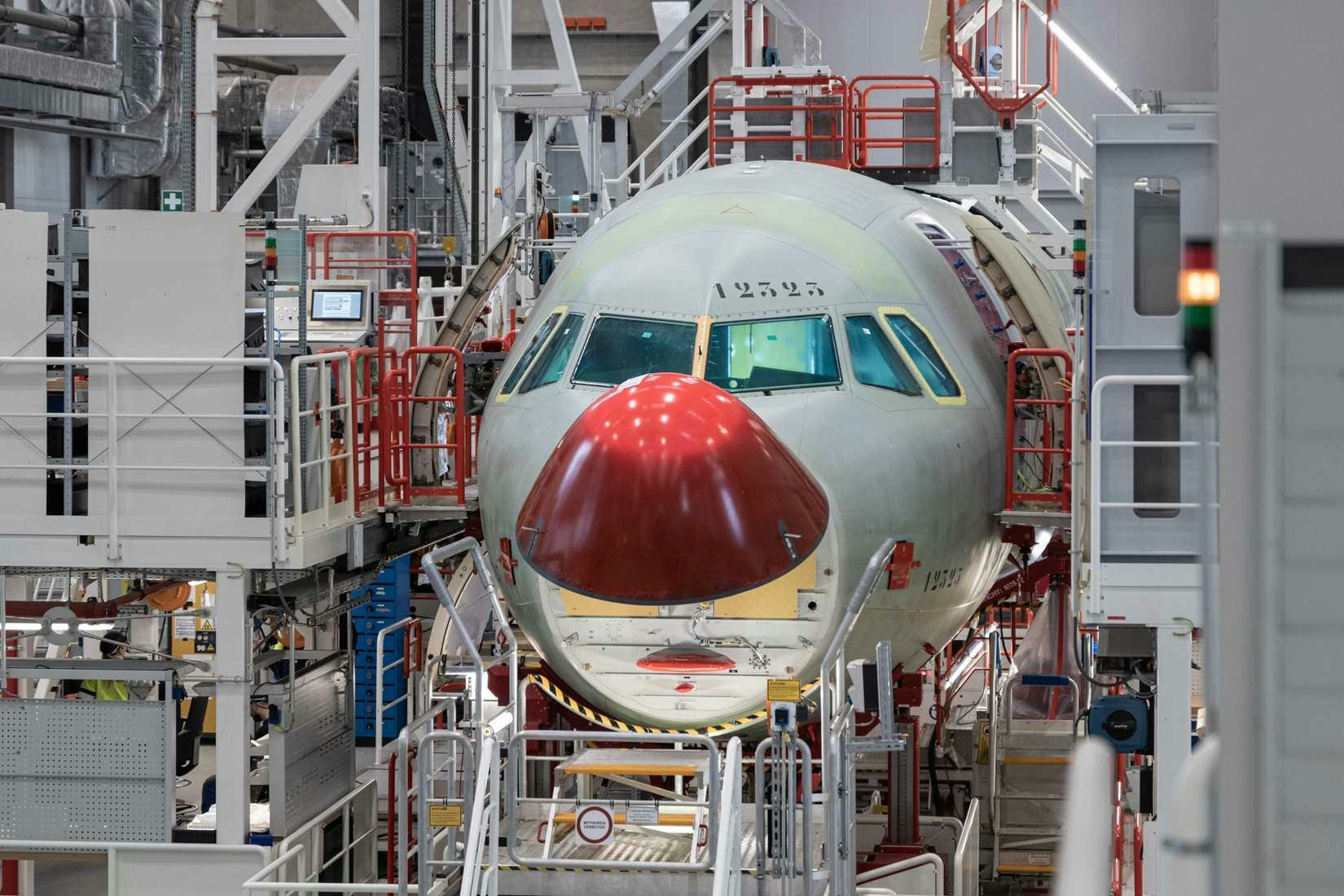
Project Winton focuses on revitalizing the domestic and short-haul international network by replacing the long-serving Boeing 737-800s and 717s with 48 Airbus A321XLRs and 29 Airbus A220-300s. These new aircraft offer enhanced fuel efficiency and extended range, modernizing the core of Qantas and QantasLink’s operations and improving overall service reliability.
Project Sunrise represents the most ambitious element of the renewal. It involves the acquisition of 12 specially modified Airbus A350-1000ULRs, equipped with an additional 20,000-liter rear center fuel tank. These aircraft are engineered to operate nonstop flights from Australia’s east coast to London and New York—routes that have never before been served on a scheduled basis. However, supply-chain disruptions affecting Airbus deliveries have delayed the launch of these ultra-long-haul services until April 2027. Once operational, the A350-1000ULRs will replace Boeing 787-9s on key long-haul routes, enabling Qantas to expand its network to North and South America, southern Africa, and Europe.
Project Fysh, announced in August 2023 and named in honor of Qantas co-founder Sir Hudson Fysh, will introduce 12 standard Airbus A350-1000s and 12 Boeing 787-10s. These aircraft will gradually replace the aging Airbus A330 fleet and eventually the Airbus A380s, further modernizing Qantas’ widebody operations and enhancing passenger experience.
In addition to these, a fourth, yet unnamed project is reportedly underway. Qantas is actively considering an order for up to 20 additional widebody jets—either Airbus A350s or Boeing 787s—to accelerate the retirement of its A380s and support further international expansion.
Financial Strength and Sustainability Commitments
This sweeping renewal program is supported by robust financial performance. In the first half of fiscal year 2026, Qantas reported an underlying profit before tax of A$1.456 billion, marking a 5% increase year-over-year. During this period, the airline invested A$1.8 billion in net capital expenditure. Full-year capital expenditure is projected to reach between A$4.1 billion and A$4.3 billion, rising further to A$5.1 billion to A$5.4 billion in FY2027 as aircraft deliveries accelerate. These figures underscore Qantas’ firm commitment to restoring and enhancing its competitive position in the global aviation market.
The economic rationale behind the fleet renewal is compelling. New aircraft models such as the A321XLR, A220, A350, and 787-10 are estimated to be 20 to 30 percent more fuel efficient per seat compared to the aircraft they replace. Financial analysts project that this efficiency could translate into an additional A$150 to A$200 million in annual earnings by 2027. Moreover, the introduction of these modern jets will reduce carbon intensity per passenger kilometer, a critical metric for corporate clients and regulatory compliance. In line with its sustainability goals, Qantas has committed to incorporating a 2 percent sustainable aviation fuel blend by 2026.
Challenges and Future Outlook
Despite facing challenges such as supply-chain delays and the complexities involved in integrating multiple new aircraft types, Qantas’ fleet renewal program is poised to transform its network, profitability, and competitive standing well into the 2030s and beyond. This comprehensive strategy not only modernizes the airline’s fleet but also positions Qantas to meet evolving market demands and sustainability expectations on a global scale.

Etihad and Swissport Extend Global Partnership

Sepehran Airlines B737 Returns to Mashhad After Tyre and Engine Issues

Etihad Deploys Widebody Fleet to Meet Strong Demand

Korean Air Finalizes $36.2 Billion Deal with Boeing

Australia’s RFDS Queensland Section Orders Six King Air 260Cs

Korean Air Finalizes Order for 103 Boeing Jets and Engines

Embraer E195-E2 Features Distinctive Engine Placement Among Regional Jets

What Passengers Can Expect on Boeing’s New 777X Jet

How Ethiopian Airlines Became Africa’s Leading Carrier Amid Gulf Competition

Joby Aviation Extends Autonomous Flight Capabilities with Cross-Country Tour
