
Orchestrer les insights d’IA pour les transformer en actions

Tendances
Categories
Southwest Airlines’ Pay Model Could Raise Senior Boeing 737 Captains’ Salaries Above $450,000 in 2026
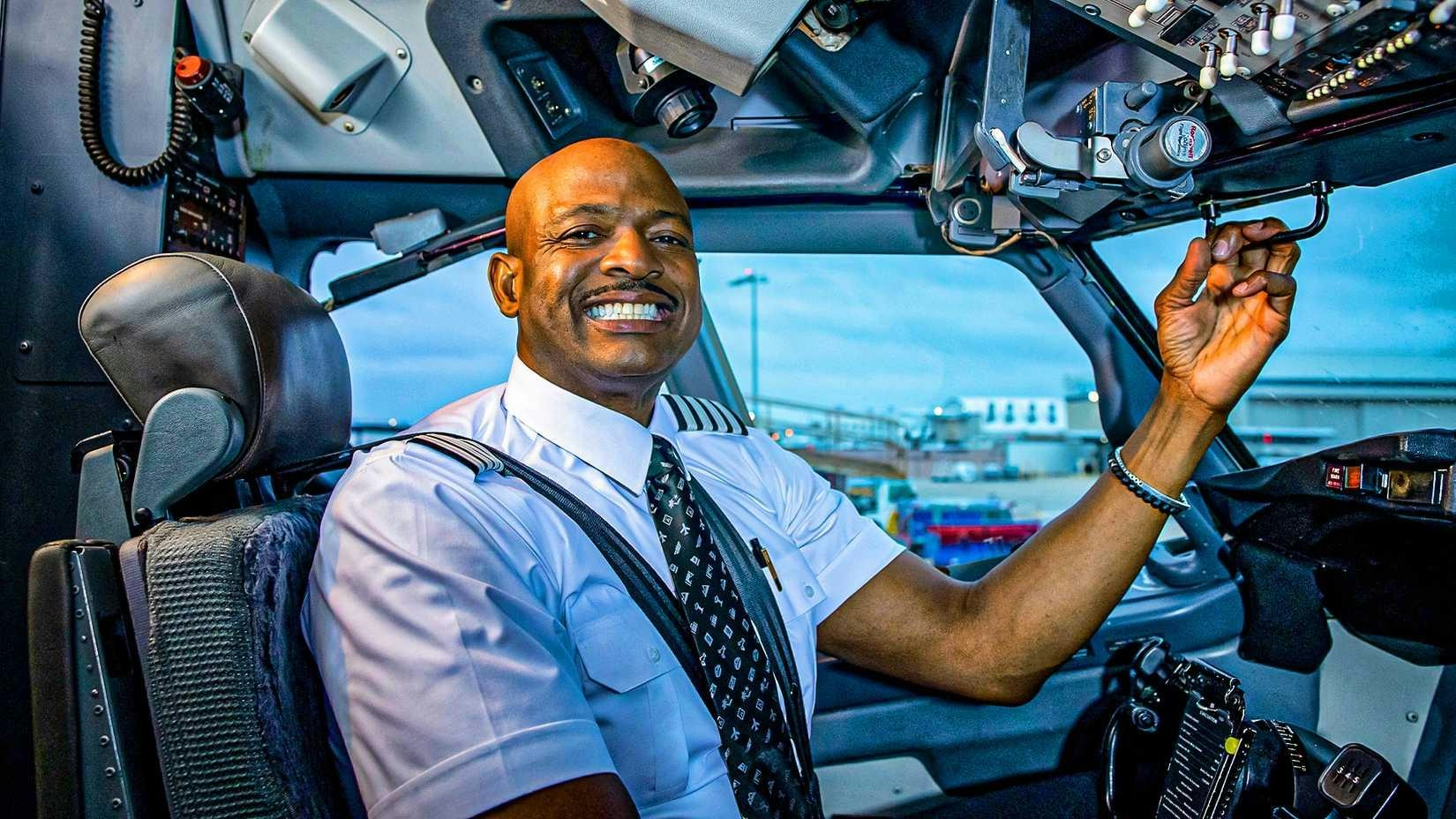
Southwest Airlines’ Pay Model Could Elevate Senior Boeing 737 Captains’ Salaries Beyond $450,000 by 2026
Southwest Airlines pilots have consistently ranked among the highest-paid aviators in the United States, and recent compensation data underscores the growing lucrativeness of these roles. According to the 2024 contract negotiated with the Southwest Airlines Pilots Association (SWAPA), first officers with 12 years of service now earn approximately $255 (€222) per hour, while senior captains command around $364 (€316) per hour. When additional elements such as premium pay, retirement contributions, and profit sharing are included, total annual compensation for top-tier captains can surpass $450,000 (€391,000), positioning them among the highest-paid narrowbody pilots globally.
The Unique Trip For Pay System
Southwest’s compensation structure is distinguished by its Trip For Pay (TFP) system, which diverges significantly from the block hour model prevalent across most major U.S. airlines. Whereas the block hour system remunerates pilots based on the elapsed time from gate departure to arrival, Southwest calculates pay primarily on the distance flown. One TFP corresponds to 243 miles, with pilots receiving an additional 10% pay credit for every 40 miles flown beyond that threshold. This system, established decades ago to support Southwest’s high-frequency Boeing 737 operations, incentivizes productivity in ways that traditional block-hour contracts often fail to capture.
The TFP model is closely aligned with Southwest’s operational strategy, which prioritizes frequent departures, short-haul routes, rapid aircraft turnarounds, and high utilization rates. By compensating pilots based on distance rather than elapsed time, the airline encourages efficiency and productivity, frequently resulting in a pay premium. Industry analysts typically apply a conversion factor of 1.15 to 1.16 when comparing TFP earnings to conventional block-hour rates, granting Southwest pilots a notable advantage in compensation relative to many of their peers.
Challenges Ahead for Sustaining Elevated Salaries
Despite the promising outlook for senior Boeing 737 captains’ salaries to exceed $450,000 by 2026, Southwest faces several challenges that could impact this trajectory. The airline’s strategy to uphold higher fare levels, even in the event of declining jet fuel prices, may be tested as competitors adjust their pricing strategies in response to market conditions. Furthermore, Southwest’s planned introduction of the Boeing 737 MAX 7 in 2027, alongside efforts to maintain flexibility in its fleet composition, could divert focus and resources away from further salary enhancements.
The competitive landscape for experienced pilots, including recruitment pressures from the U.S. military, adds another layer of complexity. Southwest will need to continuously justify and sustain its elevated pay scales to attract and retain top talent amid this competition. While most competitors continue to rely on block-hour pay systems, Southwest’s TFP model quietly generates a hidden pay premium, enabling narrowbody pilots to achieve compensation levels more commonly associated with international widebody operations at legacy carriers.
As Southwest advances its ambitious compensation plans, the sustainability of the TFP system amid evolving market dynamics and industry competition remains a critical question for the airline and its pilots.

Hong Kong's Five-Year Plan Includes Andrew Fan's Aircraft Parts Processing Hub Proposal

ACIA Aero Leasing Delivers ATR72-600 to Air Nostrum

RTX Appoints Jill Albertelli as Head of Pratt & Whitney

TAT Technologies Joins Beyond Aero Hydrogen Aircraft Program

AURAK Study Highlights Barriers to Air Taxi Adoption in Emerging Economies

Xiamen Air Selects Altitude for 787 Maintenance at Heathrow

Etihad and Swissport Extend Global Partnership

Sepehran Airlines B737 Returns to Mashhad After Tyre and Engine Issues

Etihad Deploys Widebody Fleet to Meet Strong Demand

Korean Air Finalizes $36.2 Billion Deal with Boeing
