
Orchestrer les insights d’IA pour les transformer en actions

Tendances
Categories
Why Airlines Choose Airbus or Boeing, Not Both
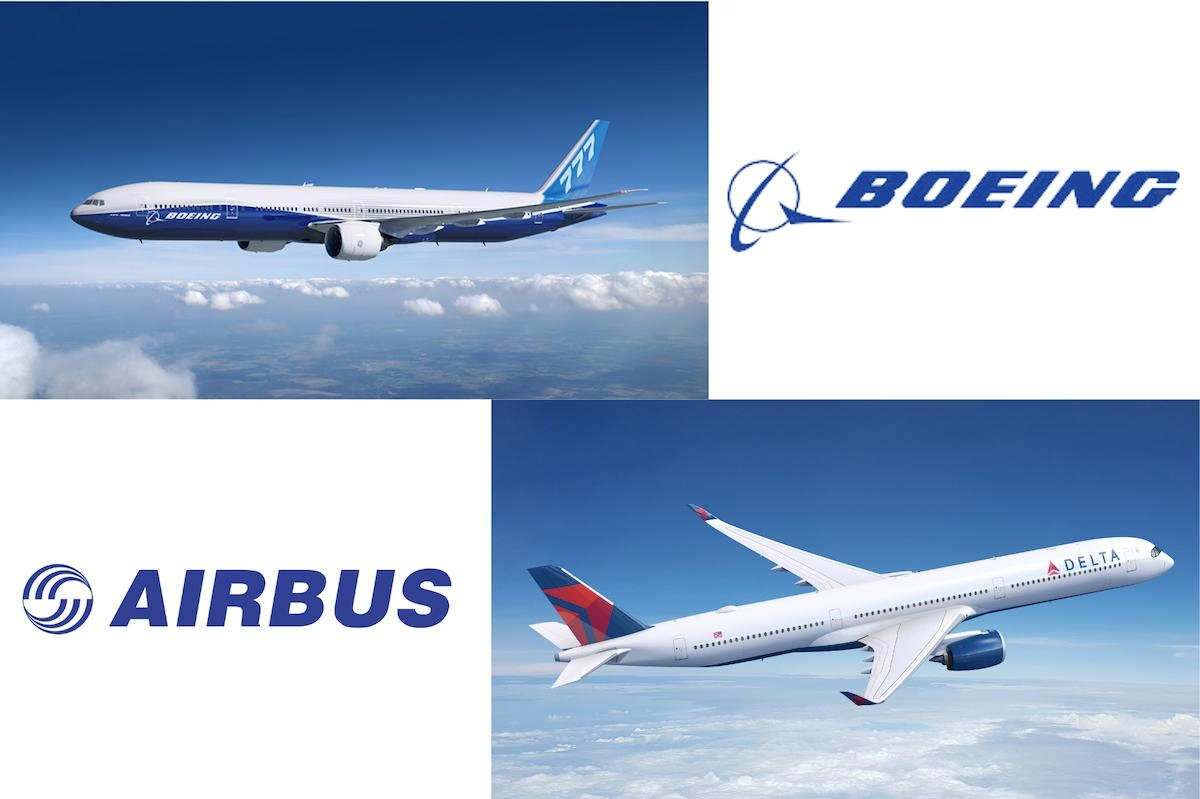
Why Airlines Choose Airbus or Boeing, Not Both
As global air travel recovers and aircraft orders increase, a distinct pattern has emerged within the aviation industry: airlines are increasingly committing to either Airbus or Boeing, rather than dividing their fleets between the two manufacturers. This trend reflects not only the dominance of these two aerospace giants but also the strategic, financial, and operational factors that influence contemporary fleet management decisions.
The Duopoly Shaping Commercial Aviation
For many decades, Airbus and Boeing have effectively controlled the commercial aircraft market, supplying the overwhelming majority of jets worldwide. Recent industry data confirms their sustained dominance, with Airbus currently leading in overall deliveries, particularly in the high-demand single-aisle segment, while Boeing retains a strong position in the long-haul widebody category. Between 2015 and 2024, Airbus secured more orders, yet Boeing delivered a comparable number of aircraft, underscoring the close competition between the two manufacturers.
This duopoly provides airlines with both advantages and limitations. The extensive production capabilities and substantial order backlogs of Airbus and Boeing guarantee long-term support, parts availability, and ongoing development of new models well into the 2040s. However, the absence of similarly sized competitors means that selecting one manufacturer carries significant implications across all facets of an airline’s operations.
Strategic Considerations and Market Dynamics
Airlines’ preferences for Airbus or Boeing are shaped by the distinct strengths each company offers. Airbus has cultivated a strong reputation for its widebody aircraft, while Boeing is often favored for its narrowbody jets. These choices are influenced by factors such as fleet compatibility, maintenance expenses, and specific aircraft performance characteristics.
The market closely monitors major fleet decisions, which can have notable impacts on investor sentiment. For example, Airbus’s robust delivery figures reported in February 2026 and Boeing’s best January delivery performance since 2019 were met with positive investor reactions. Competitors also respond strategically; GOL’s recent decision to incorporate Airbus A330-900s into its fleet exemplifies a tactical move to maintain competitiveness in a shifting market.
The Importance of Fleet Commonality
A compelling rationale for airlines to concentrate their fleets with a single manufacturer is the operational efficiency gained through fleet commonality. Operating a homogeneous fleet enables airlines to standardize pilot training, maintenance protocols, spare parts inventories, and cabin configurations. This standardization reduces operating costs and enhances scheduling flexibility. For instance, pilots trained on the Airbus A320neo can transition to other Airbus models with minimal additional training, a benefit similarly observed within Boeing’s product families.
Maintenance operations also become more streamlined. Airlines can minimize the number of spare engines, landing gear components, and avionics units required when their fleet shares common designs. Engineering teams operate more efficiently, and technicians can service multiple aircraft types with greater expertise. These efficiencies are particularly valuable as airlines expand capacity to meet growing passenger demand.
Future Outlook
Industry forecasts indicate that narrowbody aircraft will continue to represent approximately three-quarters of global deliveries through the early 2030s, reinforcing the central role of the Airbus A320neo and Boeing 737 MAX families. Given the significant future seat capacity tied to these platforms, airlines are incentivized to consolidate orders with a single supplier to secure more favorable pricing and earlier delivery schedules.
Ultimately, the choice between Airbus and Boeing extends beyond the acquisition of aircraft; it represents a long-term strategic partnership that will influence an airline’s competitive position for decades.

Etihad Airways Suspends Airbus A380 Flights on Key Route

Aditya Birla Group Seeks Approval for Aircraft Leasing in GIFT City

Qatar Airways Highlights Innovation and Connectivity at Arabian Travel Market 2026

Hong Kong's Five-Year Plan Includes Andrew Fan's Aircraft Parts Processing Hub Proposal

ACIA Aero Leasing Delivers ATR72-600 to Air Nostrum

RTX Appoints Jill Albertelli as Head of Pratt & Whitney

TAT Technologies Joins Beyond Aero Hydrogen Aircraft Program

AURAK Study Highlights Barriers to Air Taxi Adoption in Emerging Economies

Xiamen Air Selects Altitude for 787 Maintenance at Heathrow

Etihad and Swissport Extend Global Partnership
