
Trasforma le intuizioni dell’IA in azioni concrete

Tendenze
Categories
Three U.S. Airports End Airbus A380 Superjumbo Service
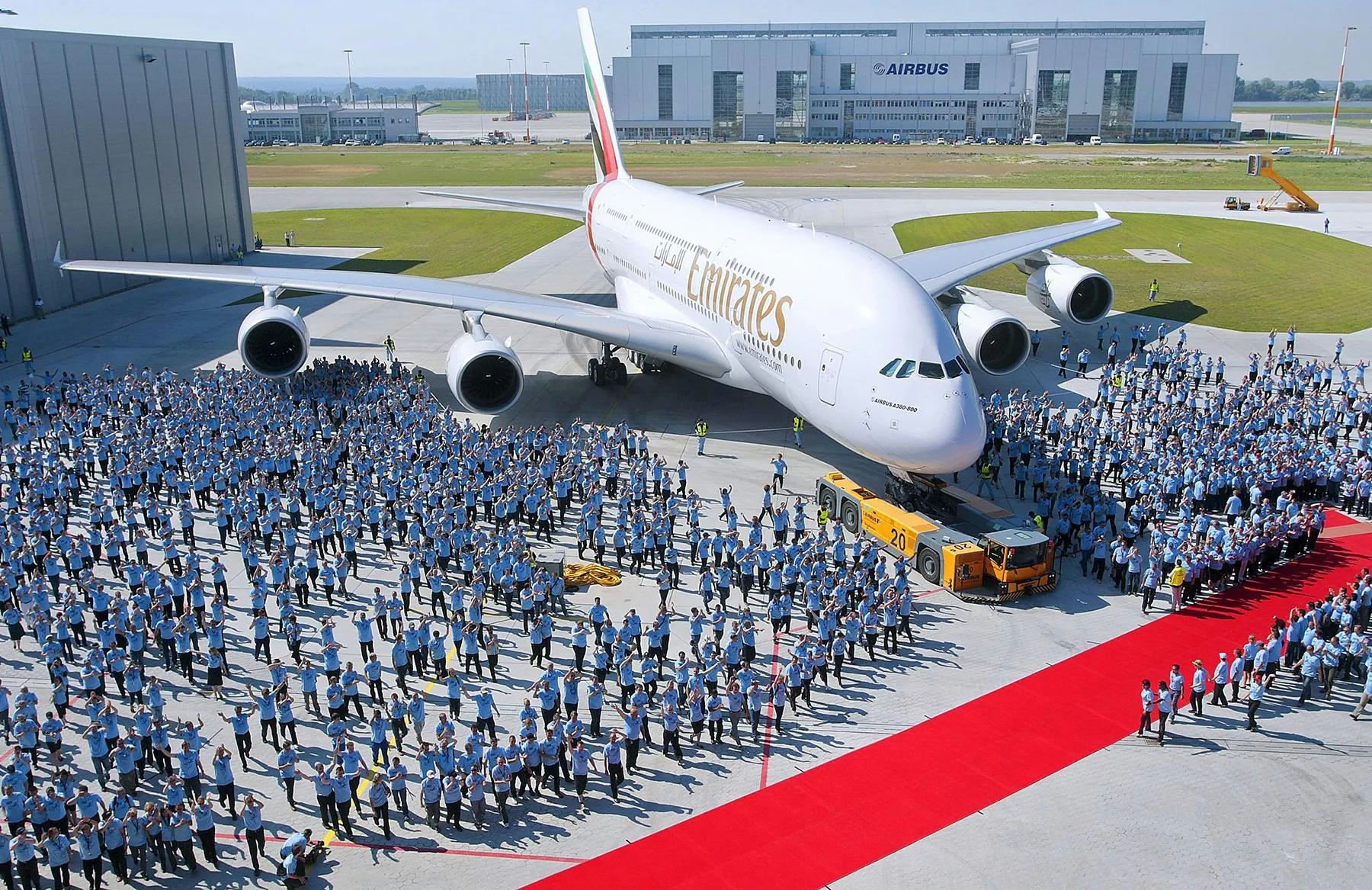
Three U.S. Airports End Airbus A380 Superjumbo Service
The Airbus A380, celebrated for its immense size and distinctive double-decker design, has historically depended on high-density, hub-and-spoke routes to maintain profitability. Although no U.S. airline has operated the superjumbo, several international carriers have deployed the aircraft to major American airports. Over time, however, some key U.S. hubs have completely discontinued A380 service, prompting notable adjustments in airport operations and airline strategies.
Atlanta Hartsfield-Jackson International Airport (ATL)
Atlanta, the world’s busiest airport by passenger volume, once regularly accommodated the A380 from multiple international carriers. Air France operated the aircraft sporadically in 2017 and more consistently in 2019, while Korean Air flew A380s to Atlanta between 2013 and 2017. Qatar Airways inaugurated its Doha-Atlanta route in 2016 with a single A380 flight, although the aircraft was not assigned a dedicated gate, requiring passengers to disembark via stairs and buses. Since then, all A380 operations at Atlanta have ceased, with airlines opting instead for smaller widebody aircraft such as the Boeing 777 and Airbus A350.
Chicago O’Hare International Airport (ORD)
Chicago O’Hare first welcomed the A380 in July 2016 when Emirates conducted a one-off flight to test the airport’s upgraded infrastructure for handling the superjumbo. This event laid the groundwork for future A380 operations, but it was British Airways—not Emirates—that established regular A380 service from London Heathrow in 2018 and 2019, resuming briefly after the pandemic in 2022 and 2023. Currently, British Airways has transitioned to using Boeing 777 and 787 aircraft on this route, according to aviation analytics firm Cirium.
Orlando International Airport (MCO)
Orlando International Airport also previously hosted A380 flights, which have since been discontinued. The withdrawal of the A380 from these airports reflects broader industry trends, as airlines increasingly favor more fuel-efficient twin-engine jets over four-engine giants.
Operational and Strategic Implications
The cessation of A380 service at these three major U.S. airports presents both operational and strategic challenges. Airports may need to reevaluate investments in infrastructure specifically designed for the superjumbo, as accommodating such large aircraft requires specialized gates and ground handling equipment. The absence of the A380 could lead airports to repurpose these facilities for other widebody aircraft or adjust operations to optimize gate utilization.
For airlines, the move away from the A380 is reshaping route planning and fleet deployment. Competitors may respond by increasing capacity with their own large aircraft models or by introducing new services to capture passengers formerly served by the A380. This transition is likely to result in more frequent flights operated by smaller widebody aircraft, offering greater flexibility and operational efficiency.
As the aviation industry continues to evolve, the departure of the A380 from these U.S. airports highlights the ongoing shift toward more versatile and economical aircraft, fundamentally altering both airport operations and airline strategies in key American markets.
Avianca Obtains $300 Million Financing for Engine Maintenance

MSA Safety Introduces A1X WinGrip Vacuum Anchor for Aircraft Maintenance
Air Cairo Chooses LEAP-1A Engines for New A320neo Fleet
Airbus and Boeing Aircraft Deliveries Exceed 2025 Targets

Ontic Acquires SIRS Navigation
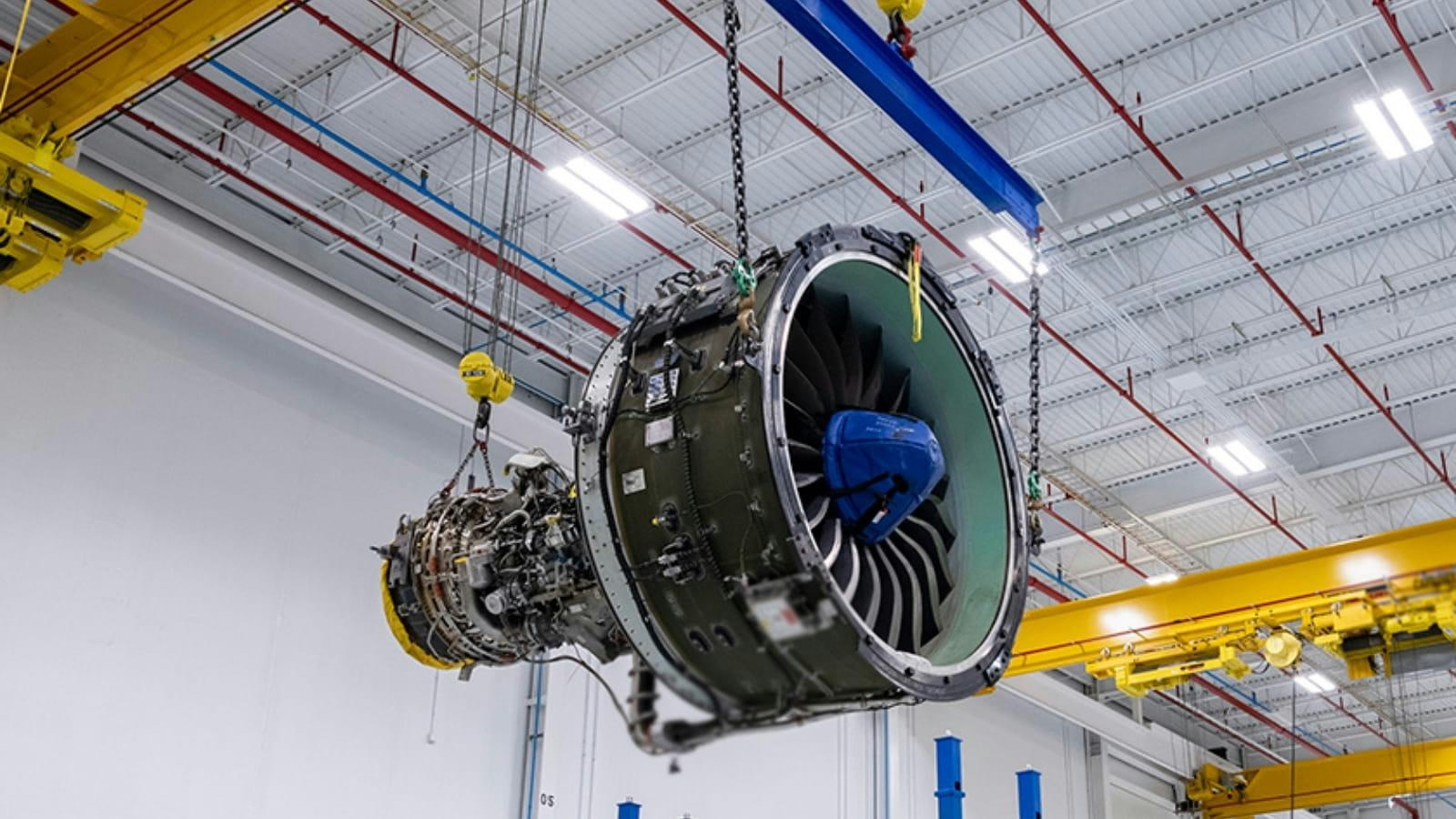
IATA Says P&W Canada’s Contract Changes Could Improve Engine Aftermarket
August 2026 Parts Data Shows GE90 Engine Controls Tighten Before Maintenance Season
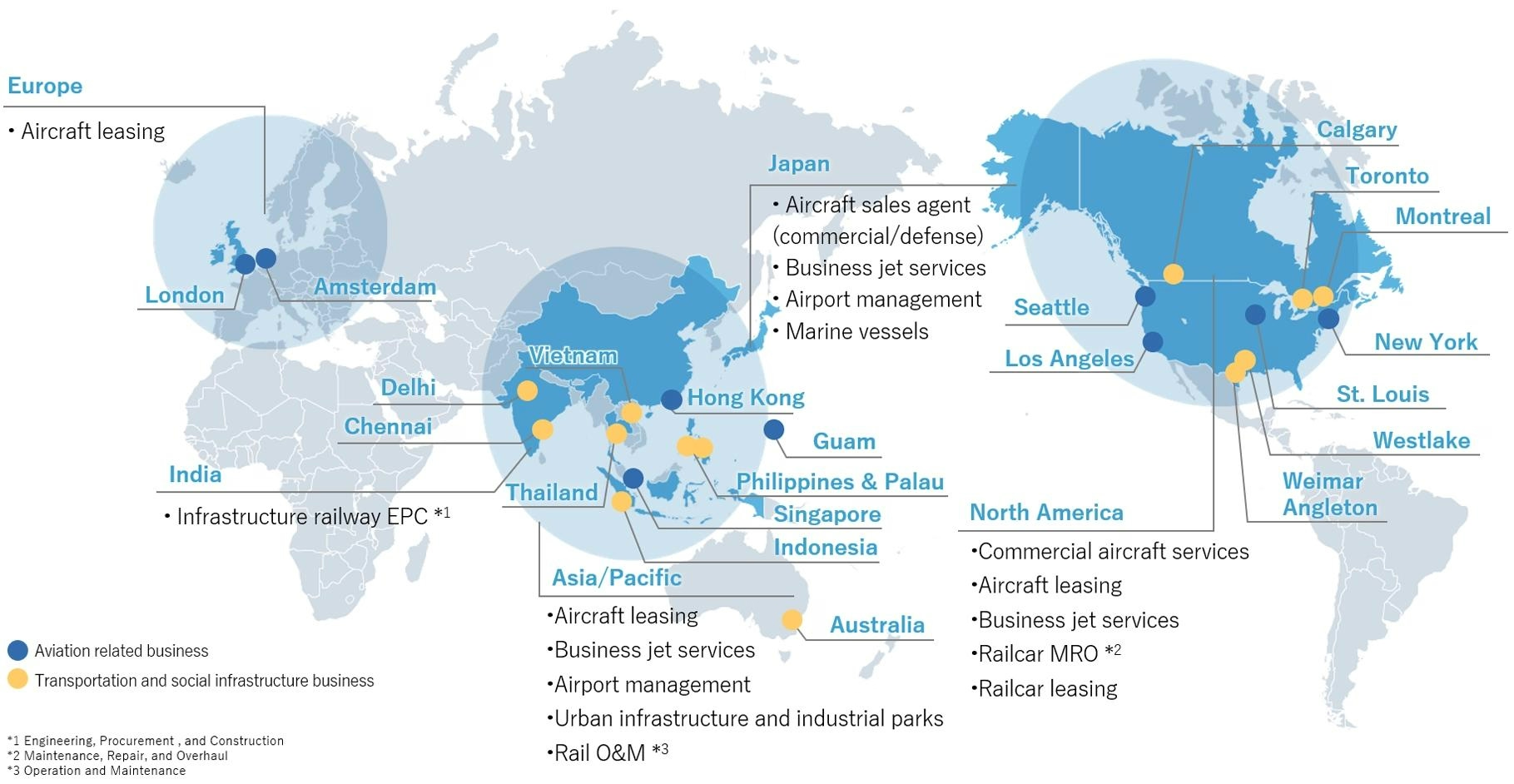
Japanese Companies Expand Investment in Aircraft Leasing
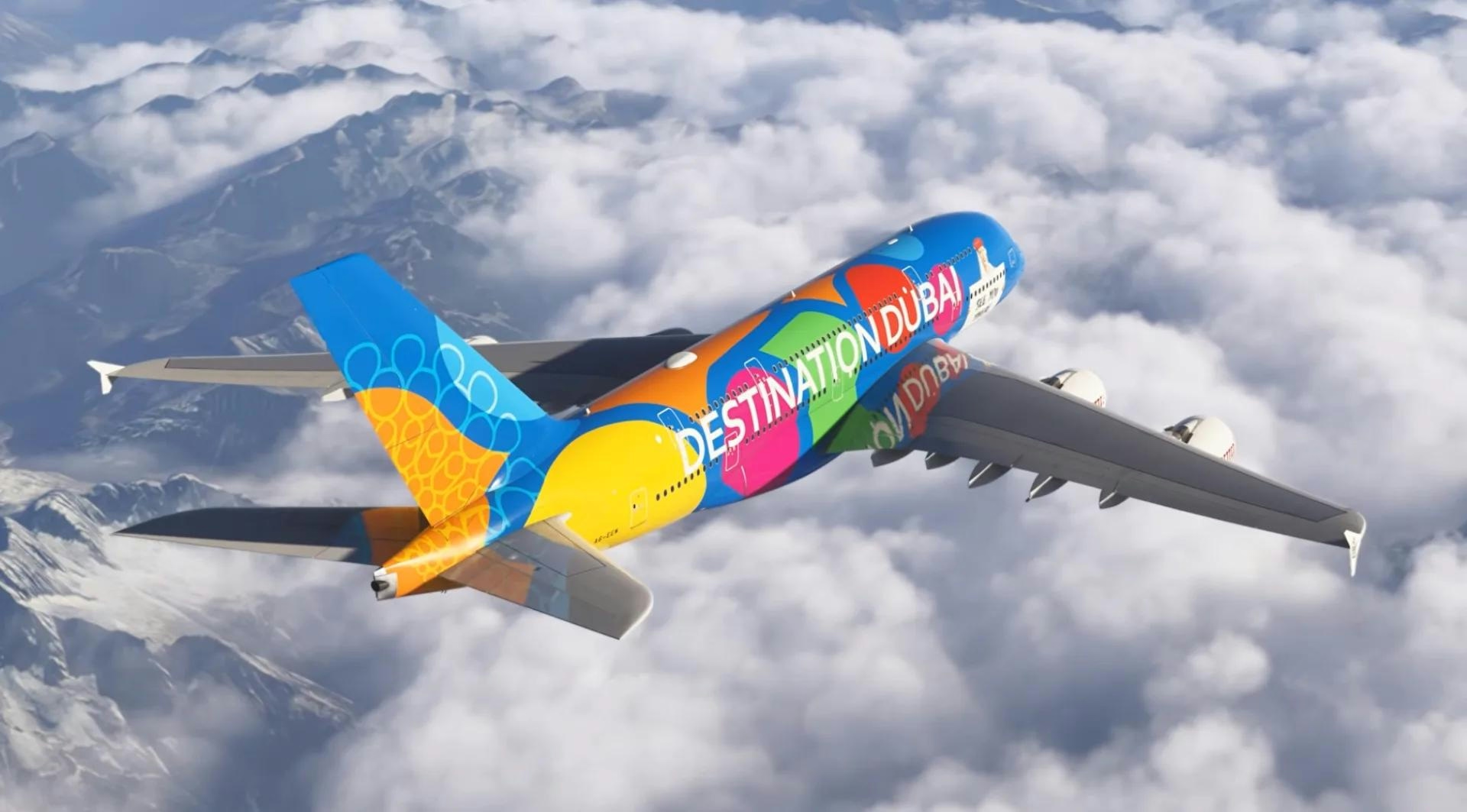
iniBuilds Releases A380 Introduction Video
Air India Diverts and Cancels Flights Amid UK Aviation Disruptions
