
AIによるインサイトを行動へとつなげる

現在のトレンド
Categories
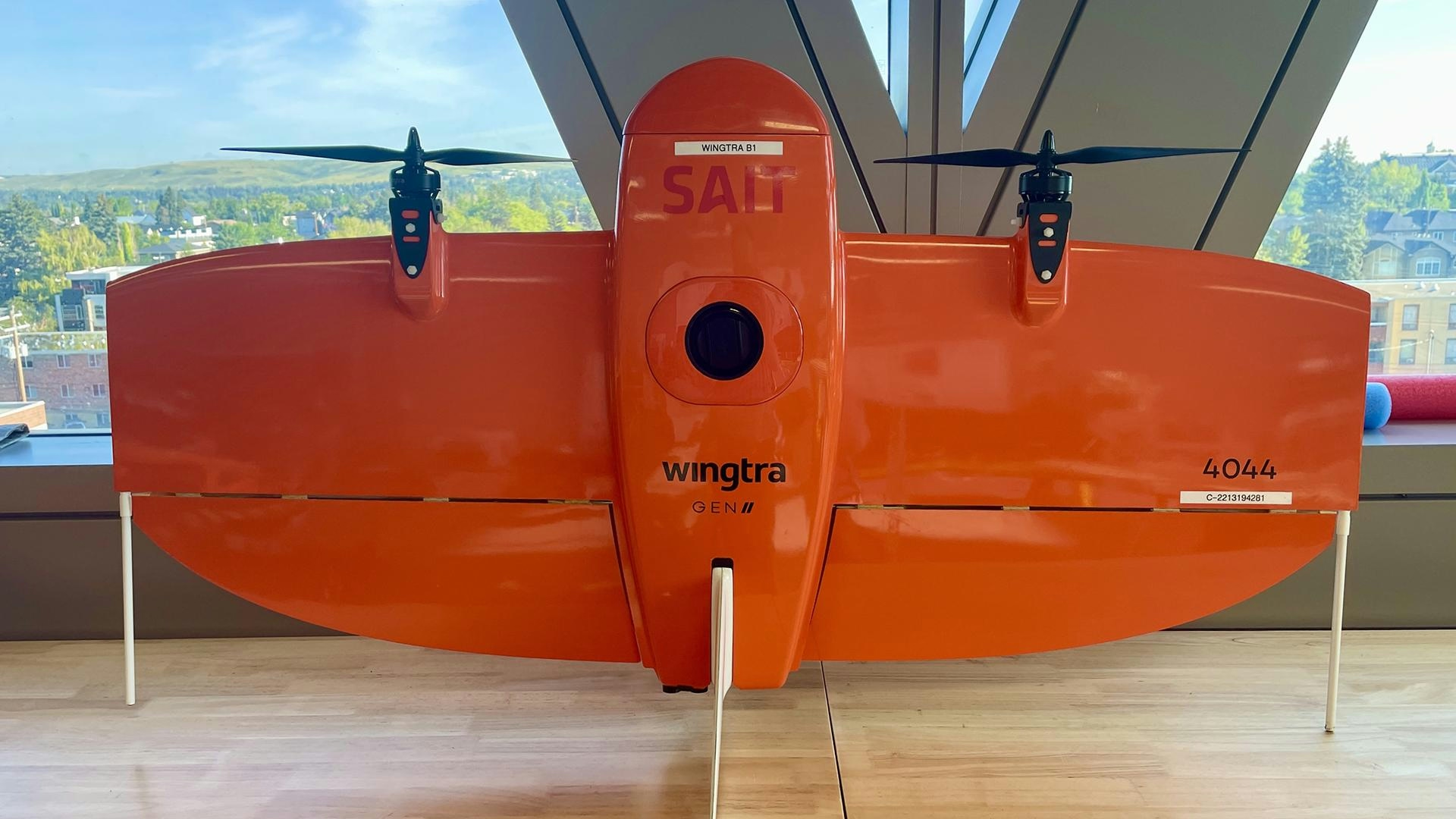
Advancing Research and Innovation with Remotely Piloted Aircraft Systems
Advancing Research and Innovation with Remotely Piloted Aircraft Systems
The Centre for Innovation and Research in Unmanned Systems (CIRUS) at the Southern Alberta Institute of Technology (SAIT) in Calgary, Alberta, stands at the forefront of advancing remotely piloted aircraft systems (RPAS), commonly known as drones, across diverse industries. As Canada’s first remotely piloted aviation training centre and a vital component of SAIT’s Applied Research and Innovation Services (ARIS) Hub, CIRUS is committed to exploring how drones can enhance data acquisition, management, analytics, and dissemination. This work supports organizations in navigating increasingly complex regulatory and operational environments.
CIRUS’s applied research focuses on addressing industry challenges by leveraging RPAS alongside advanced sensor technologies. The centre emphasizes the customization, validation, integration, and analysis of data collected through these systems. While much of CIRUS’s research involves aerial drones, its scope also extends to terrestrial and submersible unmanned vehicles, reflecting a comprehensive approach to real-world applications.
The centre’s expertise encompasses the integration of remotely piloted aircraft with sensor systems, the development of payload delivery solutions, and the advancement of heavy-lift, high-endurance beyond visual line of sight (BVLOS) operations. CIRUS also pioneers analytical modeling using RPAS-based geographic information systems (GIS), remote sensing, machine learning (ML), and artificial intelligence (AI). Additionally, the centre explores data visualization techniques through augmented reality (AR) and virtual reality (VR).
Building on this foundation, CIRUS’s Environmental Resiliency and Sustainability Hub (ERSH) delivers innovative solutions in disaster management, search and rescue, wildfire response, wildlife management, and natural resource stewardship. ERSH aligns research, technology development, and deployment efforts to address these critical challenges in a scalable and coordinated manner.
Applied Research in Action
CIRUS’s projects demonstrate the practical potential of remotely piloted systems to bridge the gap between research and real-world application. During the COVID-19 pandemic in 2020, CIRUS collaborated with the University of Calgary’s W21C Research and Innovation Centre to test drone delivery of medical supplies to remote communities. This initiative sought to overcome geographical barriers and improve access to COVID-19 testing and healthcare resources. A successful test flight underscored the potential for drones to support emergency medical logistics, laying the groundwork for broader adoption of drone technology in healthcare delivery across Canada.
Reflecting on the project’s origins, Wade Hawkins, CIRUS Research Chair, recalled, “The concept for this project began during a lunch between Dr. John Conly from W21C and myself, two months before COVID-19. We were discussing the integration of drone technology and healthcare when we ended up sketching out a project idea on a cocktail napkin.”
Navigating Challenges and a Competitive Landscape
As CIRUS and similar institutions push the boundaries of RPAS applications, the sector faces significant challenges. Achieving reliable all-weather operational capability remains a critical hurdle. This was recently highlighted by General Atomics Aeronautical Systems’ (GA-ASI) successful MQ-9B icing flight tests, which are expected to stimulate market interest in expanded surveillance and strike capabilities. Such advancements are likely to prompt competitors to accelerate their own efforts in icing certification and advanced weapon integration.
The competitive environment is further shaped by the development of counter-drone technologies. For instance, the U.S. Army Research Laboratory’s collaboration with the Pennsylvania Army National Guard on enemy drone recovery systems exemplifies the growing focus on defensive measures. Market dynamics are also influenced by uncertainties surrounding government funding, evolving legislation and regulations, and global economic volatility.
Meanwhile, progress in related aerospace fields underscores the need for regulatory updates and public engagement. NASA’s X-59 experimental supersonic aircraft, designed to achieve quieter supersonic flight over land, exemplifies emerging technologies that will require careful integration into existing frameworks.
As CIRUS continues to drive innovation, its work exemplifies both the potential and complexity of integrating remotely piloted systems into critical sectors, balancing technological advancement with regulatory, operational, and societal considerations.

Etihad Airways Suspends Airbus A380 Flights on Key Route

Aditya Birla Group Seeks Approval for Aircraft Leasing in GIFT City

Qatar Airways Highlights Innovation and Connectivity at Arabian Travel Market 2026

Hong Kong's Five-Year Plan Includes Andrew Fan's Aircraft Parts Processing Hub Proposal

ACIA Aero Leasing Delivers ATR72-600 to Air Nostrum

RTX Appoints Jill Albertelli as Head of Pratt & Whitney

TAT Technologies Joins Beyond Aero Hydrogen Aircraft Program

AURAK Study Highlights Barriers to Air Taxi Adoption in Emerging Economies

Xiamen Air Selects Altitude for 787 Maintenance at Heathrow

Etihad and Swissport Extend Global Partnership
