
画像

AIを活用して見積もり機会における収益を3倍に増やしましょう!

見積もり自動化の30分間のライブデモにご参加ください。

現在のトレンド

Categories

Boeing 737 MAX Software Issues Prompt Changes in Global Aviation Safety
May 13, 2026By ePlane AI
Boeing 737 MAX Software Issues Prompt Changes in Global Aviation Safety
0
0
Boeing 737 MAX
MCAS Software
Aviation Safety Regulation

Boeing 737 MAX Software Issues Prompt Changes in Global Aviation Safety

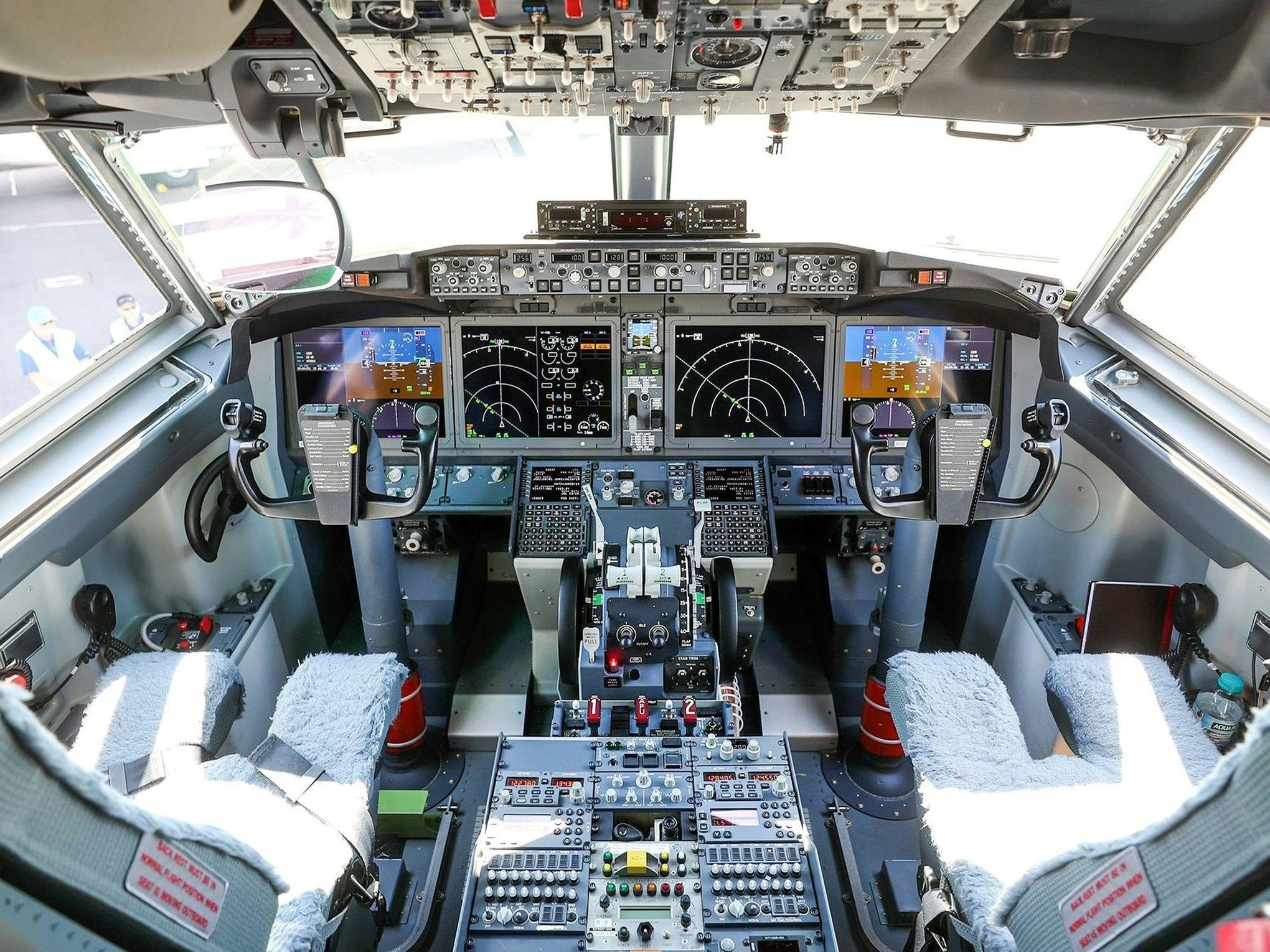
The Boeing 737 MAX crisis has fundamentally altered global aviation safety standards by revealing significant deficiencies in software transparency and regulatory oversight. Central to the controversy was the Maneuvering Characteristics Augmentation System (MCAS), a software feature that Boeing failed to fully disclose to pilots, airlines, and regulatory authorities. This lack of transparency came to light following two catastrophic crashes—Lion Air Flight 610 in Indonesia and Ethiopian Airlines Flight 302—that resulted in the deaths of 346 people and led to the unprecedented global grounding of the 737 MAX fleet for nearly 20 months.

Concealed Software and Catastrophic Consequences

MCAS was engineered to automatically lower the aircraft’s nose to prevent aerodynamic stalls. However, Boeing’s failure to inform flight crews about the system left pilots unprepared to recognize or counteract its malfunction. In both fatal incidents, erroneous activation of MCAS repeatedly forced the aircraft into unrecoverable dives. These tragedies exposed not only critical design flaws but also systemic failures in Boeing’s communication and the regulatory approval process.

Regulatory Scrutiny and Industry-Wide Reform

The aftermath of the 737 MAX disasters prompted comprehensive reforms throughout the aviation industry. The Federal Aviation Administration (FAA) and other global regulators revised certification protocols, imposing stricter software testing requirements, enhanced pilot training standards, and demanding greater transparency from manufacturers. Airlines worldwide instituted extensive retraining programs before reintroducing the 737 MAX into service.

Boeing itself faced intense regulatory scrutiny, criminal investigations, and substantial financial penalties. The company continues to grapple with ongoing lawsuits, including investor class actions linked to the safety crisis. Additionally, LOT Polish Airlines publicly accused Boeing of concealing safety issues to secure sales, further intensifying regulatory and market pressures.

Market Impact and Competitive Landscape

The crisis has significantly affected Boeing’s market position. The company’s stock price has experienced volatility amid safety concerns, legal challenges, and delays in implementing FAA-mandated software updates. Despite temporary delivery suspensions, Boeing continues to supply aircraft and anticipates new 737 MAX certifications later this year. Meanwhile, competitor Airbus has maintained its market share as Boeing works to rebuild confidence and comply with regulatory demands.

Long-Term Implications for Aviation Safety

The 737 MAX crisis underscored the critical importance of full information sharing among manufacturers, regulators, and operators. While devastating, the incident has established new standards for transparency and accountability within the aviation sector. The aircraft’s return to service in late 2020 followed an exhaustive recertification process, marking one of the most scrutinized comebacks in aviation history.

More news
Soji AI and Active Partners Explore AI Applications for MRO Records

Soji AI and Active Partners Explore AI Applications for MRO Records

Soji AI and Active Partners Collaborate to Enhance AI Integration in Aircraft MRO Records Soji AI and Active Partners have announced a strategic partnership aimed at advancing the application of artificial intelligence to improve the efficiency of aircraft and engine delivery, re-delivery, inspections, and transitions. Central to this collaboration is the integration of Soji AI’s platform, which converts fragmented aircraft data into automated workflows and actionable insights, into Active Partners’ operational framework. Transforming Aircraft Maintenance and Records Management By implementing Soji AI’s technology, Active Partners anticipates significant reductions in downtime, optimized resource allocation, and enhanced value delivery to its clients, including aircraft owners, lease managers, and operators. Rob de Klerk, Director of Technical Services at Active Partners, described the partnership as a pivotal step in the company’s digital transformation. He emphasized that the adoption of AI-driven engineering management not only improves efficiency and reliability but also establishes new benchmarks for innovation and safety within the aviation sector. De Klerk highlighted that the collaboration goes beyond mere digitization of documents; it streamlines manual document searches and accelerates record processing by identifying inconsistencies at earlier stages. The partnership is designed to empower engineers with validated information, thereby reducing reliance on manual interpretation of raw data. Florian Falk, CEO of Soji AI, underscored the broader industry trend toward intelligent, AI-powered operations. He noted that the decision by Active Partners to adopt Soji AI’s platform reflects a shift away from traditional, document-heavy processes toward scalable, digital-first aircraft lifecycle management. Falk stressed that human-AI collaboration remains central to the solution, with engineers maintaining final decision-making authority. The partnership aims to demonstrate how AI can be effectively embedded within certified environments to support this transition. Challenges and Industry Implications Despite the promising outlook, the partnership faces several challenges in scaling AI applications for maintenance, repair, and overhaul (MRO) records. Key obstacles include ensuring that existing infrastructure can support AI agents in production settings and addressing issues related to data scarcity. Furthermore, as the aviation industry increasingly explores AI-driven solutions, there is potential skepticism regarding the tangible operational return on investment, especially in the context of complex fleet management decisions. The competitive landscape is expected to intensify as rivals enhance their own AI capabilities, focusing on real-time workflow adjustments and improved data integration for AI agents. This environment underscores the necessity for robust and scalable solutions capable of delivering measurable improvements in operational efficiency and safety. As Soji AI and Active Partners advance their collaboration, their efforts may serve as a benchmark for the wider adoption of AI in aviation MRO, potentially setting new standards for digital transformation and operational excellence across the industry.
Trip.com Group Highlights AI and Digital Identity at Airline Global Conference

Trip.com Group Highlights AI and Digital Identity at Airline Global Conference

Trip.com Group Highlights AI and Digital Identity at Airline Global Conference Embracing Artificial Intelligence to Transform Travel On May 13, 2026, Trip.com Group hosted its flagship Airline Global Conference (AGC) in Amsterdam, gathering leaders from the aviation and travel industries to explore how technology, trust, and collaboration are driving the future of travel. The event, held at Passenger Terminal Amsterdam, convened airline partners, airports, global distribution systems, technology firms, corporate travel executives, and organizations such as the International Air Transport Association (IATA) to discuss the next phase of industry growth. The conference’s theme, “Co-Creating Value: Leading the Future of Travel Through Intelligence, Trust, and Partnership,” placed artificial intelligence (AI) at the forefront of the conversation. Xing Xiong, Chief Operating Officer of Trip.com Group, delivered the keynote address titled “Travelling Into the New World,” emphasizing AI’s accelerating influence in reshaping the online travel agency (OTA) landscape. He outlined how Trip.com is harnessing AI to improve internal efficiencies and elevate customer service on a large scale. Xiong also highlighted the transformative potential of Agentic AI within the aviation sector. Amy Wei, Senior Product Director at Trip.com, demonstrated practical AI applications, including TripGenie, an AI-powered assistant designed to personalize and streamline the traveler experience. Wei underscored the importance of human-AI collaboration in customer service, noting that this synergy fosters trust and reduces uncertainty for users navigating complex travel arrangements. Advancing Digital Identity for Seamless Travel In addition to AI innovations, Trip.com Group is advancing digital identity initiatives in partnership with IATA. The companies are piloting a Customer ID digital identity project that leverages secure credentials stored in mobile wallets such as Google Wallet and Apple Wallet. This technology enables travelers to autofill booking details with a single click, aiming to reduce friction, minimize errors, and enhance user control over personal data. The initiative reflects a broader industry movement toward seamless, end-to-end digital travel experiences. Nick Careen, IATA’s Senior Vice President of Operations, Safety, and Security, emphasized the significance of digital identity as a key enabler of smoother travel. He noted that the pilot with Trip.com explores how wallet-based credentials can simplify the booking process while empowering travelers with greater data autonomy. Industry Challenges and Strategic Outlook Despite its technological advancements, Trip.com Group faces considerable challenges. The company is currently under regulatory scrutiny, including an antitrust investigation in China that has recently impacted its stock performance. Moreover, evolving market demands around digital identity and AI require continuous adaptation to maintain competitive advantage. The competitive landscape is intensifying, with rivals such as Amadeus expanding their offerings in biometric identity and AI-driven solutions. Additionally, the growing sophistication of AI-enabled fraud presents new cybersecurity risks, complicating Trip.com’s strategic planning. Trip.com Group and its partners remain engaged in evaluating the future development and phased rollout of the Customer ID functionality, potentially involving select user groups in upcoming stages. As the travel industry continues to evolve, Trip.com’s focus on AI and digital identity highlights both the opportunities and complexities that lie ahead.
Air India Faces Growing Crisis Ahead of Ahmedabad Crash Report

Air India Faces Growing Crisis Ahead of Ahmedabad Crash Report

Air India Faces Growing Crisis Ahead of Ahmedabad Crash Report Air India is confronting a deepening crisis as it awaits the imminent release of the Ahmedabad crash report. The airline’s ambitious five-year transformation plan, launched following its privatisation, is increasingly under threat from a series of operational and financial challenges that have hindered progress. Strategic Vision Undermined by Operational Challenges The airline had set out a clear roadmap to revamp its operations and restore its standing in the global aviation market. However, according to Jitendra Bhargava, a former executive director at Air India, the journey has been fraught with difficulties. “They needed a clear vision right now. Air India had given itself a five-year plan to revamp itself after the privatisation. But one can't really say that it's been a happy ride so far. Between their plan and its implementation, there have been big and growing gaps,” Bhargava remarked. This disconnect between strategy and execution has become increasingly apparent as the airline struggles to meet its objectives. Financial Pressures and Geopolitical Strains The airline’s challenges have been exacerbated by rising fuel prices and geopolitical tensions, particularly the recent conflict in Iran. Airspace restrictions resulting from this conflict have forced Air India to curtail several long-haul international routes, many of which have become financially unsustainable. Compounding these difficulties is the depreciation of the Indian rupee against the US dollar, which has significantly increased the cost of dollar-denominated expenses such as fuel. These financial pressures have placed considerable strain on the airline’s operational viability. Leadership Vacuum and Safety Concerns Further complicating the situation is the abrupt departure of a key executive, leaving a leadership void at a critical moment. Air India continues to grapple with persistent operational lapses and safety violations, issues that have undermined efforts to rehabilitate its brand image and restore passenger confidence. The airline’s ongoing struggles with safety and management oversight have heightened scrutiny from regulators and industry observers alike. As the Ahmedabad crash report draws near, the pressure on Air India to confront and resolve these multifaceted challenges intensifies. The airline’s ability to bridge the widening gap between its strategic ambitions and operational realities will be crucial in determining its future trajectory.
Brownsburg, Indiana, Emerging as a Center for Aviation and Defense Innovation

Brownsburg, Indiana, Emerging as a Center for Aviation and Defense Innovation

Brownsburg, Indiana, Emerging as a Center for Aviation and Defense Innovation Brownsburg, Indiana, traditionally recognized for its scenic parks and peaceful lifestyle, is undergoing a significant transformation into a prominent hub for global aviation and defense innovation. This evolution is exemplified by the recent inauguration of a 65,000-square-foot aerospace campus, a landmark achievement for AeroCore Technologies and ReNu Technologies. Situated on a five-acre site, the facility represents five years of strategic growth and firmly establishes Brownsburg as a leader in advanced manufacturing within the region. Advanced Manufacturing and Engine Technology The new campus was designed to support the expanding global operations of both companies, with all products manufactured domestically to meet stringent Defense and Department of Homeland Security regulations. A notable technological advancement developed by AeroCore is its patented nucleated foam cleaning process, which restores aircraft engine performance without requiring engine removal from the wing. This innovation, now recognized internationally, allows airlines to avoid costly and time-intensive engine disassembly, thereby significantly enhancing operational efficiency. With service volumes projected to double annually, AeroCore plans to introduce more than 30 new operations in the coming year. This expansion will further solidify Brownsburg’s status as an international center for aviation maintenance and technological development. Digital Infrastructure and Defense Applications In addition to manufacturing capabilities, the campus boasts a sophisticated digital infrastructure powered by an artificial intelligence-based analytics platform. This system delivers advanced performance and fleet analytics tailored specifically to the needs of defense and energy sector clients. By integrating digital solutions with physical maintenance processes, the platform optimizes engine health and extends operational longevity. ReNu Technologies utilizes the facility to broaden its engineering and sustainment services for ground-based turbine installations and energy producers. The site also supports chemical and refinery operations across the United States, attracting a diverse workforce of engineering professionals and industrial laborers to the Brownsburg area. Economic Impact and Emerging Challenges Brownsburg’s rise as a center for aviation and defense innovation brings substantial economic benefits but also introduces challenges. The influx of aerospace and defense enterprises is expected to place pressure on local infrastructure, necessitating significant investments in transportation networks, housing, and utilities. While increased competition among local businesses may spur innovation, it also risks economic displacement as the market adjusts to the demands of these emerging industries. Responses from competitors at both local and national levels are anticipated as firms recalibrate strategies to either capitalize on or counter Brownsburg’s growing influence. The establishment of new facilities, such as H.B. Fuller’s Aerospace Manufacturing Center of Excellence, is poised to reshape supply chains and alter the economic landscape of the region. Workforce Development and Community Collaboration Sustaining this growth will require close collaboration with educational institutions to develop a skilled workforce capable of meeting the advanced technological demands of the aviation and defense sectors. Industry leaders and local officials alike emphasize the importance of workforce development as a critical component of the region’s continued success. Executives from both AeroCore and ReNu Technologies express pride in the new campus, underscoring the dedication of their teams and the broader positive impact on the community. As Brownsburg continues its transformation, it exemplifies Indiana’s unique blend of traditional values and cutting-edge innovation within the global aviation and defense industries.
Fiji Airports Launches AI Training Program to Enhance Workforce Skills and Operations

Fiji Airports Launches AI Training Program to Enhance Workforce Skills and Operations

Fiji Airports Launches AI Training Program to Enhance Workforce Skills and Operations Fiji Airports has initiated a specialised Artificial Intelligence (AI) training program as a central component of its digital transformation strategy. The initiative seeks to strengthen workforce capabilities, improve operational efficiency, and sustain competitiveness within the rapidly evolving aviation sector. Advancing Workforce Capabilities Through AI The training program, conducted in Nadi, involved over 30 employees from diverse departments including Air Traffic, Safety and Risk, Airside Operations, Electrical and Mechanical, and Airport Management. Led by Caribbean AI and data transformation expert Leslie Fook, the sessions concentrated on practical AI applications, workplace innovation, and technology-driven decision-making. Participants engaged with AI tools designed to streamline operational tasks, enhance data analysis, accelerate risk identification, and support more effective airport management practices. This initiative arrives at a pivotal moment for Fiji’s labour market, which has been challenged by significant workforce migration. Approximately 15,500 Fijians have left the country seeking better opportunities abroad, underscoring a persistent disconnect between education, training, and industry requirements. Fiji Airports’ AI program directly addresses this gap by fostering digital literacy and equipping employees with the skills necessary to meet the future demands of aviation technology. Addressing the AI Skills Gap and Fostering Innovation Industry data highlights the urgency of such workforce development efforts. Despite considerable investments in AI infrastructure, many organisations—including those in Fiji—face challenges in workforce readiness. The AI Skills Gap Score reveals that only 14% of graduates are able to apply AI effectively in real-world workflows. Fiji Airports’ program aims to bridge this divide by delivering comprehensive training that extends beyond theoretical knowledge to practical implementation. Human resources leaders have stressed the importance of humility and agility as organisations adapt to the impact of AI on employment and workplace culture. Fiji Airports’ approach seeks to cultivate a culture of innovation and adaptability, thereby maintaining employee trust and addressing concerns related to technological change. Enhancing Airport Operations with AI The training underscored AI’s potential to support airport operations through predictive analytics, operational planning, and improved customer service systems. Employees were introduced to AI-driven tools for decision-making, risk assessment, safety management, and performance monitoring. These technologies are expected to reduce response times during operational disruptions, enhance workflow management, and optimise resource allocation across departments. As airports worldwide increasingly adopt smart technologies, Fiji Airports is positioning itself to align with international trends and meet growing passenger expectations. The organisation views AI as a critical enabler for smarter airport management, increased productivity, and sustainable business growth. By investing in workforce development and digital skills, Fiji Airports aims not only to elevate operational standards but also to confront broader national challenges related to workforce readiness and talent retention. This AI training program represents a significant step toward cultivating a future-ready workforce capable of navigating the complexities of modern aviation.
Locations of Boeing Headquarters and Major Hubs

Locations of Boeing Headquarters and Major Hubs

Boeing Headquarters: Historical Shifts and Strategic Relocations Boeing, a preeminent figure in the global aerospace industry, has undergone several headquarters relocations that mirror its evolving corporate strategies and the shifting landscape of the aerospace sector. Established in Seattle in 1916, Boeing’s headquarters remained in the city for many decades, closely intertwined with its primary manufacturing operations in the Pacific Northwest. This long-standing connection underscored Seattle’s role as the heart of Boeing’s commercial aircraft production. However, in 2001, the company moved its headquarters to Chicago, seeking a more centralized position that offered enhanced access to global markets, key business partners, and financial institutions. This relocation marked a strategic pivot toward broadening Boeing’s commercial and financial reach. In 2022, Boeing once again shifted its headquarters, this time to Arlington, Virginia, just outside Washington, D.C. This move was driven by the increasing importance of Boeing’s government and defense sectors. By situating itself near federal policymakers, regulatory agencies, and defense stakeholders, Boeing positioned itself to better navigate the complexities of defense contracts, regulatory approvals, and policy developments. The Arlington location provides direct access to critical institutions such as the Pentagon and the Federal Aviation Administration, facilitating closer collaboration on defense programs and certification processes. This proximity aligns with Boeing’s long-term strategy to integrate its commercial aviation, defense, and space operations more effectively. Operational Hubs and Industry Challenges Despite these headquarters relocations, Boeing’s operational footprint remains firmly rooted in several key U.S. hubs. The Seattle region, particularly the cities of Everett and Renton, continues to serve as a vital center for commercial aircraft assembly, hosting some of Boeing’s most significant jet programs. Beyond the Pacific Northwest, Boeing maintains substantial engineering, manufacturing, and support facilities in South Carolina, Missouri, and Texas, reflecting the company’s extensive national presence. Boeing’s geographic evolution occurs against a backdrop of broader industry challenges and shifting market dynamics. The company faces considerable geopolitical risks, especially concerning its relationship with China, a critical market for commercial aircraft sales. Heightened tensions between the United States and China have disrupted Boeing’s delivery schedules and order book in the Asia-Pacific region, exposing the company’s vulnerability to changes in U.S. foreign policy. While Boeing’s profitability continues to be viewed positively by the market, these geopolitical uncertainties remain a significant risk factor for its international business operations. Concurrently, competitive pressures within the U.S. airline industry are intensifying. The potential merger between United Airlines and American Airlines threatens to reshape the domestic aviation landscape, with implications for key airport hubs such as Sky Harbor. United’s strong presence in Denver could shift the balance of power among major hubs, raising concerns about market dominance. Such a merger would likely attract rigorous antitrust scrutiny due to the combined entity’s potential to control approximately 40% of the domestic market. Boeing’s relocation to Arlington exemplifies a broader corporate trend of seeking closer engagement with government decision-makers and regulatory bodies. While Seattle no longer serves as Boeing’s headquarters, it remains central to the company’s identity and operational strength. This geographic realignment highlights how leading aerospace companies adapt their organizational structures to address evolving industry demands, regulatory environments, and strategic priorities.
Hyundai’s Air Taxi Unit Supernal Returns with New Design Plans

Hyundai’s Air Taxi Unit Supernal Returns with New Design Plans

Hyundai’s Air Taxi Unit Supernal Returns with New Design Plans Supernal, Hyundai’s advanced air mobility (AAM) division, is reemerging after a period of suspension in flight testing last September and significant staff reductions in March. The company has confirmed plans to develop a “next-generation” electric vertical takeoff and landing (eVTOL) aircraft, signaling a renewed commitment to the evolving urban air mobility sector. New Partnership and Strategic Shift On Sunday, Hyundai announced a memorandum of understanding (MOU) with Korea Aerospace Industries (KAI) to jointly develop a new AAM aircraft. This collaboration marks a strategic departure from advancing the S-A2 model, which had begun flight testing last year. Instead, Supernal and KAI will focus on a new aircraft concept, with Supernal leading the design and engineering efforts. Although the S-A2 will no longer be the primary focus, its development continues to inform the company’s proprietary design and technical framework as the project pivots toward this new initiative. The partnership aims to combine Supernal’s expertise in powertrain technology with KAI’s extensive mass manufacturing capabilities. Together, they plan to address critical challenges in the eVTOL industry, including regulatory certification, infrastructure development, and public acceptance. Early stages of development will concentrate on defining comprehensive requirements to facilitate global certification, while fostering cooperation across supply chains and customer networks worldwide. Industry Context and Competitive Landscape The eVTOL sector is rapidly evolving but faces significant hurdles. For instance, U.S.-based Joby Aviation is currently under investigation by the U.S. Trade Commission over patent infringement allegations, which could impact its partnership with Delta Air Lines. Despite such challenges, Joby recently demonstrated an air taxi service in New York City, underscoring the industry’s determination to advance electric air mobility amid regulatory and operational complexities. Meanwhile, Japan’s SkyDrive Consortium aims to launch commercial eVTOL services by 2028, highlighting the intensifying global competition to bring air taxis to market. Supernal remains steadfast in its commitment to eVTOL development. Earlier this year, the company forged partnerships with fixed-base operators Signature Aviation and Clay Lacy Aviation to explore S-A2 operations and route planning in key U.S. markets such as Miami and Los Angeles. The new collaboration with KAI is expected to bolster Supernal’s development and commercialization efforts, particularly as KAI seeks to expand its footprint in civil aviation. KAI currently manufactures KT-1 trainer aircraft and RQ-101 uncrewed aerial vehicles for the South Korean government. Leadership and Future Prospects Farhan Gandhi, who joined Supernal as chief technical officer earlier this month, emphasized the significance of the partnership with KAI. He described it as a commitment to building a robust, partner-integrated foundation aimed at delivering a commercially viable aircraft. Gandhi’s arrival follows a period of restructuring during which Supernal reduced its workforce by nearly 300 employees, retaining a core team of 70 to 80. The company characterized this downsizing as a “strategic pivot” designed to optimize staffing and costs in preparation for the long-term delivery of a market-aligned aircraft. Looking ahead, Hyundai and KAI will also collaborate on the commercialization of electric aviation powertrains, reflecting a broader strategic push into the civil aviation sector. This partnership represents a critical step for Supernal as it seeks to navigate industry challenges and establish a competitive position in the global eVTOL market.
GE Aerospace and Pratt & Whitney Develop NGAP Engines for Boeing F-47 Fighter

GE Aerospace and Pratt & Whitney Develop NGAP Engines for Boeing F-47 Fighter

GE Aerospace and Pratt & Whitney Advance NGAP Engines for Boeing F-47 Fighter Progress in Adaptive-Cycle Engine Development GE Aerospace and Pratt & Whitney have achieved critical design milestones in the development of adaptive-cycle turbofan engines under the US Air Force’s Next Generation Adaptive Propulsion (NGAP) program. These engines are intended to power Boeing’s forthcoming F-47 sixth-generation air dominance fighter. On May 11, 2026, GE Aerospace completed an assembly readiness review of its XA102 engine design, while Pratt & Whitney finalized a technical assessment of its XA103 engine on May 8, 2026. Both companies utilized fully digital engine models to accelerate development and facilitate a smoother transition from design to manufacturing. GE Aerospace’s assembly readiness review assessed the XA102’s design integrity, manufacturing processes, and supply chain readiness. The company anticipates receiving additional US Air Force funding to support the next phase of NGAP development later this year. Steve Russell, general manager of GE’s Edison Works advanced projects unit, underscored the maturity of the XA102 and highlighted the benefits of a digital-first approach, which enables faster and more precise delivery of advanced propulsion capabilities. Similarly, Pratt & Whitney, a subsidiary of RTX, views the completion of its XA103 technical assessment as a pivotal step toward prototype assembly. Jill Albertelli, president of military engines at Pratt & Whitney, emphasized the development of innovative digital validation tools and projected that the XA103’s performance will exceed that of current propulsion systems. The company plans to assemble an XA103 prototype in the late 2020s, followed by ground testing. Challenges and Strategic Implications The development of NGAP engines presents significant technical challenges, including the complexity of adaptive-cycle turbofan technology and the necessity for rigorous testing to meet stringent military standards. Potential delays in US Air Force funding could further complicate development timelines. Despite these obstacles, advancements in next-generation propulsion have attracted increased investor interest in the aerospace sector. Competitors are expected to intensify efforts to secure similar contracts, with some likely to pursue partnerships to mitigate the technological and financial risks associated with developing cutting-edge engine designs. F-47 Flight Testing and NGAP Integration The Pentagon plans to commence flight testing of the Boeing F-47 as early as 2028, prior to the certification of NGAP engines. As a result, the initial F-47 fighters will not be equipped with adaptive-cycle turbofan engines. Neither the US Air Force nor Boeing has disclosed which engines will power the first production batch of F-47 aircraft. The NGAP program aims to mature technologies that extend fighter range, reduce aircraft thermal signatures, and increase onboard electrical power generation—capabilities essential for supporting advanced weapons and sensors on sixth-generation aircraft. Adaptive-cycle engines offer the ability to dynamically adjust airflow, switching between high-thrust and fuel-efficient modes to optimize performance and endurance. As GE Aerospace and Pratt & Whitney continue to advance their NGAP engine designs, the competition to equip the next generation of US fighters with superior propulsion technology is reshaping the landscape of military aviation.
Budapest Transport Museum Acquires Rolls-Royce Aircraft Engine

Budapest Transport Museum Acquires Rolls-Royce Aircraft Engine

Budapest Transport Museum Acquires Rolls-Royce Aircraft Engine The Hungarian Museum of Science, Technology and Transport has significantly enriched its collection with the addition of a Rolls-Royce RB211 aircraft engine, a landmark in aviation history. After serving for four decades, this engine will become a central exhibit in the museum’s permanent display, illustrating the evolution of jet propulsion and engineering excellence. A Historic Engine Finds a New Home The RB211 engine was transferred directly from the hangar of Aeroplex Central European Aircraft Technical Center Ltd. to the museum’s newly established exhibition space in Kőbánya, Budapest, situated on the grounds of the Northern Train Maintenance Depot (Északi Járműjavító). It will feature prominently in the museum’s temporary exhibition focused on safe and cooperative transportation. Until recently, this large and advanced gas turbine engine powered a DHL Boeing 757 aircraft, retiring only a year ago with the airline’s consent before being donated to the museum. The Rolls-Royce RB211 is celebrated as a milestone in jet aviation, emblematic of British engineering innovation and reliability. Initially developed for the Lockheed L-1011 TriStar, the engine later powered several iconic long-haul aircraft, including select models of the Boeing 747, 757, and 767. The RB211 remained in active service until July 2025, marking the end of its operational life. Alongside the museum’s acquisition, two RB211 engines will continue to serve educational purposes at the Aeroplex Training Center in Budapest, supporting the practical training of future aviation professionals. Context and Significance The museum’s decision to exhibit the RB211 coincides with a period of renewed confidence in Rolls-Royce’s market position, particularly following the successful introduction of the Trent 1000 XE engines, which addressed earlier durability challenges. This resurgence in reliability enhances the museum’s appeal to aviation enthusiasts and historians who closely monitor the legacy and technological progress of major engine manufacturers. The acquisition also highlights Rolls-Royce’s broader strategic initiatives, including expanding maintenance capacity and pioneering hydrogen-powered engine testing, underscoring the company’s leadership in sustainable aviation technology and intensifying competition within the aerospace industry. Aeroplex Central European Aircraft Technical Center Ltd., a subsidiary of 4iG Space and Defense Technologies Ltd., specializes in the maintenance, repair, and overhaul of Airbus and Boeing aircraft. Operating from its Budapest base, Aeroplex offers comprehensive hangar-level maintenance, line care, and equipment repairs, reinforcing the city’s status as a regional hub for aviation expertise. By incorporating the RB211 engine into its collection, the Budapest Transport Museum not only preserves a pivotal chapter in aviation history but also emphasizes ongoing innovation and the dynamic evolution of aerospace technology.
Aviation Maintenance Students Win National Competition in Orlando

Aviation Maintenance Students Win National Competition in Orlando

Liberty University Aviation Maintenance Team Excels at National Competition in Orlando Liberty University’s School of Aeronautics aviation maintenance team achieved a notable top-10 finish at the Aerospace Maintenance Competition held in April during the MRO Americas conference at the Orange County Convention Center in Orlando, Florida. Among 51 collegiate teams and 90 overall entrants, Liberty secured eighth place among colleges and universities and 26th overall, marking a significant advancement from their 17th-place finish the previous year. The team also demonstrated remarkable improvement in individual events, completing 13 challenges and reducing their total completion time by 24 minutes. Outstanding Performances and Industry Recognition Under the guidance of first-year coach Trey Lyons, the team’s performance reflected the dedication of both instructors and students, as well as the strength of the university’s aviation maintenance program. Lyons emphasized the competition’s role as a vital platform for industry engagement and student development, highlighting the team’s commitment to excellence and professionalism. The team, composed of James Quarberg, Ethan Steele, Jackson Hamstra, Taryn Moon, Johnathan Krichbaum, and Trevor Hill, competed in 29 demanding maintenance events designed to test the technical expertise required of aviation maintenance technicians. Notably, Quarberg and Moon secured first place in the Barfield Air Data Test, outperforming competitors including the U.S. Military Academy. Trevor Hill was awarded the $2,000 Phoebe Omlie Scholarship from Aviation Workforce Solutions. Additionally, Quarberg and Steele earned second place in the Edge and Panel Sealing event, Moon finished second in the PPG Virtual Reality Paint Booth competition, and Krichbaum placed second in Electrical Wire Harness Testing. The selection process for the team was highly competitive, with over 50 Liberty students vying for six positions. Lyons noted that as more institutions invest in such competitions, the level of competition and opportunities for students continue to increase. The event also provided direct industry engagement, resulting in immediate job offers and interviews for several team members. Steele received a job offer from Victory Lane Aviation, a team sponsor led by a Liberty alumnus, and interviewed with Pratt & Whitney. Moon interviewed with American Airlines, while Quarberg secured an interview with FedEx after finishing 13th in the Express Avionics Extract Fan competition. Lyons praised Quarberg’s professionalism and attention to detail during the event. Growing Competition and Future Prospects The competition among leading aviation maintenance schools is intensifying, with Tulsa Tech claiming the national championship this year. This heightened rivalry means that even top-performing students face challenges in securing internships and employment. As industry demand for skilled graduates grows, interest in aviation maintenance programs is expected to rise. Institutions such as Chennault Aviation Maintenance Academy are anticipated to enhance their training and recruitment efforts to attract top talent. The success of Liberty’s team and other prominent programs is also likely to encourage increased sponsorships and scholarship opportunities from industry partners. Coach Trey Lyons, who earned his AMTP degree and Airframe and Powerplant certificate in 2022 before completing his Bachelor of Science in Aviation Maintenance: Management, was recognized as the Aviation Maintenance Training Program’s Instructor of the Year at the School of Aeronautics’ spring semester meeting. Lyons expressed enthusiasm for future competitions and a commitment to building on the team’s recent achievements.
line









