
AIによるインサイトを行動へとつなげる

現在のトレンド
Categories
Flying Taxis Set to Launch During Chinese New Year
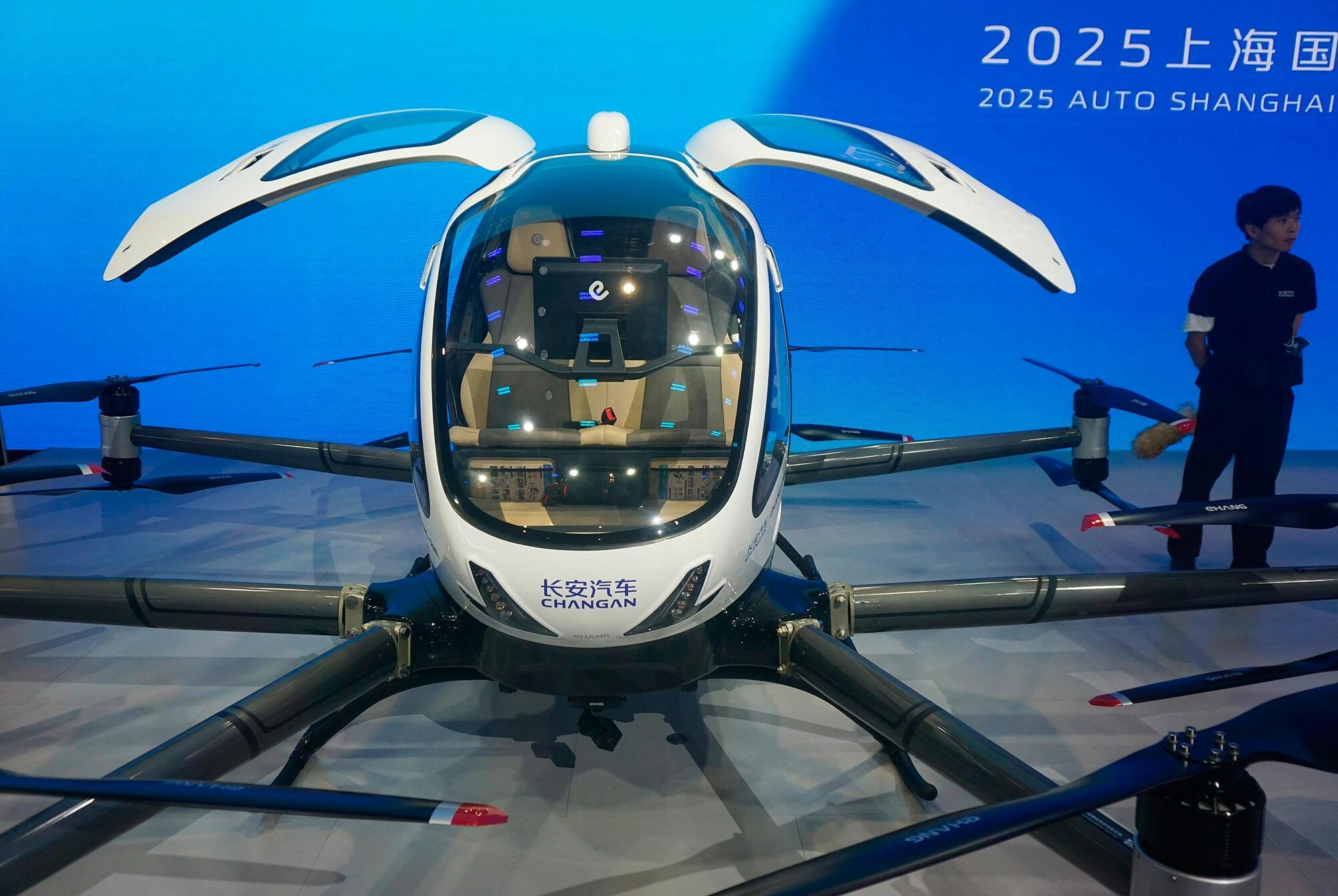
Flying Taxis Set to Launch During Chinese New Year
The futuristic concept of flying taxis, reminiscent of the iconic Jetsons cartoons, is poised to become a reality in Central New York. Syracuse Hancock International Airport has been selected as one of only eight sites nationwide to participate in a federal pilot program testing next-generation electric aircraft. This initiative could see the launch of flying taxis as early as the upcoming Chinese New Year.
Syracuse at the Forefront of Aviation Innovation
The U.S. Department of Transportation and the Federal Aviation Administration (FAA) have approved eight pilot programs spanning 26 states, with the goal of safely integrating electric vertical takeoff and landing (eVTOL) aircraft into American airspace. Syracuse’s selection underscores decades of investment in local airspace infrastructure, positioning Central New York as a leader in advancing aviation technology.
Jason Terreri, Executive Director of the Syracuse Regional Airport Authority, emphasized the significance of the program, stating that these initiatives stimulate regional economic development, attract new investment, and place the community at the forefront of the next generation of aerospace innovation.
Understanding eVTOL Technology
Electric vertical takeoff and landing aircraft, or eVTOLs, are compact, electrically powered vehicles capable of vertical takeoff and landing like helicopters, while flying forward like traditional airplanes. Designed primarily for short regional trips, these air taxis have the potential to transport passengers, deliver cargo, and assist in emergency situations. Their adoption promises to alleviate road congestion and reduce travel times significantly.
Opportunities and Challenges Ahead
Despite the excitement surrounding flying taxis, several challenges must be addressed before they become commonplace, particularly during peak travel periods such as the Chinese New Year. Regulatory approval remains a critical hurdle, as authorities work to ensure that eVTOLs can safely coexist with conventional aircraft in shared airspace. Public acceptance and safety concerns also present significant obstacles, with skepticism arising from the novelty of the technology and the anticipated high costs associated with electric air taxis.
Market responses have been varied. While some view flying taxis as a transformative advancement in urban mobility, others question their practicality and affordability. The rapid pace of development in this sector has intensified competition, with companies like Waymo and Uber increasing investments in autonomous vehicle technologies to keep pace with innovations in electric aviation.
The Path Forward
The eVTOL Integration Pilot Program (eIPP) will bring together cities, states, and private industry partners to evaluate the operation of these new aircraft under real-world conditions. The data and insights collected through this program will inform regulatory frameworks necessary for the safe and widespread adoption of flying taxis.
Although ordering a flying taxi via a mobile app remains a prospect for the future, Syracuse and other participating cities are leading the way in transforming urban transportation. The era of electric air taxis may soon be taking flight, potentially coinciding with the next major holiday travel surge.

Etihad Airways Suspends Airbus A380 Flights on Key Route

Aditya Birla Group Seeks Approval for Aircraft Leasing in GIFT City

Qatar Airways Highlights Innovation and Connectivity at Arabian Travel Market 2026

Hong Kong's Five-Year Plan Includes Andrew Fan's Aircraft Parts Processing Hub Proposal

ACIA Aero Leasing Delivers ATR72-600 to Air Nostrum

RTX Appoints Jill Albertelli as Head of Pratt & Whitney

TAT Technologies Joins Beyond Aero Hydrogen Aircraft Program

AURAK Study Highlights Barriers to Air Taxi Adoption in Emerging Economies

Xiamen Air Selects Altitude for 787 Maintenance at Heathrow

Etihad and Swissport Extend Global Partnership
