
AIによるインサイトを行動へとつなげる

現在のトレンド
Categories
Germany to Receive First Advanced Fighter Jet
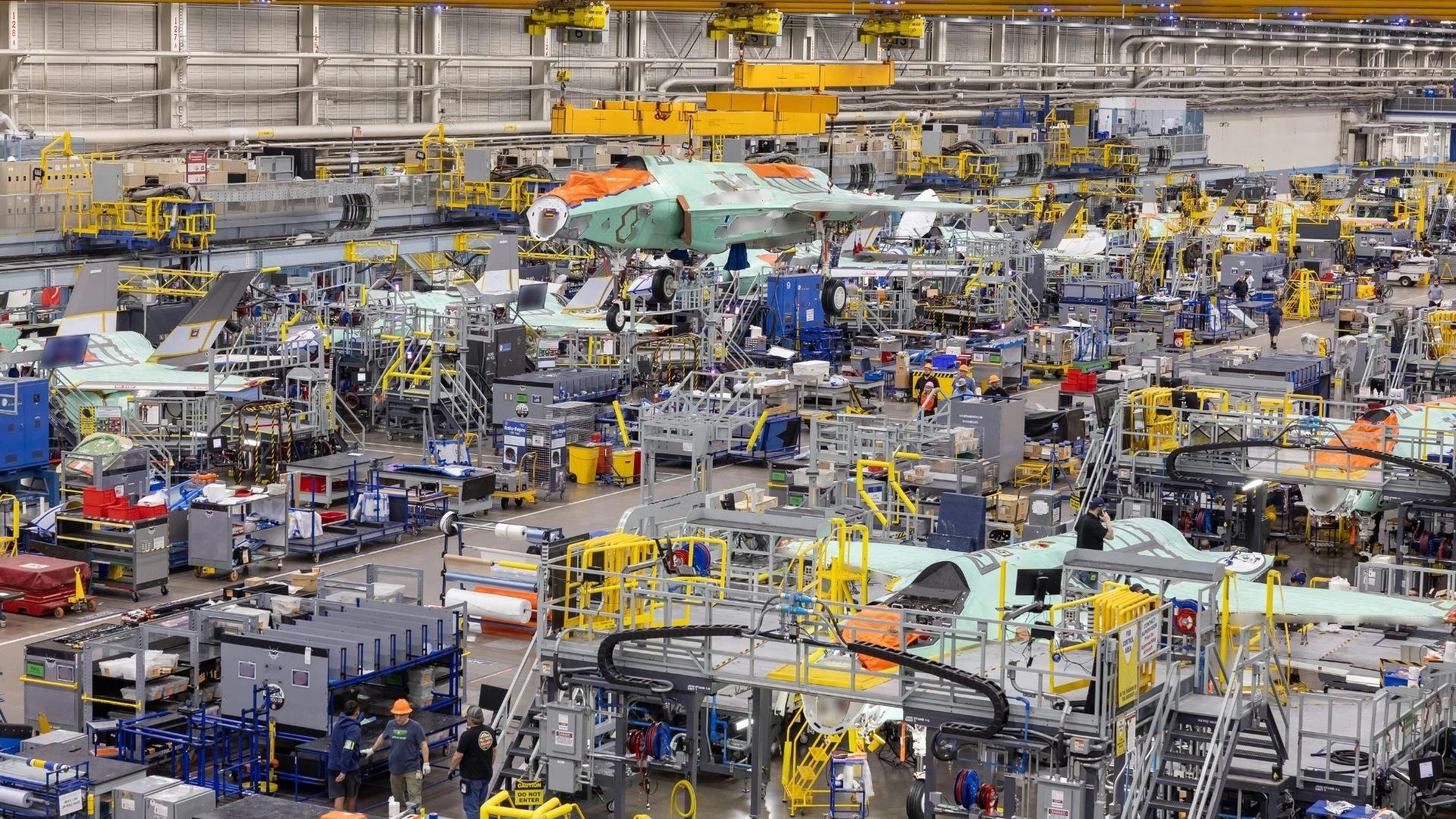
Germany to Receive First Advanced F-35A Fighter Jet Amid Strategic Military Modernization
Lockheed Martin has commenced the final assembly of Germany’s inaugural F-35A stealth fighter at its Fort Worth facility, marking a pivotal step in Berlin’s efforts to modernize its air combat capabilities. The aircraft, designated MG-01, is the first of 35 jets ordered to transition the Luftwaffe into the era of fifth-generation fighter technology, enhancing Germany’s operational readiness and strategic deterrence.
Assembly and Systems Integration
The final assembly phase begins once the aircraft’s primary structural components—including the forward, center, and aft fuselage sections, as well as the wings—are joined and the landing gear installed. At this juncture, the jet is capable of supporting its own weight and can be maneuvered through advanced production stations. The focus then shifts from structural assembly to the integration of critical systems.
During this stage, engineers install the Pratt & Whitney F135 engine and integrate essential flight control surfaces, avionics, and the cockpit canopy. Each installation undergoes stringent quality assurance processes to ensure seamless functionality of all onboard systems. Subsequently, the aircraft receives a specialized stealth coating designed to minimize radar detection and enhance survivability in contested environments. Lockheed Martin reports that several German F-35As are currently at various stages of production, with initial work on key components having commenced in late 2024.
Delivery Schedule and Pilot Training
Germany’s acquisition plan includes the delivery of 35 F-35A fighters as part of a comprehensive modernization strategy. The first eight jets will be delivered to the United States, where Luftwaffe pilots and ground crews will undertake training at Ebbing Air National Guard Base in Fort Smith. This arrangement allows German personnel to acquire operational experience and proficiency before the aircraft are deployed on German soil. Initial evaluation and check flights for the first German F-35A are anticipated to begin later this year, serving to validate the aircraft’s performance and readiness ahead of formal handover.
Context Within European Defense Developments
The introduction of the F-35A into the German air force occurs amid evolving defense priorities and challenges across Europe. The French-German Future Combat Air System (FCAS) program has encountered delays stemming from disagreements between Dassault Aviation and Airbus, casting uncertainty over the timeline for a European next-generation fighter. In this context, Rolls-Royce’s CEO has expressed openness to Germany joining the UK-led Global Combat Air Programme (GCAP), which could broaden industrial collaboration and business prospects.
Concurrently, Germany is advancing its drone capabilities, reflecting a strategic pivot toward unmanned aerial systems. Airbus is preparing to offer Germany an operational Uncrewed Collaborative Combat Aircraft (UCCA) system by 2029, which may serve as a complementary or alternative platform to traditional manned fighters.
The F-35A: A Cornerstone of Modern Air Power
The F-35 Lightning II, developed by Lockheed Martin, is widely regarded as the world’s most advanced multi-role stealth fighter. Operated by 20 nations, the aircraft integrates cutting-edge stealth technology, advanced sensors, and electronic warfare systems, establishing itself as a central element of contemporary air dominance and allied defense strategies. Germany’s adoption of the F-35A underscores its commitment to maintaining a technologically advanced air force amid a rapidly evolving security environment.

Etihad Airways Suspends Airbus A380 Flights on Key Route

Aditya Birla Group Seeks Approval for Aircraft Leasing in GIFT City

Qatar Airways Highlights Innovation and Connectivity at Arabian Travel Market 2026

Hong Kong's Five-Year Plan Includes Andrew Fan's Aircraft Parts Processing Hub Proposal

ACIA Aero Leasing Delivers ATR72-600 to Air Nostrum

RTX Appoints Jill Albertelli as Head of Pratt & Whitney

TAT Technologies Joins Beyond Aero Hydrogen Aircraft Program

AURAK Study Highlights Barriers to Air Taxi Adoption in Emerging Economies

Xiamen Air Selects Altitude for 787 Maintenance at Heathrow

Etihad and Swissport Extend Global Partnership
