
画像

AIを活用して見積もり機会における収益を3倍に増やしましょう!

見積もり自動化の30分間のライブデモにご参加ください。

現在のトレンド

Categories

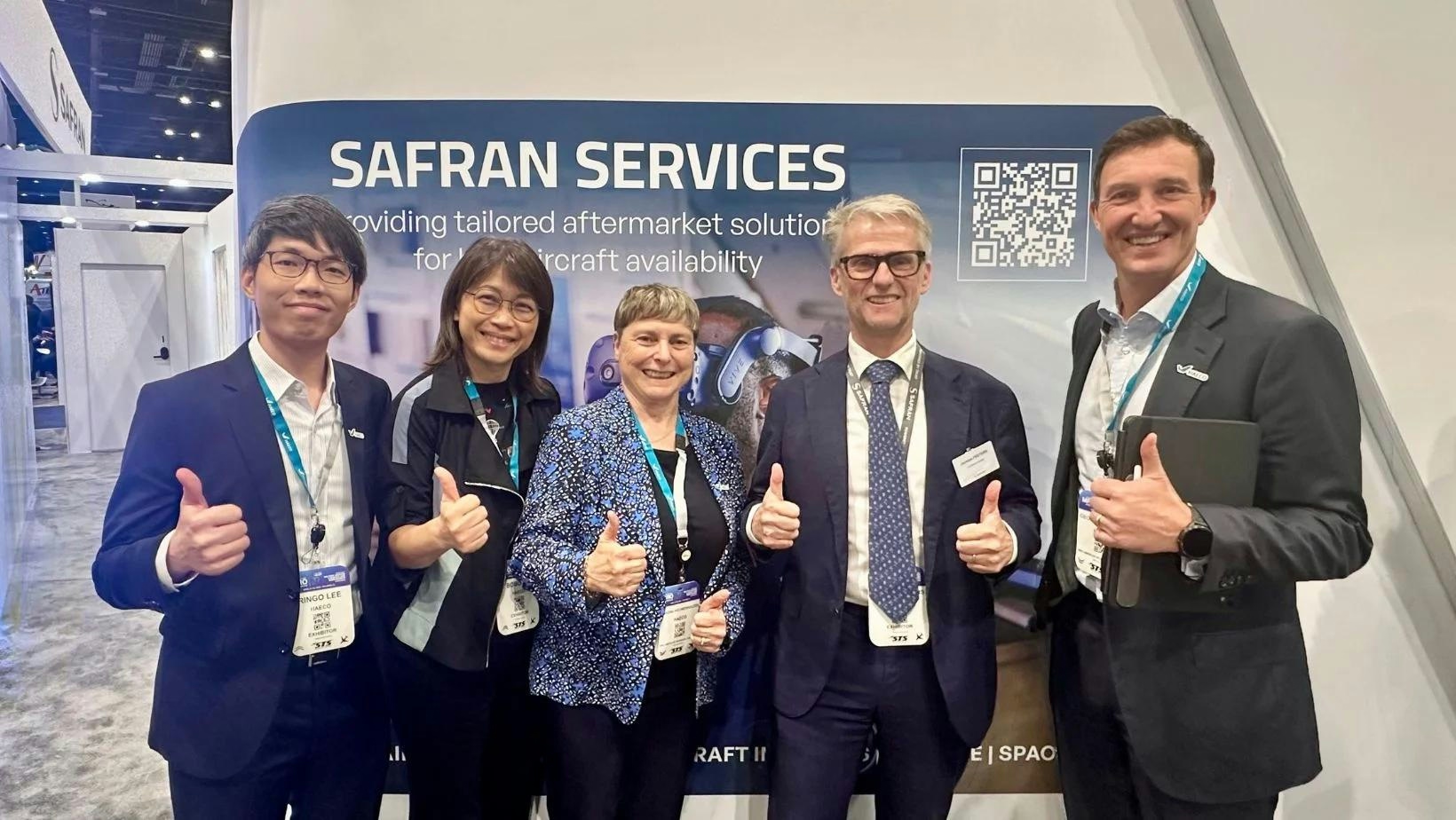
HAECO Signs Support Agreement for A320 and A330 Hydraulic Flight Controls with Safran
May 7, 2026By ePlane AI
HAECO Signs Support Agreement for A320 and A330 Hydraulic Flight Controls with Safran
0
0
HAECO
Safran Electronics & Defense
A320 Hydraulic Flight Controls

HAECO and Safran Forge Support Agreement for Airbus A320 and A330 Hydraulic Flight Controls

HAECO, a prominent provider of engineering and maintenance services, has formalized a component maintenance agreement with Safran Electronics & Defense Actuation Systems to support Airbus A320 and A330 aircraft. This collaboration focuses on delivering comprehensive repair and overhaul services for hydraulic flight control and actuation components, with the objective of enhancing operational performance and reliability for airlines throughout the Asia-Pacific region.

Strengthening Maintenance Capabilities through Collaboration

Sandra Nieuwenhuijzen, HAECO’s Group Director of Components and Engine Services, highlighted the strategic importance of the partnership, stating that it enables the delivery of world-class maintenance solutions for Airbus A320 and A330 fleets. By combining Safran’s advanced technological expertise with HAECO’s established engineering and maintenance proficiency, the agreement reinforces a shared commitment to upholding the highest standards of safety, reliability, and operational efficiency for carriers in the region.

This agreement builds upon a longstanding cooperative relationship between the two companies. HAECO has previously been authorized by Safran Aerosystems to develop maintenance capabilities for the C919 evacuation slide and collaborated with Safran Aircraft Engines on the installation of the Reverse Bleed System for LEAP engines. The latest partnership further consolidates their alliance, emphasizing a mutual focus on delivering high-quality, localized maintenance solutions tailored to the evolving demands of global operators.

Navigating Market Challenges and Industry Dynamics

The agreement arrives amid a competitive environment for maintenance, repair, and overhaul (MRO) providers. HAECO faces ongoing challenges including maintaining competitive pricing structures, ensuring timely parts delivery, and managing the complexities inherent in servicing advanced hydraulic systems. These factors are increasingly critical as airlines demand greater efficiency and reliability from their MRO partners.

Market response to the agreement has been predominantly positive, with airlines expressing increased confidence in HAECO’s ability to support key Airbus fleets. In response, industry competitors may seek to enhance their service offerings or pursue new strategic alliances to safeguard their market positions.

For Safran, the partnership aligns with recent investments in forging capabilities and reflects an optimistic outlook on missile-related production, underscoring a strong market position. However, geopolitical tensions, particularly in the Middle East, present potential risks to global supply chains and could lead to fluctuations in demand, which may affect the operations of both companies.

The reinforced collaboration between HAECO and Safran underscores their dedication to innovation and operational excellence, positioning them to effectively meet the dynamic needs of airlines across the Asia-Pacific region and beyond.

More news
Why the Travel Industry Is Preparing for a Changing Future

Why the Travel Industry Is Preparing for a Changing Future

Why the Travel Industry Is Preparing for a Changing Future Technological Advances and Their Limitations Earlier this year, OpenAI recruited the creator of OpenClaw, an AI agent designed for autonomous task management, signaling a growing interest in integrating advanced artificial intelligence into travel services. Concurrently, airlines have introduced new applications promising enhanced traveler empowerment through features such as instant rebooking, digital vouchers, and real-time baggage tracking—all accessible from a single interface. Industry commentators have praised these innovations as bridging the technological divide and returning control to customers. However, these solutions may be addressing a rapidly disappearing reality. The notion of “empowerment” in travel today often still places the burden of problem-solving squarely on the passenger. For instance, consider a business traveler arriving at the airport only to face a four-hour delay. Despite the availability of rebooking options via the airline’s app, fully booked flights and long queues for customer service remain common. The traveler must then manage a cascade of disruptions—rescheduling accommodations, transportation, and professional commitments—often at considerable personal cost and stress. While digital tools streamline certain processes, they do not eliminate the fundamental challenge: the traveler remains responsible for managing the fallout of operational disruptions. Industry Challenges and Shifting Dynamics This model of customer-managed disruption is increasingly misaligned with the evolving realities of the travel sector. Airlines are grappling with rising fuel costs, a situation expected to intensify with the anticipated global fuel crisis in 2026. These pressures are prompting a reevaluation of the traditional high-volume, low-margin business approach. Additionally, geopolitical tensions and growing operational complexities are diminishing the appeal and reliability of business travel, undermining industry confidence. At the same time, some destinations are imposing restrictions to mitigate overtourism, while artificial intelligence begins to transform how trips are planned and managed. Despite these challenges, demand for travel endures, particularly within Europe, where local travel remains robust. The industry now faces a critical juncture: it must reconcile the imperatives of profitability and sustainability with travelers’ increasing desire for hassle-free experiences—not merely more sophisticated digital tools. Envisioning a More Seamless Future Emerging developments hint at a more proactive and integrated future for travel management. Imagine an AI assistant that, in the early hours of the morning, anticipates a flight delay by analyzing weather data, crew availability, and historical patterns. Before the traveler awakens, the system has automatically rebooked flights, updated hotel and car rental reservations, and notified relevant contacts. The traveler then begins the day confident that their itinerary is intact, having invested only minimal effort. As the travel industry contends with escalating costs, operational risks, and shifting traveler expectations, the true potential of technology lies not in transferring more responsibility to customers but in anticipating and resolving disruptions before they occur. The future of travel will be defined less by the proliferation of apps and more by the seamless, often invisible integration of technology that simplifies journeys amid growing complexity.
MAHB Highlights MRO Sector's Role in Sustaining Aviation Growth

MAHB Highlights MRO Sector's Role in Sustaining Aviation Growth

MAHB Highlights MRO Sector's Role in Sustaining Aviation Growth Expansion of Selangor Aero Park and Industry Developments KUALA LUMPUR — The maintenance, repair, and overhaul (MRO) sector is increasingly critical to sustaining global aviation growth amid mounting operational and maintenance pressures faced by airlines in a rapidly evolving industry. Malaysia Airports Holdings Bhd (MAHB) is at the forefront of this development, with its 180-hectare Selangor Aero Park within KLIA Aeropolis attracting significant international aerospace players. GE Aerospace, serving as the anchor tenant, is expanding its presence at the site, underscoring the park’s growing importance as a regional aerospace hub. Bryan Thompson, MAHB’s chief airports officer, highlighted the ongoing expansion plans for GE Aerospace, which include the construction of engine test cells and new MRO facilities. The first phase of this infrastructure development is scheduled for completion in the first quarter of 2027, signaling a robust commitment to enhancing Malaysia’s aerospace capabilities. Challenges Facing the MRO Sector Despite these positive developments, the MRO sector confronts several challenges that could impede its growth trajectory. Elevated fuel prices, largely driven by geopolitical conflicts and instability in regions such as the Middle East, are exerting additional pressure on airlines. These rising costs may compel carriers to reduce capacity, potentially weakening demand for maintenance services and slowing the post-pandemic recovery of aviation maintenance. Airlines are already adjusting operations in response to fuel price shocks, while ongoing supply chain disruptions continue to pose significant risks to the sector’s expansion. Strategic Responses and Malaysia’s Aerospace Ecosystem In response to these headwinds, industry players are adopting strategic measures to sustain growth and competitiveness. Malaysia Aviation Group, among others, is actively expanding its MRO capabilities to navigate the challenging environment. MAHB managing director Datuk Mohd Izani Ghani emphasized the increasing significance of Malaysia’s aerospace ecosystem, driven by rising aviation demand across the Asia-Pacific region. “MAHB is committed to supporting this growth by strengthening the ecosystem surrounding our airports, particularly across KLIA and Subang Airport, where aerospace, aviation services, and connectivity continue to evolve in tandem,” he stated. Currently, MAHB’s integrated aerospace ecosystems at KLIA and Subang Airport host more than 30 percent of Malaysia’s aerospace operators, contributing approximately RM25 billion—nearly 40 percent—of the country’s aerospace revenue. As the sector navigates ongoing challenges, MAHB and its partners remain focused on reinforcing Malaysia’s position as a regional aerospace hub, ensuring that the MRO industry continues to underpin the nation’s aviation growth.
AirAsia Places Record Order for 150 Airbus A220 Narrowbody Jets

AirAsia Places Record Order for 150 Airbus A220 Narrowbody Jets

AirAsia Places Record Order for 150 Airbus A220 Narrowbody Jets AirAsia has announced a landmark order for 150 Airbus A220-300 aircraft, becoming the global launch customer for a new high-density, 160-seat configuration of the jet. This acquisition represents a pivotal advancement in the airline’s fleet modernization strategy, positioning the A220-300 as the cornerstone of AirAsia’s short-to-medium haul operations across Southeast Asia. Fleet Modernization and Operational Strategy The newly configured A220-300 offers significant improvements in fuel efficiency and environmental performance, delivering approximately 20% better fuel economy and 20% lower emissions compared to the older A320ceo models it will replace. Deliveries are slated to begin in 2028, with the aircraft initially deployed on regional routes. This transition will enable AirAsia to redeploy its larger A321s to mid-haul services, while its existing A330s will continue operating long-haul flights to Europe, Australia, and North America until their eventual phase-out. Bo Lingam, Group CEO of AirAsia Group, emphasized the strategic benefits of the new aircraft, noting that its range of up to seven hours “opens up entirely new possibilities” and allows the airline to better align capacity with demand. He highlighted the increased flexibility for passengers through more frequent flight options. Financial and Operational Challenges The $19 billion investment underscores AirAsia’s commitment to enhancing operational efficiency and expanding its network, but it also presents considerable challenges. Integrating 150 new jets will necessitate extensive pilot and crew training, alongside complex logistical adjustments to existing operations. Despite these hurdles, the market response has been largely positive. Industry analysts observe that the order reinforces the A220’s growing appeal among budget carriers aiming to reduce operating costs and minimize environmental impact. Competitive Implications AirAsia’s bold move is expected to prompt reactions from competitors, who may seek to place similar orders or accelerate the development of their own fuel-efficient fleets to maintain market competitiveness. As the airline prepares for the arrival of its new aircraft, it is banking on the A220’s advanced economics and operational flexibility to unlock new markets and solidify its leadership position within the low-cost carrier sector.
Shanghai Opens AI-Themed Aviation Science Fiction Park

Shanghai Opens AI-Themed Aviation Science Fiction Park

Shanghai Launches AI-Themed Aviation Science Fiction Park Shanghai has unveiled an ambitious new attraction in its Lingang New Area: an AI-powered aviation science fiction theme park that offers visitors an immersive journey into a futuristic world inspired by Chinese aerospace innovation. Opened to the media on Monday, the park centers on the "Nantianmen Project," China’s original sci-fi aerospace intellectual property, which combines advanced technology, imaginative storytelling, and interactive exhibits to simulate experiences such as "landing on the far side of the moon." A Fusion of Technology and Imagination The Nantianmen Project integrates a suite of cutting-edge technologies, including hypersonic flight, dual-mode aerospace propulsion, metamaterial stealth, directed-energy weapons, and AI-assisted decision-making. These elements are embedded within a conceptual framework focused on science fiction fighter jets, many of which have been previously showcased at major Chinese air shows. The park’s design reflects a distinctly Chinese perspective on the future of aerospace and defense. One of the park’s five main sections, the "Guanghan Base 06 Hangar," offers visitors the opportunity to step into a fictional lunar base and assume the role of recruits in a deep-space defense force. This immersive experience, lasting approximately 90 minutes to two hours, is crafted to engage visitors as deeply as a feature film. At the center of the hangar stands a full-scale model of the "Baidi" sci-fi fighter jet, where guests can wear headsets and participate in simulated pre-flight checks. The park’s general manager, Zhou Yixiao, noted that visitors will also discover hidden games and storylines throughout their visit, with plans to introduce AI-driven interactive content to further enhance the experience. Spanning 80,000 square meters, the park is slated to open to the public on August 1, 2027. It will collaborate with other prominent Shanghai attractions, including the Shanghai Astronomy Museum, Shanghai Haichang Ocean Park, and Yaoxue Ice and Snow World, positioning itself as a significant addition to the city’s cultural tourism offerings. Context Within the Broader AI and Technology Landscape The launch of this AI-themed aviation science fiction park coincides with intensifying competition in artificial intelligence and related industries on both domestic and global fronts. Shanghai Electric, for example, is leveraging AI-driven integration to strengthen its position in energy and industrial sectors, as demonstrated at the recent Hannover Messe. Meanwhile, the introduction of China’s DeepSeek AI model underscores the escalating rivalry between the United States and China in AI development, with potential implications for market strategies and international responses. Market analysts are closely monitoring how advancements in AI infrastructure might affect major technology companies. Nvidia, despite its current market dominance, could face challenges if key customers reduce AI-related spending or chip orders. In the robotics sector, Tesla’s Shanghai factory is viewed as critical for scaling production of its Optimus robot, although expectations remain cautious regarding the timeline for its release. Ding Li, editor-in-chief of AVIC Global Cultural Communication (Beijing) Co Ltd, highlighted Shanghai’s rich aviation heritage and its potential to become a hub for science education and research within the region’s cultural tourism sector. As Shanghai continues to invest in innovative attractions, the new AI aviation science fiction park is set to emerge as a landmark destination, embodying the city’s technological ambitions and reflecting broader shifts in the global AI landscape.
PlaneEnglish and EAA Launch AI-Based Aviation Radio Training for K-12 Students

PlaneEnglish and EAA Launch AI-Based Aviation Radio Training for K-12 Students

PlaneEnglish and EAA Expand AI-Driven Aviation Radio Training for K-12 Students On May 13, 2026, PlaneEnglish, a prominent developer of AI-powered aviation radio communication training tools, announced the expansion of its partnership with the Experimental Aircraft Association (EAA) to deliver aviation communication training to K-12 students through the AeroEducate program. Now reaching over 50,000 students, the initiative seeks to introduce young learners to the fundamentals of aviation radio communication by leveraging advanced artificial intelligence technologies. Addressing Industry Talent Shortages Through Early Education This collaboration arrives at a critical juncture for the aviation sector, which faces a growing talent shortage, particularly within the expanding drone industry. Recent amendments to the Federal Aviation Administration’s (FAA) Part 108 regulations have highlighted significant gaps in the drone talent pipeline, underscoring the urgent need for early and effective training solutions. By embedding AI-based radio communication tools into K-12 education, PlaneEnglish and the EAA aim to inspire the next generation of aviation professionals and help mitigate workforce challenges. Educational institutions have increasingly embraced the integration of advanced AI training into their curricula, viewing programs like AeroEducate as essential for preparing students for future careers in aviation and related fields. The positive reception from the market has also prompted competitors in the aviation training sector to enhance their own AI-driven offerings to maintain competitiveness. Challenges and Commitment to Program Evaluation Despite its promise, the initiative faces challenges related to the effectiveness of AI-based training compared to traditional methods. Industry experts stress the necessity of rigorous validation and feedback mechanisms to ensure that AI-driven instruction yields measurable improvements in student learning outcomes and communication skills. Both PlaneEnglish and the EAA have expressed their commitment to continuous evaluation and refinement of the AeroEducate program to address these concerns. As the program continues to grow, its success may provide a valuable model for integrating AI-driven training into broader educational contexts, potentially influencing the future landscape of aviation education and workforce development.
SPH Aviation Launches 'iQuantara' to Advance Indigenous Defense Drone Technology in India

SPH Aviation Launches 'iQuantara' to Advance Indigenous Defense Drone Technology in India

SPH Aviation Launches 'iQuantara' to Advance Indigenous Defense Drone Technology in India Gurugram-based SPH Aviation Pvt Ltd. has officially launched iQuantara, a new defense-focused brand dedicated to advancing indigenous drone technologies tailored to India’s evolving security and surveillance requirements. This strategic initiative marks SPH Aviation’s formal entry into the defense and aerospace sector, aligning closely with India’s national objective of achieving self-reliance in critical defense technologies. A Strategic Focus on Indigenous Drone Solutions Building upon its prior defense initiatives, SPH Aviation has rebranded its efforts under iQuantara to reflect a more focused and expansive vision for scaling homegrown drone solutions. The brand will concentrate on the design, development, and deployment of next-generation integrated unmanned aerial systems (UAS) specifically engineered for Indian defense applications. These systems are intended to support a wide range of operations including surveillance and intelligence gathering, TACC3I (Tactical Command, Control, Communications, Computers, Cyber, and Intelligence) systems, swarm-based missions, border monitoring, GIS-based mapping, logistics support, emergency management, and autonomous UAV operations. Leveraging SPH Aviation’s established expertise in drone innovation, manufacturing, and training, iQuantara aims to deliver impactful solutions aligned with national priorities. The company plans to manufacture over 500 drones within the next year, with ambitions to scale production capacity to 1,000 units annually. In parallel, iQuantara will intensify its research and development efforts to enhance critical technologies such as telemetry, remote control systems, data exchange protocols, and autopiloting capabilities, all of which are essential to India’s push for indigenous defense production. Navigating a Competitive Global Landscape The launch of iQuantara comes amid heightened global competition in defense drone technology. Established international players such as Kratos Defense & Security Solutions, AeroVironment, Anduril Industries, and Shield AI currently dominate the sector, posing significant challenges for emerging entrants like iQuantara. Meanwhile, global market activity continues to intensify: Japan’s Terra Drone has expanded its stake in drone defense, French companies Thales and ArianeGroup are advancing deep strike capabilities, and Australia has committed $5 billion towards counter-drone investments. Investor confidence in defense-linked enterprises remains robust, as evidenced by AEVEX’s successful debut on the New York Stock Exchange, indicating a favorable market environment for innovative companies such as iQuantara. To accelerate innovation and deployment, iQuantara is collaborating closely with defense research and development agencies as well as premier Indian Institutes of Technology (IITs). This initiative also reflects the broader ambitions of AITMC Venture to evolve from a sector-specific drone solutions provider into a multi-domain technology player supporting both civilian and strategic applications. Lt. Gen (Dr) RK Anand, Chief Executive Officer of iQuantara, emphasized the brand’s forward-looking vision: “iQuantara has been envisioned as a platform to develop indigenous drone technologies capable of addressing the dynamic needs of modern defense operations. Our focus is on building reliable, integrated, mission-ready systems that are designed, developed, and manufactured in India. With our experience in defense services, I see strong potential for indigenous drone systems to transform defense preparedness.” Dr. Preet Sandhu, Founder and Managing Director of AVPL International and Promoter of iQuantara, highlighted the company’s strategic evolution: “The launch of iQuantara marks a significant milestone in AITMC Venture’s journey as we expand from agricultural drone applications into the defense sector. With our strong foundation in drone technology and skilling, this progression supports India’s self-reliance in deep-tech areas while fostering a future-ready innovation ecosystem. Over the next five years, we plan to invest ₹75 crores and aim to capture 15% of the defense market.” As India continues to strengthen its domestic defense manufacturing ecosystem, iQuantara seeks to contribute by developing reliable, scalable, and indigenously built drone platforms, positioning itself at the intersection of national ambitions and intensifying global competition.
AIESL Nagpur MRO Employees Protest New NOC Policy

AIESL Nagpur MRO Employees Protest New NOC Policy

AIESL Nagpur MRO Employees Protest New NOC Policy Amid Industry Uncertainty Workers Oppose Restrictive Exit Policy At the Air India Engineering Services Limited (AIESL) Maintenance, Repair, and Overhaul (MRO) facility in Nagpur, employees have initiated a sit-in protest against a newly implemented internal policy mandating a No Objection Certificate (NOC) before staff can apply for employment elsewhere. The facility, which services Air India and other carriers at Dr. Babasaheb Ambedkar International Airport, has become the focal point of a labor dispute that may have wider repercussions across the aviation sector. The protesting employees gathered outside the General Manager’s office, contending that the new Office Order contravenes their original employment contracts. Previously, staff were permitted to resign by either serving a notice period or paying notice pay. The introduction of the NOC requirement, they argue, imposes an additional barrier that restricts their freedom to pursue new career opportunities. One protester emphasized the collective nature of the issue, stating, “We are employees, not hostages. This fight isn’t just for 3-4 people, it’s for the future of every employee.” Intervention by Labor Authorities The dispute has attracted the attention of the Deputy Chief Labor Commissioner in Nagpur, who issued a formal directive to AIESL affirming that resignation is a legal right. The directive clarified that no employee can be compelled to remain employed once the notice period has been served or notice pay has been provided. Despite this, employees allege that management continues to delay the processing of resignations by imposing procedural obstacles, including the withholding of relieving letters, NOCs, and additional approvals. These delays have reportedly caused significant professional and financial difficulties for the affected workers. Implications for the Aviation Industry The unrest at the AIESL Nagpur facility emerges amid a period of heightened sensitivity within the aviation industry. Labor disruptions at a critical MRO center raise concerns about potential operational impacts, particularly as airlines and maintenance providers contend with challenges such as rising fuel costs and supply chain disruptions linked to global geopolitical tensions. Industry stakeholders and investors are closely monitoring the situation, apprehensive about possible effects on maintenance schedules and safety standards. Competitors may also be evaluating the dispute for potential shifts in market dynamics or opportunities arising from AIESL’s operational difficulties. Employees frame their protest as a defense of career advancement and individual rights, arguing that the new NOC policy places skilled aviation professionals at a disadvantage in an already competitive job market. One worker remarked, “This isn’t just a matter of 3-4 employees. It’s a question of the future of all young people and employees who want to advance through their hard work and skills.” As the standoff continues, its resolution may establish a precedent for employment practices within India’s aviation maintenance sector, influencing both workforce mobility and industry stability.
Duncan Aviation Completes Two Gulfstream G650 144-Month Inspections

Duncan Aviation Completes Two Gulfstream G650 144-Month Inspections

Duncan Aviation Completes Two Gulfstream G650 144-Month Inspections Duncan Aviation has recently concluded simultaneous 144-month inspections on two Gulfstream G650 aircraft at its facilities in Lincoln, Nebraska, and Battle Creek, Michigan. The 144-month inspection represents one of the most extensive maintenance procedures in an aircraft’s lifecycle. It involves the removal of all exterior access panels, the complete interior, and the landing gear, allowing technicians to conduct a comprehensive nose-to-tail examination. Comprehensive Maintenance and Client-Centered Service Operators typically use the extended downtime required for these inspections to undertake additional upgrades, including interior refurbishments, exterior paintwork, and cabin enhancements. Duncan Aviation’s three maintenance, repair, and overhaul (MRO) centers—located in Battle Creek, Lincoln, and Provo—are fully equipped to support the Gulfstream G650. Each facility boasts specialized tooling, ample hangar space, and dedicated Gulfstream teams. The technicians, all factory-trained at FlightSafety, bring extensive hands-on experience to these complex inspections. Matthew Benns, director of maintenance, who was present in Provo during the 144-month inspection of his G650, praised the level of client engagement. He highlighted the open and honest communication, noting that his priorities were genuinely understood and addressed. Benns emphasized the consistent focus on safety and meeting the principal’s expectations throughout the process. Similarly, Lee Noble, accountable manager of Sybajet and a long-standing Duncan Aviation client, coordinated an exterior paint project alongside the inspection to reduce aircraft downtime. Noble explained that combining the two services at the Lincoln facility avoided multiple trips from the United Arab Emirates and minimized the aircraft’s time out of service. He commended Duncan Aviation for its technical expertise, high-quality work, and reliable adherence to schedules and budgets, having utilized all three MRO locations for various services including paint, interior refurbishment, warranty work, and inspections. Industry Context and Competitive Challenges All three Duncan Aviation MRO centers have completed interior refurbishments for the G650, with Lincoln and Provo also delivering new paint schemes. On-site design centers provide professional guidance, collaborating closely with clients to develop bespoke interiors and exterior finishes tailored to individual preferences. These accomplishments come amid intensifying competition within the business aviation maintenance sector. Competitors such as ExecuJet Malaysia and Cutter Aviation have recently obtained MRO approvals for the Gulfstream G650ER, potentially prompting them to enhance their service offerings and leverage established relationships with Gulfstream. This evolving competitive landscape may lead to increased scrutiny of Duncan Aviation’s pricing structures and service reliability as clients evaluate their options. Furthermore, the aerospace industry’s growing emphasis on supply-chain integrity—driven by concerns over counterfeit parts and supply-chain fraud, as underscored by organizations like DUST Identity—poses additional challenges. Ensuring the authenticity of components and strict compliance with safety standards will remain paramount for Duncan Aviation as it strives to uphold its reputation and maintain client trust in a rapidly changing market.
Soji AI and Active Partners Explore AI Applications for MRO Records

Soji AI and Active Partners Explore AI Applications for MRO Records

Soji AI and Active Partners Collaborate to Enhance AI Integration in Aircraft MRO Records Soji AI and Active Partners have announced a strategic partnership aimed at advancing the application of artificial intelligence to improve the efficiency of aircraft and engine delivery, re-delivery, inspections, and transitions. Central to this collaboration is the integration of Soji AI’s platform, which converts fragmented aircraft data into automated workflows and actionable insights, into Active Partners’ operational framework. Transforming Aircraft Maintenance and Records Management By implementing Soji AI’s technology, Active Partners anticipates significant reductions in downtime, optimized resource allocation, and enhanced value delivery to its clients, including aircraft owners, lease managers, and operators. Rob de Klerk, Director of Technical Services at Active Partners, described the partnership as a pivotal step in the company’s digital transformation. He emphasized that the adoption of AI-driven engineering management not only improves efficiency and reliability but also establishes new benchmarks for innovation and safety within the aviation sector. De Klerk highlighted that the collaboration goes beyond mere digitization of documents; it streamlines manual document searches and accelerates record processing by identifying inconsistencies at earlier stages. The partnership is designed to empower engineers with validated information, thereby reducing reliance on manual interpretation of raw data. Florian Falk, CEO of Soji AI, underscored the broader industry trend toward intelligent, AI-powered operations. He noted that the decision by Active Partners to adopt Soji AI’s platform reflects a shift away from traditional, document-heavy processes toward scalable, digital-first aircraft lifecycle management. Falk stressed that human-AI collaboration remains central to the solution, with engineers maintaining final decision-making authority. The partnership aims to demonstrate how AI can be effectively embedded within certified environments to support this transition. Challenges and Industry Implications Despite the promising outlook, the partnership faces several challenges in scaling AI applications for maintenance, repair, and overhaul (MRO) records. Key obstacles include ensuring that existing infrastructure can support AI agents in production settings and addressing issues related to data scarcity. Furthermore, as the aviation industry increasingly explores AI-driven solutions, there is potential skepticism regarding the tangible operational return on investment, especially in the context of complex fleet management decisions. The competitive landscape is expected to intensify as rivals enhance their own AI capabilities, focusing on real-time workflow adjustments and improved data integration for AI agents. This environment underscores the necessity for robust and scalable solutions capable of delivering measurable improvements in operational efficiency and safety. As Soji AI and Active Partners advance their collaboration, their efforts may serve as a benchmark for the wider adoption of AI in aviation MRO, potentially setting new standards for digital transformation and operational excellence across the industry.
Trip.com AGC 2026 Highlights Need for Data Quality, Interoperability, and Governance in AI Era

Trip.com AGC 2026 Highlights Need for Data Quality, Interoperability, and Governance in AI Era

Trip.com AGC 2026 Highlights Need for Data Quality, Interoperability, and Governance in AI Era The aviation industry faces an urgent imperative to improve data quality, interoperability, and governance as artificial intelligence (AI) increasingly reshapes the sector. This message was underscored by industry leaders at the Trip.com Airline Global Conference (AGC) 2026 held in Amsterdam, where experts emphasized the critical challenges posed by fragmented and poor-quality data in an AI-driven environment. Data Fragmentation and Its Consequences Filip Filipov, chief executive of aviation data provider OAG, highlighted the persistent problem of data fragmentation within the aviation ecosystem. He explained that the issue is not merely broken data but rather the lack of connectivity between disparate data sources. This fragmentation becomes particularly problematic as AI systems automate and accelerate processes, amplifying the impact of errors. Filipov illustrated this with a recent incident involving a transatlantic flight operated by a regional turboprop aircraft that was incorrectly entered into booking systems. The erroneous data quickly propagated through global distribution systems (GDSs), travel agencies, and metasearch platforms, causing widespread confusion before the mistake was rectified. He warned that as AI enables more complex and rapid transactions such as searches, bookings, and cancellations, similar errors could spread even more rapidly and have far-reaching consequences. The scope of the data challenge extends beyond flight schedules and fares to include critical operational areas such as crew management, gate assignments, cancellations, payments, and credit card processing. As AI becomes more deeply integrated into these functions, the risks associated with poor data quality are magnified, potentially disrupting multiple facets of airline operations. The Imperative of Data Readiness and Governance The concerns raised at the conference reflect broader industry-wide issues regarding data readiness for AI adoption. Research from Cloudera reveals that only 7% of enterprises consider their data fully prepared for AI, underscoring a significant gap in readiness. For companies like Trip.com, which are pursuing hyperlocalization strategies and leveraging AI-driven interfaces to maintain competitive advantage, ensuring data quality, governance, and interoperability is paramount. Filipov stressed that the aviation sector must prioritize not only the accuracy of data but also its interconnectedness and accessibility. He cautioned that without these improvements, AI systems will produce flawed outcomes, encapsulated in the adage “rubbish in, rubbish out.” Furthermore, he identified governance as a critical pillar for the future, emphasizing the need for robust frameworks to ensure compliance, security, and trust as AI models grow more sophisticated and companies expand into diverse regulatory environments. Market analysts expect that the increasing focus on AI will drive heightened scrutiny of data governance and compliance within the travel industry. Airlines and travel companies are likely to make significant investments in data quality and AI governance to remain competitive in a rapidly evolving landscape. As the aviation sector stands on the threshold of an AI-driven transformation, the Trip.com AGC 2026 conference delivered a clear directive: addressing data quality, interoperability, and governance is essential for harnessing the full potential of artificial intelligence while mitigating associated risks.
line









