
AIによるインサイトを行動へとつなげる

現在のトレンド
Categories
IAF Attributes Tejas Incident to Software Fault Ahead of Flight Resumption
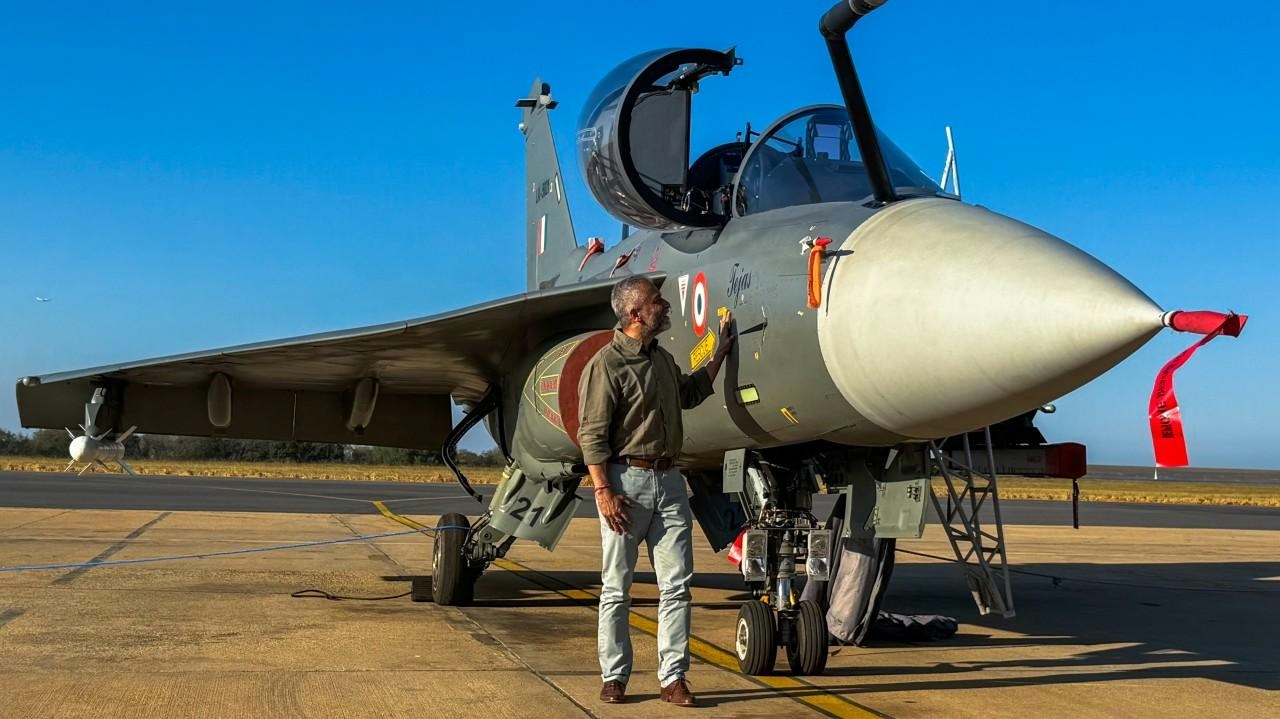
IAF Attributes Tejas Incident to Software Fault Ahead of Flight Resumption
The Indian Air Force (IAF) has attributed the runway incident involving a Tejas fighter jet on 7 February to a software glitch in the aircraft’s onboard computer. This clarification, provided after weeks of speculation, confirms that the cause was not related to any structural or mechanical failure but originated from a fault within the jet’s digital systems during take-off. Sources familiar with the investigation, as reported by The Tribune, emphasized that the issue was confined to the aircraft’s software architecture rather than its physical components.
Investigation and Response
Following the incident at a forward airbase along India’s western front, where the single-seat Tejas veered off the runway and came to rest in a mud ditch, the pilot sustained injuries but survived. Initial concerns had pointed to potential problems with the braking system or undercarriage, prompting the IAF to initiate a comprehensive investigation and mandate fleet-wide inspections. Standard aviation protocols were rigorously applied, with detailed examinations of the landing gear, brakes, and avionics software to exclude systemic faults.
The investigation ultimately identified the anomaly within the digital control architecture of the aircraft. All physical subsystems, including the landing gear, brakes, and flight controls, were found to be fully operational and free of defects. This outcome highlights the increasing complexity of modern fighter jets, where software and hardware are deeply integrated. The Tejas employs a digital fly-by-wire system that translates pilot commands through software-controlled computers, enhancing precision and stability but also introducing new vulnerabilities. Experts from the Indian Institute for Aeronautical Engineering and Information Technology have noted that such digital systems, while offering significant operational advantages, can render even minor software glitches critical.
Software Revision and Future Prospects
In response to the findings, a revised software package has been developed in collaboration with Hindustan Aeronautics Limited (HAL) and is currently undergoing final validation. The resumption of flying operations is anticipated in the coming days, contingent upon the successful completion of software testing. HAL declined to comment publicly, but informed sources suggest that the grounded Tejas aircraft are expected to return to service shortly.
The software fault has posed several challenges for the Tejas program, including delays that have attracted scrutiny from stakeholders and raised concerns about potential impacts on the program’s budget and timeline. Defense analysts and investors have expressed doubts regarding the aircraft’s reliability, while competitors may leverage the incident to underscore their own technological progress. This external pressure is likely to motivate program managers to expedite resolution efforts and strengthen quality assurance protocols.
Despite these challenges, the IAF’s transparent investigation and prompt collaboration with HAL demonstrate a proactive commitment to operational safety. As the updated software nears approval, the Tejas fleet is poised to re-enter service, with the lessons learned from this incident expected to inform future upgrades and risk mitigation strategies within India’s indigenous fighter program.

Etihad Airways Suspends Airbus A380 Flights on Key Route

Aditya Birla Group Seeks Approval for Aircraft Leasing in GIFT City

Qatar Airways Highlights Innovation and Connectivity at Arabian Travel Market 2026

Hong Kong's Five-Year Plan Includes Andrew Fan's Aircraft Parts Processing Hub Proposal

ACIA Aero Leasing Delivers ATR72-600 to Air Nostrum

RTX Appoints Jill Albertelli as Head of Pratt & Whitney

TAT Technologies Joins Beyond Aero Hydrogen Aircraft Program

AURAK Study Highlights Barriers to Air Taxi Adoption in Emerging Economies

Xiamen Air Selects Altitude for 787 Maintenance at Heathrow

Etihad and Swissport Extend Global Partnership
