
Orquestre insights de IA em ações

Tendências
Categories
ATSB Investigates Engine Failure in Remote Plane Crash
ATSB Investigates Engine Failure in Remote Plane Crash
Preliminary Findings from Broome Incident
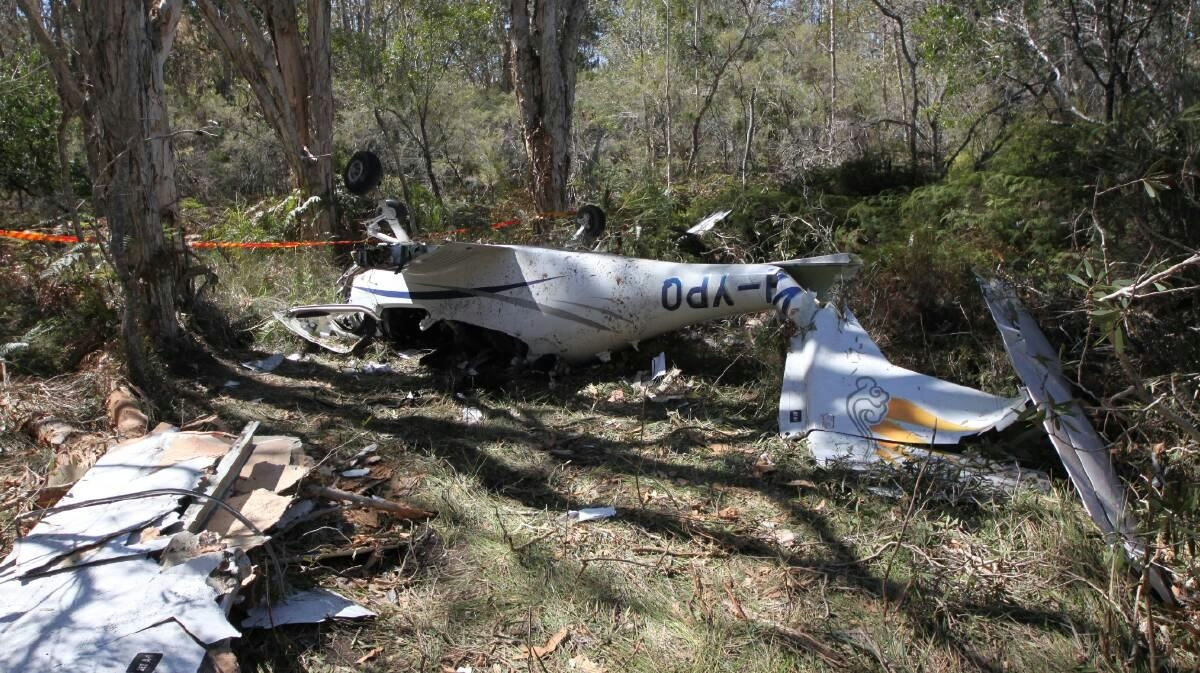
Australia’s transport safety authority is conducting an investigation into a possible engine shutdown that may have contributed to a plane crash shortly after take-off from Broome Airport in northern Western Australia. The incident occurred on March 19, approximately 2,000 kilometres north of Perth, involving a Skippers Aviation Cessna 441 carrying two pilots and five passengers. One passenger sustained serious injuries, while the others suffered minor harm. The aircraft was heavily damaged after it came to rest in nearby mangroves.
The Australian Transport Safety Bureau (ATSB) released a preliminary report outlining early findings from the ongoing inquiry. Although the report does not draw definitive conclusions, it highlights a known defect requiring both engines to be started manually due to inoperative control computers responsible for fuel enrichment. This manual procedure was necessary under certain conditions, complicating engine management during critical phases of flight.
According to the ATSB, the pilot flying the aircraft was uncertain immediately after take-off whether the engine stop or start buttons had been pressed. These buttons are positioned adjacent to each other on the same control panel, increasing the risk of inadvertent activation. The pilot reportedly pressed what they believed were the start buttons for both engines without visually confirming their actions. Following a noticeable change in engine sound, the training captain questioned whether the stop buttons had been engaged instead. With limited time to rectify the situation, the captain elected to execute an emergency landing in the mangroves.
The report also draws attention to safety concerns arising from the forced landing, noting that two passenger seats detached completely from their tracks, while a third partially detached. This raises important questions about seat attachment integrity and occupant safety during emergency landings.
Focus of Ongoing Investigation and Broader Safety Context
ATSB Chief Commissioner Angus Mitchell stated that the investigation will continue to examine operational procedures, pilot training, and aircraft design elements, particularly the proximity of the stop and start buttons. The bureau will also assess the broader safety implications related to seat attachment mechanisms.
This investigation occurs amid intensified global scrutiny of aviation safety standards. Recently, the United States National Transportation Safety Board (NTSB) concluded an inquiry into a fatal UPS cargo plane crash in Louisville, Kentucky. That investigation revealed Boeing’s failure to address critical cracks in an engine attachment point, first identified in 2002, which hindered the Federal Aviation Administration’s safety assessments and may have contributed to the November crash that claimed 15 lives. The NTSB also cited relaxed inspection schedules and fragmented data management as contributing factors.
These developments have prompted widespread reflection within the aviation industry, with stakeholders closely monitoring the outcomes of such investigations. Both the ATSB and NTSB cases underscore the vital importance of rigorous safety oversight, robust maintenance protocols, and clear operational procedures to prevent future tragedies.
The ATSB’s inquiry into the Broome crash remains active, with further updates anticipated as additional evidence is collected and analyzed.

Etihad Airways Suspends Airbus A380 Flights on Key Route

Aditya Birla Group Seeks Approval for Aircraft Leasing in GIFT City

Qatar Airways Highlights Innovation and Connectivity at Arabian Travel Market 2026

Hong Kong's Five-Year Plan Includes Andrew Fan's Aircraft Parts Processing Hub Proposal

ACIA Aero Leasing Delivers ATR72-600 to Air Nostrum

RTX Appoints Jill Albertelli as Head of Pratt & Whitney

TAT Technologies Joins Beyond Aero Hydrogen Aircraft Program

AURAK Study Highlights Barriers to Air Taxi Adoption in Emerging Economies

Xiamen Air Selects Altitude for 787 Maintenance at Heathrow

Etihad and Swissport Extend Global Partnership
