Imagem

AeroGenie — Seu Copiloto Inteligente.

Pergunte qualquer coisa. Analise tudo. Aja imediatamente.

Tendências

Categories

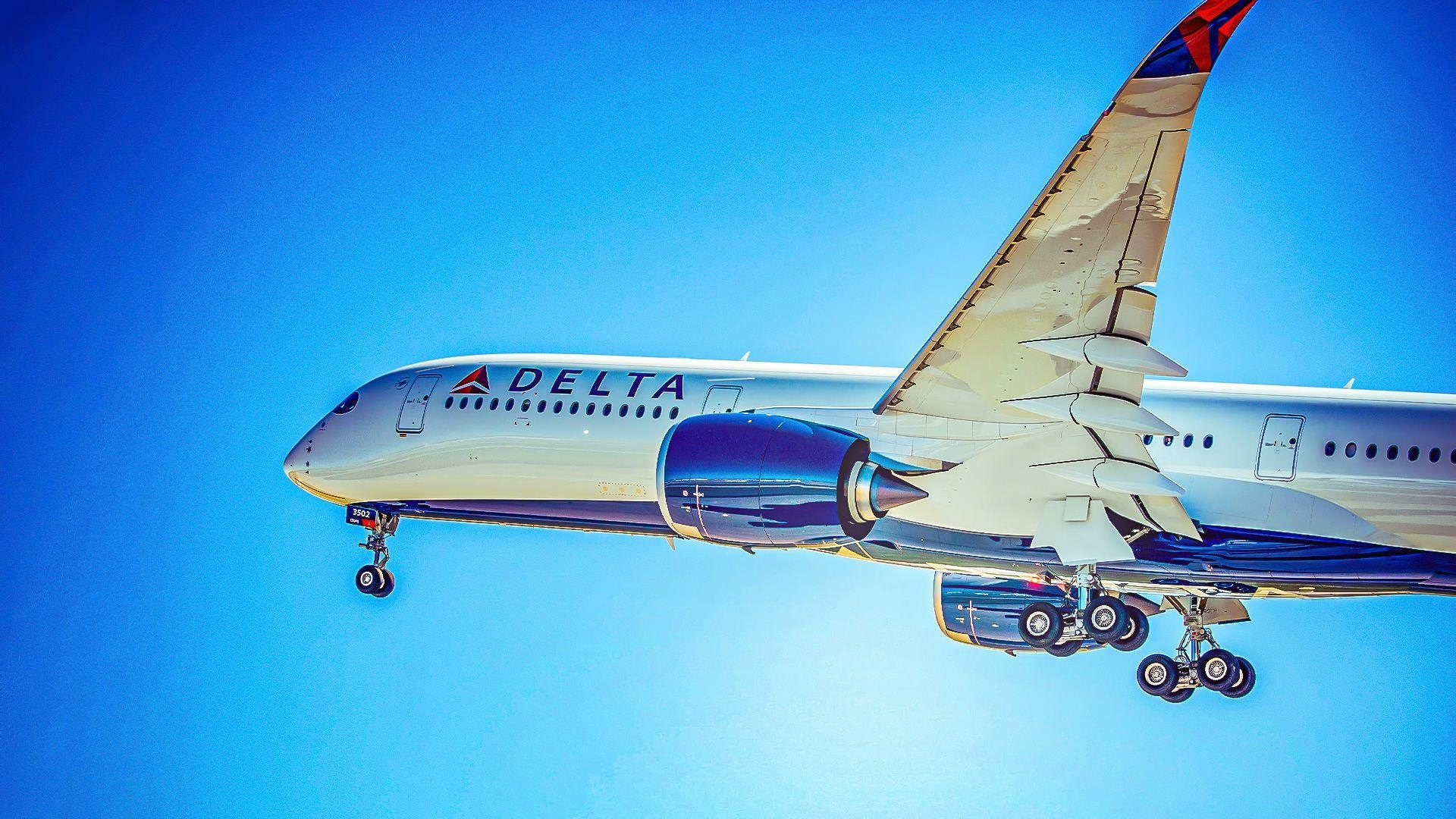
Delta Introduces Boeing 787 Dreamliner to Widebody Fleet
January 13, 2026By ePlane AI
Delta Introduces Boeing 787 Dreamliner to Widebody Fleet
0
0
Delta Air Lines
Boeing 787 Dreamliner
Fleet Modernization

Delta Introduces Boeing 787 Dreamliner to Widebody Fleet

Delta Air Lines has announced the addition of 30 Boeing 787 Dreamliner widebody aircraft to its fleet, marking a pivotal advancement in the airline’s strategy to modernize its operations, enhance fuel efficiency, and elevate the passenger experience. This introduction of the 787 represents a new fleet type for Delta, complementing its existing order of 100 Boeing 737-10 MAX aircraft. Deliveries are expected to commence following the completion of certification processes.

Strategic Fleet Modernization and Operational Efficiency

Ed Bastian, Delta’s chief executive officer, emphasized that the order is designed to build a future-ready fleet that improves customer experience, drives operational efficiencies, and gradually replaces older, less efficient aircraft over the coming decade. He highlighted the airline’s commitment to maintaining high service standards, noting that these new aircraft will be operated by Delta’s skilled aviation professionals who provide a welcoming and elevated travel experience worldwide.

The introduction of the Dreamliner also underscores the strength of the U.S. aerospace industry, as both the aircraft and its General Electric engines are domestically designed and manufactured. This move aligns with Delta’s broader ambition to expand its international network, anticipating its largest-ever international schedule this year. The 787-10 model is expected to play a crucial role in Delta’s transatlantic and South American routes, offering approximately 25% better fuel efficiency per seat, increased passenger capacity, larger premium cabins, and enhanced cargo capabilities compared to the older widebody aircraft it will replace.

Dan Janki, Delta’s chief financial officer, noted that the 787 order adds diversity to the airline’s widebody fleet while creating cost-efficient scale across all widebody operations. He described the fleet strategy as a forward-looking approach that balances customer experience enhancements with operational improvements.

Passenger Experience and Industry Challenges

Passengers flying aboard the Dreamliner can anticipate a premium experience characterized by a wide, quiet cabin, large tint-controlled windows, spacious overhead bins, and advanced fuselage technologies that reduce noise, contributing to a smoother and quieter flight.

Despite these advantages, Delta’s fleet expansion occurs amid broader industry challenges. Boeing’s production of the 787 has slowed in recent years due to safety concerns, although efforts are underway to increase output. This production pace may affect delivery schedules for Delta and other airlines with substantial orders for long-haul aircraft.

The market for widebody aircraft is becoming increasingly competitive. Airlines such as Southwest and Alaska Airlines are also expanding their long-haul fleets with orders for the Dreamliner and rival Airbus models, including the A330 and A350. As Delta strengthens its international presence, competitors are likely to respond by upgrading their own widebody offerings, potentially intensifying competition and sparking renewed rivalry as airlines contend with shifting economic conditions and consumer price sensitivities.

Delta’s latest order reflects a strategic effort to secure its position within the evolving global aviation landscape, balancing operational efficiency, customer experience, and the realities of a dynamic and competitive marketplace.

More news
IndiGo Secures Japanese Financing for Aircraft, a First in Indian Aviation

IndiGo Secures Japanese Financing for Aircraft, a First in Indian Aviation

IndiGo Secures Japanese Financing for Aircraft, a First in Indian Aviation India’s largest airline, IndiGo, has achieved a significant milestone by becoming the first Indian carrier to secure Japanese equity financing for two Airbus A320 family aircraft. This landmark transaction, executed through a Japanese Operating Lease with Call Option (JOLCO), marks a pivotal development in the Indian aviation sector, reflecting growing international investor confidence in the creditworthiness of Indian airlines and the strength of India’s legal and regulatory framework. A New Financing Paradigm for Indian Aviation Japanese equity financing is generally more cost-effective than traditional debt instruments. Japanese investors, known for their conservative risk appetite, have historically limited their investments to top-tier, state-owned, or highly rated international airlines such as British Airways, Singapore Airlines, and Cathay Pacific. IndiGo’s successful access to JOLCO financing, previously unavailable to Indian carriers, signals a notable shift in global perceptions of Indian aviation credit risk. The transaction was facilitated through Gujarat International Finance Tec-City (GIFT City), a special economic zone designed to promote financial services. Aircraft leasing entities registered under the International Financial Services Centre (IFSC) in GIFT City benefit from significant tax incentives. To enable this deal, IndiGo established a dedicated leasing subsidiary, InterGlobe Aviation Financial Services IFSC Private Limited. Under the JOLCO structure, Japanese investors—including corporations and high-net-worth individuals—co-invest alongside bank debt to finance the aircraft, which are then leased to IndiGo. The airline retains the option to purchase the aircraft at the end of the lease term. Japanese tax laws allow these investors to claim depreciation allowances, reducing their dependence on lease income and enabling lower lease rates for the airline. A participant in the transaction noted that investors are willing to accept lower economic returns on equity because a substantial portion of their benefits derives from tax shields rather than lease income alone. Regulatory Reforms and Market Confidence Indian airlines have historically faced skepticism from global lessors due to a series of bankruptcies and weak insolvency laws that complicated aircraft repossession. The recent collapse of Go First, which resulted in prolonged legal disputes, highlighted these challenges. However, India’s adoption in February of legislation aligning with the Cape Town Convention—an international treaty that mandates aircraft repossession within 60 days of bankruptcy—has significantly mitigated jurisdictional risks. GIFT City has also addressed a critical impediment: the absence of a double taxation treaty between India and Japan, which had previously rendered direct JOLCO structures unfeasible. Ajay Kumar, Managing Partner at KLA Legal, which advises global lessors, remarked that JOLCO transactions through GIFT City offer an excellent opportunity for Japanese investors to participate in India’s expanding civil aviation sector. He emphasized that this development reflects both a reduction in credit risk and growing confidence in GIFT City’s financial structures. Operational Challenges Amid Financial Innovation Despite this financing breakthrough, IndiGo continues to confront operational challenges. Airspace closures over Pakistan and Iran have necessitated longer and more expensive flight detours, potentially affecting the airline’s operational efficiency and financial performance. These disruptions may attract heightened scrutiny from investors and market analysts. Meanwhile, competitors are likely to respond by leveraging their own financial resources or pursuing alternative financing arrangements to sustain their market positions. IndiGo’s successful acquisition of Japanese financing not only opens new avenues for Indian airlines but also highlights the evolving landscape of aircraft financing in India. Regulatory reforms and innovative financial structures are increasingly attracting global capital to the sector, signaling a transformative phase for Indian civil aviation.
Korean Air and Skyports Sign Memorandum of Understanding on Air Traffic

Korean Air and Skyports Sign Memorandum of Understanding on Air Traffic

Korean Air and Skyports Forge Partnership to Advance Urban Air Mobility Korean Air, South Korea’s national flag carrier, has formalized a Memorandum of Understanding (MoU) with Skyports Infrastructure, a prominent specialist in vertiport design, to collaborate on the future management of urban air mobility (UAM) services. The agreement, signed during the 2026 Drone Show Korea (DSK) exhibition, seeks to jointly develop and analyze air traffic management solutions tailored for next-generation aviation technologies. Collaboration on Air Traffic Management Systems The partnership will focus on leveraging the strengths of both organizations by integrating Skyports’ Vertiport Automation System (VAS) with Korean Air’s Air Control & Routing Orchestrated Skyway System (ACROSS). This collaboration aims to facilitate the seamless operation of vertiports—specialized hubs designed for electric vertical take-off and landing (eVTOL) aircraft—within urban landscapes. By doing so, the two companies hope to revolutionize the movement of passengers and cargo in densely populated areas, potentially reshaping urban transportation networks. Challenges and Industry Context Despite the promising outlook, the initiative faces notable challenges, particularly in regulatory compliance. Korean Air is currently embroiled in a dispute with South Korean competition authorities concerning fines related to its proposed merger with Asiana Airlines. This ongoing regulatory uncertainty may affect the pace and scope of the UAM project, introducing risks that have elicited cautious responses from some investors. Market reactions to the partnership have been mixed. While some stakeholders remain wary due to the regulatory environment surrounding Korean Air, others recognize the innovative potential of the vertiport concept and its capacity to transform urban mobility. The collaboration may also influence competitive dynamics within the aviation sector, prompting rival airlines to consider similar strategic alliances to maintain relevance amid rapid technological change. The broader aviation industry is contending with significant disruptions, as evidenced by recent operational challenges across Asia’s air transport network. Such instability could further complicate the rollout and success of emerging ventures like the vertiport initiative. Nonetheless, Korean Air and Skyports have reaffirmed their commitment to advancing urban air mobility. Their partnership exemplifies a wider industry trend toward embracing innovation and adapting to evolving transportation demands and technological progress.
Kazakhstan Advances as Regional Travel Hub with SCAT Airlines’ Boeing MRO Facility and Fleet Expansion

Kazakhstan Advances as Regional Travel Hub with SCAT Airlines’ Boeing MRO Facility and Fleet Expansion

Kazakhstan Advances as Regional Travel Hub with SCAT Airlines’ Boeing MRO Facility and Fleet Expansion Kazakhstan is taking significant steps to establish itself as a central travel hub in Central Asia, driven by SCAT Airlines’ plans to develop a Boeing Maintenance, Repair, and Overhaul (MRO) facility at Shymkent International Airport alongside an expansion of its fleet. This strategic move aims to enhance the airline’s operational capabilities while supporting Kazakhstan’s broader vision of becoming a pivotal player in the region’s aviation sector. Strategic Development of Boeing MRO Facility SCAT Airlines, one of Kazakhstan’s leading carriers with a predominantly Boeing fleet, has long served key domestic and international routes. The airline is now exploring the creation of a cutting-edge MRO facility in partnership with Boeing, which would enable aircraft maintenance to be conducted domestically rather than relying on foreign service centers. This development is expected to bring substantial benefits not only to SCAT Airlines but also to other regional carriers, positioning Kazakhstan as a vital aviation maintenance hub in Central Asia. The proposal for the MRO center was a focal point during a recent high-level meeting between Kazakh President Kassym-Jomart Tokayev and Boeing executives in the United States. The collaboration promises to introduce world-class technical expertise to Kazakhstan’s aviation infrastructure, ensuring the SCAT fleet remains in optimal condition. Moreover, the facility is anticipated to attract regional and international airlines seeking cost-effective and efficient maintenance services, thereby enhancing Kazakhstan’s strategic standing in the global aviation market. Challenges and Market Dynamics Despite these promising developments, Kazakhstan’s ambition to become a regional travel hub faces several challenges. The aviation industry in Central Asia is marked by intense competition, with neighboring countries investing heavily in their own infrastructure to capture a larger share of regional air traffic. Additionally, ongoing supply chain disruptions and volatile fuel prices continue to complicate efforts to expand fleets and improve operational efficiency. In response, airlines across the region are prioritizing fleet modernization and forming strategic partnerships to navigate these complexities. Market responses to SCAT Airlines’ initiatives have been significant, with increased interest from regional travelers and airlines seeking dependable maintenance solutions. Competitors are likely to respond by upgrading their facilities or adjusting routes and services to protect their market positions. Recent industry data highlights the critical role of modernization and collaboration as airlines adapt to shifting market conditions. As SCAT Airlines advances its MRO facility and fleet expansion plans, Kazakhstan stands to enhance regional connectivity, stimulate tourism growth, and bolster its economy. The ultimate success of these initiatives will depend on the country’s ability to overcome industry challenges while leveraging emerging opportunities within the rapidly evolving aviation landscape.
How Russian Aircraft Continue to Use Western Parts

How Russian Aircraft Continue to Use Western Parts

How Russian Aircraft Continue to Use Western Parts Exclusive documentation obtained by UNITED24 Media reveals that, despite stringent EU and US sanctions, Russia continues to procure substantial quantities of Western aviation components. Customs records and internal communications indicate that Russian aviation remains heavily dependent on these restricted parts, which are funneled into the country through an intricate global network of intermediaries. Sanctions Evasion Through Global Networks Since the imposition of sanctions by leading aerospace companies in the United States and European Union, Russia has encountered significant obstacles in maintaining its aircraft fleet. Many Russian planes, including those operated by state-owned carriers, rely on Western-manufactured parts essential for safe operation. To circumvent these restrictions, Russian entities have established a complex network of third-party companies across various countries. These intermediaries legally purchase aviation components in jurisdictions not subject to sanctions and subsequently re-export them to Russia, often obscuring the true end-user to evade detection and breach export controls. Recent customs data highlights the scale and sophistication of this operation. For instance, on June 18, 2024, the China-based Ruida Flying Aviation Technology Company acquired a push-button switch from Honeywell, a major US aerospace manufacturer. Although the part was initially imported into China through legal channels, it was later resold to Aeroflot, Russia’s largest airline, which is majority-owned by the Russian government. This transaction, among many others, effectively bypassed legislation prohibiting such sales to Russia. Between April 2024 and March 2025, thousands of shipments containing avionics and aircraft systems were traced to Russia. Honeywell emerged as the most frequent supplier, with a broad range of products—including safety systems, electronics, and mechanical components—ultimately reaching Russian buyers. Other Western companies were also implicated in these transactions, often through convoluted supply chains involving logistics firms and shell companies. Industry and Market Implications The continued influx of Western parts into Russia underscores several challenges and transformations within the global aerospace sector. While sanctions and export restrictions have curtailed Russia’s access to critical technology, they have also intensified scrutiny from international regulators and prompted potential boycotts by buyers reluctant to support Russian military or civil aviation capabilities. In response, competitors are seeking to exploit emerging opportunities. The Embraer-Adani alliance, for example, is increasing production of regional aircraft in India, targeting markets that may prefer to avoid entanglements with Russian or Western supply chains. Concurrently, Russia is accelerating efforts to achieve technological self-sufficiency by turning to Chinese suppliers and investing heavily in domestic drone and aerospace manufacturing. These developments are reshaping the competitive landscape. As Russia’s dependence on Western technology endures, the risk of supply disruptions and maintenance difficulties grows. Simultaneously, the global market is witnessing a shift toward alternative aircraft platforms and heightened vigilance against sanctions evasion.
Archer Integrates Starlink into Midnight Electric Air Taxi

Archer Integrates Starlink into Midnight Electric Air Taxi

Archer Integrates Starlink into Midnight Electric Air Taxi Archer Aviation has announced its intention to incorporate SpaceX’s Starlink internet service into its flagship Midnight electric vertical takeoff and landing (eVTOL) air taxi. This marks the first deployment of Starlink on an eVTOL aircraft, aiming to provide high-speed internet connectivity for up to four passengers during short urban flights connecting airports, downtown districts, and event venues in major cities such as New York, Miami, and Los Angeles. Enhancing Connectivity for Urban Air Mobility Starlink’s satellite constellation, comprising nearly 10,000 low-Earth orbit satellites, is engineered to deliver broadband-level speeds even in densely populated urban areas or locations with limited cellular coverage. Archer highlights that this capability makes Starlink particularly well-suited for air taxi operations at altitudes around 1,500 feet above ground level. The integration is expected to significantly improve the passenger experience by enabling activities such as video streaming, voice calls, and online gaming throughout all phases of flight. Additionally, it will facilitate critical communications between Midnight’s pilots and ground engineers, forming a key component of Archer’s broader air taxi connectivity framework. Adam Goldstein, Archer’s founder and CEO, emphasized the importance of connectivity for the Midnight air taxi, stating, “Connectivity is a must-have feature for Midnight. Starlink is uniquely built to deliver it.” He described the collaboration as an industry first that will provide seamless, high-speed internet access and essential amenities for both passengers and pilots. The Starlink system employs a flat, electronically steered antenna capable of automatically tracking multiple satellites to maintain uninterrupted service as the aircraft moves. Installation on each airframe will require a supplemental type certificate (STC), a regulatory approval process that Archer must complete to deploy Starlink across its fleet. Starlink’s Growing Role in Commercial Aviation and Industry Implications Since JSX became the first commercial carrier to equip its aircraft with Starlink in 2023, the satellite internet system has rapidly expanded its footprint in the aviation sector. Major airlines including United, Southwest, Lufthansa, Alaska Airlines, British Airways, Emirates, and numerous national carriers across Europe and Asia have announced plans to install Starlink on their fleets. The system is compatible with a broad range of aircraft models, with additional certifications underway for planes manufactured by Boeing, Airbus, Dassault, Pilatus, and others. Archer’s move to integrate Starlink comes amid intensifying competition and regulatory scrutiny within the eVTOL industry. Competitors such as Joby Aviation and Vertical Aerospace are also advancing connectivity and technological capabilities, potentially accelerating a wider industry shift toward in-flight internet services for urban air mobility. The competitive environment is further complicated by ongoing legal disputes, with Archer currently engaged in litigation against Vertical Aerospace over alleged patent infringement and seeking dismissal of a trade-secret lawsuit filed by Joby Aviation. Despite these challenges, Archer views Starlink as a strategic differentiator with applications extending beyond passenger convenience. The company plans to collaborate closely with SpaceX to develop enhanced connectivity solutions aimed at improving operational efficiency and safety for its Midnight air taxis. As Archer progresses with Starlink integration, the initiative is poised to influence regulatory discussions and shape market expectations regarding connectivity standards in the emerging urban air mobility sector.
Airbus Expresses Concern Over GTF Engine Delays and Slow SAF Development

Airbus Expresses Concern Over GTF Engine Delays and Slow SAF Development

Airbus Highlights Engine Delivery Delays and Slow Progress in Sustainable Aviation Fuel Production Challenges Linked to Pratt & Whitney’s GTF Engine Issues Airbus has publicly expressed growing concern over ongoing delays in the delivery of Pratt & Whitney’s geared turbofan (GTF) engines, which has directly influenced a downward revision of its A320 production targets. In its recent full-year earnings presentation, the European aerospace giant announced a revised forecast of producing between 70 and 75 A320-family aircraft per month by the end of 2027, a reduction from the previously anticipated steady rate of 75. Airbus expects to stabilize production at 75 units per month thereafter. Chief Executive Guillaume Faury attributed the production slowdown primarily to Pratt & Whitney’s failure to meet engine delivery commitments. He stated, “Pratt & Whitney’s failure to commit to the number of engines ordered by Airbus is negatively impacting this year’s guidance and the ramp-up trajectory for this year.” Faury emphasized Airbus’s determination to enforce its contractual rights in response to these challenges. The root of the problem lies in a recall campaign affecting Pratt & Whitney’s PW1000G GTF engines, which power the A320neo family alongside CFM International’s LEAP-1A engines. A defect involving powdered metal components necessitated the grounding of hundreds of aircraft for maintenance, causing significant delays in new engine deliveries. Although Pratt & Whitney reported a 6% increase in GTF engine deliveries in 2025, Airbus and its customers remain concerned about the company’s recovery pace from the recall. Faury expressed particular frustration with Pratt & Whitney’s prioritization of servicing in-service aircraft over supplying new engines to Airbus. He argued that the manufacturer should expand its capacity to address both demands simultaneously, stating, “We continue to work with them to make them change the way they manage this.” Despite these setbacks, Airbus maintains a positive outlook for 2026, projecting deliveries of 870 commercial aircraft—an increase of nearly 10% compared to the 793 units delivered in 2025. The company reported a 6% rise in revenue to €73.4 billion ($86.6 billion) and a 33% increase in adjusted EBIT to €7.1 billion for the year. Airbus also secured 1,000 gross aircraft orders in 2025, ending the year with a record backlog of 8,754 aircraft. Other engine manufacturers, including MTU Aero Engines and CFM International, are advancing their engine technologies in response to market demands. Airlines such as Volaris anticipate a reduction in GTF-related groundings as the industry approaches a turning point in resolving these technical issues. Airbus’s production targets for other aircraft models remain largely stable. The A220 is now expected to reach a production rate of 13 per month by 2028, down from an earlier target of 14 per month in 2026. The A330 and A350 production rates are set to hold steady at five and 12 units per month by 2029 and 2028, respectively. Concerns Over Slow Development of Sustainable Aviation Fuel Beyond the challenges related to engine supply, Guillaume Faury also voiced concern over the sluggish progress in the sustainable aviation fuel (SAF) market. He underscored Airbus’s commitment to SAF as a critical component of the industry’s decarbonization strategy but acknowledged that its development remains largely outside the company’s direct control. “The progress is slow—too slow—but it’s not something we should give up on,” Faury remarked, highlighting the importance of continued efforts to advance SAF adoption.
AIAA Identifies Key Issues to Strengthen U.S. Aerospace Leadership in 2026

AIAA Identifies Key Issues to Strengthen U.S. Aerospace Leadership in 2026

AIAA Identifies Key Issues to Strengthen U.S. Aerospace Leadership in 2026 As the United States approaches 2026, its aerospace sector faces a pivotal moment shaped by rising demands for safer, more resilient air transportation, increasing congestion in airspace, the commercialization of space, and rapidly evolving defense requirements. The American Institute of Aeronautics and Astronautics (AIAA) has published its 2026 Key Issues report, outlining critical priorities designed to assist policymakers and industry leaders in maintaining U.S. aerospace leadership amid intensifying global competition and internal challenges. The report highlights several structural concerns confronting the nation’s aerospace industry. The aging fleet of aircraft and persistently low readiness rates pose significant risks, particularly as the U.S. Air Force’s capabilities may decline in the event of a future conflict with China. Market dynamics further complicate the landscape: Airbus continues to dominate single-aisle aircraft sales, while Boeing struggles to reclaim its position in the narrowbody segment. Additionally, companies such as Honeywell are expanding aggressively into the Asia-Pacific defense market, underscoring the need for innovation and strategic partnerships to sustain competitive advantage. Aviation: Modernizing for Safety, Resilience, and Growth AIAA’s aviation priorities emphasize the urgent need to modernize the National Airspace System (NAS) to enhance safety and support sustainable growth. Although the NAS remains one of the most advanced globally, much of its infrastructure is outdated and increasingly susceptible to cyber threats and operational disruptions. The Institute calls for sustained funding from the Federal Aviation Administration (FAA) for the Next Generation Air Transportation System (NextGen), focusing on investments in time-based, precision flight operations and the advancement of digital air traffic control systems. These upgrades are essential not only to bolster safety and cybersecurity but also to accommodate emerging technologies such as advanced air mobility (AAM) and commercial space operations. AIAA stresses the importance of regulatory and operational clarity for AAM and autonomous flight, advocating for scalable certification and integration pathways that support early operations and future autonomy. The report also draws attention to manufacturing challenges, including qualification bottlenecks, fragile supply chains, and shortages in skilled labor, all of which hinder technology adoption and production readiness. National Security: Bridging the Gap Between Objectives and Capacity In the defense arena, AIAA highlights a growing disparity between U.S. defense objectives and the realities of industrial capacity, sustainment, and acquisition speed. Recent conflicts and war-gaming exercises have revealed that industrial fragility, rather than engineering feasibility, may be the primary constraint on military readiness. The Institute emphasizes the need to accelerate qualification processes, enhance workforce capacity, and build resilience within supply chains. A particularly contentious issue for 2026 is the debate surrounding the defense right-to-repair. While access to sustainment capabilities is vital for maintaining readiness, broad mandates risk undermining intellectual property protections that incentivize private investment in defense innovation. AIAA advocates for balanced sustainment policies that provide tailored access to technical data necessary for maintenance without compromising the incentives that drive innovation. Sustaining U.S. Aerospace Leadership The 2026 Key Issues report reflects AIAA’s role as a neutral, technical convener bridging government, industry, and academia. Its consistent focus on strengthening safety, modernizing systems, protecting innovation, and supporting the workforce and industrial base aims to ensure that the United States remains at the forefront of global aerospace. This commitment is particularly critical as international competitors invest heavily in advanced technologies and pursue strategic market expansion.
ACG Delivers Two Boeing 737 MAX 8 Aircraft to WestJet

ACG Delivers Two Boeing 737 MAX 8 Aircraft to WestJet

ACG Delivers Two Boeing 737 MAX 8 Aircraft to WestJet Amid Boeing’s Market Push Aviation Capital Group LLC (ACG), a global full-service aircraft asset manager, has completed the delivery of two Boeing 737 MAX 8 aircraft to Canadian carrier WestJet. The transaction, structured as a sale-and-leaseback agreement, was finalized with the handover of the aircraft in Seattle earlier this week. These planes, equipped with CFM LEAP-1B engines, represent a significant addition to WestJet’s fleet as the airline pursues its expansion strategy. Boeing’s Strategic Market Positioning This delivery coincides with a critical phase for Boeing, which has accelerated production and deliveries of its commercial aircraft to reach its highest output since 2018. The increased activity forms part of Boeing’s broader initiative to reclaim market share in the narrowbody segment, where Airbus currently maintains a dominant position in single-aisle aircraft sales. Despite intense competition, Boeing’s recent financial recovery and operational enhancements suggest a more stable and competitive stance within the global aviation industry. Carter A. White, Chief Commercial Officer at ACG, highlighted the significance of the transaction and the ongoing partnership with WestJet. He remarked, “We are pleased to finalize this transaction and further strengthen our long-standing relationship with WestJet.” White emphasized that the introduction of these modern, fuel-efficient aircraft will bolster WestJet’s fleet modernization efforts and support its continued growth. Industry Response and Future Outlook The market has reacted favorably to Boeing’s improved delivery performance, with airlines such as Ryanair revising their outlooks positively amid strong demand and more dependable aircraft handovers. Competitors in the industry are expected to maintain a rigorous focus on safety and production efficiency as they strive to sustain their market positions. In addition to the delivery milestone, White extended congratulations to WestJet on its 30th anniversary, wishing the airline and its team ongoing success. The arrival of the two Boeing 737 MAX 8 aircraft not only marks a key moment in WestJet’s fleet development but also reflects broader trends in the commercial aviation sector as manufacturers and carriers navigate evolving market dynamics.
GE Aerospace Awarded J85 Engine Readiness Contract

GE Aerospace Awarded J85 Engine Readiness Contract

GE Aerospace Awarded Contract to Enhance J85 Engine Readiness for US Air Force GE Aerospace has secured a contract from the US Defense Logistics Agency to improve the readiness of the J85 engine, which powers the US Air Force’s primary trainer aircraft, the T-38. The agreement entrusts GE Aerospace with delivering advanced fleet management and supply optimization solutions to support the Air Force’s pilot training operations. Digitally Enabled Sustainment and Data Integration This contract represents the first digitally enabled TrueChoice™ Defense agreement for the J85 engine. The initial term spans seven months, with an option to extend for an additional four years and five months. The program will utilize artificial intelligence and sophisticated data analytics to unify previously fragmented information from the US Air Force, the Defense Logistics Agency, and GE Aerospace. By consolidating these data sources, the platform aims to forecast parts demand, identify emerging supply chain constraints, and provide stakeholders with a comprehensive operational overview. This enhanced visibility is expected to facilitate faster decision-making, more efficient engine sustainment, and improved fleet readiness. The award follows a successful pilot initiative that integrated data from multiple organizations managing over 6,000 individual J85 engine components. The trial demonstrated that advanced analytics can enhance supply chain transparency, reduce delays, and enable more proactive maintenance and sustainment planning. Strategic Partnerships and Industry Challenges As part of the program, GE Aerospace is collaborating with Palantir to combine aerospace engineering expertise with advanced data integration and artificial intelligence capabilities. This partnership focuses on alleviating supply chain bottlenecks, improving parts availability, and enabling timely, data-driven decisions across the J85 sustainment ecosystem, thereby reinforcing operational capability for the Air Force. GE Aerospace faces several challenges in executing this contract. The company must maintain technological leadership amid competition from major rivals such as Pratt & Whitney and Rolls-Royce, who are expected to intensify efforts to develop advanced engine technologies and forge strategic partnerships. Additionally, GE Aerospace must ensure compliance with stringent defense and aviation regulations while effectively integrating AI and data analytics into its operations. Market response to the contract has been positive, with increased investor confidence in GE Aerospace’s capacity to fulfill complex defense contracts. The award is viewed as a significant advancement in strengthening the company’s position within the defense sector, while also prompting competitors to enhance their own offerings and market strategies. By leveraging advanced technology, strategic collaborations, and a focus on operational efficiency, GE Aerospace aims to establish a new benchmark for engine readiness and sustainment in support of the US Air Force’s training mission.
Nominal Advances Testing and Validation for Future Naval Combat Aircraft

Nominal Advances Testing and Validation for Future Naval Combat Aircraft

Nominal Advances Testing and Validation for Future Naval Combat Aircraft Key Role in U.S. Navy Flight Test Demonstration Nominal, a software company specializing in accelerating the deployment of mission-critical systems, has been instrumental in a recent U.S. Navy flight test demonstration designed to advance future Collaborative Combat Aircraft (CCA) initiatives. The demonstration was conducted in collaboration with the Naval Air Systems Command’s Strike Planning and Execution Program (PMA-281) and Aerial Targets Program (PMA-208). During the exercise, Shield AI and Kratos successfully operated two live BQM-177A subsonic aerial targets equipped with Shield AI’s Hivemind autonomy software. Throughout the test, the aircraft executed autonomous mission behaviors supported by Nominal’s Core software platform, which facilitated test planning, data collection, and post-flight analysis. Cameron McCord, CEO and co-founder of Nominal, emphasized the importance of keeping testing aligned with development, stating, “Autonomy at scale depends on testing that keeps pace with development. Demonstrations like this show how modern testing can help the Department validate manned-unmanned collaborative autonomy faster while maintaining rigor and confidence.” Enhancing Data Integration and Continuous Learning Nominal Core played a critical role in rapidly ingesting and organizing flight telemetry alongside supporting test data, enabling Navy and industry teams to collaboratively evaluate autonomy performance, vehicle response, and mission execution. The platform also aggregated insights from historical flight tests, providing essential context and fostering continuous learning to inform future test cycles. As the Navy advances AI-enabled autonomy and manned-unmanned teaming concepts, the BQM-177A remains an operationally relevant testbed for exercising sophisticated autonomy behaviors. Plans are underway to expand this demonstration with additional flight tests that will focus on more complex autonomy behaviors and mission scenarios. Challenges and Competitive Landscape Despite these advancements, the development of nominal testing and validation for future naval combat aircraft faces significant challenges. Ensuring compatibility with both current and next-generation naval systems, integrating advanced software-defined technologies, and meeting stringent performance and safety standards continue to pose considerable hurdles. The evolving defense landscape has intensified competition among contractors, with companies such as Saab and Divergent Technologies pioneering software-defined fuselage technologies. Meanwhile, the Royal Navy is accelerating development of its Peregrine and Proteus platforms, and the U.S. Navy is pursuing advanced anti-radiation missile capabilities, underscoring the urgency to integrate cutting-edge technologies. These market dynamics are driving competitors to accelerate development timelines and increase investment in advanced technologies to maintain a strategic advantage. As the Department of Defense advances collaborative autonomy, modernized testing approaches like those demonstrated by Nominal will be essential to delivering warfighting capabilities within operationally relevant timeframes. Founded in 2022, Nominal remains committed to transforming testing into a continuous, secure source of truth across complex defense programs, enabling the rapid and confident deployment of mission-critical systems. For further information, visit nominal.io.
line










