
Orquestre insights de IA em ações

Tendências
Categories
Investigators Probe Engine and Control Issues After Fatal B-52 Crash
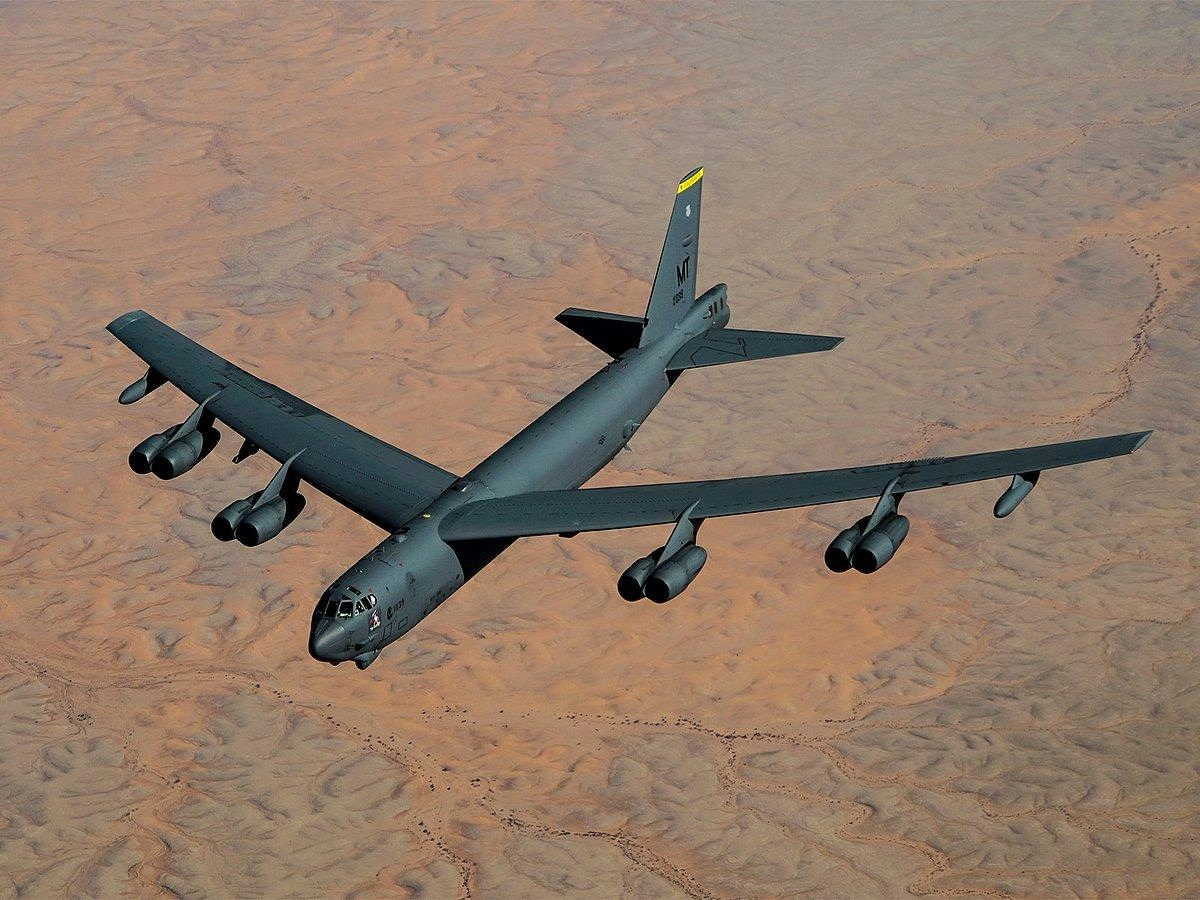
Investigators Probe Engine and Control Issues After Fatal B-52 Crash
The U.S. Air Force’s ongoing effort to modernize its fleet of B-52 Stratofortress bombers has come under intense scrutiny following a fatal crash at Edwards Air Force Base in California. The accident occurred shortly after takeoff during a routine test mission, resulting in the deaths of all eight individuals on board, including military personnel, government civilians, and contractors. Boeing later confirmed that two of its employees were among the victims.
Background and Significance of the B-52 Program
The B-52, a Cold War-era bomber first introduced in the 1950s, remains a cornerstone of America’s strategic air capabilities. With only 76 aircraft still in service, the loss represents a significant blow to the Air Force’s long-term plans. The service is investing billions of dollars to extend the bomber’s operational life into the 2050s through a comprehensive modernization program. This initiative includes the integration of new Rolls-Royce F130 engines, upgraded avionics, and a state-of-the-art active electronically scanned array radar system installed in 2025 to improve navigation, targeting, and situational awareness.
The ill-fated flight was part of a local test sortie supporting the radar modernization program. Edwards Air Force Base, known as the Air Force’s premier flight-test center, regularly evaluates new technologies and modifications before they are deployed across the fleet.
Investigation and Early Assessments
A thorough investigation into the crash has been launched, with officials anticipating the process to take up to six months. Early focus is expected to center on potential engine failure or control issues, given that the aircraft lost control moments after takeoff—a critical phase of flight. Aviation attorney and Marine veteran Justin Green highlighted the importance of maintaining an open mind during the investigation, cautioning against premature conclusions. He noted that while the timing of the crash has drawn attention to the new radar system, there is currently no indication that it played a role in the accident.
Broader Implications for the Air Force and Defense Industry
Beyond the immediate tragedy, the crash carries wider implications for the Air Force’s modernization efforts and the defense industry at large. Market observers anticipate increased scrutiny of Boeing’s role in upgrading the B-52 and the reliability of the aircraft’s enhanced systems. Competitors in the defense sector may seek to leverage concerns raised by the incident to promote the safety and dependability of their own platforms.
As investigators continue to reconstruct the events leading to the crash, the Air Force and its industry partners face mounting pressure to ensure the safety and operational integrity of the B-52. This remains critical as the bomber is expected to serve alongside next-generation aircraft such as the B-21 Raider for decades to come.

Etihad Airways Suspends Airbus A380 Flights on Key Route

Aditya Birla Group Seeks Approval for Aircraft Leasing in GIFT City

Qatar Airways Highlights Innovation and Connectivity at Arabian Travel Market 2026

Hong Kong's Five-Year Plan Includes Andrew Fan's Aircraft Parts Processing Hub Proposal

ACIA Aero Leasing Delivers ATR72-600 to Air Nostrum

RTX Appoints Jill Albertelli as Head of Pratt & Whitney

TAT Technologies Joins Beyond Aero Hydrogen Aircraft Program

AURAK Study Highlights Barriers to Air Taxi Adoption in Emerging Economies

Xiamen Air Selects Altitude for 787 Maintenance at Heathrow

Etihad and Swissport Extend Global Partnership
