Изображение

Превращайте аналитические выводы ИИ в реальные действия

Присоединяйтесь к списку ожидания AeroGenie уже сегодня!

В тренде

Categories

AFI KLM E&M Appoints New Senior Vice President for Component Products
July 9, 2025By ePlane AI
AFI KLM E&M Appoints New Senior Vice President for Component Products
0
0
AFI KLM E&M
Component Services
Aviation Leadership

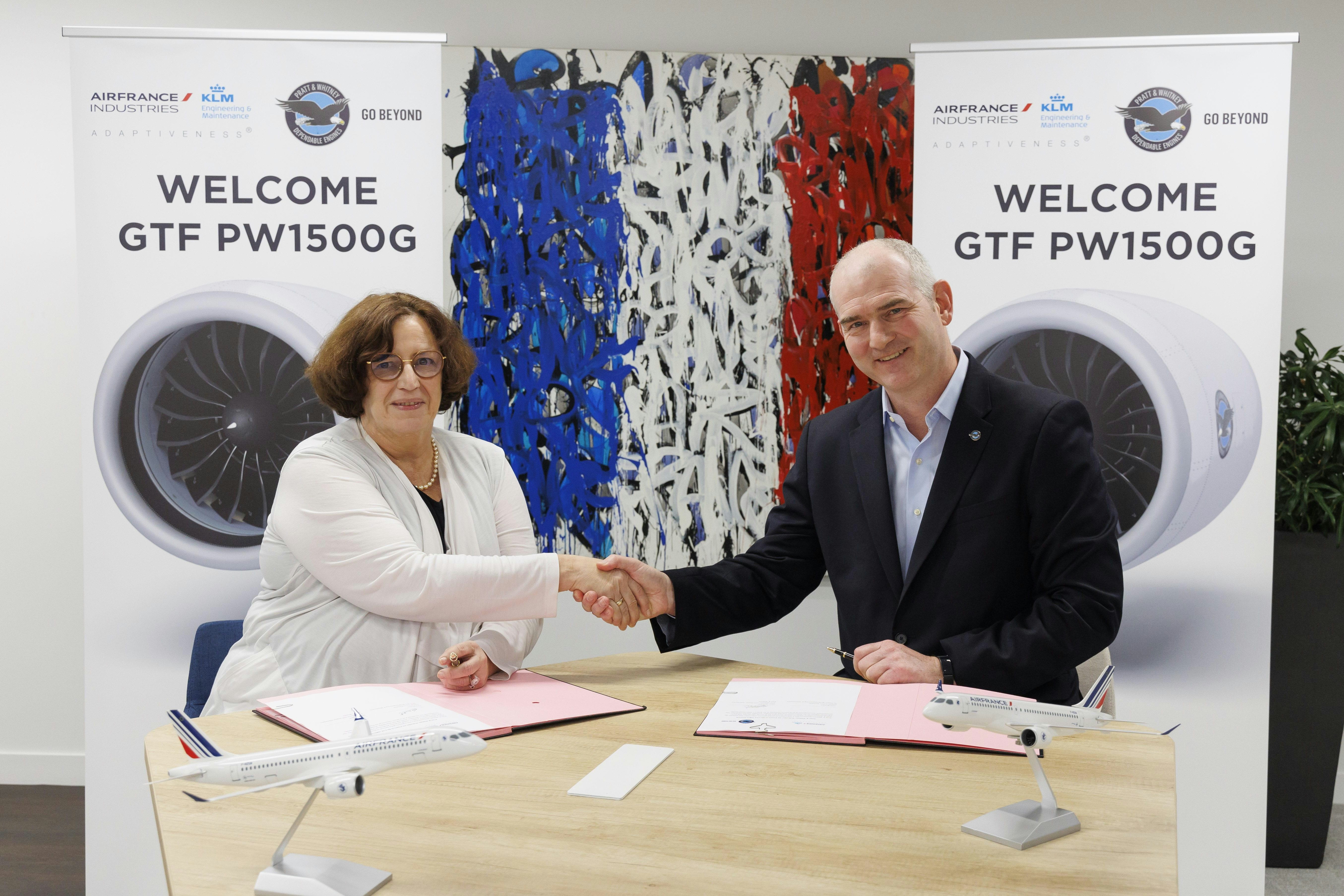
AFI KLM E&M Appoints Peter van Helden as Senior Vice President for Component Products

Air France Industries KLM Engineering & Maintenance (AFI KLM E&M) has named Peter van Helden as Senior Vice President for Component Products, a strategic appointment amid ongoing challenges in the aviation sector. Van Helden assumes this role at a time when the company continues to navigate post-Covid supply-chain disruptions and uncertainty surrounding the timeline for normalization. His leadership is anticipated to be crucial as AFI KLM E&M adapts its component services portfolio to meet evolving market demands.

Extensive Industry Experience and Strategic Vision

Peter van Helden brings decades of experience within the aviation industry, combining technical expertise with commercial acumen. His background includes significant roles in original equipment manufacturer (OEM) relations, strategic partnerships, engineering, sales, and program management at internationally recognized organizations. Known for his strategic vision and ability to drive operational excellence, van Helden is regarded as a valuable asset in AFI KLM E&M’s efforts to reinforce its global standing and create long-term value.

Strategic Initiatives Amid Supply-Chain Pressures

Van Helden’s appointment coincides with AFI KLM E&M’s ongoing negotiations with AerCap to form a joint venture focused on CFM International Leap engines. This proposed partnership aims to provide spare assets to customers during engine maintenance, thereby enhancing service reliability in the face of persistent supply-chain constraints. Industry analysts suggest that such strategic collaborations may prompt similar moves by competitors as maintenance, repair, and overhaul (MRO) providers seek to secure supply chain continuity and broaden their service offerings.

Van Helden succeeds Bruno Tricoire, who has transitioned to the position of Senior Vice President of Engines at Air France Industries. Anne Brachet, Executive Vice President of Air France-KLM Engineering & Maintenance, expressed strong support for the new appointment, highlighting van Helden’s deep industry knowledge, extensive OEM relationships, and proven track record. She emphasized confidence that under his leadership, the Component Product division will continue to evolve and deliver exceptional value to customers worldwide.

Van Helden’s expertise in leading cross-functional teams, managing complex regulatory environments, and delivering customer-centric solutions is expected to be instrumental as AFI KLM E&M responds to industry shifts and positions itself for future growth.

More news
FTAI Aviation Rises 6% Following Oversubscribed Aircraft Lease ABS Deal

FTAI Aviation Rises 6% Following Oversubscribed Aircraft Lease ABS Deal

FTAI Aviation Advances 6% Following Oversubscribed Aircraft Lease ABS Transaction FTAI Aviation’s shares rose by 6% after the company successfully priced its inaugural aircraft lease asset-backed securitization (ABS), MRE 2026-1. The $612 million deal is secured by 48 narrowbody aircraft currently on lease to 23 airlines worldwide. The strong oversubscription of the offering reflects robust investor confidence in FTAI’s aircraft leasing platform and its strategic shift toward diversified, capital-markets-based financing. Strategic Significance of the ABS Issuance This ABS issuance represents a pivotal development for FTAI Aviation, reinforcing its investment thesis centered on midlife engines, aircraft leasing, and capital-light business models. The company’s ability to generate substantial demand for its ABS supports the view that it can continue delivering attractive returns despite its concentration in legacy engine platforms such as the CFM56. Nonetheless, challenges remain, including the scalability of its Service Center Initiative (SCI) and the risk that demand for older engine types may decline more rapidly than anticipated. In conjunction with the ABS transaction, FTAI announced plans to redeem all outstanding 8.25% Series C preferred shares at $25.00 per share. This move aligns with the company’s broader objective to cultivate a more flexible, capital-markets-driven balance sheet, which could reduce funding costs and diversify capital sources. Such financial agility may prove essential if aftermarket demand for engines or interest from SCI partners falls short of expectations. Market Context and Competitive Pressures FTAI’s positive momentum unfolds amid a shifting competitive environment. American Airlines is currently raising $1.1 billion through a 32-aircraft deal aimed at bolstering liquidity in response to ongoing fuel-cost pressures. Meanwhile, the preowned jet market is experiencing rising values despite a slowdown in transaction volumes, indicating evolving dynamics that could influence lessors’ strategies. Competitors such as TrueNoord, supported by Arcus Infrastructure Partners, are actively expanding their aircraft portfolios, intensifying competition within the leasing sector. Looking forward, FTAI Aviation has set ambitious targets, aiming for $6.6 billion in revenue and $1.7 billion in earnings by 2029. Achieving these goals would require an annual revenue growth rate of 32.8% and a significant increase in earnings from the current $521.7 million. While some analysts remain cautious due to the company’s reliance on legacy engines, the successful ABS issuance and ongoing strategic initiatives suggest FTAI is positioning itself to navigate both opportunities and risks in a rapidly evolving market. As the aircraft leasing industry adapts to changing market conditions and heightened competition, FTAI Aviation’s recent developments underscore both its strengths and the challenges it faces. Investors will need to carefully assess the company’s innovative funding strategies alongside broader industry trends to form a comprehensive view of its long-term prospects.
Iran-linked hackers are now targeting aviation and oil firms through fake job offers, researchers warn

Iran-linked hackers are now targeting aviation and oil firms through fake job offers, researchers warn

Iran-Linked Hackers Target Aviation and Oil Firms Through Fake Job Offers Cybersecurity researchers have identified a growing campaign by Iran-linked hackers targeting aviation and oil companies using sophisticated fake recruitment schemes. These attackers, believed to be connected to Iranian state interests, impersonate recruiters to approach software engineers and other technical professionals. Their objective is to steal sensitive access credentials and gather intelligence by exploiting the trust inherent in job-seeking interactions. Focus on High-Value Targets and Sectors Recent investigations reveal that the hackers have concentrated their efforts on high-value organizations, including a U.S. oil and gas firm, an Israeli defense contractor, and an entity based in the United Arab Emirates. The aviation sector has been particularly targeted, with attackers posing as recruiters to lure software engineers under the pretense of legitimate job opportunities. Although there is no current evidence that these attempts have resulted in successful breaches, cybersecurity experts warn that the threat remains active and carries significant potential for disruption. The use of fake job offers forms part of a broader espionage strategy that leverages social engineering to compromise corporate networks and access confidential information. This approach highlights the increasing sophistication of cyber operations aimed at critical industries. Broader Strategic Ambitions and Infrastructure Threats Beyond direct targeting of companies, Iran is reportedly seeking to exert control over undersea internet cables passing through the Strait of Hormuz, a vital chokepoint for global data traffic. Control over this infrastructure could jeopardize up to $10 trillion in daily financial transactions, with potential consequences including elevated oil prices and increased stagflation pressures on technology stocks. Iranian cyber operations have also extended to critical U.S. infrastructure. Researchers have detected attempts to compromise fuel monitoring systems at gas stations, although no damage has been reported so far. Despite the absence of confirmed major breaches, cybersecurity experts emphasize the persistent risk posed by these campaigns. The combination of targeted phishing, strategic infrastructure ambitions, and ongoing infiltration attempts underscores the evolving and multifaceted nature of Iran-linked cyber threats.
Inside the high-stakes world of private jet catering

Inside the high-stakes world of private jet catering

Inside the High-Stakes World of Private Jet Catering Delivering gourmet meals to the world’s most discerning travelers aboard private jets presents a unique set of challenges. Unlike commercial airlines that depend on large-scale industrial kitchens, private jet catering operates as a boutique service. It relies heavily on local suppliers capable of meeting stringent standards for quality and presentation, often with minimal advance notice. Coordinating Culinary Excellence at 40,000 Feet Hope Bifulco, spokesperson for private jet operator Magellan Jets, describes the catering process as “a fresh, individually coordinated delivery for every flight.” The operation involves negotiating airport and fixed-base operator (FBO) handling fees, managing vendor logistics, and navigating regional price variations. Securing reliable providers is particularly difficult in remote locations such as Aspen or Bar Harbor, where vendor options are limited and delivery costs are high. Conversely, busy airports like Teterboro and Miami command premium pricing due to demand. To maintain reliability, Magellan Jets requests quotes from multiple vendors for each flight and meticulously manages delivery schedules. Catering is required to arrive at the FBO 90 minutes before departure and be ready for boarding at wheels-up, ensuring there are no last-minute complications. The overriding objective is to prioritize the private client’s experience at every stage. Brody Speno, founder of Miami-based SkyDine, has developed an international network of vetted partner kitchens serving hundreds of airports worldwide. He emphasizes the importance of consistency across locations, whether in Omaha or London. Each partner kitchen undergoes rigorous evaluation for food safety certifications such as ServSafe and HACCP, alongside internal assessments based on passenger feedback, delivery reliability, and responsiveness. Personalization and the Digital Age Catering to individual preferences and dietary requirements is a critical aspect of private jet service. Magellan Jets engages clients well in advance, requesting menu selections within a timeframe that allows for timely delivery. The company accommodates a wide range of dietary needs, including vegetarian, vegan, gluten-free, kosher, and halal options, encouraging clients to communicate their requirements early. Standard orders typically require 24 to 48 hours’ notice, while more complex or customized meals ideally need 72 hours. Not all dishes travel well in the unique environment of a jet cabin. Meals are delivered cold and reheated onboard, prompting Magellan Jets to advise clients on menu choices that maintain quality under these conditions. As the industry evolves, private jet operators are increasingly embracing digital technologies to enhance the hospitality experience beyond mere transportation. Companies such as Elevate Jet are at the forefront of this transformation, using technology to improve personalization and service delivery. This shift has fueled growing demand for luxury and bespoke offerings, encouraging competitors to invest in digital platforms and customer service innovations. Rising Costs and Industry Headwinds Despite these advancements, the private jet catering sector faces significant challenges. The anticipated jet fuel crisis in 2026, which has already caused prices to double, threatens to escalate operational costs and disrupt supply chains, particularly in Europe and Asia. These pressures may affect everything from catering logistics to the availability of premium ingredients, compelling operators and caterers to adapt swiftly. In this high-stakes environment, success depends on agility, meticulous attention to detail, and an unwavering commitment to client satisfaction, even as the industry contends with rapid change and rising expenses.
Kenya Airways Faces Disruptions Amid Strategic Goods Bill and Supply Chain Challenges

Kenya Airways Faces Disruptions Amid Strategic Goods Bill and Supply Chain Challenges

Kenya Airways Faces Disruptions Amid Strategic Goods Bill and Supply Chain Challenges Kenya Airways (KQ) has issued warnings of significant disruptions to its domestic and regional flight operations, raising concerns among travelers across Africa. The airline’s difficulties are primarily linked to the forthcoming Strategic Goods Control Bill, 2026, which threatens to delay the import and clearance of vital aircraft components. This legislative development coincides with mounting complexities in the global supply chain, where increasing automation and the demand for resilience continue to challenge the aviation sector, as highlighted in recent industry forums such as TOC Europe 2026 and reports by Retail Gazette and Logistics Management. Impact of the Strategic Goods Control Bill on Aviation The Strategic Goods Control Bill is designed to regulate dual-use goods—items that have both civilian and military applications. However, its broad regulatory scope inadvertently encompasses critical aviation parts, including avionics, engine components, and maintenance equipment. Kenya Airways has expressed concern that without specific exemptions for certified commercial aviation materials, the bill could cause severe delays in acquiring essential parts. Such delays would hinder the airline’s ability to promptly address Aircraft on Ground (AOG) situations, potentially leading to widespread flight cancellations and operational paralysis. Operational Vulnerabilities Due to a Limited Fleet Kenya Airways operates a relatively small fleet of approximately 34 aircraft, which limits its operational flexibility when technical issues arise. Unlike larger carriers with extensive fleets, KQ cannot easily substitute grounded aircraft, making the timely delivery of replacement parts crucial. Previous incidents, such as engine backlogs affecting Boeing 787 Dreamliners, have demonstrated how even minor delays can escalate into extensive cancellations, disrupting thousands of passengers across domestic, regional, and international routes. Broader Supply Chain and Geopolitical Challenges The airline’s operational challenges are further exacerbated by ongoing supply chain disruptions and regional geopolitical instability. While the logistics sector is increasingly investing in automation and adaptive strategies, many initiatives have yet to yield consistent improvements, as noted by Logistics Management. These systemic vulnerabilities have contributed to delays in major projects, including the Wynn Al Marjan Island opening, illustrating the widespread impact of supply chain fragility. Additionally, regional instability, particularly in Middle Eastern airspace, has compelled Kenya Airways to reroute European flights bound for cities such as London, Paris, and Amsterdam. These longer flight paths increase travel times, crew fatigue, and fuel consumption. With crude oil prices remaining above $100 per barrel, the airline faces mounting operational costs and financial pressures. Financial Implications and Market Position Kenya Airways is actively pursuing a $500 million strategic investment aimed at reducing debt and expanding its fleet capacity. However, persistent operational disruptions threaten to undermine these recovery efforts by eroding passenger confidence and weakening the airline’s competitive stance against regional rivals like Ethiopian Airlines, which benefits from a larger and more flexible fleet. Maintaining reliable flight operations is essential not only for financial stability and customer loyalty but also for preserving Nairobi’s role as a pivotal hub in East African air travel. Advisory for Passengers Although daily flights between Nairobi (NBO) and Dubai (DXB) have resumed, Kenya Airways’ broader network remains susceptible to disruption. Passengers are advised to monitor their flight status closely and consider flexible booking options as the airline navigates a challenging environment shaped by legislative changes, supply chain constraints, and geopolitical tensions.
Significant Advancement for Local Aviation

Significant Advancement for Local Aviation

Significant Advancement for Local Aviation New State-of-the-Art MRO Facility Strengthens Malaysia’s Aviation Sector SHAH ALAM — Malaysia’s aviation industry has reached a significant milestone with the inauguration of a cutting-edge maintenance, repair, and overhaul (MRO) hangar. Operated by Base Maintenance Malaysia (BMM), a subsidiary of SIA Engineering Company Ltd, the facility is poised to enhance the country’s standing within the regional MRO ecosystem. Deputy Investment, Trade and Industry Minister Sim Tze Tzin highlighted that the new hangar will not only improve Malaysia’s competitiveness but also accelerate the development of local expertise in the aviation maintenance sector. Equipped with advanced technologies, the hangar is designed to service next-generation wide-body aircraft such as the Airbus A350, Boeing 777, and Boeing 787. These twin-aisle aircraft, characterized by fuselage diameters exceeding five meters and passenger capacities ranging from 200 to over 800, require sophisticated maintenance capabilities. The facility incorporates a digital dashboard system that monitors all aspects of aircraft maintenance, providing real-time updates and estimated return-to-service timelines. BMM has ambitious plans to expand its workforce from 350 to 700 employees by next year. Local Malaysian talent will benefit from world-class MRO training programs conducted in Singapore, complemented by specialist training delivered by SIA experts within Malaysia. At the opening ceremony near Sultan Abdul Aziz Shah Airport, Minister Sim underscored the importance of such capability-driven investments in achieving Malaysia’s target of RM55 billion in annual MRO revenue by 2030. Industry Challenges and Future Expansion Despite these advancements, Malaysia’s MRO sector faces significant challenges amid evolving industry dynamics. Regulatory complexities, particularly concerning the adoption of sustainable aviation fuels (SAF) and emerging technologies like vibrational anti-icing systems, are expected to influence the sector’s future trajectory. As environmental regulations become more stringent, airlines and MRO providers may encounter increased scrutiny and rising operational costs to ensure compliance. Meanwhile, competitors are intensifying research into hydrogen propulsion and other sustainable technologies, while advocating for adjustments to international regulations such as the ReFuelEU initiative to preserve competitive balance. BMM’s Chief Executive Officer Lee Yang Loong revealed plans for a second hangar at Subang Airport, scheduled to become operational by the end of the year. This expansion aims to double the company’s capacity, enabling up to six simultaneous aircraft MRO operations. Lee emphasized the company’s commitment to rigorous manpower training and adherence to the highest standards of quality and safety across both facilities. With 95% of BMM’s workforce comprising Malaysian nationals, the company intends to establish additional local training centers to support its operational growth and regional talent development. However, the sector must also navigate potential resistance to SAF mandates and related taxation, which could complicate the green transition for business aviation. Lee concluded by reaffirming BMM’s vision to position Malaysia as a core MRO hub in the region, noting that further investments will be evaluated following the completion of the second hangar.
McCormick, aviation industry leaders to attend Aerium Innovation Summit

McCormick, aviation industry leaders to attend Aerium Innovation Summit

McCormick and Aviation Industry Leaders to Convene at Aerium Innovation Summit **Johnstown, PA** – Leading figures from the aviation sector, including representatives from McCormick, are preparing to attend the forthcoming Aerium Innovation Summit. The event will serve as a critical forum for addressing some of the most urgent challenges and emerging opportunities facing the industry today. Navigating Industry Challenges Amid Geopolitical and Supply Chain Pressures The summit arrives at a crucial juncture for aviation, as the sector continues to contend with ongoing supply chain disruptions and escalating geopolitical tensions, notably conflicts in the Middle East. These factors, underscored in recent analyses such as the Aviation Week MRO Americas 2026 Wrap Program, are expected to dominate discussions. Attendees will focus on strategies to sustain operational stability and foster growth despite these external pressures. McCormick’s involvement is attracting particular attention, given the company’s significant role in aviation maintenance and the increasing scrutiny it faces amid shifting market dynamics. The competitive landscape is evolving rapidly; for example, Frontier Airlines anticipates a potential revenue increase following Spirit Airlines’ market exit, a development likely to influence strategic planning across the industry. Innovation and Market Expansion as Key Themes In response to these shifts, competitors are poised to launch initiatives centered on cabin innovation and enhanced in-flight connectivity. Recent trends highlighted in the AIX 2026 report emphasize a growing commitment to improving passenger experience through advanced cabin designs and superior Wi-Fi capabilities. Furthermore, India’s expanding presence in the aviation market is expected to be a focal point, as companies seek to leverage new growth opportunities in the region. As the Aerium Innovation Summit convenes, industry leaders will deliberate on how best to navigate these multifaceted challenges while pursuing innovation and expansion. The summit’s outcomes are anticipated to significantly influence the future trajectory of aviation maintenance, passenger experience enhancements, and global market strategies.
38 Years After TACA Flight 110’s Emergency Landing at Michoud

38 Years After TACA Flight 110’s Emergency Landing at Michoud

38 Years After TACA Flight 110’s Emergency Landing at Michoud A Remarkable Feat of Aviation Skill This weekend marks the 38th anniversary of one of aviation’s most extraordinary emergency landings. On May 24, 1988, TACA Flight 110, a Boeing 737-300 traveling from Belize to New Orleans, encountered a severe storm east of the city that caused both engines to fail. Captain Carlos Dardano, confronted with a powerless descent, successfully executed an emergency landing on a narrow strip of land near Michoud in New Orleans East—an area not designed for aircraft landings and far from any official runway. Despite the New Orleans region being served by three airports, the location where the plane touched down was wholly unexpected. Reflecting on the incident, Captain Dardano recently revisited the site and recounted the harrowing moments when hail and heavy rain overwhelmed the aircraft’s relatively new engines. “We hit a lot of turbulence, and the engines quit on us... both at the same time,” he told Fox 8. After briefly restarting the engines only for them to fail again, air traffic controllers suggested Interstate 10 as a potential landing site. Dardano rejected this option, concerned about the risk to both passengers and motorists. Instead, he aimed for the Intracoastal Waterway until his co-pilot spotted a narrow strip of land alongside a levee. “We saw some cables over there we had to jump a little bit and I said I got it baby I got it, and then the rest is history,” Dardano recalled. The crew’s quick thinking, combined with the 737’s gliding capabilities, ensured the safety of all 45 people on board. Legacy and Renewed Focus on Flight Safety The successful landing, immortalized by Times-Picayune photographer Ted Jackson, concluded without any fatalities, underscoring the crew’s exceptional skill and composure under pressure. After evacuating the passengers, Captain Dardano observed as the aircraft was repaired and flown out two weeks later, an event that drew crowds from across the city. The TACA Flight 110 incident remains a benchmark in emergency aviation response. In recent years, however, a series of high-profile airline emergencies have brought renewed public attention to flight safety. Southwest Airlines Flight 2665 made headlines after a cracked windshield forced an emergency landing in Oklahoma. American Airlines Flight 5318 diverted to Kansas City due to smoke in the cabin, while United Airlines Flight 1551 landed in Washington D.C. following a passenger’s attempt to open a door mid-flight. Additionally, Delta Flight DL478 was rerouted to Portland when a passenger gave birth onboard. These incidents highlight the unpredictable challenges faced by flight crews and have intensified scrutiny of airline safety protocols. As passengers and investors respond to such events, the legacy of TACA Flight 110 serves as a powerful reminder of the vital importance of rigorous training, preparedness, and decisive action in ensuring safety in the skies.
Airlines Expand Long-Haul Narrowbody Flights Across the Atlantic

Airlines Expand Long-Haul Narrowbody Flights Across the Atlantic

Airlines Expand Long-Haul Narrowbody Flights Across the Atlantic Emerging Strategy in Transatlantic Travel A growing number of airlines across North America and Europe are adopting a novel approach to transatlantic travel by deploying single-aisle, long-range aircraft to connect secondary cities on both continents. This strategy, initially pioneered by Canadian leisure carrier Air Transat, is gaining traction industry-wide as carriers seek to unlock new markets and enhance route economics. Air Transat has focused on underserved destinations in southern Europe, recently launching thrice-weekly flights between Ottawa and London Gatwick—the first direct connection between the Canadian and UK capitals via Gatwick. Sebastian Ponce, Transat’s chief revenue officer, emphasized that this route, combined with connections offered by partner Porter Airlines from multiple cities across Canada and the United States, positions Ottawa as a genuine gateway to Europe. Additionally, the airline introduced once-weekly flights from Quebec City to Marseille and Nantes in France, all operated with Airbus A321LR aircraft—narrowbody jets designed for longer-range routes that cannot economically support widebody aircraft. The Rise of the Airbus A321XLR and Market Impact The trend toward long-haul narrowbody operations is accelerating with the introduction of the Airbus A321XLR, a next-generation narrowbody aircraft boasting an advertised range of 4,700 nautical miles (8,700 km). Its lower trip costs and improved fuel efficiency enable airlines to serve smaller, secondary cities and launch seasonal routes that were previously unviable with larger jets. Persistently high fuel prices, exacerbated by ongoing geopolitical tensions such as the United States’ conflict with Iran, have further increased the appeal of these more efficient aircraft. Data from aviation analytics firm Cirium reveals an 11% year-on-year increase in transatlantic narrowbody flights originating in North America for July, accompanied by a 12% rise in available seats. This contrasts with flat or declining capacity on widebody transatlantic routes. Air Transat’s July schedule alone reflects a 22% increase in narrowbody flights to Europe compared to the same month last year. Air Canada, which recently introduced its first A321XLRs, is expanding such flights by 80%. Other notable increases include Aer Lingus (19%) and Iberia (87%), both operators of the A321XLR. American Airlines is deploying its new A321XLRs on routes between New York and Edinburgh, as well as on transcontinental flights between New York and Los Angeles. Alaska Airlines is also entering the long-haul narrowbody market with a seasonal Seattle–Reykjavik service operating from late May to early September. Challenges and Competitive Dynamics Despite the promising expansion, long-haul narrowbody operations face significant challenges. Rising fuel costs and operational complexities present ongoing risks, while competition from established Gulf carriers remains a critical factor. Some European airlines are responding by adjusting capacity; for instance, Lufthansa is reducing approximately 1% of its total capacity to mitigate higher fuel expenses. Emirates president Tim Clark has attributed the decline of certain European long-haul operations to strategic missteps by those airlines rather than competition from Gulf carriers. As airlines continue to navigate shifting market dynamics and economic pressures, the deployment of long-range narrowbody jets is reshaping the transatlantic aviation landscape. This evolution offers passengers increased options and connects cities that were previously beyond the reach of direct flights.
Why the Boeing 777X May Not Suit This European Airline

Why the Boeing 777X May Not Suit This European Airline

Why the Boeing 777X May Not Suit This European Airline Scandinavian Airlines (SAS) is currently undertaking a significant widebody fleet renewal, with the Boeing 777X among the aircraft under consideration alongside established competitors such as the Airbus A350 and Boeing 787. Despite the 777X’s impressive range and passenger capacity, its suitability for SAS’s network and strategic direction remains uncertain, particularly as the airline undergoes a period of substantial transformation. Scale and Network Compatibility The Boeing 777-9, the flagship model of the 777X family, is designed primarily for high-density routes and mega-hubs like Dubai or Doha, where daily passenger volumes can consistently fill its expansive cabin of over 400 seats. In contrast, SAS’s hubs in Copenhagen and Stockholm typically operate routes that are better served by aircraft seating between 250 and 300 passengers. Consistently filling a 400-plus seat aircraft would pose a considerable challenge for SAS, potentially necessitating a reduction in flight frequencies to maintain high load factors. Such a shift could alienate business travelers who value schedule flexibility over aircraft size, thereby undermining a key segment of SAS’s customer base. Operational and Economic Challenges Introducing the 777X would also disrupt SAS’s current technical commonality. The airline’s existing fleet includes six Airbus A350-900s, averaging just 3.8 years in service, which efficiently cover its long-haul operations. Incorporating a small sub-fleet of 777X aircraft would require significant investment in pilot training, spare parts, and ground support equipment, particularly due to the 777-9’s distinctive folding wingtips. Unless SAS commits to a fleet size of at least 18 to 20 units, the costs associated with maintaining a separate 777X operation could outweigh the potential benefits, especially if passenger demand does not meet projections. Market Timing and Competitive Pressures The timing of any potential 777X order is further complicated by ongoing delivery delays. Boeing’s backlog for the 777X has grown to nearly 600 aircraft, with Singapore Airlines not expected to receive its first delivery until after April 2027. This high demand and delayed availability could affect pricing and delivery schedules for European carriers like SAS, increasing the risk of falling behind in the competitive race for next-generation widebodies. Boeing’s recent surge in orders during April highlights the aircraft’s popularity but also underscores the urgency for airlines to act swiftly or risk missing out. Strategic Considerations Amid Alliance Shifts SAS’s decision extends beyond considerations of aircraft size and range to encompass long-term alignment with manufacturers and airline alliances. With Air France-KLM set to increase its stake in SAS to approximately 60.5% by 2026, the airline is transitioning away from its Star Alliance roots toward the SkyTeam alliance. This strategic shift coincides with the pressing need to replace SAS’s aging fleet of eight Airbus A330-300s. Evaluating the A330neo and A350 alongside the 787 and 777X allows SAS to leverage its market position, but operational realities and evolving network strategies suggest that the 777X may be too large and complex for the airline’s current needs. While the Boeing 777X represents a technological advancement, its scale, cost implications, and market timing present significant challenges for SAS. The airline’s forthcoming fleet decisions will require a careful balance between ambition and operational pragmatism as it navigates a new chapter in European aviation.
Red Arrows to Operate with Seven Aircraft Until 2030 Due to Aging Engines

Red Arrows to Operate with Seven Aircraft Until 2030 Due to Aging Engines

Red Arrows to Operate with Seven Aircraft Until 2030 Amid Engine Aging Concerns The Royal Air Force’s renowned aerobatic team, the Red Arrows, will reduce their display formation from the traditional nine jets to seven aircraft for most performances until 2030. This adjustment is driven by the aging engines of their Hawk T1 fleet, which have become increasingly difficult to maintain due to the scarcity of critical spare parts, particularly engines. RAF leadership has confirmed the decision as a necessary measure to sustain the team’s operations amid growing maintenance challenges. Operational Adjustments and Display Commitments While the Red Arrows will continue to perform nine-aircraft flypasts on significant occasions—such as the King’s official birthday and the 250th anniversary of American Independence on July 4th—the majority of their displays across the UK, Europe, and internationally will feature the smaller seven-jet formation. The Hawk T1 jets, which have been the backbone of the team’s nearly 4,000 worldwide displays, are facing increasing maintenance difficulties as parts become harder to source, a situation initially reported by Sky News. An RAF spokesperson emphasized that scaling down the number of aircraft in future flypasts is intended to support sustainable management of the Hawk T1 fleet and to prepare the Red Arrows for a transition to a new aircraft type. The spokesperson reaffirmed the team’s status as a national symbol, celebrated globally for their precision, speed, and teamwork. Broader Industry Challenges and Future Prospects The Hawk T1s are slated for retirement in 2030, following a service life extension granted by the UK government in 2021. Although most of the UK’s original Hawk T1s were retired in 2022, the Red Arrows retained their aircraft to fulfill ongoing display commitments. The difficulties faced by the Red Arrows reflect wider challenges within the aviation sector, including the global grounding of Pratt & Whitney PW1100G turbofan engines, which has strained maintenance resources. Recent efforts have reduced grounded aircraft by 15% through increased production of critical components, while competitors such as GE Aerospace have accelerated deliveries of their Leap engines. Additionally, the US Air Force’s approval of the T-7A Red Hawk for production signals a broader shift toward newer trainer aircraft. In the UK, market pressures are also evident. Modular trainer developer Aeralis recently entered administration due to cash flow issues and delays in the UK Defence Investment Plan. These industry-wide difficulties highlight the importance of prudent fleet management and strategic planning as the Red Arrows prepare for their eventual transition to a new generation of aircraft. Despite these challenges, the RAF remains committed to maintaining the high standards of the Red Arrows’ displays. The team will continue to showcase British aviation excellence at airshows and events, adapting their operations to ensure the legacy of the Red Arrows endures through the conclusion of the Hawk T1 era and beyond.
line









