
Превращайте аналитические выводы ИИ в реальные действия

В тренде
Categories
Air Cargo Facilitated $157 Billion in Early 2025 Trade and Supported AI Expansion
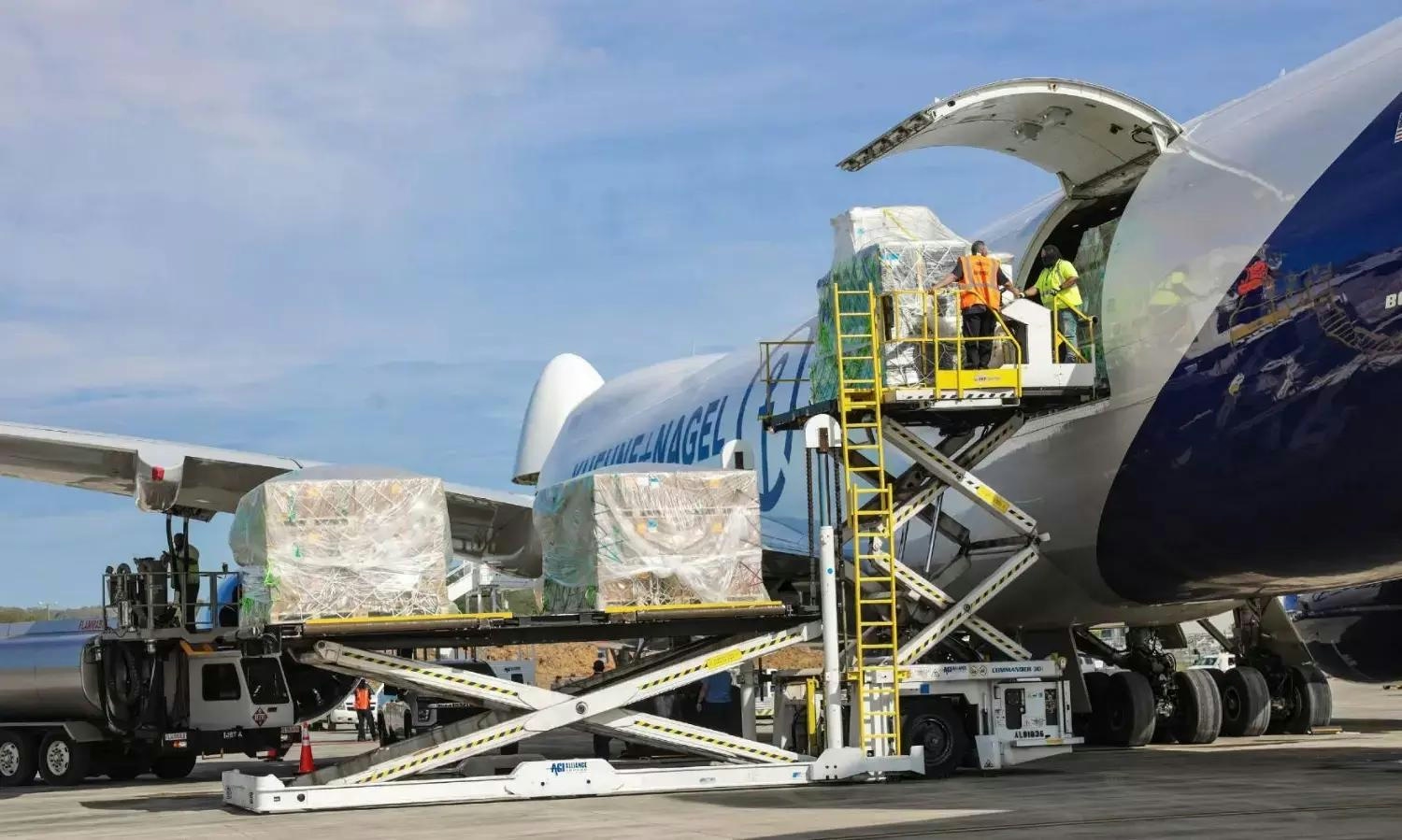
Air Cargo Facilitates $157 Billion in Early 2025 Trade Amid Market Volatility
The International Air Transport Association (IATA) has underscored the critical role of air cargo in sustaining global trade and economic growth during the first quarter of 2025. In a period marked by heightened trade policy uncertainty and the rapid expansion of artificial intelligence (AI) investment, air freight emerged as a vital enabler for businesses navigating these challenges.
According to IATA’s latest report, air cargo was instrumental in frontloading $157 billion worth of U.S. imports in early 2025, as companies sought to circumvent rising tariffs and shifting trade regulations. This surge contributed to a 2.4% increase in global trade, surpassing initial forecasts by the World Trade Organization, while global GDP expanded by 3.2% despite significant policy headwinds. Notably, air cargo transported more than two-thirds of global AI-related goods, highlighting its strategic importance in supporting the burgeoning AI sector.
Julia Seiermann, IATA’s Head of Industry Analysis, emphasized the structural significance of air cargo, stating, “In 2025, it helped businesses absorb tariff shocks, enabled rapid trade restructuring, and supported the expansion of artificial intelligence investment, helping sustain trade and economic growth in a challenging year.”
Frontloading and Trade Lane Restructuring
The year 2025 saw average U.S. tariff rates climb to approximately 17%, the highest level since the 1930s. This escalation prompted companies to accelerate shipments via air freight to avoid new levies, resulting in a $193 billion year-on-year increase in U.S. imports during the first quarter—a 26% rise. Air cargo accounted for $157 billion, or 82%, of this increase, demonstrating its capacity to provide rapid and flexible solutions amid volatile trade policies.
Concurrently, businesses restructured supply chains to reduce tariff exposure by shifting sourcing away from heavily affected partners and redirecting exports toward alternative markets, particularly in Europe. Air cargo facilitated this swift geographical realignment of high-value, time-sensitive goods. In the U.S., expanding trade lanes saw imports rise by $213 billion, with $174 billion (82%) transported by air. Conversely, on contracting lanes, air cargo represented only 30% of the $257 billion decline. In Europe, air cargo carried 48% of gains on expanding lanes but accounted for a mere 3% of losses on contracting routes.
Powering the AI Investment Boom
The rapid growth of AI investment in 2025 further amplified the strategic importance of air cargo. High-value equipment critical to AI infrastructure—such as servers, data storage units, and memory chips—was efficiently delivered by air freight, enabling swift deployment. More than two-thirds of the value of AI-related trade was transported by air, with shipments of AI goods increasing by 20% year-on-year. Despite representing only 7% of air cargo volume, AI-related products accounted for 53.5% of the total value of air-transported trade, underscoring their high value density.
Navigating Market Challenges in the AI Era
The integration of AI into logistics and supply chain operations has introduced new complexities. Market volatility has intensified amid concerns over cash flow, capital expenditures, and the long-term viability of industry players as AI reshapes freight transportation. Leading companies such as UPS and FedEx are investing heavily in advanced inventory planning and optimized shipping routes to adapt to these changes. Additionally, the revaluation of physical infrastructure as a critical asset in the AI era has spurred significant transactions in the industrial and energy sectors, accompanied by stricter regulatory oversight and increased subsidies aimed at domestic expansion.
As the logistics sector continues to adapt to these disruptions and mounting competitive pressures, air cargo remains central to facilitating high-value, time-sensitive trade. Its role is pivotal not only in supporting global economic resilience but also in driving the next phase of AI-fueled growth.

Etihad Airways Suspends Airbus A380 Flights on Key Route

Aditya Birla Group Seeks Approval for Aircraft Leasing in GIFT City

Qatar Airways Highlights Innovation and Connectivity at Arabian Travel Market 2026

Hong Kong's Five-Year Plan Includes Andrew Fan's Aircraft Parts Processing Hub Proposal

ACIA Aero Leasing Delivers ATR72-600 to Air Nostrum

RTX Appoints Jill Albertelli as Head of Pratt & Whitney

TAT Technologies Joins Beyond Aero Hydrogen Aircraft Program

AURAK Study Highlights Barriers to Air Taxi Adoption in Emerging Economies

Xiamen Air Selects Altitude for 787 Maintenance at Heathrow

Etihad and Swissport Extend Global Partnership
